• العربية
  • فارسی
BrandBrand
  • Iran Insight
  • Politics
  • Economy
  • Analysis
  • Special Report
  • Opinion
  • Podcast
  • Live TV
  • Iran Insight
  • Politics
  • Economy
  • Analysis
  • Special Report
  • Opinion
  • Podcast
  • Live TV
  • Theme
  • Language
    • العربية
    • فارسی
  • Iran Insight
  • Politics
  • Economy
  • Analysis
  • Special Report
  • Opinion
  • Podcast
  • Live TV
All rights reserved for Volant Media UK Limited
volant media logo
EXCLUSIVE

Head full of pellets: protester recalls ordeal on Iran holiday island

Azadeh Akbari
Azadeh Akbari

Iran International

Nov 16, 2026, 19:10 GMT+0
Taha Eskandari
Taha Eskandari

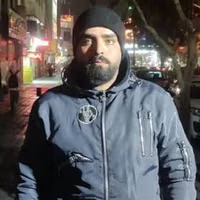
An Iranian protester who survived being shot in the head during January's nationwide demonstrations has described how security forces opened fire on crowds on the resort island of Kish, leaving him with more than 100 shotgun pellets lodged in his head and neck.

Kish is a holiday destination in the Persian Gulf known for its beaches, luxury hotels and shopping malls. Hardly a hotbed of political protest, the island became a scene of deadly violence during January's crackdown, according to 25-year-old Taha Eskandari.

"I thought Kish was a small place and that killings on the scale seen in other cities couldn't happen there," he told Iran International.

Eskandari said he was shot twice while fleeing security forces on January 9, lost consciousness and subsequently spent months in hiding, fearing arrest if he sought medical treatment.

X-rays and a radiology report dated September 22, reviewed by Iran International, identified more than 100 small, round metallic foreign bodies consistent with shotgun pellets in and around his skull, facial tissues, both eye sockets and neck, with a marked concentration around his left eye.

'The first thing we did was write our wills'

Eskandari said protests began on Kish on January 7, with larger demonstrations following a call by exiled Prince Reza Pahlavi on January 8 and 9.

Having participated in the 2022 anti-government protests, he anticipated a violent response and joined four others in preparing first-aid supplies for injured demonstrators.

"The first thing we did was write our wills," he said, explaining that they feared being killed and wanted their families prepared.

The group purchased medical supplies at their own expense, but their first-aid kits were nearly exhausted by around 10:30 p.m. on January 8 because of the number of wounded protesters, he said.

100%

"They weren't shooting below the waist. They were shooting directly above the waist," Eskandari said. He described seeing security forces firing from the roof of a police station. "They were firing at people from above the police station. I saw it with my own eyes."

He also recalled witnessing a young woman being shot in the neck while standing beside him near Police Station 11 that night.

"She was standing beside me, protesting. We didn't have anything with us, not even a stick," he said. Suddenly, he heard a bullet pass close to his ear. It hit the woman.

"I looked down and saw her dying at my feet."

Eskandari said he and other protesters tried to move her to safety but were forced to scatter when security forces advanced. They could not recover her body or establish her identity.

"Whenever I talk about that night, my hands and feet start shaking," he said.

Shot twice while fleeing

The following day, according to Eskandari, security forces pursued protesters near Amir Kabir Square. He fled into the Maryam Hotel, but armed officers entered the building and began shooting. He escaped through a rear exit but was spotted by two armed men.

"The first shotgun blast hit my neck and back," he recalled. "The second hit me directly in the head, and I lost consciousness."

Eskandari said he regained consciousness roughly two hours later in another hotel, where someone had taken him after the shooting. Fearing arrest, he avoided hospitals and tried to treat his wounds himself.

"I couldn't sleep that night. When I tried to put my head on the pillow, my neck hurt. That was when I realized my neck was full of pellets," he said.

Eskandari subsequently spent months in hiding, including in the mountains near Varamin, southeast of Tehran, as swelling and infections worsened. He eventually fled Iran and underwent medical imaging abroad.

"My right eye is gradually losing its sight," he said. "What I see with that eye is no longer the same as what I see with the other."

He described the pellets still lodged in his body as permanent reminders of the crackdown.

"I've always said these are souvenirs for me. Souvenirs of those days, of the people who lost their lives," Eskandari said.

"I survived so I could be the voice of those inside Iran who cannot speak."

Most Viewed

Third US carrier joins Iran blockade, Bessent warns of economic collapse
1

Third US carrier joins Iran blockade, Bessent warns of economic collapse

2

Blair's sister-in-law attended Iran conference linked to IRGC spy recruitment - Telegraph

3

Iran facing one of fastest economic collapses ever, Bessent says

4

Democrats push to end Iran war, Republicans dig in

5
ONE-ON-ONE

Israeli opposition to Islamic Republic transcends party lines

Banner

Spotlight

  • Head full of pellets: protester recalls ordeal on Iran holiday island
    EXCLUSIVE

    Head full of pellets: protester recalls ordeal on Iran holiday island

  • Israeli opposition to Islamic Republic transcends party lines
    ONE-ON-ONE

    Israeli opposition to Islamic Republic transcends party lines

  • 2019 crackdown failed to break cycle of Iran street protests
    ANALYSIS

    2019 crackdown failed to break cycle of Iran street protests

  • Toxic air chokes Iranian cities, residents report health problems
    VOICES FROM IRAN

    Toxic air chokes Iranian cities, residents report health problems

  • Can higher fuel prices curb Iran’s smuggling problem?
    ANALYSIS

    Can higher fuel prices curb Iran’s smuggling problem?

  • Iran’s Janfada campaign gives Basij recruitment a patriotic banner
    ANALYSIS

    Iran’s Janfada campaign gives Basij recruitment a patriotic banner

Banner
Banner
Banner
Banner
Banner
Banner
•
•
•

More Stories

Five job seekers arrested after protest at oil company in southwestern Iran

Nov 15, 2026, 19:11 GMT+0
100%
Images from a video published on November 15, show mothers protesting outside an oil company in Hoveyzeh, southwestern Iran, demanding the release of their sons, who were arrested after demonstrating over job opportunities.

Five young men seeking jobs at an oil company in southwestern Iran were arrested after protesting over employment opportunities, prompting their mothers to stage a demonstration demanding their release, according to Iranian rights monitors and local media.

The five men, aged between 25 and 30, were detained on Saturday outside the Dana Sohrab oil company near the town of Rafi in Khuzestan province, the human rights organization HRANA reported on Sunday.

HRANA identified them as Hossein Savari, Saeed Savari, Ebrahim Savari, Hamoud Savari and Khalil Savari.

Local sources said the arrests followed a complaint by Dana Energy, with the company's site manager and head of security named as complainants.

The men's whereabouts, the charges against them and their legal status remained unknown as of Sunday.

Mothers demand release of detained protesters

The local Telegram channel Moj Ahvaz published footage on Sunday showing the mothers of the detained men gathering outside the company's premises to demand their release.

Residents of Rafi, near the Iraqi border and the Sohrab and Azadegan oil fields, have complained that oil companies operating in the area recruit workers from elsewhere in Iran instead of hiring local residents.

Dana Petro Sohrab, a subsidiary of the privately owned Dana Energy Group, operates a development project at the Sohrab oil field near Rafi and Hoor al-Azim.

A local resident quoted by Moj Ahvaz criticized officials for failing to address unemployment, saying the detained men were trying to support their families and secure their futures.

"Demanding bread and work is not a crime," the resident said.

Employment grievances fuel protests across Iran

The arrests come amid persistent protests over unemployment, discriminatory hiring practices, unpaid wages and job insecurity across Iran.

In late August, Iran International reported that police opened fire on young protesters demonstrating over hiring practices at industrial facilities in Gachsaran and Ahvaz, two cities in southwestern Iran.

Iran's deputy labor minister, Malek Hosseini, said in late October that around 2.5 million people were unemployed and warned that continued economic contraction could put another 1.4 million jobs at risk by the end of the Iranian calendar year in March.

According to HRANA's annual report, at least 2,551 protest gatherings, including 724 labor demonstrations, and 390 labor strikes were recorded across Iran during the previous Iranian calendar year, which ended in March 2026.

2019 crackdown failed to break cycle of Iran street protests

Nov 15, 2026, 11:45 GMT+0
•
Ata Mohamed Tabriz
100%
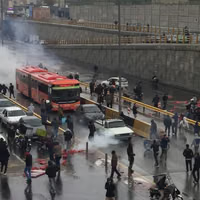
People protest against increased gas price, on a highway in Tehran, Iran November 16, 2019.

Iran's deadly crackdown on protests in November 2019 failed to prevent successive uprisings, fueling a cycle of unrest driven by economic hardship, restrictions on personal freedoms and increasingly forceful repression.

The November 2019 protests marked a turning point in Iran's political landscape, widening the divide between the Islamic Republic and much of society.

Authorities sought to deter further demonstrations through mass arrests, lethal force and nationwide internet shutdowns. But the grievances that brought people into the streets persisted, and new sources of discontent accumulated.

  • Grieving Mothers Speak Out On Anniversary Of Iran’s Bloody November

    Grieving Mothers Speak Out On Anniversary Of Iran’s Bloody November

The cycle continued through protests in 2021, the Woman, Life, Freedom uprising in 2022 and another nationwide wave in January 2026, which began over economic hardship and faced the deadliest crackdown in recent decades.

November 2019: From fuel prices to mass killings

The November 2019 protests erupted against a backdrop of rising inflation, regional inequality and growing poverty on the outskirts of major cities.

On November 15, authorities announced overnight increases of 200 percent in the price of unsubsidized gasoline and 50 percent for subsidized fuel, without prior public notice.

The decision triggered demonstrations that rapidly expanded beyond opposition to fuel prices into a broader rejection of the political system and Supreme Leader Ali Khamenei.

Within 48 to 72 hours, protests had spread to between 100 and 200 cities across 22 to 28 provinces, with major centers in Khuzestan, the outskirts of Tehran, Alborz and several western and central provinces.

Many participants came from what sociologists describe as the impoverished middle class: residents of smaller cities and urban peripheries whose expectations resembled those of the middle class but whose economic circumstances were closer to those of lower-income groups.

The demonstrations lacked established organizations and coordinated leadership, contributing to their rapid, decentralized spread.

The rejection of Iran's political establishment had already emerged during protests in December 2017 and January 2018, when demonstrators chanted that both reformists and conservatives had exhausted their political relevance.

  • Anatomy of a massacre, and the mothers who refuse to let November end

    Anatomy of a massacre, and the mothers who refuse to let November end

By November 2019, opposition to the Islamic Republic itself was evident from the beginning.

The government, backed by reformist political forces, implemented the fuel price increase and internet shutdown before distancing itself from responsibility for the consequences.

Officials described protesters as "thugs" and characterized the demonstrations as "urban warfare," presenting the crackdown as necessary to protect national security and public order.

Authorities imposed a nationwide shutdown of international internet access under a decision by the country's security council.

Special police units, the Revolutionary Guards and the Basij militia deployed alongside armed personnel using live ammunition. Between 7,000 and 8,600 people were arrested.

In Mahshahr, southern Iran, security forces fired bursts from heavy weapons at protesters and residents who had sought refuge in nearby marshlands.

Reuters subsequently reported, citing sources familiar with the decision-making, that Khamenei had ordered the protests stopped at any cost.

The scale of the killings became a central source of public anger, compounded by the absence of accountability for those responsible.

"Well, shots were fired at their legs too," then-Interior Minister Abdolreza Rahmani Fazli said when questioned about why protesters had been shot in the head, according to former lawmaker Mahmoud Sadeghi.

The remarks did not lead to the prosecution of officials who ordered the crackdown. An effort to impeach Rahmani Fazli also failed to advance in parliament.

Mojtaba Zolnouri, then head of parliament's national security committee, defended the minister's actions as implementation of presidential orders and decisions by the country's security authorities.

Estimates of the death toll varied widely. Then-Interior Minister Abdolreza Rahmani Fazli put the figure at between 200 and 225, while Amnesty International documented hundreds of deaths. Reuters, citing Iranian Interior Ministry officials, reported that approximately 1,500 people had been killed.

The wide differences between official and independent estimates of the death toll, coupled with the lack of accountability, helped sustain demands for justice long after the protests had subsided.

How the memory of 2019 shaped the 2022 uprising

The legacy of November 2019 extended beyond the immediate political consequences of the crackdown.

Cultural sociologist Jeffrey Alexander argues that suffering can become a collective trauma when a wider community identifies with the victims through a shared narrative of their suffering and those responsible.

Families seeking justice for those killed in November 2019 helped construct such a narrative.

Annual commemorations, repeated publication of victims' names and accounts shared by grieving mothers on social media transformed the losses of hundreds of families into a wider public concern.

The protest slogan "Aban continues," referring to the Iranian calendar month in which the killings occurred, captured the persistence of that memory.

The anniversary of the crackdown helped determine the timing of protest calls in November 2022, during the Woman, Life, Freedom uprising.

Families of those killed in 2019 also provided a model for relatives seeking accountability after subsequent crackdowns.

In April 2025, Kamelia Sajadian, whose son Mohammad Hassan Torkaman was killed during the 2022 protests, launched the "I too am someone's mother" campaign.

The initiative drew on words associated with Pouya Bakhtiari, killed in November 2019, and subsequently repeated by his mother, Nahid Shirpisheh. Mothers of victims from both the 2019 and 2022 protests joined the campaign.

But the persistence of protest cannot be explained by collective memory alone.

Economic conditions that helped fuel the 2019 demonstrations deteriorated over the following three years.

Persistent inflation, the declining value of the national currency and shrinking household purchasing power pushed more middle-class Iranians toward poverty and deepened hardship among those already struggling.

The Islamic Republic also consolidated political power following the 2021 presidential election, leaving reformist political forces with little remaining capacity to mediate between the state and society.

At the same time, authorities intensified restrictions on personal freedoms, particularly women's clothing.

A July 2022 decision tightening enforcement of mandatory hijab rules, alongside an expanded presence of morality police patrols, increased pressure on women.

  • Iran's Raisi Orders Strict Enforcement Of Hijab Amid Crackdown

    Iran's Raisi Orders Strict Enforcement Of Hijab Amid Crackdown

The death of Mahsa Amini in September 2022 after her detention by morality police triggered another nationwide uprising.

Unlike the initial fuel-price protests of 2019, the 2022 movement brought together women, young people, middle-class Iranians, lower-income communities and protesters from different ethnic backgrounds.

Its demands centered on personal freedom, dignity and opposition to compulsory hijab, alongside rejection of the Islamic Republic's political structure.

A younger generation with limited attachment to official ideology or traditional political organizations occupied a central role.

The decentralized character of the demonstrations resembled November 2019, although tactics such as nighttime rooftop chanting also drew on earlier protest movements, including those of 2009.

Repression contains protests but leaves grievances unresolved

The November 2019 crackdown did not end nationwide protest in Iran.

Demonstrations over water shortages in Khuzestan in 2021, the 2022 uprising and the protests of January 2026 demonstrated the continued importance of the streets as a place of confrontation between citizens and the state.

Each wave involved different immediate grievances, but all unfolded against a backdrop of accumulated economic and political dissatisfaction.

Authorities repeatedly used arrests, violence and communications restrictions to contain demonstrations.

  • Tehran quelled street protests but economic troubles persist

    Tehran quelled street protests but economic troubles persist

Those measures increased the risks of participation and disrupted protesters' ability to organize, without addressing the conditions that had brought them into the streets.

The January 2026 protests followed the same broader trajectory.

Beginning with economic grievances, the demonstrations developed into a wider challenge to the political establishment and were met with the deadliest crackdown in decades.

The recurrence of protest also highlights the limits of interpreting the absence of demonstrations as public acceptance of existing conditions.

Participation depends not only on the depth of dissatisfaction but also on people's assessment of personal risk, their ability to communicate and their expectations about whether others will join them.

Lethal repression raises the perceived cost of taking to the streets, while internet shutdowns make it harder to coordinate gatherings or learn where protests are taking place.

Such measures can temporarily reduce demonstrations even when the underlying grievances remain.

Economic hardship continues to affect access to basic necessities, while restrictions on clothing and personal behavior sustain another source of dissatisfaction.

Authorities have also linked opposition to some of these restrictions with espionage or cooperation with foreign adversaries, extending security enforcement into everyday life.

That approach can increase the consequences of dissent while generating additional resentment over state interference.

The continuing economic strain, restrictions on personal freedoms and reliance on security measures have left the conditions for renewed protest largely intact.

From November 2019 to January 2026, the Islamic Republic has repeatedly demonstrated its capacity to suppress demonstrations, but not to prevent the emergence of new ones.

The central pattern remains unchanged: authorities can regain control of the streets through force, but suppressing a protest movement has not eliminated the grievances that brought it into being.

Iran’s Janfada campaign gives Basij recruitment a patriotic banner

Nov 15, 2026, 02:59 GMT+0
•
Pooya Jahandar
100%
A government-organized Janfada mobilization gathering held in Iran in October 2026.

Iran’s Revolutionary Guards are expanding a campaign built around sacrifice for the homeland into a route for military training and Basij paramilitary recruitment, giving a force associated with decades of domestic repression a broader patriotic appeal.

The Janfada initiative — roughly meaning someone willing to sacrifice their life — presents participation as service to Iran. Its development raises a question: how far can the authorities use national loyalty to attract recruits who might otherwise hesitate to join the Islamic Republic’s security institutions?

On November 2, Hassan Hassanzadeh, commander of the Guards’ Tehran corps, said the first Janfada brigade had been organized, completed supplementary training and received equipment. Speaking at the opening of a training center in Tehran’s Tajrish Square, he said the unit was preparing for practical exercises and specialist shooting-range training.

The announcement marked a further step toward turning a public mobilization campaign into organized military units.

A new route into the Basij

Launched on March 28 by the Guards-linked Baqiyatallah cultural and social headquarters, Janfada initially invited volunteers to participate in defense, security and relief activities during the war with the United States and Israel.

By September, organizers were announcing plans for 1,000 national resistance battalions. Training programs subsequently included firearms handling, urban defense and rescue skills.

Ali Kowsari, the Basij’s deputy for training, has said participants who complete supplementary courses can join the organization’s combat structure. Esmail Faraji, its deputy for operations, has said the campaign attracted volunteers who had not previously belonged to the Basij, although the scale of that recruitment has not been independently established.

The distinction matters because the Basij, a paramilitary organization subordinate to the Revolutionary Guards, combines military mobilization with ideological organization and domestic security. Its network extends through neighborhoods, universities, schools and workplaces, and its members have participated in successive protest crackdowns.

  • Protest crackdown veteran Taeb returns to lead Basij, expand intel network

    Protest crackdown veteran Taeb returns to lead Basij, expand intel network

A campaign emphasizing defense of the country could therefore provide a more accessible entry point than direct recruitment under the Basij name. Joining a course presented as preparation to protect Iran may carry different associations from joining an institution identified with policing dissent.

That remains an interpretation of the campaign’s appeal, rather than proof of its organizers’ intentions or success. Available evidence does not establish how many participants are new recruits, how many were already Basij members, or whether the patriotic message has broadened support beyond existing government loyalists.

National defense and domestic control

The campaign’s public presentation has combined national solidarity with explicit loyalty to the leadership.

At the September 18 Janfada parade in Tehran, participants included Basij members, uniformed volunteers and children. The event began with a declaration of allegiance to Khamenei, while President Masoud Pezeshkian described it as a display of national cohesion.

That combination illustrates how the campaign places defense of Iran alongside support for the political system.

Its activities also extend beyond preparation for an external attack. Campaign spokesman Sassan Zare said in September that Janfada provided training related to urban and public security, while responsibility for deploying volunteers at checkpoints rested with the relevant security bodies.

Those overlapping functions make the campaign relevant to domestic control, although they do not establish that every participant will undertake security duties or be deployed against protesters.

A Syrian parallel, with limits

Syria offers a comparison in how governments organize loyalist forces under the language of national defense.

During Bashar al-Assad’s rule, pro-government militias and neighborhood committees were incorporated into the National Defense Forces. Research by the Institute for the Study of War describes Iranian and Hezbollah assistance in formalizing the force along a model resembling the Basij, including training recruits.

The comparison has limits. Syria involved the consolidation of existing militias during a civil war. Janfada is presented as a recruitment and training campaign connected to institutions that remain in place. There is no evidence here that the Basij has been dissolved or formally renamed.

The more defensible argument is that Janfada offers the existing security structure an additional public identity and recruitment channel. Its language emphasizes sacrifice for the country; its training pathways lead toward institutions whose responsibilities also include preserving the Islamic Republic.

Whether that approach can repair the Basij’s reputation remains unproven. What commanders’ announcements demonstrate is a growing effort to turn patriotic participation into organized manpower.

Canadian MP to flag paintball gun findings after Iran protest blindings

Nov 14, 2026, 23:46 GMT+0
•
Negar Mojtahedi
100%
Iranian protesters who lost one or both eyes to brutality by security forces.

Canadian lawmaker Ali Ehsassi has pledged to refer findings that Iranian security forces possessed paintball guns from a Canadian-owned brand during the 2022 protest crackdown, which left scores of demonstrators blinded, to federal authorities.

The report identified Tippmann guns, a brand owned by Montreal-based KORE Outdoor, in the possession of Iranian security personnel. Investigators could not establish whether the guns were responsible for any of the blinding injuries.

“We’ll take this report. I was not aware of it, and we’ll send it to the appropriate authorities,” Ehsassi told Iran International’s Eye for Iran.

Ehsassi, a Liberal who represents Willowdale, said he did not know whether Global Affairs Canada had reviewed the investigation, published in September 2025 by IranWire and the Iran Human Rights Documentation Center.

Asked what Canada could do about the equipment reaching Iranian security forces, he pointed to federal funding to strengthen sanctions enforcement.

Iran International contacted Global Affairs Canada and KORE Outdoor for comment. Neither responded by the deadline for this report.

How did Tippmann guns reach Iran?

Shahin Milani of the Iran Human Rights Documentation Center told Iran International that researchers found photographs showing Iranian security personnel with paintball guns bearing the Tippmann logo.

One photograph from 2018 shows a member of the Fatehin special unit holding a Tippmann marker. The report also includes a screenshot of the Iranian Paintball Association’s website offering a Tippmann marker for sale.

Some paintball guns seen in footage from the 2022 protests resembled Tippmann models, the researchers said, but image quality and distance made the brand difficult to confirm. Milani said investigators could not link a specific case of blinding to a Tippmann gun.

In October 2022, KORE Outdoor CEO Billy Ceranski condemned the use of the company’s paintball products to suppress protests in Iran. He said KORE complied with US import and export laws and had never sold goods directly or indirectly to countries on the US arms embargo list, including Iran.

Milani said Canadian authorities could start by asking KORE to identify its buyers and then ask those buyers where the equipment went next.

“You cannot just sell such devices and not care as to who actually ends up owning them,” Milani told Iran International.

100%
The sales page for Tippmann Empire BT-4 Combat paintball marker in the official website of Paintball Association of the Islamic Republic of Iran. Source paintball.ir

Hundreds suffered eye injuries

A separate investigation by the Human Rights Center at the University of California, Berkeley found that about 120 people suffered partial or total blindness during the 2022–23 crackdown.

Researchers documented close-range shots to the face involving shotguns, paintball guns and tear gas canisters.

By November 2022, ophthalmologists at three Tehran hospitals had reported at least 500 serious eye injuries, while doctors in Kurdistan province reported at least 80 more.

In its investigation, IranWire and the Iran Human Rights Documentation Center documented 134 people injured by weapons described as less lethal across 47 cities in 24 provinces. At least 114 were injured by shotgun pellets and nine by paintball projectiles. Most of the injuries were to the head, face or eyes.

In one video from December 2022, a plainclothes agent fires a paintball gun at the face of a person being detained in Tehran’s Ekbatan neighborhood.

Blinding injuries documented again in January

Severe eye injuries were also reported during Iran’s January 2026 crackdown, although no link has been established between those cases and Tippmann guns.

Dr. Sarah Raza, a trauma and vascular interventional radiologist who advised wounded protesters remotely, told Iran International that patients feared their wounds would identify them as protesters if they sought medical care.

Raza cited reports of more than 400 gunshot-related eye injuries at a single Tehran hospital during the January 8 and 9 crackdown.

The report Ehsassi pledged to forward examined the 2022 crackdown. The weapons used in the January cases remain a separate question.

Seven years after ‘Bloody November,’ Iran rations gasoline it dares not reprice

Nov 14, 2026, 12:44 GMT+0
•
Arash Sohrabi
100%
An Iranian man fills his car at a gas station in Tehran on September 7, 2026.

Seven years after a fuel price rise set off one of the deadliest crackdowns in the Islamic Republic’s history, Iran is rationing gasoline more tightly, with lines at stations across the country, but it still dares not touch the subsidized price.

Esmail Saghab Esfahani, a vice president who heads the state energy efficiency agency, admitted this week that “we really have a supply problem.” He told Iranians they could no longer count on fuel stations to cover what they need, and should save part of their monthly ration before traveling.

“All the gasoline the government has, it has given to the people,” he said. “Nothing has been held back to supply more.”

On Thursday night, residents of Bandar Abbas, the main port on the Persian Gulf, blocked a road near a fuel station in the city’s Rajaei district with their cars, protesting long lines and empty pumps. Drivers on the Minab–Bandar Abbas route had protested earlier over the lack of fuel.

100%
Price of gasoline is displayed on a fuel dispenser.

Seven years after ‘Bloody November’

Sunday marks seven years since the government announced, shortly after midnight on November 15, 2019, that gasoline prices would rise by 50 to 200 percent. Drivers who had paid 10,000 rials a liter would now pay 15,000 for their first 60 liters a month and 30,000 after that.

Protests broke out within hours and spread to more than 100 cities. Demonstrators blocked highways with their cars, burned banks and tore down images of Supreme Leader Ali Khamenei. On the second day, Khamenei told senior officials, “Do whatever it takes to end it,” Reuters later reported, citing people close to his inner circle.

  • Hardline daily accuses government of scaring Iranians, says there is no crisis

    Hardline daily accuses government of scaring Iranians, says there is no crisis

  • Iran's oil output plunges below pre-war domestic needs

    Iran's oil output plunges below pre-war domestic needs

The state cut off the internet for about a week, and security forces shot protesters with live ammunition, including from rooftops, in Mahshahr in the southwest and in cities across the country. Hundreds of people were killed and more than 7,000 arrested. Iranians call it “Bloody November,” or “Bloody Aban,” after the month in the Iranian calendar.

Those two prices, 15,000 and 30,000 rials, are still the two cheapest tiers today. In 2019 the cheaper one was worth about 12 cents. After seven years of inflation and a collapsing rial, it is worth about half a US cent.

The state has not risked a general price rise since. Each time economic pain has boiled over, it has turned on the state: fuel stations in Tehran were set on fire when rationing began in June 2007, and the uprising over the economic collapse in December 2025 ended in the January massacre.

That memory hangs over every decision. Sagheb Esfahani said this week that the price of the third tier would be reviewed every season, but that “a range of security, military and law enforcement bodies” had to give their opinion first. Government spokeswoman Fatemeh Mohajerani said the two cheapest tiers would not change.

Gasoline for half a cent

Each private car gets a monthly ration on its fuel card: 60 liters at 15,000 rials a liter, half a US cent; 50 liters at 30,000 rials, about one cent; and, since September 8, 50 liters at 100,000 rials, under four cents. A full month’s ration of 160 liters costs about 7.4 million rials, or $2.70.

What the government is doing instead of increasing prices is cutting access.

Until now, drivers who ran out of their ration could fill up with the station’s own “emergency” card at the third-tier price. On September 7, those station cards supplied 41 percent of all gasoline sold, about 59 million liters a day, the national fuel distribution company said.

Since November 1, station cards have been withdrawn in 11 provinces, almost all of them along Iran’s borders with Pakistan, Afghanistan, Turkmenistan, Iraq, Turkey and the Caucasus, plus the Persian Gulf coast, where officials say subsidized fuel is smuggled out. The plan began in Kerman, the first to lose the cards, before spreading.

Tehran, which burns about 20 million liters a day, as much as 15 other provinces combined, has been spared for now. There, each fill-up with a station card is tied to the car owner’s national ID instead. Drivers anywhere who need more than their ration are told to buy premium gasoline at about 1 million rials, or 37 cents, a liter, more than 60 times the cheapest rate.

Executive Vice President Mohammad Jafar Ghaempanah said the cards would be collected province by province within weeks, blaming smuggling.

“Several thousand Nissan pickups do nothing but collect fuel from different provinces and take it across the border,” he said, putting smuggling at 30 million liters a day. A liter of gasoline sells for about 2.6 million rials, or 96 cents, in Pakistan.

Former lawmaker Nezam al-Din Mousavi said about 90 percent of smuggled fuel was diesel, not gasoline. “Stop making excuses and say you are after price rises,” he said.

‘Neither the capacity nor the money to import’

Behind the measures is a supply gap that the war has made impossible to close.

Iran consumed about 133 million liters of gasoline a day on average through October, peaking at 144 million in September, while refineries produce between 112 and 135 million, according to official figures cited by Rouydad24.

Hossein Taeb, head of the Basij militia, said on Thursday that Iran still imports about seven million liters a day. The US naval blockade of Iran’s ports, in place since April, has made those imports harder and costlier, and refineries and fuel depots were damaged in the war.

“Every effort of the government is to match gasoline consumption with domestic production,” Ata Hosseinian, an economic and energy journalist, told Iran International. “There is neither the capacity nor the money to import gasoline.”

The government, he said, is applying the method it used for electricity and gas bills: a fixed cheap ration, and a much higher price above it, while station supplies are released “drip by drip.”

“People have to go to five stations to maybe get the cheaper gasoline at one of them after standing for hours,” he said.

“The Islamic Republic is threatening people with death so they’ll settle for a fever,” he said, citing a Persian saying. Once the fate of Hormuz and the blockade is settled, he expects the third-tier price to rise step by step, each season, toward 500,000 to 700,000 rials a liter, 18 to 26 cents.

‘Please stop talking’

The rationing has also split the establishment.

Within a day of Sagheb Esfahani’s remarks, First Vice President Mohammad Reza Aref ordered officials to stop commenting on gasoline, saying decisions would be announced only by the government spokeswoman or the national refining and distribution company.

A former lawmaker, Ahmad Amirabadi Farahani, posted a message to Sagheb Esfahani: “Doctor, please stop talking, stop giving interviews, stop getting on people’s nerves.”

The hardline daily Kayhan accused “a current” in the government of pursuing higher prices “by other methods,” called the two vice presidents’ remarks “provocative” and said they had fed “hostile media.”

“Regulatory and security bodies must step in as a deterrent,” it wrote. It also warned that without station cards, Iranians could not flee cities if war resumed, as many did during the 12-day and 40-day wars.

The hardline Farhikhtegan called the policy “a media game with society’s psyche in the middle of a war.”

‘What can you do with 110 liters a month?’

Online, the measures drew anger and ridicule.

“With the fuel use of domestic cars, what can you do with 110 liters a month?” one user wrote,. Another asked what the plan was for millions who drive into Tehran every day “to earn 350 or 400 million rials a month,” about $130 to $150, “and survive on bread and eggs.”

“The government’s message is that the real price of gasoline is 1.1 million rials,” a third wrote. At that price, a month’s ration of 160 liters would cost more than the minimum wage of about 166 million rials, or $61