Two recent scenes show what that means in practice.
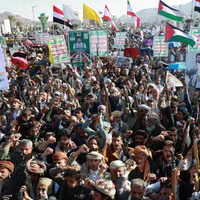
At state-organized rallies in February, marking the anniversary of the 1979 revolution, organizers set fire to effigies they identified as Baal, the Canaanite deity condemned as a false god in both the Bible and the Quran. In the middle of an economic crisis, the state staged its victory over its enemies as a piece of street ritual.
Months later, Salar Velayatmadar, a member of parliament, said the decision to stop publishing images of Mojtaba Khamenei had been taken on the advice of senior clerics in Qom, Mashhad and Najaf, and of security officials, so that Iran's enemies could not use "occult sciences," a term covering practices such as talismans, incantations and divination, to harm him.
With that, the occult had entered the official language of national security.
A distinction matters here. This is not an argument about what Iranians privately believe, and the point is not that millions of people hold beliefs about the sacred, as they do in every society. The question begins at the moment an unfalsifiable claim becomes the basis of political legitimacy, a security decision and the distribution of public money. At that point it has stopped being faith and become statecraft.
Nor is this a case of a secular state later contaminated by such thinking. The Islamic Republic's identity was bound from the beginning to a phrase that describes the country as belonging to someone who cannot be seen.
The absent owner
Speaking to government officials in September 1981, Ruhollah Khomeini, the cleric who led the 1979 revolution and founded the Islamic Republic, said: "The owner of this country is the Imam of Time." The line is recorded in volume 15 of Sahifeh-ye Imam, the official collection of his speeches and writings.
The Imam of Time is the twelfth imam of Shia Islam, who is believed to have vanished in the ninth century, to be alive and hidden, and to be destined to return. Iran's constitution frames clerical rule explicitly as an arrangement for the era of his absence.
Read as a theory of ownership, the consequences are considerable. If the country's true owner is absent, clerics become the interpreters of his will, and the Supreme Leader, rather than representing citizens, becomes the deputy of an absent proprietor. His accountability runs towards a realm no one can reach, not towards a public that could remove him.
Khomeini's arrival did not create popular belief in miracles and unseen forces, which long predated him. What the state he founded did was move those beliefs out of private life and into the machinery of power.
Manufacturing the sacred
The apparatus has been building sanctity around its leaders since the beginning.
The historian Olmo Gölz, in a study of the claim that Khomeini's face could be seen in the moon, drew on memoirs and newspapers of the period to trace both the spread of the rumor and its rejection by Khomeini himself and by a number of clerics. The denial did nothing to prevent the halo forming.
Video from Khomeini's first days back in Tehran shows a man touching his hand and then the hands of the crowd, passing on a blessing said to reside in the leader's body.
Decades later, Mohammad Saeedi, the Friday prayer leader of Qom, said that Ali Khamenei, the late supreme leader, had uttered the name of Imam Ali at the moment of his birth. The political significance of such a story lies not in efforts to establish whether it happened, but in the fact that the official apparatus uses it to build sanctity around a ruler.
The unseen world also has physical addresses. The most important is the mosque at Jamkaran, outside Qom, built on the belief that the hidden imam once appeared on the spot. Its own website describes the well where visitors drop written petitions addressed to him. Around such beliefs the state has built rituals, buildings, media, pilgrimage routes and an economy.
Set in that history, the absence of Mojtaba Khamenei is the most recent expression of the same logic. A leader with no verified image or voice governs a system whose true owner is also described as absent. What looks from outside like a crisis of decision-making, and has clearly produced disagreement inside the government, is material that this apparatus is equipped to convert into mystery, sanctity and waiting.
The security dimension is real, and the comparison with Osama bin Laden's final years captures it. But the difference is in the structure of meaning: the al-Qaeda leader hid in order not to be found, while the ruler of a country said to belong to a hidden imam can turn his own invisibility into symbolic capital.
In a secular system, a vanished leader is a legitimacy crisis. Here, absence was given meaning in advance by the architecture of belief.
Messages attributed to Mojtaba Khamenei extend the same logic outward, describing Iranians as the bearers of a historic mission and placing the public, state institutions and allied forces abroad in a chain of divine purpose. The ruler cannot be seen, but society is required to carry out his mission.
Who pays for it
None of this could have expanded so far without earthly backing.
The Venezuelan anthropologist Fernando Coronil, in The Magical State: Nature, Money, and Modernity in Venezuela, described how oil states use wealth from beneath the ground to stage a power that appears miraculous. In the Islamic Republic the metaphor has acquired a literal meaning.
In the state's first decades, oil revenue freed the government from depending on taxation, and therefore from bargaining with its citizens. Money came out of the ground and was spent building an apparatus that took its legitimacy from the sky. Oil remains the state's source of foreign currency: according to data from the analytics firm Kpler, China took about 1.2 million barrels a day from Iran in 2026.
On that foundation, the seminaries, the propaganda organizations, the shrines, religious foundations, devotional associations and cultural institutes became a network for reproducing this worldview.
Superstition in the Islamic Republic moved well beyond the pulpit and the amulet-writer: it acquired organizations, media, staff and budget lines.
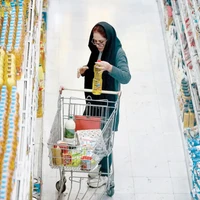
In the 2026 budget bill, the Supreme Council of Seminaries was allocated 74.5 trillion rials, about $37 million at market exchange rates, and the Seminary Services Centre 164.2 trillion rials, roughly $82 million. What those figures show is less their size than their presence: bodies of this kind now appear as line items in the national accounts. In the same budget, a meaningful pay rise for civil servants and pensioners was set aside in the name of controlling inflation, while the apparatus that produces and distributes religious legitimacy was left untouched.
The political function of these institutions is clear enough. They produce clerics, preachers, rituals, obedience, enemies and legitimacy. They build a world in which a foreign policy failure becomes a divine test, poverty becomes an occasion for patience, repression becomes the defense of faith, and the survival of the government becomes a sacred promise.
But the apparatus is no longer run on oil money alone. The 2026 bill projects that 87 percent of total budget resources will come from taxation. Oil was central to constructing this ideological edifice; taxes, inflation and the falling purchasing power of Iranians now pay to maintain it.
Magic did not produce oil for the Islamic Republic. The Islamic Republic used oil money to turn magic into an instrument of power.
In the republic of magic, the orders still come from heaven. The bill is increasingly paid out of people's pockets.