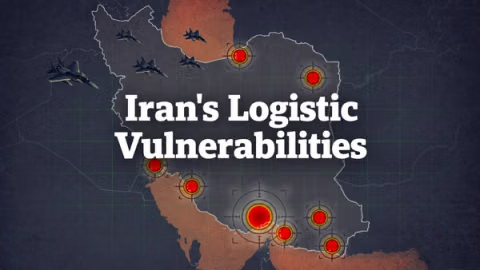
Iran’s IRGC intelligence arm is recruiting non-Iranian operatives to carry out attacks on ships, waterways and ports in East Asia, including two major Chinese ports, sources familiar with the plans told Iran International.
Iran International has obtained information about three alleged recruits and an operation being developed by Unit 4000, the Special Operations Division of the Islamic Revolutionary Guard Corps Intelligence Organization.
According to the sources, the unit recruited the three individuals through Shiite clerics in Thailand and Indonesia and has begun planning attacks in the Malacca and Bangka straits, as well as at Tanjung Priok Port in Indonesia and the Ningbo-Zhoushan and Shanghai ports in China.
The operations are being overseen by Brigadier General Rahman Moghaddam, commander of Unit 4000, according to Iran International’s sources.
Moghaddam was reported killed in an Israeli strike in Tehran on March 3, during the opening days of the war. Israeli security agencies identified him among senior Iranian intelligence figures killed in Israeli attacks.
Two days later, drones struck Nakhichevan in Azerbaijan in an attack Baku blamed on Iran, although Tehran denied responsibility. CNN later reported that Iranian officials believed the drone attack was retaliation for Moghaddam’s killing, which Tehran suspected had been carried out with Israeli assistance from Azerbaijan.
Iran International has now obtained information indicating that those reports of Moghaddam’s death were incorrect. According to the new information, he survived the strike and is now overseeing what the sources describe as a new phase of Unit 4000’s overseas maritime operations.
Moghaddam, a former deputy coordinator at the Defense Ministry’s Protection and Intelligence Organization, took charge around three years ago of Unit 4000, which has been linked to assassination and sabotage operations targeting opponents of the Islamic Republic and Israeli interests abroad.
Plans to target ships in Indonesian and Chinese waters
Two sources familiar with the IRGC’s activities said Moghaddam is overseeing a new program aimed at expanding Unit 4000’s operations into East Asian waters.
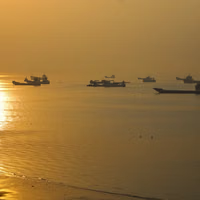
The sources said the unit is considering attacks on commercial, military and privately owned vessels transiting the Malacca Strait, one of the world’s most important shipping routes, as well as the Bangka Strait.
Operatives recruited by the unit have also developed plans targeting Tanjung Priok, Indonesia’s busiest port, and the major Chinese ports of Ningbo-Zhoushan and Shanghai, the sources said.
The plans would represent a significant geographical expansion of Iran’s maritime pressure campaign.
Since the war began on February 28, Iran has sought to restrict shipping through the Strait of Hormuz, while the Iran-backed Houthis in Yemen have disrupted maritime traffic around the Bab al-Mandab and the Red Sea.
In June, Mohsen Rezaei, then a senior adviser to Iran’s supreme leader and now secretary of the Supreme National Security Council, told CNN that Tehran could expand the conflict if the war and US naval blockade continued.
“If the war continues and the naval blockade is not lifted, we will drag the war to the Indian Ocean, the Bab al-Mandab Strait, the Red Sea and the Mediterranean,” Rezaei said.
Around the same period, Quds Force commander Esmail Qaani said a new “security belt” of Iran’s so-called resistance front would extend from the Strait of Hormuz to Bab al-Mandab and from the Persian Gulf to the Red Sea.
Sources identify recruitment links in Thailand and Indonesia
Iran International’s sources said Unit 4000 had been seeking non-Iranian recruits for its East Asian maritime operations, allowing Tehran greater deniability if an operation was exposed.
The recruits were brought to Iran for training before being assigned to operations in East Asia, according to the sources.
For recruitment in Thailand, Moghaddam approached Seyyed Momen Saketicha, a prominent figure in the country’s Shiite community, the sources said.
Saketicha was part of a Thai delegation that travelled to Tehran in 2023 and met Hamas representatives in efforts to secure the release of Thai nationals taken hostage during the October 7 attack on Israel.
The sources described Saketicha as a close associate of prominent Thai Shiite cleric Seyed Sulaiman Husaini, who heads the Al-Mahdi Foundation in Thailand and serves as imam of the Ruhollah Mosque in Nakhon Si Thammarat.
Husaini also has ties to Al-Mustafa International University, an Iran-based institution sanctioned by the US Treasury in 2020 over what Washington described as its role in facilitating recruitment for the IRGC Quds Force.
In 2012, after explosions in Bangkok that Thai and Israeli officials said were part of a plot targeting Israeli diplomats, Husaini blamed Mossad. A Thai court later convicted two Iranian men over the bomb plot. Iran denied involvement.
Focus on Indonesia
The bulk of Unit 4000’s planned East Asian maritime activity is centered on Indonesia, according to Iran International’s sources.
The sources said Moghaddam used two Indonesian clerics to identify potential recruits.
One is Zahir Yahya, chairman of Ahlulbait Indonesia, a national Shiite organization. Iran International’s sources described Yahya as an intermediary who introduced potential operatives to Unit 4000.
The second is Abdullah Saqqaf, whom the sources identified as head of the Amir al-Mu’minin seminary in Bogor and as having links to Al-Mustafa International University.
According to the sources, Saketicha, Yahya and Saqqaf introduced potential recruits to the IRGC, while two Unit 4000 figures — Mohsen Aghazadeh and Vahid Yekeh-Dehqan — were responsible for recruitment and training.
Three alleged recruits identified
Iran International has identified three individuals its sources say were recruited by Unit 4000 for covert maritime operations in East Asia.
The first, Pandu Yudhawinata, is an Indonesian operative who has previously been linked in counterterrorism reporting to Hezbollah and Iranian intelligence.
Yudhawinata was implicated in a failed 1994 Hezbollah plot to bomb the Israeli Embassy in Bangkok. Counterterrorism reporting has said he underwent training in Iran and later worked with Hezbollah networks in Southeast Asia.
Iran International’s sources also linked him to attacks in Sri Lanka.
The sources said Yudhawinata and two other Indonesian nationals, Ardiyanta Mutoha and Mohammad Hossein, travelled to Tehran for training intended to prepare them for covert operations at ports and waterways across East Asia.
The alleged plans come as Washington seeks to increase pressure on Iran’s oil exports while helping move energy shipments through the Strait of Hormuz.
US Treasury Secretary Scott Bessent said last week that the United States had helped move 130 million barrels of oil through the waterway over a two-week period while preventing Iranian exports.
Asia is particularly exposed to any expansion of maritime disruption. The International Energy Agency estimates that around 80% of oil passing through the Strait of Hormuz is destined for Asian markets.
The plans described to Iran International suggest that Unit 4000 may now be seeking to threaten another critical section of the energy and commercial shipping network serving Asia — extending the potential reach of Iran’s maritime campaign from the Middle East into some of the world’s busiest waters.
CENTCOM handout: US Sailors conduct night flight operations aboard USS George Washington as the ship sails in regional waters supporting operations in the Middle East.
US and Iranian forces exchanged attacks on Sunday after a week of intensive regional diplomacy failed to break the deadlock between Tehran and Washington, marking a renewed military escalation following heightened economic pressure.
The fighting resumed when US forces struck two Iranian launchers on Larak Island in the Strait of Hormuz, the first known American attack on Iran since late July.
A US official said Revolutionary Guards forces had been preparing to launch rockets carrying sea mines into the Strait. Iran’s Revolutionary Guards said the attack killed and wounded several Iranian fighters and civilians and vowed retaliation.
Hours later, the IRGC said it had launched a combined ballistic missile and drone attack on two US air bases in Jordan, claiming “heavy damage” to technical and maintenance infrastructure and areas where fighter jets were stationed at Muwaffaq Salti Air Base in Azraq and King Hussein Air Base.
There was no immediate independent confirmation of the damage claimed by Iran.
The renewed exchange came after a flurry of mediation efforts last week raised hopes that the two sides might find a path back toward negotiations.
Senior officials from Pakistan, Oman and Qatar visited Tehran within days of each other, with talks focused on de-escalation, the Strait of Hormuz and reviving stalled US-Iran diplomacy.
Qatar’s prime minister and foreign minister, Sheikh Mohammed bin Abdulrahman Al Thani, visited Tehran on Thursday, following visits by Omani Foreign Minister Badr Albusaidi and Pakistan’s army chief.
Iran and Oman had also been discussing a temporary navigational corridor through the Strait of Hormuz, but Tehran insisted any reopening would depend on Washington lifting its blockade and meeting other Iranian conditions.
President Donald Trump, meanwhile, said Thursday that Washington was not seeking talks with Iran.
‘Devastating response’
Iranian officials hardened their rhetoric following Sunday’s US attack.
IRGC spokesperson Sardar Mohebi called the strike a “strategic and fatal mistake” by the Trump administration in the course of its economic war, warning that Washington would face consequences “in both the economic and military arenas.”
Ebrahim Azizi, chairman of the Iranian parliament’s National Security and Foreign Policy Committee, said no attack “at any level” would go unanswered and threatened a “devastating, more painful and instructive” response.
The escalation came as Washington continued enforcing its blockade. US Central Command said Sunday that its forces had redirected 83 commercial vessels, disabled three and boarded two as of August 30 to ensure compliance.
Commercial traffic through Hormuz remains sharply depressed.
The number of visible commodity vessels transiting the Strait fell to five per day over the weekend, shipping data showed Monday, although the actual figure may be higher because some ships have switched off their tracking systems.
The return of military strikes quickly spilled into energy markets. Oil prices jumped more than 2% in early Monday trading following the Larak attack, with Brent crude rising 2.5% to above $90 a barrel and US West Texas Intermediate gaining 2.4%, Reuters reported.
An Iranian missile system is displayed in Azadi Square in Tehran, Iran, July 30, 2026.
Iran will target US economic interests if Washington maintains its maritime blockade, Supreme National Security Council Secretary Mohsen Rezaei said Thursday, as the Trump administration steps up efforts to tighten Iran’s economic isolation.
“If the blockade continues, we will target US economic interests 100 percent, with intensity and force,” Rezaei told Lebanon’s Al-Manar television.
Rezaei also warned Israel against resuming the war, saying any new conflict would be different from previous rounds.
“We will send Netanyahu to hell,” he said, adding that the Israeli prime minister had made “major mistakes” that had brought Israel closer to its end.
Tehran has taken a tougher stance since a ceasefire agreed in June failed to produce a broader agreement and the subsequent MoU expired, despite mounting economic problems and Washington’s recent announcement of an “economic D-Day” against Iran.
US Treasury Secretary Scott Bessent is preparing to press G20 finance ministers next week to comply with Washington’s sanctions on Iran, according to AFP.
President Donald Trump said Thursday that Tehran was “begging to make a deal,” declaring that “Iran Is a Failing Nation!” in a social media post.
Rezaei shrugged off Trump’s Operation Economic Fury, claiming Iran had already “broken the maritime blockade” during the ceasefire and exported between 70 million and 80 million barrels of oil.
He said oil sales had returned to pre-sanctions levels and that Tehran had established new export routes that were gradually expanding.
The US military rejected that claim hours later.
“Iran has exported zero oil from its shores since we resumed the naval blockade in mid-July,” US Central Command said, adding that other countries in the region had exported 750 million barrels of oil from the Persian Gulf during the same period.
Rezaei also said Iran and Oman had agreed on a shipping corridor running partly through Omani and partly through Iranian waters.
Commercial vessels would be allowed through a designated central channel in the Strait of Hormuz if the United States met Iran’s conditions, he said.
Rezaei added that mediators had asked Tehran to set out its conditions for reopening the strait and that Iran was preparing a list of demands, including an end to the war in the region.
Abolfazl Shekarchi, spokesman for Iran’s armed forces, speaks at an event in Tehran.
The Iranian general who has threatened Persian-language journalists abroad as potential military targets has a history of incendiary attacks on critics and was among officials who initially dismissed reports that Iran had shot down Flight PS752.
Abolfazl Shekarchi, a brigadier general and senior spokesman for Iran’s armed forces, said on Wednesday journalists working for Persian-language media abroad could be placed on a list of military targets.
“Media outlets such as Iran International, BBC Persian and Radio Farda are directly connected to Mossad, the US Central Intelligence Agency and other foreign intelligence services and receive support from them,” he said.
He called the employees of the Persian-language outlets “soldiers of Israel and the United States,” adding: “They can be included in the bank of military targets because, from our perspective, these are not media outlets.”
He provided no evidence for the accusations.
The remarks extend years of military and ideological rhetoric from Shekarchi against people and organizations Iranian authorities consider hostile, from protesters and opponents of compulsory hijab to foreign officials and media organizations.
PS752 reports called ‘absolute lies’
Iran's Revolutionary Guards shot down Ukraine International Airlines Flight PS752 shortly after takeoff on January 8, 2020, killing all 176 people aboard.
Reports that an Iranian surface-to-air missile had brought down the Boeing 737 were “absolute lies” and “ridiculous,” Shekarchi said as evidence pointing to a missile strike emerged.
Abolfazl Shekarchi, spokesman for Iran’s armed forces, speaks on a program about the 12-day war, with centrifuge replicas forming the backdrop, September 24, 2026.
Shekarchi portrayed the reports as psychological warfare against Iran, while Iranian authorities initially attributed the crash to a technical problem.
Iran's armed forces acknowledged three days after the disaster that its air defenses had shot down the passenger plane, saying it had been mistakenly identified as a hostile target during a period of heightened confrontation with the United States.
The admission triggered protests in Iran and abroad and accusations that authorities had sought to conceal responsibility for the disaster.
Shekarchi's categorical denial became one of the most prominent official responses to early reporting on PS752 before the armed forces acknowledged that an Iranian missile had brought down the aircraft.
His latest accusations against foreign-based Persian-language media employ a similar framework, casting journalism and information as components of an enemy operation.
Protesters and hijab opponents
Shekarchi has also directed security and military rhetoric at domestic dissent.
During nationwide protests in 2022, Shekarchi described demonstrators as deceived and accused the United States of seeking to manufacture deaths to sustain the unrest.
The protests spread across Iran following the death in morality-police custody of Mahsa Amini, a 22-year-old woman detained over compulsory hijab rules.
His rhetoric had already extended to opponents of compulsory hijab.
Participants in a campaign encouraging women to appear in public without mandatory head coverings, along with artists supporting them, were “forces of Satan,” Shekarchi said.
Thousands detained over coronavirus information
Shekarchi also played a public role in the authorities' response to information circulating during the coronavirus pandemic.
Around 3,600 people had been detained by police and the Basij over what authorities characterized as rumors or false information about the outbreak, with more than 1,100 judicial cases opened, Shekarchi said in April 2020.
The figures showed the scale of the authorities' effort to police information about the pandemic as questions mounted over infection and death figures.
Shekarchi also drew criticism after minimizing coronavirus deaths among military personnel and healthcare workers.
The deaths of four doctors, nurses and paramedics were “not a number” of significance, Shekarchi said during the early months of the pandemic.
The coronavirus outbreak became another period in which Iranian authorities treated the dissemination of information as a security matter, with people detained or prosecuted over online material about the disease.
Threats beyond Iran
Shekarchi's rhetoric has also targeted Israeli and US officials and personnel abroad.
Israel's destruction was Iran's “greatest aspiration,” Shekarchi said in 2021, presenting it as an objective from which the Islamic Republic would not retreat.
Even tourist and recreational locations around the world would not necessarily provide safety for American and Israeli officials targeted by Iran, Shekarchi warned in March.
“From now on, based on the information we have on you, tourist destinations, resorts, and recreational and leisure venues around the world will no longer be safe for you.”
Abolfazl Shekarchi, spokesman for Iran’s armed forces, visits a news agency in Tehran.
Earlier, responding to threats by US President Donald Trump against Iran's leadership, Shekarchi said an attack on Supreme Leader Ali Khamenei would prompt Iran to “set their world on fire” and leave its adversaries without a safe haven.
“Trump knows that if a hand is raised against our leader, not only will we decisively and courageously cut off that hand, but we will set their world on fire, give them no respite and leave them no safe haven.”
His latest remarks extend such language explicitly to journalists working outside Iran.
Iran's drawdown of strategic fuel reserves has reached a “red alert” level and could exhaust remaining stocks within weeks, fueling disagreement between President Masoud Pezeshkian and the Revolutionary Guards, informed sources told Iran International on Wednesday.
The reserves, intended to cushion severe shortages and emergencies, have been tapped at a pace in recent weeks that has prompted warnings from experts within the state about the consequences of continuing, the sources said.
Remaining fuel stocks could be depleted within several weeks if withdrawals continue at the current rate, limiting the government's ability to offset disruptions to domestic production or imports and prevent widespread supply stoppages, according to the sources.
The growing reliance on strategic stocks has also opened a dispute between the government and the Revolutionary Guards over how long withdrawals should continue, they said.
Revolutionary Guards officials oppose unrestricted use of the reserves, while government officials want to keep drawing on them to keep filling stations operating and contain public concern over shortages and higher prices, the sources added.
Daily shortfall strains supplies
Iran produces about 120 million liters of gasoline a day but consumes around 135 million liters, leaving a daily deficit of about 15 million liters.
Ali-Akbar Saghab Esfahani, head of Iran's Energy Optimization and Strategic Management Organization, put the daily gasoline shortfall at 14 million to 15 million liters on August 15.
Before the shortage intensified, imports covered about half the gap, much of it through fuel supplies from Russia, the sources said.
A US maritime blockade, Ukrainian strikes on Russian refining infrastructure and the closure of the Caspian Sea supply route have sharply restricted Iran's ability to maintain those imports, according to the sources.
Iranian diplomatic efforts to secure alternative fuel supplies from allies and neighboring countries have yet to produce an agreement.
Britain and Qatar have meanwhile backed a new US economic campaign against the Islamic Republic, as Washington seeks to restrict its financial, shipping and energy trade routes.
Fuel moved to reopen Tehran stations
Gasoline shortages have reached Tehran, forcing some filling stations to close, according to information obtained by Iran International.
Authorities have ordered fuel transferred from neighboring provinces to reopen some stations in the capital, but dozens of others remain at risk of closure, the sources said.
Videos and messages sent by citizens have also documented long lines, station closures and difficulties obtaining gasoline in Tehran, Alborz, South Khorasan and Razavi Khorasan provinces.
The Tehran regional manager of the National Iranian Oil Products Distribution Company attributed temporary closures at some stations to a sudden rise in demand and congestion along fuel transportation routes.
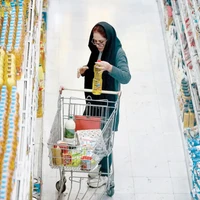
Reports from citizens suggest the disruption is also affecting transportation costs. Several people told Iran International that fares charged by ride-hailing services Snapp and Tapsi had risen sharply as fewer drivers accepted trips.
“Gas stations are crowded, GPS doesn't work and you can't work for Snapp. Fares have gone up, but there are no drivers to accept the trip. We're left without money and without gasoline,” a Tehran resident told Iran International.
Another citizen said the cost of a regular Snapp journey had risen from 1,000,000 rials last month to 3,200,000 rials, while a resident of Shiraz described steep increases in ride-hailing fares despite no gasoline shortage there.
A Snapp driver said fuel consumption from running air conditioning for passengers required him to refill about every two days, but his quota had been exhausted and purchases outside the quota were limited to 25 liters.
Other messages sent to Iran International accused authorities of deliberately restricting supplies before a possible price increase.
“When they want to raise the price of cooking oil, they say there isn't any. When they want to raise the price of rice, they say there isn't any. But after the price goes up, everything is available,” a resident of Mashhad said. “Now it's gasoline's turn.”
The Mashhad resident said filling stations were not receiving enough gasoline but predicted supplies would become readily available if authorities raised prices.
Another citizen questioned why a gasoline deficit of 10% to 20% was causing such widespread disruption and accused authorities of deliberately making fuel scarce to make consumers more willing to accept higher prices.
File photo shows a man filling his car with gasoline at a gas station in Tehran.
“Many gas stations are either closed or have no gasoline to distribute,” a Tehran resident said, also accusing the government of diverting fuel for foreign currency earnings.
Another message accused authorities of using the shortage as justification for a gasoline price increase and manipulating distribution to create congestion at filling stations and reduce resistance to higher prices.
“Half of Pakdasht's gas stations have no gasoline and the rest are extremely crowded,” a resident said. “They are trying to force people to accept higher gasoline prices.”
Government weighs three options
The government is considering three responses to the shortage: limiting gasoline supply to domestic production levels, reducing subsidized quotas and selling additional consumption at the unrestricted price, or shifting fuel quotas from vehicles to individuals.
Concern that higher gasoline prices could trigger protests has encouraged the government to use strategic reserves to buy time, the sources said.
Fuel price increases have been politically sensitive in Iran. A sudden rise in gasoline prices in November 2019 triggered nationwide protests followed by a deadly state crackdown.
The attempt to delay harder choices by drawing on emergency stocks is now creating another problem, according to Iran International's sources: the buffer intended to protect Iran during severe supply disruptions may itself be only weeks away from exhaustion.
Iranian security forces used mosques across Tehran to deploy personnel, monitor protesters and support operations during the January crackdown, evidence obtained by Iran International shows.
Intercepted radio communications, video footage and eyewitness accounts point to security forces operating from several mosques in and around the capital on January 8 and 9, when protests drew large crowds and authorities launched a deadly crackdown.
In one intercepted exchange, security personnel discussed deploying forces and equipment inside Imam Hossein Mosque, which Iran International geolocated to the intersection of Sattari and Mokhbari in western Tehran.
Witnesses described security operations around the mosque as electricity was cut in the area and surveillance drones flew overhead.
Other locations identified through footage and witness accounts included mosques along Andarzgoo Boulevard and Qolhak Grand Mosque.
Satellite image showing Imam Hossein Mosque at the intersection of Sattari Highway and Mokhbari Street in western Tehran, Iran.
Witnesses also described security personnel positioned outside some mosques engaging protesters before forces inside emerged to beat and arrest them.
Taken together, the evidence suggests some mosques served not simply as gathering points but as bases from which security forces monitored and confronted protesters.
Shooting from rooftops
Several eyewitnesses described mosque rooftops being used as observation or firing positions.
One witness described several people positioned on the roof of a mosque near Kashani Boulevard in western Tehran on January 8.
“The sound of a stun grenade could be heard,” the witness said. “Once the crowd scattered a little, they started shooting from above.”
In Naziabad in southern Tehran, another witness described protesters coming under fire from elevated positions.
“They were being shot at from the rooftops of mosques and Basij bases,” the witness said.
Witnesses in the area described security forces firing directly at crowds and from elevated positions, with a number of protesters wounded or killed.
Video footage obtained by Iran International also showed surveillance drones flying above crowds during the protests.
Other witnesses described security personnel monitoring protesters with cameras from inside mosques. Some said windows at mosque buildings had been broken to create positions from which weapons could be fired and described seeing weapons fitted with laser sights.
In several areas, witnesses also said security forces pursued protesters who sought refuge in residential buildings or private parking garages, beating some of those sheltering inside and preventing injured protesters from leaving to seek medical treatment.
Iran International was not able to independently verify each of those accounts or determine who was responsible for individual shots seen or heard in footage.
Allegations of fires
Some witnesses alleged that security personnel themselves damaged or set fire to mosques that authorities could subsequently portray as having been attacked by protesters.
One witness also said security forces left gas valves open at a mosque before departing, creating the risk of a fire or explosion.
Iran International could not independently verify those accounts or establish whether any fires at the sites were deliberately started by security forces.
The allegations are significant because Iranian authorities repeatedly portrayed damage to mosques and other religious sites during the January unrest as evidence of violence by protesters.
Civilian sites used in crackdowns
The apparent use of mosques as operational sites in Tehran follows evidence that security forces used other civilian buildings during the January crackdown.
A separate Iran International investigation in neighboring Alborz province found security forces using a public library as an ammunition store and staging point, schools and mosques as gathering places for armed personnel, and the roof of a cinema as a firing position.
There is also precedent for security forces operating from or around religious sites during earlier protests. Human Rights Watch documented security forces firing on protesters and bystanders from rooftops around Zahedan’s Grand Mosalla prayer hall and Makki Mosque during the September 2022 crackdown known as Bloody Friday.
The United Nations separately documented the use of live ammunition, tear gas and metal pellets against protesters following Friday prayers in Zahedan, with footage analyzed by the UN appearing to show security forces firing from rooftops.
The evidence gathered in Tehran suggests some mosques became part of the security apparatus during the January crackdown: used to assemble personnel and equipment, monitor crowds and, according to multiple eyewitnesses, confront protesters.