• العربية
  • فارسی
Brand
  • Iran Insight
  • Politics
  • Economy
  • Analysis
  • Special Report
  • Opinion
  • Podcast
  • Iran Insight
  • Politics
  • Economy
  • Analysis
  • Special Report
  • Opinion
  • Podcast
  • Theme
  • Language
    • العربية
    • فارسی
  • Iran Insight
  • Politics
  • Economy
  • Analysis
  • Special Report
  • Opinion
  • Podcast
All rights reserved for Volant Media UK Limited
volant media logo

Iran war was a step toward global Islamic rule, IRGC chief says

Aug 15, 2026, 06:52 GMT+1

Ahmad Vahidi, commander-in-chief of the IRGC, told Iran’s armed forces that their performance during six months of war had demonstrated that “Islam can be made to rule the world.”

In a message published on Saturday, Vahidi praised IRGC, army, police and Basij forces, saying they had “brought the most heavily armed army in the history of the world to its knees.”

He compared their operations to the early Islamic battles of Badr and Khaybar and said that under Supreme Leader Mojtaba Khamenei’s command, Iranian forces had “opened the gates of uprising for the oppressed of the world.”

Vahidi also said their campaign had revived hopes of defeating dominant global powers and predicted that the world would soon be more prepared for what he described in religious terms as the advent of ultimate Islamic rule.

Most Viewed

Iran hits back after Trump says he may declare Hormuz US territory
1

Iran hits back after Trump says he may declare Hormuz US territory

2

Land routes cannot replace Iran’s blocked sea trade, chamber official warns

3

Iran seals dozens of businesses in renewed hijab crackdown

4
INSIGHT

A silent letter on state TV turned Iran's top diplomat into an enemy of the faith

5
INSIGHT

How Iran’s Supreme National Security Council works, and who gets a vote

Banner
Banner
Banner

Spotlight

  • Fear of unrest complicates Iran’s gasoline dilemma
    INSIGHT

    Fear of unrest complicates Iran’s gasoline dilemma

  • Iran’s security reshuffle lays bare political drama at the top
    ANALYSIS

    Iran’s security reshuffle lays bare political drama at the top

  • Tehran weighs benefits of brief Hormuz reprieve
    INSIGHT

    Tehran weighs benefits of brief Hormuz reprieve

  • A silent letter on state TV turned Iran's top diplomat into an enemy of the faith
    INSIGHT

    A silent letter on state TV turned Iran's top diplomat into an enemy of the faith

  • Iranian forces used cultural sites, medical clinics in Alborz crackdown

    Iranian forces used cultural sites, medical clinics in Alborz crackdown

  • Tehran’s reshuffle leaves no pragmatic opening
    OPINION

    Tehran’s reshuffle leaves no pragmatic opening

•
•
•

More Stories

Sanctions alone cannot topple Iran’s regime, former Treasury official says

Aug 15, 2026, 03:35 GMT+1
•
Kambiz Tavana
100%
Kerri Bitsoff (left) in an interview with Iran International's Kambiz Tavana in Washington DC on August 13, 2026.

Sanctions can make Iran’s military and nuclear activities costlier and more difficult but cannot bring down the Islamic Republic on their own, former US Treasury official and weapons procurement expert Kerri Bitsoff told Iran International.

“Sanctions can't topple a regime on their own. That's not what they're for,” said Bitsoff, who previously worked at the Treasury Department’s Office of Foreign Assets Control, the agency responsible for administering and enforcing US economic sanctions. “They are intended to increase pressure.”

For Bitsoff, who worked on nonproliferation and weapons procurement at OFAC and is now executive director of investigations at TANGOS, the distinction is central to understanding what decades of US sanctions against Iran can and cannot accomplish.

Rather than expecting sanctions themselves to produce political change, she said their effect should be measured by how much they increase the cost and difficulty of the activities Washington is trying to constrain.

“They make everything that the regime does related to those more expensive, slower and more difficult to obtain,” she said, referring to activities such as Tehran’s nuclear and weapons programs. Sanctions, she added, are also intended “to set conditions for something else to happen” and “can't be alone.”

That argument comes after years in which successive US administrations have expanded, eased or more aggressively enforced different layers of sanctions against the Islamic Republic. Washington restored broad nuclear-related sanctions after withdrawing from the 2015 nuclear deal in 2018, targeting areas including Iran’s banking, energy and shipping sectors. President Donald Trump launched a renewed “maximum pressure” policy in February 2025, directing the Treasury Department to pursue a “robust and continual sanctions enforcement campaign” aimed at denying Tehran and its allied groups access to revenue.

Bitsoff said those measures should not be judged simply by how many Iranian individuals, companies or organizations Washington places on sanctions lists.

Enforcement matters more than numbers

“Numbers are not a good measure of the impact of sanctions and whether they are important,” Bitsoff said. “You can sanction thousands of individuals and entities within Russia, within Iran, within North Korea, and that's not really the answer.”

The more meaningful test, she said, is whether sanctions change the behavior of actors outside the targeted country — the banks, buyers, suppliers, shipping companies and intermediaries that allow sanctioned governments to continue obtaining money and material.

That often requires Treasury officials to identify specific weak points in complex networks rather than simply placing restrictions on an entire sector. Bitsoff described sanctions policy as operating on two levels: broad measures designed to restrict areas such as oil revenue or access to the financial system, and day-to-day operational measures targeting individual transactions, companies and procurement networks.

Weapons procurement provides one example of how that pressure works. Sanctions may not stop Iran from producing a missile or drone, Bitsoff said, but they can increase the cost of securing the components needed to build them and force manufacturers to rely on inferior alternatives.

“You raise the cost of procuring parts and components,” she said. “You force them to get worse parts and components, so their finished weapons are less effective.”

The effects can take years to become visible, she said, and may eventually be measured in missile failure rates or the ability of adversaries to jam drones and develop other countermeasures.

Iran’s reliance on foreign components has remained a focus of US sanctions. Treasury actions in 2025 and 2026 targeted networks in China, Hong Kong, the UAE and elsewhere accused of supplying Iran with drone components, missile propellant ingredients and other military goods. In June, OFAC sanctioned another group of China- and Hong Kong-based individuals and companies it said had supported weapons procurement for the Revolutionary Guards and Iran’s defense ministry.

Oil sanctions work differently, Bitsoff said. Rather than necessarily preventing a barrel of Iranian crude from reaching a customer, the restrictions can make every stage of that journey more expensive.

An Iranian shipment may have to pass through several intermediaries, rely on aging tankers carrying higher insurance costs, undergo ship-to-ship transfers and be sold at a discount to a limited pool of buyers willing to accept the risk of dealing in sanctioned oil. Ship managers, operators and others involved in the trade may also demand premiums because they risk becoming sanctions targets themselves.

“By the end of it,” Bitsoff said, Iran can be forced to absorb a “huge discount,” meaning export volumes alone do not provide a complete measure of whether sanctions are working.

The US Treasury has described many of the same methods in its recent actions against Iran’s oil trade, citing front companies, intermediary brokers, ship-to-ship transfers, falsified documents and manipulation of vessel identities. In April, Treasury said China was buying about 90% of Iran’s oil exports and that independent Chinese refineries, commonly known as teapots, accounted for most of those purchases.

Bitsoff said enforcement can therefore be thought of as a dial that Washington can turn up or down even when the underlying sanctions remain on the books.

She pointed to the period after the United States left the nuclear agreement in 2018, when tougher enforcement drove major buyers with exposure to the US financial system away from Iranian oil.

She contrasted that with the early years of the Biden administration, when she argued Washington eased enforcement as it sought to revive negotiations with Tehran, allowing Iran’s oil trade with China to adapt around smaller buyers with less exposure to the US financial system.

“The whole idea is to change behavior,” she said. “You don't wanna just sanction something and then walk away.”

Without continued enforcement, she said, companies treat a designation as a one-time event and find ways to adjust their operations around it. “If you don't keep up with that, if you don't make that enforcement visible, people are just going to keep doing what they want to do.”

Iran's sanctions evasion machine

Keeping up has become more difficult because Iran has spent years developing mechanisms to circumvent the restrictions imposed on it, Bitsoff said, describing a system largely developed by the Revolutionary Guards and the broader state during the intense sanctions pressure of the early 2010s.

“They have a sanctions evasion machine that works pretty well,” she said.

The core of that system has remained relatively consistent, relying on shadow banking, buyers willing to trade with Iran and efforts to avoid transactions vulnerable to the US financial system. But Bitsoff said Tehran has repeatedly adapted the mechanics when new opportunities appear, from deceptive tanker practices and cash smuggling to newer methods involving cryptocurrency.

“The pattern I can discern is that they'll just use anything at their disposal to evade sanctions,” she said.

China now occupies an especially important place in that system, both as the dominant destination for Iranian oil and as a source of components used by Iran’s military industries. The Treasury Department has increasingly targeted Chinese refiners, ports, shipping companies and procurement networks as part of the maximum-pressure campaign, including a June action against China- and Hong Kong-based actors accused of facilitating weapons purchases for the IRGC and defense ministry.

“Most evasion of sanctions, especially related to Iran, happens through China,” Bitsoff said. “Those are the front companies that move money. They're the buyers of oil. They're the suppliers of weapons components.”

That makes pauses in enforcement against China particularly significant, she argued, because companies and intermediaries watch US actions when deciding how much sanctions risk they are prepared to accept.

Bitsoff said this helps explain why sanctions cannot be regarded as an on-off mechanism capable either of completely stopping Iran’s activities or, at the other extreme, being dismissed as ineffective because those activities continue. Their purpose, in her view, is degradation: reducing revenues, increasing costs and making military and nuclear programs harder to sustain.

That pressure also has a domestic dimension, she said, because Iran’s leadership must contend with economic mismanagement while the public sees resources being directed toward military programs and allied armed groups rather than economic opportunity at home.

“The population knows that it's funneling money not to them, not to economic growth, not to opportunities, but back to its proxies, back to its nuclear program, back to its weapons program,” Bitsoff said.

But she stopped short of arguing that economic pressure can determine the Islamic Republic’s political future. Instead, she said sanctions can help establish the conditions in which other forces operate, with political change ultimately depending on Iranians themselves.

“The Iranian people are the ones that have to use that pressure,” Bitsoff said, adding that alongside sanctions, the United States should be “thinking of any possible way we can support that.”

Iran hits back after Trump says he may declare Hormuz US territory

Aug 14, 2026, 22:28 GMT+1
100%
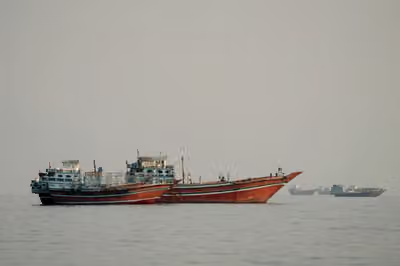
An Iranian child plays by the Strait of Hormuz as ships transit the strategic waterway.

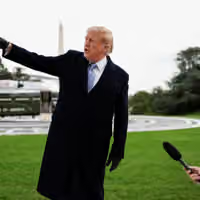
President Donald Trump said he may soon declare the Strait of Hormuz US territory as shipping through the waterway nearly stopped and Tehran insisted it alone would decide when the strait opens or closes.

The Strait of Hormuz was unusually quiet Friday, with shipping traffic near a standstill. Hours later, as the day turned to Saturday in Iran, President Donald Trump said in New York that he may soon declare the strategic waterway “a territory of the United States,” drawing an immediate assertion from Tehran that the strait remains Iranian and under its command.

“Pretty soon I’ll be declaring the Strait of Hormuz a territory of the United States,” Trump said during remarks at the Police Academy Center for Training and Intelligence.

Deputy Foreign Minister Kazem Gharibabadi responded that Iran would decide when the strait opened or closed and would continue what he described as its blockade until Washington accepted its “strategic defeat.”

“The Strait of Hormuz has been Iranian, is Iranian, and will remain Iranian,” Gharibabadi wrote on X, adding that the waterway would be “closed and opened under Iran’s command.”

Hormuz traffic nearly stops

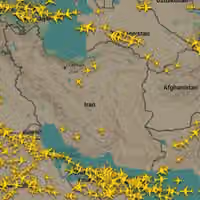
The competing claims over the waterway came as actual traffic through it fell to extremely low levels.

Kpler data showed only two vessels passed through the Strait of Hormuz on Friday, with no crude oil shipments visible.

Nine vessels crossed Thursday and five Wednesday, compared with an August average of 12. More than 130 ships traversed the strait daily before the US-Israeli war on Iran began in February.

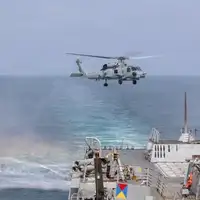
US Central Command said Friday that its forces had redirected 62 commercial vessels, disabled three and boarded two as of Aug. 14 while enforcing the US blockade against Iran.

Secretary of War Pete Hegseth said Thursday that the United States could maintain that blockade “indefinitely” by rotating ships in and out.

Oil prices also rose Friday as faltering efforts to end the Iran war and the prospect of an extended blockade kept geopolitical risks elevated. Brent crude gained 0.7% to $87.68 a barrel, while US crude rose 0.3% to $81.49.

Pressure grows as talks remain unsettled

Washington also kept up its economic pressure on Tehran. Trump highlighted Treasury Secretary Scott Bessent’s remarks on “unprecedented economic isolation” for Iran by sharing a Newsmax report on Truth Social. Bessent said Thursday that the United States would apply measures against Iran that had “never been seen.”

Canada added sanctions Friday on five Iranian officials over activities it said obstructed navigation rights in and around the Strait of Hormuz. Global Affairs Canada said the measures targeted senior officials, including members of the IRGC, involved in military, legal and communications activities linked to threats against the waterway. Tehran, meanwhile, stopped short of committing to renewed negotiations.

Foreign Minister Abbas Araghchi said Friday that no decision had been made to resume talks with Washington, semi-official ISNA reported.

He said Qatar and Pakistan were continuing to exchange messages and remain in contact with Iran, but stressed that this “does not mean negotiations.”

Araghchi also said the Islamabad memorandum of understanding referred to an “end to the war,” rather than a ceasefire, rejecting the idea that there was a 60-day truce requiring an extension. He said previous diplomatic channels were no longer effective and that Iran was working on a temporary path that could later develop into a final framework.

Pakistan continued to push implementation of the June 18 Islamabad memorandum, with Foreign Minister Ishaq Dar calling it the “only way forward.” Iraq also said Friday it was negotiating with both the United States and Iran to secure passage of its oil exports through Hormuz.

The waterway itself was nearly still Friday, but the dispute over who controls it was not. Washington is sustaining military and economic pressure, Tehran is asserting authority over passage through the strait, and neither side has yet moved back into formal negotiations.

Tehran is likely to wake Saturday to a new round of official and media reactions to Trump’s remarks on Hormuz, just as much of the West heads into a summer weekend.

Fear of unrest complicates Iran’s gasoline dilemma

Aug 14, 2026, 21:08 GMT+1
•
Maryam Sinaiee
100%
A man gestures towards the camera as he fills up his car at a gas station in Tehran, Iran

The aborted move in Kerman Province revived one of the most politically explosive questions in Iran: how to curb gasoline consumption without repeating the upheaval that followed the last major nationwide price increase in 2019.

Authorities in Kerman announced Thursday that gasoline consumed beyond the existing monthly quota would be sold at 872,000 rials per liter, roughly 17 times the current non-quota price. The measure was halted within hours, fueling speculation that it had been intended as a test for broader changes.

Under the current system, private-car owners receive 60 liters a month at 15,000 rials per liter and another 50 liters at 30,000 rials. Once that allocation is exhausted, gasoline costs 50,000 rials per liter.

The last nationwide gasoline price increase, imposed without warning in November 2019, triggered widespread protests and a deadly crackdown.

After the Kerman scheme was withdrawn, Esmail Saghab-Esfahani, vice president and head of the Organization for Optimization and Strategic Energy Management, appeared on state television to assure citizens that the government had no plan to increase gasoline prices.

Fars news agency, which is affiliated with the Revolutionary Guards, cited a government source Friday as saying an increase had been ruled out for now.

Mohammad-Saeed Ahadian, an adviser to parliament speaker Mohammad-Bagher Ghalibaf, said the heads of the three branches of government had decided against an increase and were considering alternatives.

A widening gasoline deficit

The retreat does little to resolve the problem that prompted the debate: Iran is increasingly consuming more gasoline than it produces.

Saghab-Esfahani said gasoline consumption had reached around 135 million liters a day, compared with domestic production of approximately 121 million liters. The daily shortfall must be covered through imports or strategic reserves.

Saghab-Esfahani also said the recent war had damaged some gasoline production capacity and made imports through southern Iran more difficult. He warned that the gap between production and consumption could reach 70 million liters a day within three years.

Increasing production enough to address the problem would require between $13 billion and $30 billion in investment, he said, money the government cannot afford.

Signs of tightening supply have already emerged, with images circulating on social media in recent days showing long lines of vehicles at fuel stations.

Searching for an alternative

With economic growth below zero and access to foreign currency under pressure, the government faces a choice between raising prices and fundamentally changing how gasoline subsidies are distributed.

One alternative gaining support would shift subsidized gasoline quotas from vehicles to individuals, an idea long promoted by hardliners and associated with former presidential candidate Saeed Jalili.

A version of the scheme was briefly tested on Kish Island under President Ebrahim Raisi before being abandoned.

Supporters argue that the current system disproportionately benefits wealthier households with multiple cars, while more than 40% of Iranian households without private vehicles receive no direct benefit.

Under the proposed model, individuals would instead receive gasoline allocations linked to their national ID or bank accounts and could use or sell them.

Economist Sadegh al-Hosseini, a prominent supporter of the proposal, argued that control over the subsidy should effectively be transferred from the state to citizens.

“Gasoline quotas should be given to people for free based on production, and people themselves should determine the price by trading their quotas,” he wrote on X.

Divisions over reform

The abrupt launch and cancellation of the Kerman scheme has exposed wider divisions within Iran’s political establishment over how to address the fuel problem.

Saghab-Esfahani supports linking gasoline quotas to national ID numbers rather than simply raising prices. His intervention drew criticism from reformist figures who warned of the political risks surrounding any changes to gasoline policy.

Abdollah Ramezanzadeh, spokesman for former President Mohammad Khatami’s government, criticized the handling of the issue in a post addressed to Pezeshkian.

“Entrusting the determination of energy prices—the most political and perhaps the most security-sensitive economic issue in the country—to someone with minimal political and security experience and no experience in crisis management has caused the current confusion over gasoline prices,” he wrote.

“The society is agitated and you have no room for mistakes.”

Ali Gholhaki, a political activist close to Ghalibaf, also pointed to resistance elsewhere in the establishment.

“Using pricing tools under the current circumstances to control fuel consumption is highly sensitive, and some important institutions in the country are also opposed to it,” he wrote.

The Kerman reversal leaves the underlying problem untouched. Iran has a widening gasoline deficit, but the most obvious corrective tool—higher prices—remains perilous under the long shadow of the 2019 upheaval.

Iran’s security reshuffle lays bare political drama at the top

Aug 14, 2026, 19:10 GMT+1
•
Jason M. Brodsky
100%
File photo shows former IRGC chief-commander Mohsen Rezaei attending a conference in Kerman on November 26, 2025. / Photo by ISNA

The ascension of Mohsen Rezaei as secretary of Iran’s Supreme National Security Council underscores that there is much political drama beneath the surface of the Islamic Republic’s portrayal of strength as the Trump administration tries to end the war.

The resignation of Mohammad Bagher Zolghadr, the former deputy commander-in-chief of the Islamic Revolutionary Guard Corps (IRGC), from the SNSC positions his tenure as secretary as the shortest in the history of the Islamic Republic.

Zolghadr was demoted, becoming a political advisor to the supreme leader. Rezaei's appointment demonstrates both the militarization and fragmentation of the Islamic Republic’s elite.

The careers of Rezaei and Zolghadr have multiple parallels. Zolghadr served under Rezaei when he was commander-in-chief of the IRGC. Zolghadr was Rezaei’s chief of the IRGC’s joint staff.

Both men later became secretary of the Expediency Council, which advises the supreme leader and arbitrates disputes between parliament and the Guardian Council, after their long tenures in the IRGC’s top brass. The Expediency Council has traditionally been used by Iran’s supreme leaders as a landing spot for the old guard after service in more consequential positions.

The return of these figures to Iran’s top ranks reflects the hollowing out of the Islamic Republic’s military leadership following US and Israeli airstrikes in 2025 and 2026.

This is not Rezaei’s first stint on the SNSC. As commander-in-chief of the IRGC, he served as an SNSC member. But the last time he was officially part of its deliberations was in 1997.

  • How Iran’s Supreme National Security Council works, and who gets a vote

    How Iran’s Supreme National Security Council works, and who gets a vote

In becoming secretary of the SNSC, he is the first former IRGC commander-in-chief to serve as secretary. He joins Ahmad Vahidi, the current IRGC chief, who was Quds Force commander under Rezaei’s tenure at the helm of the Guards, who holds a seat on the SNSC.

Rezaei also has a long history with another SNSC member Speaker of Parliament Mohammad Bagher Ghalibaf, who rose through the ranks of the IRGC—as deputy commander of the fearsome Basij and commander of the Khatam al-Anbiya Construction Headquarters—under Rezaei’s leadership. In 1997, when Rezaei departed from the IRGC’s top position, Ghalibaf signed a letter to Rezaei praising him as a “mentor.”

Both Ghalibaf and Rezaei have also been political rivals, unsuccessfully running against each other as candidates for president, for example in 2013. With a supreme leader who has largely been inaccessible and invisible to most in Iran, this sets-up the prospect of clashes within the SNSC, especially as both men have seen themselves as destined for higher office.

Like Zolghadr, Rezaei is also a hardline actor. But Rezaei has exhibited more political competitiveness than his predecessor, having run for office whereas Zolghadr spent most of his career embedded in military and security institutions.

Ghalibaf, however, could be bolstered on the SNSC with the appointment of Ali Abdollahi as chief of staff of Iran’s Armed Forces. Abdollahi served as a longtime deputy of Ghalibaf, when Ghalibaf headed the IRGC’s Air Force and Iran’s Police. Therefore, while Rezaei’s appointment can be seen as a check on Ghalibaf, the latter is not necessarily losing his influence.

Rezaei’s appointment as SNSC secretary is also likely a blow to President Masoud Pezeshkian. Traditionally, despite presidential decrees appointing the SNSC secretary, in practice, the supreme leader decides the fate of the position.

Given Rezaei’s being a longtime fixture in conservative politics in Iran, it can be safely assumed that he was not the reformist Pezeshkian’s first choice for the position. These dynamics further marginalize Pezeshkian and his Foreign Minister Abbas Araghchi. Just days ago, Iranian media reported that Pezeshkian had refused Zolghadr’s resignation as SNSC secretary.

Rezaei’s views may also lead to disagreements with Pezeshkian’s camp, which is more focused on returning to the MOU than dragging negotiations out to build deterrence and achieve a better deal.

In a 2015 state television appearance, Rezaei proclaimed that “we’ll take 1,000 Americans hostage. America will have to pay several billions to get every single one freed. This is how we can solve our economic problems.”

Rezaei’s ascension continues the trend of the SNSC being populated by men steeped in asymmetric tactics against the United States, like terrorism. Zolghadr previously commanded the IRGC’s Ramadan Headquarters which later morphed into the Quds Force.

Rezaei oversaw a particularly active period of IRGC terror plots when he was leading the IRGC—for example the bombings of the Israeli embassy in Argentina in 1992, a Jewish community center in Buenos Aires in 1994, and Khobar Towers in Saudi Arabia which killed 19 American servicemembers in 1996.

INTERPOL issued a Red Notice for Rezaei at Argentina’s request over his alleged involvement in the 1994 AMIA bombing.

Vahidi also participated in the deliberations which led to these attacks and was likewise the suject of an INTERPOL Red Notice. Thus, Iran’s SNSC will now feature two men who are the subject of an INTERPOL Red Notice.

Before, especially under Ali Khamenei’s tenure, softer faces more palatable to the international community served as secretary. Now, the Islamic Republic is broadcasting the rogue nature of the regime—a signal of its overconfidence, which is dangerous.

This raises questions over Iran’s future trajectory with respect to developing nuclear weapons—especially as it’s using the tussle over the Strait of Hormuz as a shield from having to make concessions on its nuclear program.

When he was commander-in-chief of the IRGC, Rezaei was quoted in a 1988 assessment sent to Akbar Hashemi Rafsanjani and later relayed to then-Supreme Leader Ruhollah Khomeini as suggesting that nuclear weapons, among other arms, would be needed if Khomeini chose to continue the Iran-Iraq War, which was depleting the Iranian state.

He did recognize the limits of the Islamic Republic’s power at the time—reportedly telling Khomeini that “there are no victories forthcoming in the next five years” without such weaponry. Although, for now, Rezaei appears content with leveraging the Strait of Hormuz, dubbing Iran’s control over it “more important than dozens of nuclear bombs.”

In the end, Rezaei’s ascension may lead to growing disagreements within the Islamic Republic’s establishment. It also reflects the continued domination—which started before the war—of the IRGC in decision-making.

Rezaei’s predecessors as secretary of the pre-war SNSC, include Ali Shamkhani, who headed the IRGC’s Navy, and Ali Akbar Ahmadian, a longtime IRGC commander himself. Rezaei being elevated at this time is telling given his role in past crises during wartime.

100%

Tehran weighs benefits of brief Hormuz reprieve

Aug 14, 2026, 16:43 GMT+1
•
Behrouz Turani
100%
Iranian children play football on the shores of the Strait of Hormuz as cargo vessels pass in the background, August 5, 2026

With a deadline to fully reopen the Strait of Hormuz only days away, parts of Iran’s media are increasingly treating any easing of tensions not as a return to normality but as a brief window to replenish essential supplies before the confrontation potentially resumes.

The debate comes amid speculation that the 60-day arrangement agreed with the United States could be extended by another 30 to 60 days, while Oman continues efforts to broker a temporary reopening of the waterway.

An ILNA report published less than a week before the deadline cited diplomatic sources as saying the atmosphere surrounding the talks had become more positive, though no final agreement had been reached.

The proposed arrangement would not constitute a broader political settlement, but a temporary de-escalation mechanism allowing commercial shipping to resume under monitored conditions.

One source described it as a “technical and security understanding,” with shipping lanes potentially restored in phases.

A ‘golden opportunity’

The possibility of even a temporary reopening has prompted debate in Tehran over how Iran should use what some commentators describe as a “60-day golden opportunity.”

Writing in the moderate Etemad newspaper, Hossein Salahvarzi argued that any easing of tensions would provide a narrow but valuable chance to stabilize trade after months of disruption.

Political de-escalation alone, he warned, would not restore normal commerce. Ships must be willing to enter the region, insurers must accept the risks, freight rates must fall and ports must be able to handle incoming cargo.

Salahvarzi urged authorities to prioritize imports of medicine, grain, livestock feed, critical spare parts and industrial inputs, warning that without clear planning, essential goods could remain stuck in bureaucratic queues until the window closes.

The argument reflects a wider sense of urgency in Iranian coverage, with any reopening increasingly portrayed as a temporary opportunity rather than the beginning of a durable return to normal trade.

ILNA similarly noted that even a short period of stability could reduce freight and insurance costs and ease pressure on essential imports.

Hardliners resist reopening

But the prospect of reopening Hormuz continues to face strong political resistance in Tehran.

Hardline lawmakers on Thursday dismissed the chances of arrangements negotiated with Omani and Pakistani intermediaries succeeding and insisted that the strait should remain closed.

Foreign Ministry officials have also publicly expressed doubts over whether the mediation will produce an agreement.

The competing positions expose a broader disagreement over how Iran should use its remaining leverage over Hormuz: whether to exploit a temporary opening to relieve pressure on its economy or preserve restrictions on shipping as a bargaining tool in negotiations with Washington.

ILNA said Oman had been mediating intensively on a temporary arrangement, while Persian Gulf Arab states, China and Pakistan were also pushing for de-escalation because of the disruption to regional trade.

“No country in the region benefits from a closed Hormuz,” the agency quoted a diplomatic source as saying.

Any agreement would nevertheless remain conditional and reversible, with deep mistrust between Tehran and Washington leaving it vulnerable to another military incident.

For those urging Tehran to seize the opportunity, that uncertainty is precisely the point. A temporary reopening would offer Iran a chance to replenish essential supplies and ease pressure on trade, but with little confidence that calmer conditions in the Persian Gulf will last.