• العربية
  • فارسی
Brand
  • Iran Insight
  • Politics
  • Economy
  • Analysis
  • Special Report
  • Opinion
  • Podcast
  • Iran Insight
  • Politics
  • Economy
  • Analysis
  • Special Report
  • Opinion
  • Podcast
  • Theme
  • Language
    • العربية
    • فارسی
  • Iran Insight
  • Politics
  • Economy
  • Analysis
  • Special Report
  • Opinion
  • Podcast
All rights reserved for Volant Media UK Limited
volant media logo

Turkey, Pakistan, Saudi Arabia to set up military mechanisms under defense pact

Aug 13, 2026, 10:46 GMT+1

Turkey, Pakistan and Saudi Arabia will establish political and military mechanisms to coordinate under a joint defense pact signed last week, Turkey's Defense Ministry said on Thursday.

The mechanisms will bring together the three countries' defense and foreign ministers as well as their military chiefs, the ministry said at a weekly briefing in Ankara.

The three countries signed the Mecca Joint Defense Agreement on Aug. 7, which states that an armed attack on one member will be treated as an attack on all three, similar to NATO's collective defense principle.

The ministry said the countries were also planning joint military exercises and would deepen defense industry cooperation, including possible joint production and technology sharing.

The pact brings together three regional powers amid the Iran war, which has seen Iranian missile attacks reach regional countries.

Most Viewed

US ship strike tests Tehran’s narrative of victory in Hormuz
1
INSIGHT

US ship strike tests Tehran’s narrative of victory in Hormuz

2
ANALYSIS

Iran loses ground in oil market as neighbors rebound

3
INSIGHT

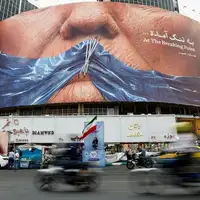
Iran hardliners tout offensive posture as Khamenei reshapes military command

4

US strikes Iran-bound ship as mediators signal Hormuz breakthrough

5
ANALYSIS

From Hormuz to Bab el-Mandeb, conflict converges on vital shipping lanes

Banner
Banner

Spotlight

  • Iran loses ground in oil market as neighbors rebound
    ANALYSIS

    Iran loses ground in oil market as neighbors rebound

  • US ship strike tests Tehran’s narrative of victory in Hormuz
    INSIGHT

    US ship strike tests Tehran’s narrative of victory in Hormuz

  • Iran hardliners tout offensive posture as Khamenei reshapes military command
    INSIGHT

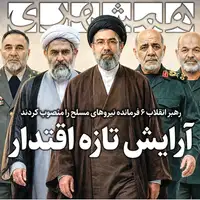
    Iran hardliners tout offensive posture as Khamenei reshapes military command

  • The Kinglet’s rookie mistake: how an Iranian hacker was caught at US request
    SPECIAL REPORT

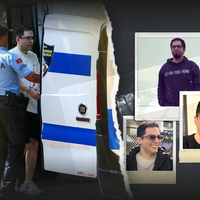
    The Kinglet’s rookie mistake: how an Iranian hacker was caught at US request

  • Rising costs leave Iranians 'nothing' for a coffee
    VOICES FROM IRAN

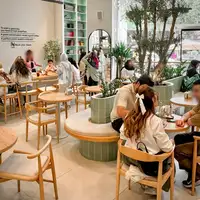
    Rising costs leave Iranians 'nothing' for a coffee

Banner
•
•
•

More Stories

Iran International's Negar Mojtahedi wins top Canadian journalism honor

Aug 13, 2026, 10:24 GMT+1
100%
Iran International's reporter Negar Mojtahedi during an interview

Iran International's Negar Mojtahedi has won Canada's 2026 Bill Good Award, part of the Jack Webster honors regarded as western Canada's preeminent journalism awards, cited for reporting that bridged the gulf between the West and Iran, often at risk to her own safety.

"Reporting on war, state violence and human rights violations, often at great risk to her personal safety, Negar has helped bridge the gulf between the West and Iran and increased cultural understanding," the Jack Webster Foundation said in announcing the award.

The foundation also praised Mojtahedi, a first-generation immigrant, for challenging negative stereotypes and serving as a role model for journalists seeking more equitable representation of their communities.

The Bill Good Award was created to mark the retirement of its namesake, one of Canada's most trusted broadcast voices, after a 50-year career spanning CTV, CKNW and CBC. Unlike the foundation's juried categories, its recipient is chosen directly by the board, and past honorees have been drawn from the country's most established newsrooms, from CBC to the Vancouver Sun.

"No other award in Western Canadian journalism instills a sense of pride greater than a Webster," the foundation says of its honors.

Mojtahedi is an investigative reporter, documentary filmmaker and host of Eye for Iran, Iran International's weekly English-language podcast, based in British Columbia.

  • Iran International wins four WAN-IFRA Middle East digital media awards

    Iran International wins four WAN-IFRA Middle East digital media awards

  • Negar Mojtahedi, Iran International awarded 2025 TLN media freedom award

    Negar Mojtahedi, Iran International awarded 2025 TLN media freedom award

The award caps a run of international recognition for the network and its journalists stretching back less than two years.

Last year, the Transatlantic Leadership Network in Washington presented Mojtahedi its Freedom of the Media Award for excellence in international reporting, an honor whose past recipients include the Iranian dissident journalist Masih Alinejad; Iran International was recognized at the same ceremony.

In May, the network took four top prizes at the 2026 WAN-IFRA Digital Media Awards Middle East, run by the World Association of News Publishers, including two for a secure Telegram bot that lets Iranians submit verified footage and reports from inside the country, alongside awards for its interactive map of the 12-day war and its Woman, Life, Freedom coverage. The bot advanced to the global stage of the competition, where the network placed among the Middle East's top-performing organizations.

The same month, Art of Resistance, a short documentary produced by the network's parent company Volant Media and directed by Iran International correspondent Mehran Abbassian, won Best Short Documentary at the Swedish Cinema House Film Festival, with Abbassian named Best Director.

The Webster foundation also named Surrey Now-Leader journalist Tom Zytaruk the recipient of the Bruce Hutchison Lifetime Achievement Award and CBC producer Anne Penman the recipient of the Shelley Fralic Award.

The honors will be presented at the Webster Awards gala in Vancouver on November 2.

Iran hardliners see shift on US talks in Rezaei appointment

Aug 13, 2026, 02:52 GMT+1
•
Maryam Sinaiee
100%
FILE PHOTO: Mohsen Rezaei at a farewell ceremony for Iran's late Supreme Leader Ayatollah Ali Khamenei, July 3, 2026.

Mohsen Rezaei’s appointment as Iran’s new security chief has opened a battle over its political meaning, with ultra-hardliners portraying the removal of his predecessor as evidence that the balance in Tehran has shifted against advocates of negotiations with Washington.

Supreme Leader Mojtaba Khamenei appointed Rezaei as his representative on the Supreme National Security Council (SNSC), after which President Masoud Pezeshkian named him secretary of the body at the center of Iran’s security and foreign policy decision-making.

Rezaei replaces Mohammad Bagher Zolghadr after only about five months in the job, an unusually short tenure for a position whose previous occupants typically served for years.

Opponents of negotiations have welcomed the change and sought to link Zolghadr’s departure to disagreements surrounding the ceasefire, negotiations with Washington and the Islamabad memorandum.

Reformist and government-aligned voices have cautioned against concluding that the harder-line camp has prevailed.

A battle over Zolghadr’s departure

Raja News, an outlet associated with the ultra-hardline Paydari camp, said Zolghadr’s replacement showed that, contrary to claims by supporters of negotiations, “not everything was coordinated with the Supreme Leader.”

Amir-Hossein Sabeti, a hardline member of parliament and prominent critic of negotiations, went further, accusing Pezeshkian of resisting the Supreme Leader’s wishes over replacing Zolghadr with Rezaei.

He warned the president that unless he changed course and followed the leader’s direction, “the people will replace him.”

Accounts circulating among hardliners have claimed that Pezeshkian initially resisted appointing Rezaei as SNSC secretary and did so only after Khamenei named Rezaei as his representative on the council.

No official explanation has been given for Zolghadr’s departure, and the claims do not establish that disagreements over negotiations caused his removal.

The reformist-leaning Rouydad24 website said opponents of negotiations were seeking to build a political narrative around the reshuffle: that divisions had emerged during the ceasefire and negotiations and that the balance had now shifted toward the harder-line faction.

Nour News, which is considered close to the SNSC, also said Rezaei’s appointment could signal “the beginning of a new approach to the country’s strategic governance,” but rejected attempts to portray it as evidence of a confrontation between Pezeshkian’s government and the leadership.

Rezaei’s record fuels hardline hopes

Rezaei’s own previous statements have added to speculation over what his appointment could mean for negotiations.

Ultra-hardliners have recirculated comments in which he interpreted an earlier message from Mojtaba Khamenei saying that “in principle, I had a different view” of the path taken by the SNSC.

Rezaei said the phrase meant “the path he had in mind was better than the path taken by the Supreme National Security Council,” remarks critics of the Islamabad memorandum have cited as evidence that Khamenei had reservations about the council’s approach.

But Rezaei has not opposed negotiations outright.

In an earlier interview with the Iranian Labour News Agency (ILNA), he said talks should take place but argued against maintaining a ceasefire while they continued, saying a pause in fighting would give the enemy an opportunity to rebuild its forces.

The distinction suggests the emerging argument may be less about whether to negotiate than about the conditions under which talks take place and the role of military pressure alongside diplomacy.

What comes next

The conservative Farhikhtegan newspaper similarly argued against reducing the choice to either concessions or continued war.

It criticized those who believe the conflict could be turned into peace through concessions, including handing over management of the Strait of Hormuz, but also those who view the conflict solely through a military lens and see war as the only solution.

Hesamoddin Ashena, a former adviser to President Hassan Rouhani, meanwhile appeared to caution against the risks of miscalculation at the SNSC without explicitly naming Rezaei.

“Because you are not allowed even one analytical mistake, you must be very careful,” he wrote on X. “Because a nation will pay the cost of your mistake, you must be very careful.”

For now, Rezaei’s appointment has become a proxy for the larger argument over Iran’s direction.

Ultra-hardliners see Zolghadr’s departure as evidence that the political ground has shifted toward them, but Rezaei’s own record points to a more complicated position: support for negotiations combined with a greater emphasis on maintaining military pressure while they take place.

Security by design: why Tehran is tearing up cobblestones

Aug 13, 2026, 00:04 GMT+1
•
Mehdi Sepahvand
100%
Piles of historic cobblestones torn from central Tehran’s streets sit stacked beside traffic.

Tehran's municipality is tearing up the cobblestones of the capital's historic pedestrian zones and laying asphalt, a change officials call traffic management and that architects and urban sociologists read as something older: the redesign of a city to make protest harder.

The work, underway in District 12, Baharestan Square and 30 Tir Street, is presented by municipal officials as a routine measure to ease congestion, carried out at the request of the traffic police.

Critics in architecture and urban sociology argue it cannot be read as a merely technical decision, and belongs instead to a long historical tradition: the use of urban design as an instrument of control.

When the city takes away the barricade

The link between redrawing a city's body and engineering its security is not new. Its most famous case is the great reconstruction of nineteenth-century Paris, carried out by Baron Haussmann on the orders of Napoleon III.

Until the 1850s, Paris was a city of narrow, winding, organic streets that let protesting citizens pry up the paving stones, throw up barricades and take control of their own neighborhoods, the world Victor Hugo drew so vividly in Les Misérables.

By demolishing the old fabric and driving broad, straight, uniform boulevards through it, Haussmann pursued two entwined goals: to strip the public of the ability to barricade the streets, and to ease the rapid movement of troops and heavy artillery for the suppression of unrest.

Later theorists built the insight into the foundations of urban thought. Walter Benjamin in The Arcades Project and David Harvey in his work on the "right to the city" traced how space itself becomes a tool for reproducing ruling power and erasing the protester's presence from it.

Physical disarmament of public space

The replacement of segmented paving blocks with continuous asphalt functions, in effect, as the physical disarmament of the urban environment. Unlike uniform asphalt, cobblestones can be pried loose in a street confrontation, handing demonstrators ready material for barricades or for holding back advancing security forces.

  • Over 36,500 killed in Iran's deadliest massacre, documents reveal

    Over 36,500 killed in Iran's deadliest massacre, documents reveal

Beyond removing potential projectiles, the smooth surface answers the operational needs of motorized units. Pedestrian infrastructure, with its uneven paving, varying widths, benches and street furniture, slows vehicles down. Coating these zones in asphalt creates uninterrupted corridors for special forces, water cannons and high-speed motorcycle patrols.

100%
Pedestrians stroll along a cobblestone walkway in central Tehran.

Eradicating gathering points

The repaving projects coincide with heightened enforcement against public gathering spaces in central districts, including the sealing of outdoor cafes and the removal of street furniture.

Pedestrian-friendly designs naturally create pause points where citizens congregate, engage in conversation, and form initial nodes of public assembly.

Converting pedestrian hubs into vehicular thoroughfares prioritizes rapid transit over civic presence, reshaping central public areas into channels designed for continuous traffic flow.

The removal of seating and outdoor dining areas reinforces this operational shift by eliminating physical spaces that encourage citizens to linger.

Reclaiming the street

Public thoroughfares have consistently served as primary arenas for civil expression during periods of political tension in Iran.

Highlighting the symbolic and practical weight of public space, prominent Iranian actress Hedieh Tehrani addressed security forces in a public message during the 2022 nationwide protests, writing, "My only way of communicating with the people is the street."

  • Iran crossed a political threshold

    Iran crossed a political threshold

Similarly, exiled Prince Reza Pahlavi emphasized the importance of public thoroughfares during his calls for widespread demonstrations in January 2026, framing the reclamation of street spaces as a central objective for people.

Replacing historical pedestrian infrastructure with asphalt prioritizes security deterrence and vehicular velocity over civic life and urban heritage. By converting public gathering hubs back into high-speed transit corridors, municipal authorities reduce public space from a venue for civic engagement into an infrastructure designed to prevent assembly.

Over 150,000 disabled Iranians await nursing allowances

Aug 12, 2026, 21:12 GMT+1
100%
A woman with lower-limb disabilities receives support in a rehabilitation centre in Iran.

More than 152,000 people with severe disabilities remain on a waiting list for nursing care payments because of insufficient funding, the rehabilitation deputy of Iran’s State Welfare Organization said on Wednesday.

A shortage of credit is the main reason for the long queue and responsibility for allocating the necessary resources rests with the Plan and Budget Organization, Fatemeh Abbasi told the ISNA news agency.

Payments to those who qualify will begin as soon as possible once the funds are assigned, Abbasi said.

The nursing allowance is available only to those classified as having severe or very severe disabilities under Article 7 of the 2018 Law on the Protection of the Rights of Persons with Disabilities.

Government support still falls far short of the real costs faced by people with disabilities, a report published on Tuesday by the newspaper Payam-e Ma said. Treatment, rehabilitation, equipment, transport and ongoing care consume a large share of household income, the paper added.

The actual cost of hiring a carer is several times higher than the state payment and families are forced to cover most of the expense themselves, Behrouz Morovati, director of the Campaign for the Rights of People with Disabilities, told the newspaper.

  • Iran cuts living allowances for many people with disabilities

    Iran cuts living allowances for many people with disabilities

Payments lag real care costs

The organization must operate within the framework of the annual budget approved by the Cabinet, Abbasi said. Payments stop in a limited number of cases when a person’s disability classification is revised from severe or very severe to moderate, she noted.

Delays have also affected livelihood assistance, with payments for many recipients halted since June on the grounds of a lack of funds, the ILNA news agency reported in July.

Of roughly 600,000 people eligible for livelihood assistance, only about 245,000 currently receive it, leaving more than 300,000 still waiting, Morovati told Payam-e Ma.

Some of those who do receive the payment also get a monthly stipend of around 21 million rials ($11).

Combined, the two forms of support amount to roughly 100 million to 110 million rials ($53–$59), a sum that bears little relation to the actual cost of living and the extra needs of people with disabilities, Morovati said.

100%
A young man in a wheelchair is assisted with paperwork in a public building in Iran.

Support levels trail global peers

By comparison, France’s adult disability allowance stands at about €1,042 a month for people with limited other income. Australia’s Disability Support Pension for a single adult reaches roughly A$1,201 per fortnight, or about A$2,600 a month, and can be paired with individualised packages under the National Disability Insurance Scheme that cover personal care.

Germany’s long-term care insurance pays cash benefits ranging from €347 a month at the lower care grade to €990 at the highest, with higher amounts available for formal services.

Nordic systems such as Norway’s typically replace 66 percent of prior earnings, subject to minimums and caps.

Even in those countries extra disability-related expenses frequently exceed benefits, yet the absolute gap between official payments and real care costs remains markedly wider where baseline amounts stay at the levels recorded in Iran and eligibility for nursing support is restricted to the most severe categories.

The distance between available payments and the actual expenses of care continues to leave large numbers of disabled people and their families carrying the main financial burden themselves.

Canada says IRGC conscription alone no bar as Iranians face scrutiny

Aug 12, 2026, 20:13 GMT+1
•
Mahsa Mortazavi
100%
Islamic Revolutionary Guards Corps conscripts

Canada says immigration applications are assessed individually in response to cases of Iranians who completed mandatory military service with the Revolutionary Guards receiving letters warning they could be deemed inadmissible on security grounds.

In a statement to Iran International, Immigration, Refugees and Citizenship Canada (IRCC) said “membership in the IRGC and service in the IRGC are distinct considerations” for assessing inadmissibility.

Individuals who served as a result of compulsory military service are assessed individually, the department said, adding that “conscription alone does not necessarily result in inadmissibility.”

IRCC said final decisions are made by immigration officers after reviewing submitted documents, relevant case law and recommendations from security partners, including the Canada Border Services Agency (CBSA) and the Canadian Security Intelligence Service (CSIS).

Conscripts receive fairness letters

Documents and accounts obtained by Iran International indicate that Iranian applicants whose only declared connection to the IRGC was compulsory military service have received Procedural Fairness Letters (PFLs) raising possible inadmissibility.

The letters notify applicants that their cases are being assessed under paragraph 34(1)(f) of the Immigration and Refugee Protection Act (IRPA) over possible membership in an organization believed to engage in terrorism.

A finding of inadmissibility can result in the refusal of an application for permanent residence and can also affect accompanying family members.

Iran International reviewed a PFL issued to an applicant on Aug. 6 that explicitly cited the applicant’s mandatory military service with the IRGC.

“On form IMM 5546, you indicated that you served your mandatory military service with the IRGC,” the letter said, giving the applicant 30 days to submit additional information before a decision is made.

IRGC designation and compulsory service

Canada designated the IRGC a terrorist entity under the Criminal Code in June 2024, after years of debate that included concerns over Iranians who had been conscripted into the force.

A separate measure expanded later that year makes senior Iranian government officials who served at any point since June 23, 2003 inadmissible to Canada.

IRCC said procedural fairness letters give applicants an opportunity to provide additional information before a final decision is made. Community advocates and legal representatives, however, say the recent volume of letters has created widespread uncertainty among Iranians with a history of compulsory IRGC service.

Advocates estimate that thousands of Iranian families in Canada could be affected by security reviews stemming from mandatory conscription.

Several applicants also told Iran International they had participated in anti-government demonstrations and human rights rallies since arriving in Canada and feared possible repercussions if they were eventually returned to Iran.

“We served in the military solely because it is mandatory under Iranian law,” one applicant said on condition of anonymity because of security concerns. “Yet, my spouse is now also facing potential inadmissibility.”

The applicant said they were hesitant to submit evidence detailing their opposition activities in Canada because they feared the information could endanger their family if they were ultimately forced to return to Iran.

IRCC said no final decision is made until information submitted by an applicant during the response period has been evaluated.