• العربية
  • فارسی
Brand
  • Iran Insight
  • Politics
  • Economy
  • Analysis
  • Special Report
  • Opinion
  • Podcast
  • Iran Insight
  • Politics
  • Economy
  • Analysis
  • Special Report
  • Opinion
  • Podcast
  • Theme
  • Language
    • العربية
    • فارسی
  • Iran Insight
  • Politics
  • Economy
  • Analysis
  • Special Report
  • Opinion
  • Podcast
All rights reserved for Volant Media UK Limited
volant media logo

GOP senator urges halt to Iran bombing while tightening economic blockade

Aug 7, 2026, 20:00 GMT+1

Washington may lack enough leverage to secure Iran’s nuclear material and reopen the Strait of Hormuz, Republican Senator Todd Young told Iran International, calling for an end to offensive strikes on Iran while maintaining a blockade that would “slowly constrict” its economy.

“I hope the war ends soon but it has to end on the right terms, meaning we have to have certainty that we can get control over the nuclear materials that lay beneath a mountain and we also need to open up the Strait of Hormuz of course and it's not clear that we have enough leverage to accomplish that,” he said.

Most Viewed

A Khamenei in-law is openly recruiting to replace the Islamic Republic
1

A Khamenei in-law is openly recruiting to replace the Islamic Republic

2
VOICES FROM IRAN

Iranians turn on Pezeshkian over protest death toll comments

3

Mecca pact ties three Sunni powers together as Iran-backed attacks loom

4

US imposes new Iran sanctions as officials say Hormuz deal is near

5

UN experts say Iran steps up repression of ethnic minorities

Banner
Banner
Banner

Spotlight

  • US miscalculated Iran’s resilience and hurt deal prospects, expert says
    ANALYSIS

    US miscalculated Iran’s resilience and hurt deal prospects, expert says

  • What the Pentagon learned from the Iran war
    INSIGHT

    What the Pentagon learned from the Iran war

  • Iran hardliners push renewed hijab crackdown despite widespread defiance

    Iran hardliners push renewed hijab crackdown despite widespread defiance

  • A Khamenei in-law is openly recruiting to replace the Islamic Republic

    A Khamenei in-law is openly recruiting to replace the Islamic Republic

  • Executions in Isfahan renew calls to end German city partnership

    Executions in Isfahan renew calls to end German city partnership

  • Iran's energy crisis is political, not seasonal
    ANALYSIS

    Iran's energy crisis is political, not seasonal

•
•
•

More Stories

What the Pentagon learned from the Iran war

Aug 7, 2026, 19:45 GMT+1
•
Mehdi Beigi
100%
یک هواپیمای سوپر هورنت F/A-18F متعلق به اسکادران ضربتی VFA-41 در حال فرود با قلاب روی عرشه ناو هواپیمابر یو‌اس‌اس آبراهام لینکلن در اقیانوس آرام است.

President Donald Trump's latest order to investigate leaks about US munitions stockpiles may look like another dispute between the White House and the American media. In Tehran, it is being read as vindication.

Iran's military and state media have spent months portraying the depletion of American interceptors and precision weapons as evidence of a newfound way to impose costs on a vastly more powerful military.

The United States has not run out of weapons, and the Pentagon does not disclose exact inventories. But beneath the propaganda is a real strategic argument.

Iran does not need to match the United States missile for missile. It needs to make the United States expend expensive, slow-to-replace weapons at a rate that becomes difficult to sustain.

Washington increasingly appears to be treating that challenge as an industrial problem, not simply a battlefield one.

Tehran is not hiding the calculation

The clearest evidence comes from the IRGC itself. In a July 23 statement announcing an attack on a US base in Kuwait, the Revolutionary Guards said they would not allow Washington to use what they called "deceptive ceasefires" to replenish its oil and munitions stockpiles before resuming attacks.

The IRGC was not simply claiming to have damaged American forces. It was identifying the time required to replenish US stocks as a factor in how Iran viewed ceasefires and the continuation of the war.

On March 10, IRGC spokesman Ali Mohammad Naeini told American officials that Iran knew their ammunition stocks were being depleted. In April, Aerospace Force commander Majid Mousavi claimed Iran was replenishing its missile and drone capacity faster than the United States could replace weapons sent to the region.

Those statements cannot establish the actual condition of either country's arsenal. They do, however, show that Iranian commanders are treating ammunition consumption as part of the strategic contest.

On July 26, the hardline daily Kayhan ran a report referring to the "running dry" of Pentagon weapons stocks, using American media reports to challenge Washington's claims of overwhelming military power. Tasnim has similarly highlighted estimates of depleted Patriot, THAAD, Tomahawk and other missile inventories.

The claims are propagandistic, but they take aim at a genuine vulnerability.

Iran's advantage

Iran's military model was shaped partly by necessity. A May 13 analysis by the Carnegie Endowment traced Tehran's emphasis on ballistic missiles and drones to decades of sanctions and restricted access to Western military technology.

Rather than attempting to recreate an American-style force built around advanced aircraft and expensive precision systems, Iran invested heavily in weapons it could manufacture domestically and deploy in large numbers.

Carnegie cited estimates putting the cost of a Shahed-136 drone at roughly $20,000 to $50,000. Iranian ballistic missiles are substantially more expensive—roughly $1 million to $2 million by some estimates—but can still cost far less than the defensive systems used against them.

That does not mean a $30,000 drone automatically forces the launch of a multimillion-dollar Patriot interceptor. Air defense is layered. Fighters, guns, electronic warfare and cheaper interceptors can also be used.

Iran can also threaten an array of military and energy targets across the region with weapons flying at different speeds and altitudes. The defender must keep radars active, aircraft airborne and sufficient interceptors available for the threats that matter most.

Iran therefore does not have to win every exchange. It can fail to penetrate most defenses and still impose costs through volume, persistence and geography. That is the part of Iran's approach that an inventory count alone misses.

Politically sensitive numbers

Reuters reported on August 4, citing three people familiar with US military data, that the Army had consumed much of its stock of long-range ground-launched precision missiles during five months of war. Two sources said "virtually all" available ATACMS and Precision Strike Missiles had been used.

The Pentagon has not confirmed those numbers.

Three days later, The Wall Street Journal reported that Trump had ordered investigations into leaks about US munitions stockpiles. According to the report, the administration is seeking $52.9 billion for munitions and another $21 billion specifically to replace stocks depleted during the Iran war.

Trump publicly insists the United States retains "massive" quantities of ammunition. The two positions are not necessarily contradictory. The US military can have enough ammunition to continue current operations while simultaneously concluding that its inventories and production rates are inadequate for another major war.

That matters because Iran is not the Pentagon's only concern, and a potential conflict with China would place vastly greater demands on US stocks.

Future problems

The United States has spent years preparing for the possibility of conflict in the Indo-Pacific while simultaneously supplying Ukraine and maintaining commitments in Europe and the Middle East.

Every Patriot interceptor, Tomahawk or long-range precision missile used against Iran is therefore part of a larger calculation: What remains available if another crisis begins before the first one ends?

That is why the most revealing evidence is not the disputed number of missiles left in storage. It is what Washington is doing to its factories.

On January 6, the Pentagon announced a seven-year agreement aimed at increasing the annual production capacity of the PAC-3 MSE Patriot interceptor from roughly 600 to as many as 2,000.

On July 27, L3Harris announced agreements designed to nearly triple production of propulsion components for PAC-3 and quadruple propulsion production for THAAD. The Pentagon has also brought new suppliers into missile production and launched a program for lower-cost, air-launched cruise missiles that can be manufactured at greater scale.

These are not signs that American military power has collapsed. They are signs that the Pentagon believes industrial capacity itself has become a weapon.

The bigger picture

Iranian state media have turned the US stockpile debate into evidence that Washington has been defeated. That conclusion goes beyond what the public evidence supports.

The United States retains enormous military advantages in intelligence, air power, logistics, precision strike and global deployment. Iran has also suffered severe military, economic and human losses during the war.

But Tehran does appear to have demonstrated something narrower and strategically significant. A weaker state does not necessarily have to compete with America's most advanced technology. It can attack the economics and tempo behind that technology.

Michael Duffey, the Pentagon official responsible for acquisition and sustainment, recently described the shift in American thinking in unusually direct terms. For decades, he said, the United States benefited from its ability to engineer the world's most sophisticated weapons.

"We're no longer in that global environment," Duffey said, arguing that the Pentagon needs not only superior technology but speed and volume.

The argument over whether America's missile stocks are "running out" will continue, particularly while the actual numbers remain classified. The more consequential change is already visible.

Iran spent decades building a military around the assumption that it could not compete with the United States in sophistication. Washington is now spending billions to ensure that its technological superiority does not leave it vulnerable on quantity.

The next arms race is no longer only about who can build the better missile. It is also about who can build the next one fast enough.

Iran hardliners push renewed hijab crackdown despite widespread defiance

Aug 7, 2026, 16:36 GMT+1
•
Maryam Sinaiee
100%

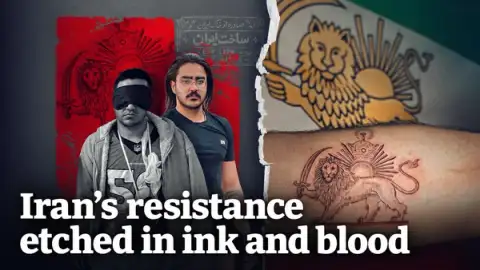
Iranian hardliners are intensifying pressure on authorities to enforce compulsory hijab, as recent cafe closures and online campaigns raise fears of a renewed crackdown despite widespread defiance of the dress code.

Last week, hardline lawmaker Mohammad Naghd-Ali told parliament that another member had told him he cries after every parliamentary session because of the current state of women's dress.

Naghd-Ali fiercely criticized President Masoud Pezeshkian's administration for refusing to implement the controversial hijab law approved in 2024, saying the government was allowing what he described as "nudity” and “immorality" to spread.

Although the new legislation was finalized in 2024, its implementation has been suspended following a decision by the Supreme National Security Council, reportedly out of concern that enforcing it could trigger unrest similar to the nationwide protests that erupted after Mahsa Amini's death in 2022.

Existing compulsory-hijab rules, however, remain legally in force.

Hardline activists have likewise blamed Pezeshkian for what they portray as the country's cultural decline.

"If Pezeshkian's incompetent and secular government continues for another two years, even today's level of dress will become something people long for," conservative commentator Hassan Abbasi wrote on social media. "Pezeshkian is standing against God's command on hijab and wants to return Iran's cultural climate to the Pahlavi era."

Social media campaign seeks broader crackdown

Hardline activists have also intensified an online campaign demanding tougher enforcement.

In recent days they have circulated videos showing unveiled women in tight-fitting sleeveless tops serving customers at a well-known restaurant in Tehran—scenes that would have been almost unimaginable in the capital and other cities until only a few years ago. Such activists frequently describe these styles as "nudity" or "body display."

One hardline X user, allegedly tied to a state institution, wrote: "The first step in confronting unveiled women is confronting cafes and establishments that violate social norms." According to the post, enforcement is currently focused mainly outside Tehran but will gradually expand across the capital.

Hardline journalist Fereshteh Sadeghi similarly shared a photograph of an unveiled woman shopping outside Tehran and criticized those arguing that hijab should not be discussed while the country faces broader security challenges.

"They tell us not to talk about hijab in the middle of a war and not even to take pictures. Then when are we allowed to speak?" she wrote.

Yet Sadeghi also acknowledged the state's failure to restore widespread headscarf compliance.

"The battle to force the hijab back onto women is over; you can't force the hijab on their heads," she wrote in another post, while arguing that authorities should at least establish dress regulations to prevent what she called "body display."

Hijab as a political symbol

For many hardliners, compulsory hijab is not only a religious obligation but also a defining political symbol of the Islamic Republic.

"Hijab is the flag of Islam. Muslim society is recognized through hijab," conservative social media activist Alireza Akbari wrote.

Supporters of compulsory veiling frequently cite a ruling by Supreme Leader Ali Khamenei, who described unveiling as forbidden both religiously and politically.

Journalist Mehrdad Khadir argued in an article published by Asr-e Iran that women's dress is no longer among the public's primary concerns.

"The way women and girls dress is not a concern for the majority of people," he wrote. "The face of the city has changed, and it will not return to what it once was."

According to Khadir, the country's real concerns are the threat of war and the collapse in living standards.

"In the current circumstances," he wrote, "it is unlikely—indeed impossible—that the authorities would surrender their judgment to those tears and turn an issue that has effectively been settled back into a national crisis. If there is anything worth crying over, it is the collapse of people's purchasing power."

Resistance through everyday life

Although enforcement has eased in many areas over recent years, critics argue that this should not be mistaken for legal liberalization because compulsory hijab laws remain fully in force even if they are not consistently applied.

The social landscape has nevertheless changed dramatically. Many women who continue to wear the hijab have also moved away from the traditional all-black chador and highly conservative appearance. Styles often described online as “hijab style” combine headscarves with colorful clothing, modern designs and fashion accessories.

Hardliners reject these styles as well, arguing that they contradict hijab's original purpose of discouraging attention and preserving modesty.

Opponents of compulsory veiling, meanwhile, say the increasingly visible presence of unveiled women reflects persistence rather than freedom.

"The type of clothing women wear in public still depends on the neighborhood, how they travel, even the day and time," one X user wrote. "The fact that we now see bolder styles is the result of the relentless struggle of brave women who accept the risks of dressing that way. Nothing has actually been liberated."

Mecca pact ties three Sunni powers together as Iran-backed attacks loom

Aug 7, 2026, 14:30 GMT+1
•
Arash Sohrabi
100%

Saudi Arabia, Turkey and Pakistan signed a mutual defense pact in Mecca on Friday that never once named a threat, and within hours Iranian officials and clerics had named it for them, mocking the agreement and promising that "the roar of our missiles" will reach its signatories.

The Mecca Joint Defense Agreement, signed as Crown Prince Mohammed bin Salman hosted Turkish President Recep Tayyip Erdogan and Pakistani Prime Minister Shehbaz Sharif, declares that an armed attack on any of the three will be treated as an attack on all.

A Turkish official called the pact "purely defensive," directed at no specific actor and open to other countries in the region.

The signatories' combined weight explains the attention. Turkey fields NATO's second-largest military, Saudi Arabia is one of the world's top oil exporters and home to Islam's holiest sites, and Pakistan is the only nuclear-armed Muslim state.

The pact caps nearly a year of negotiations and builds on last year's Saudi-Pakistani defense agreement, under which some 8,000 Pakistani troops, fighter jets and an air-defense system have already deployed to the kingdom.

The timing needs little decoding. Since the war began on February 28, Iran and its allies have struck US bases and civilian infrastructure across Saudi Arabia, Kuwait, Bahrain, Qatar, the United Arab Emirates, Oman and Jordan, shut the Strait of Hormuz to most shipping, and, through the Houthis, declared a naval embargo on Saudi ports in the Red Sea.

For Riyadh, three years of regional war have also raised a harder question: whether the American security umbrella it built its plans on still opens.

100%
Turkish President Tayyip Erdogan, Saudi Crown Prince Mohammed bin Salman, and Pakistan's Prime Minister Shehbaz Sharif, accompanied by their ministers of Foreign Affairs and Defence, pose after signing a joint defence agreement in Mecca, Saudi Arabia, August 7, 2026.

Tehran answers the question nobody asked

The pact's statement avoided Iran's name. Tehran filled the silence itself.

"The Saudis should know that a paper agreement with Turkey and Pakistan will not bring them security, just as years of one-way nursing of the Americans brought them none," Ebrahim Rezaei, a member of the Iranian parliament's national security committee, wrote on X. "Correct your policies so you no longer need to go begging for security."

The clerical establishment was blunter. "Borrowed security and begging America for security will not save you," Alireza Arafi, the Friday prayer leader in Qom, told regional governments.

"As long as you are with the enemies of Islam and Iran, the roar of our missiles will threaten you."

In Ahvaz, another Friday preacher said Iran was working to extend its missiles' range to 15,000 kilometers so that "the American people, too, will see what it is like to be left in blood and destruction."

For a pact its authors insisted was aimed at no one, the replies arrived from one address.

Riyadh braces, Baghdad moves

The agreement was signed against specific and immediate warnings. A Saudi official told CNN the kingdom is preparing for coordinated attacks on energy facilities, ports and airports by Iraqi militias and Yemen's Houthis "in the very near future," under the guidance of Iran's Revolutionary Guards, citing intelligence that included tracked meetings between militia and Guards personnel and movements of drones and missiles.

Baghdad, unusually, is moving against the same groups. An Iraqi government official told Iran International the country is "on the verge of delivering the final blow" to Iran-backed militias, with intelligence indicating planned operations not only against Saudi Arabia but against Kuwait, Jordan and Syria.

Iraq's armed forces said a security plan is underway to foil any attack on the kingdom, and troops have been ordered to prevent Iraqi territory from being used for missile and drone launches at neighbors.

The warnings follow a week in which the Houthis struck two Saudi tankers in the Red Sea and hit Najran's airport, wounding 11 civilians, including a four-year-old child.

Reporting by Asharq al-Awsat and Israeli media describes a joint Houthi-Iraqi operations room established at Jurf al-Sakhr, the militia stronghold south of Baghdad.

A deal Tehran wants, on terms it dictates

The day's other track ran through Muscat.

Iran's parliament confirmed the framework of an understanding with Oman has been agreed, and lawmaker Ahmad Bakhshayesh Ardestani described its logic with unusual candor: Iran is negotiating with America "in Oman's name," he said, over an arrangement that would leave the strait's management in Iranian hands and charge passing ships a tariff of 7 percent of cargo value, split three-quarters to Tehran and a quarter to Muscat.

President Donald Trump sounded confident and noncommittal at once. "It's obvious they don't want to be hit. They want to make a deal. So, we'll see," he said, adding that gasoline prices would rise only if he had to "do another hit" on Iran.

The Wall Street Journal reported that Arab mediators doubt Iran's diplomats have the authority to deliver any Hormuz deal they sign, as hardliners accuse the negotiating team of giving too much away.

That doubt, in the end, is what Friday's ceremony in Mecca was about. Three of the region's heaviest states have concluded that whatever emerges from the talks, the threat that closed the strait and burned their ports will outlast the paperwork, and they intend to face it attached to one another rather than waiting, separately, for Washington.

Dozens of Iran protest detainees held without hearings - rights group

Aug 7, 2026, 11:29 GMT+1
100%

Dozens of people detained over Iran's January protests remain in a security ward in the country's northwest, with more than half still awaiting hearings or serving prison sentences of up to five years, the US-based Human Rights Activists News Agency (HRANA) reported on Friday.

HRANA said 54 detainees were being held in Ardabil prison, near Iran's border with Azerbaijan. Of those, 25 have been sentenced to between six months and five years and three months in prison, while 29 remain in custody without having had a hearing in their cases.

Among those convicted, Ahmad Seifi received the longest sentence of five years and three months, while Milad Ashkani was sentenced to four years. Three others received sentences of three years and six months, according to HRANA.

Prosecutors seek harsher sentences

An informed source told HRANA that Ardabil prosecutor Jalal Afaghi considered the sentences handed to 10 of those convicted too lenient and had asked Iran's Supreme Court to increase their punishments.

  • Iran executes 20-year-old protester as fears grow for other detainees

    Iran executes 20-year-old protester as fears grow for other detainees

HRANA said full details of the charges, proceedings and courts responsible for the sentences had not been made public.

Some of the detainees have also been denied telephone calls and family visits, while relatives have faced restrictions in seeking information about their cases or requesting temporary release, the rights group said.

Hundreds detained in northwestern province

Around 800 people were arrested in Ardabil province during the January protests, according to HRANA. The group said about 500 were released during the first 10 days and roughly another 250 were later freed after posting bail or other forms of security.

  • UN experts say Iran steps up repression of ethnic minorities

    UN experts say Iran steps up repression of ethnic minorities

The cases form part of a much broader judicial crackdown following the protests. Rights groups have estimated that more than 60,000 people were detained across Iran, while some independent sources have put the number summoned, detained or interrogated at more than 100,000.

Iranian judiciary spokesman Asghar Jahangir said in February that authorities had issued more than 10,000 orders sending cases for prosecution and around 9,000 indictments against people detained during the unrest.

The report comes amid mounting international concern over prosecutions and executions connected to the protests.

UN human rights chief Volker Türk said this week that Iran had executed at least 56 people on national security-related charges since March 19, including 27 in protest-related cases. He urged Iranian authorities to halt executions and move towards abolishing the death penalty.

Iran opens second case against jailed protester who appealed to Trump

Aug 6, 2026, 19:24 GMT+1
•
Pooya Jahandar
100%
Ahmad Seyyed-Abdollahi

Iran has opened a second case against Ahmad Seyyed-Abdollahi, who is serving a prison term after posting a video urging Donald Trump to protect demonstrators during January’s nationwide protests, sources familiar with the case told Iran International.

The second case was opened in June on the charge of “propaganda against the establishment” and remains at the preliminary investigation stage, the sources said.

Seyyed-Abdollahi, 32, posted the English-language video on January 4, two days after Trump warned that the United States would come to the aid of peaceful protesters if Iranian authorities opened fire on them.

In the video, Seyyed-Abdollahi urged Trump to act quickly, saying many young Iranians had trusted his words and that help would come too late for those killed.

He added that Iranians would remember those who helped them and would seek to repay their friends in the future.

Seyyed-Abdollahi was first arrested on January 14, ten days after posting the video. He was held for about two months in solitary confinement at Borujen Prison and an intelligence detention facility operated by the Islamic Revolutionary Guard Corps in Isfahan.

He was released on bail on March 10.

Branch One of the Borujen Revolutionary Court later convicted him of “engaging in media activities against national security,” sentenced him to seven months in prison and barred him from government and public services for five years.

He was detained again on July 7 to begin serving the sentence and transferred to Borujen Prison in southwestern Iran’s Chaharmahal and Bakhtiari province, where he remains incarcerated.

Seyyed-Abdollahi was denied access to a lawyer of his choosing during his detention and was at times prevented from contacting his family, according to the sources.

He was among several Iranians who appealed directly to Trump for help during the nationwide protests.

Videos sent to Iran International showed one woman holding a sign reading, “Trump, a symbol of peace. Don’t let them kill us,” while another protester urged him to “do something” as security forces opened fire in Yazdanshahr in Isfahan province.

A protester in the northeastern city of Mashhad also addressed Trump directly and appealed for help during the crackdown.

Trump repeated his warning on January 9, telling Iranian authorities: “You better not start shooting because we’ll start shooting too.”

On January 13, he urged Iranians to continue protesting and wrote that “help is on its way.”

Iranian authorities crushed the protests with lethal force and carried out mass arrests.

The US-based rights group HRANA has reported that more than 50,000 people were arrested during just over six weeks of protests and the ensuing crackdown.

Authorities have since intensified their use of the death penalty against protesters. UN human rights chief Volker Türk said Wednesday that Iran had executed at least 56 people on national security-related charges since March 19, including 27 in cases linked to the January protests.

Amnesty International says at least 60 protest-related defendants, including three who were arrested as children, remain at risk of execution.