Trump to discuss Iran war with Netanyahu at White House - CNN
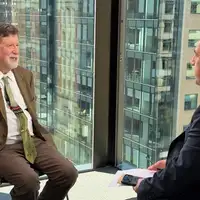
US President Donald Trump will host Ukrainian President Volodymyr Zelensky and Israeli Prime Minister Benjamin Netanyahu for separate White House meetings on Tuesday focused on the wars in Ukraine and the Middle East, CNN reported, citing a White House official.
Trump and Netanyahu will discuss the war in Iran, progress in negotiations with Lebanon and efforts to expand the Abraham Accords, the official said.
Iranian social media users and news outlets have praised archaeologist Hamideh Choubak after Alamut Castle was added to UNESCO’s World Heritage List, highlighting her 25 years of work excavating and protecting the historic site.
The UNESCO listing has drawn renewed attention to Choubak’s role in identifying, documenting and conserving the fortress complex, located 120 miles northwest of Tehran, and preparing it for World Heritage status.
Alamut Castle and Related Fortifications became Iran’s 30th UNESCO World Heritage property when it was inscribed on July 26 during the committee’s 48th session in Busan, South Korea.
Images of Choubak crying as the decision was announced were widely shared online, with users praising her decades-long commitment while criticizing the prominence given to government officials at the ceremony.
Zeinab Karimian, an Iranian journalist who formerly worked for the official news agency IRNA, said the inscription was the result of Choubak’s 25 years of “perseverance, yet once again, the front row was filled by male officials who will serve as ministers or deputy ministers for only a few years, while she remained in a corner.”
“History forgets the names of those who occupy the seats, but not those who devoted their lives to this land.”
Many social media users also praised Choubak as a symbol of professional dedication, saying the UNESCO listing had finally brought overdue recognition to decades of largely unseen work.
“I wish people like Dr. Hamideh Choubak could be multiplied—people who love this country’s land and heritage,” communications specialist Negar Arab wrote on X.
The Asr-e Iran news website also published a tribute to Choubak titled “25 years of effort and love for Iran’s cultural heritage.”
The outlet said she had devoted much of her career to researching and protecting Alamut, describing the UNESCO decision as the culmination of years of work.
“Alamut’s inscription may be only a piece of news, but for a woman who devoted more than a quarter of a century of her life to this mountain and fortress, this moment marks the end of a long journey and the beginning of Alamut’s lasting place in global memory,” it wrote.
Twenty-five years at Alamut
Choubak began archaeological excavations at Alamut Castle in 2001.
Her research continued over 25 years and included 16 excavation seasons at the main fortress, surrounding areas and several associated castles.
Her team uncovered buried sections of the complex and identified the functions of different structures.
The excavations revealed the castle’s prison, main entrance, observatory and central courtyard.
Researchers also identified Molasara, believed to have been used by Hassan-i Sabbah and other Ismaili leaders, as well as storage facilities, irrigation systems and communication routes.
Studies of six neighboring castles indicated that the fortifications had operated as an integrated network.
Botanical research conducted during the excavations also challenged some common accounts about the use of hashish during Hassan-i Sabbah’s era.
Choubak said the site had been reduced to little more than a mound of earth after years of erosion and neglect when excavations began.
Only parts of its walls remained visible.
Over the following decades, the main structures were identified, documented, conserved and restored as part of efforts to prepare Alamut for UNESCO recognition.
Protecting Alamut from development
Choubak was also praised for opposing projects that could have damaged the site and its surrounding historical landscape.
She resisted plans to construct a road, a cable car and other developments within the protected area, and sought to prevent unauthorized land occupation and construction.
Choubak, who serves as director of the Alamut World Heritage base, has said the complex was more than a military fortress.
It was also a center of government, science and culture during the Ismaili period, she said.
She pointed to the presence of scholars including Nasir al-Din al-Tusi, as well as the castle’s library and scientific activities, as evidence of its broader cultural importance.
Asr-e Iran also highlighted Choubak’s archaeological work in the ancient city of Jiroft and the Jazmourian region.
Those excavations led to the identification of a mosque, bazaar, public square, cemetery, water-distribution network and industrial workshops.
Choubak, born in 1952 in Bushehr in southern Iran, is an archaeologist specializing in the Islamic period. She studied archaeology at the University of Tehran, completing her master’s degree in 1983 with a thesis on Islamic ceramics, before earning a PhD in Islamic archaeology from Tarbiat Modares University.
Her career has included work at Iran’s Archaeological Center, the Glassware and Ceramic Museum, the Tehran Cultural Heritage Center and the Research Institute of Archaeology.
Choubak has participated in and led numerous excavations across Iran, including at Rey, Tepe Hissar, Hormuz, Jiroft and Kish.
A group of Iranians living in Australia planted a Persian Cypress to mark the 47th anniversary of Mohammad Reza Shah Pahlavi and his father Reza Shah on July 26, 2026.
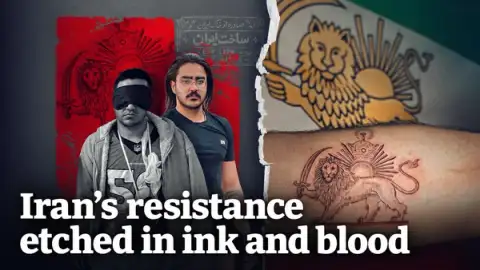
Iranians gathered in dozens of cities worldwide over the weekend to mark the anniversaries of the deaths of Reza Shah and Mohammad Reza Shah Pahlavi, voicing support for exiled Prince Reza Pahlavi and calling for an end to the Islamic Republic.
Rallies were held on July 25-27 in cities across Germany, the United States, Britain, Sweden, Canada, Australia, Spain, Portugal, Switzerland, Finland, Greece and New Zealand. Participants commemorated the Pahlavi dynasty, waved Iran's pre-1979 lion-and-sun flag and chanted slogans against the Islamic Republic.
In Berlin, demonstrators endorsed Prince Reza Pahlavi as a leader for a political transition and called on the international community to support Iranians' demands for freedom, democracy and change.
Similar gatherings took place in Frankfurt, Cologne, Hamburg and Hanover, where participants chanted "King Reza Pahlavi" and "The lion-and-sun flag shines across the world."
Rallies across Europe and North America
In London, Iranians held a memorial in the city center, highlighting what participants described as the legacy of Reza Shah and Mohammad Reza Shah.
Events were also held in several US cities. Los Angeles hosted a ceremony honoring the Pahlavi monarchs, while New York held a gathering attended by Iranian cultural, political and social figures to commemorate the last Shah of Iran.
In Sweden, demonstrators marched through central Stockholm chanting "No to the Islamic Republic" and expressing support for a democratic transition. Similar events took place in Malmö and Gothenburg, where participants sang the patriotic song Ey Iran.
Events span
In Melbourne, Iranians marked the 47th anniversary of Mohammad Reza Shah's death by planting a Persian cypress tree, which organizers described as a symbol of resilience. Similar commemorations were held in Perth.
In Canada, participants in Calgary praised the Pahlavi dynasty's role in Iran's modernization and expressed support for Prince Reza Pahlavi during a transition from the Islamic Republic.
Additional gatherings were reported in Bern, Helsinki, Lisbon, Athens, Madrid and Auckland, underscoring the continued visibility of monarchist supporters within the Iranian diaspora.
An elderly patient sits in a hospital ward in Iran.
A growing number of Iranians are financing healthcare with debt as medical costs rise beyond household incomes, a new Eghtesad Online report found, while authorities prioritize medical preparations for the Shiite pilgrimage, Arbaeen.
Iranians are increasingly borrowing money, delaying treatment and bargaining over medical bills as healthcare costs outpace household incomes, according to a new report by Eghtesad Online, while authorities say medicines and medical supplies are fully secured for Arbaeen, the annual pilgrimage commemorating the 40th day after the death of third Shiite imam.
The report describes a healthcare system where treatment increasingly begins not with a doctor's diagnosis but with offers to activate credit, pay in installments or use discount codes. From dental care and physiotherapy to psychotherapy, prescription drugs and online consultations, households are increasingly financing healthcare with future income.
"The issue is not just the growth of a few startups or advertisements by a few clinics; the issue is the shrinking liquidity of households, where a patient is forced to borrow from next month's income to pay for today's pain," the report said.
When treatment depends on payday
Conversations in doctors' offices, the report said, increasingly focus on affordability rather than treatment. Patients ask whether insurance will cover consultation fees or whether doctors can charge less, while physicians report seeing people who postpone laboratory tests, imaging scans and prescriptions after paying for the initial visit.
"Is this charged at the private rate? Doesn't insurance cover it? Can't you charge a little less?" are now common questions at reception desks, according to the report, which said patients bargain "not out of habit, but out of necessity."
Long-term treatment is particularly vulnerable. Patients stop physiotherapy midway, discontinue psychotherapy after only a few sessions or ration medication so it lasts longer, turning what the report called "a shortage of cash into a shortage of treatment."
Official figures for the current Iranian year have not yet been released, but the latest available data showed healthcare accounted for 8.7% of urban household spending and 9.8% of rural household spending in 2024.
Mental health becomes a luxury
Financial pressures are especially visible in mental healthcare, where patients increasingly align appointments with payday.
A therapist meets with a patient in Iran, where rising treatment costs are making mental healthcare less affordable.
"Can I pay for this session at the end of the month?" is among the requests therapists now hear regularly, according to the report. Others ask, "My salary is deposited on the 10th. Can I pay for two sessions together?" or explain, "I can't come every week for now. I'll come twice a month."
The report said psychotherapy is intended to help people cope with anxiety, exhaustion and the pressures of daily life, yet "the cost of the session itself has become one of those anxieties." Social media users quoted in the report described calculating rent, loan payments, medicine and food costs before deciding whether they could afford therapy.
Dental care has become another symbol of the trend. Clinics increasingly advertise installment plans for implants, orthodontics and root canals, while online pharmacies and health platforms now offer credit for medicines and health-related products.
"Toothache does not wait for next month's paycheck," the report said, describing installment payments as both an opportunity to obtain treatment and a warning that essential healthcare costs are increasingly becoming future debt.
Officials warn of shortages
The financial pressures coincide with warnings from lawmakers about Iran's pharmaceutical sector.
Salman Es’haqi, spokesperson for parliament's Health and Treatment Committee, described medicine shortages as a "serious and critical" issue, citing sanctions, the recent war and disruptions to imports of pharmaceutical raw materials. He warned that unstable access to medicines could cost lives.
Other lawmakers have linked shortages to delays in foreign currency allocations and cash shortages affecting imports, while pharmacists have said weak oversight has allowed some medicines to be diverted from official distribution channels into the unofficial market.
Medical support for Arbaeen
Despite those concerns, officials have repeatedly emphasized that healthcare resources for Arbaeen will be fully available.
Medical supplies and pharmaceuticals are loaded for shipment from Iran to Iraq ahead of the Arbaeen pilgrimage in 2019.
Jafar Miadfar, head of Iran's Emergency Organization, said authorities had no concerns about supplying medicines and intravenous fluids for pilgrims. He said around 300,000 units of intravenous fluids had been allocated and medicine stocks positioned at six border crossings ahead of the pilgrimage.
Earlier, Iranian Red Crescent chief Pirhossein Kolivand said medicines and medical equipment had been dispatched for Arbaeen and that five hospitals in Iraq along the Najaf-Karbala route would provide care for Iranian pilgrims.
U.S. President Donald Trump delivers remarks at the White House Correspondents' Association (WHCA) Dinner, July 24, 2026
Voices against the United States' military campaign against Iran grew louder over the weekend as Republican and Democratic lawmakers argued it was leaving Americans to bear mounting military, economic and human costs.
Leading the Republican criticism was Representative Thomas Massie of Kentucky, one of the few Republicans to openly challenge President Donald Trump's handling of the conflict.
"The U.S. has been significantly weakened by the war with Iran," Massie wrote on X.
"This administration depleted our missile defenses, drained our oil reserves, sacrificed our men & women, inflated the price of consumer goods, increased our debt, and neglected our domestic needs... all for Israel."
The Wall Street Journal and CBS News reported this week that senior military officials had warned the White House about declining inventories of air defence interceptors and precision-guided munitions, raising fresh questions about the campaign's longer-term cost.
Trump rejected those reports.
"We have far more munitions than anyone in the world, and far more than we need," he told The Wall Street Journal on Sunday.
Democrats, meanwhile, sharpened their own attacks, portraying the campaign as both illegal and increasingly costly for American taxpayers.
Representative Becca Balint of Vermont criticised House Republicans' latest budget bill, saying it allocated more than $70 billion for what she described as Trump's "illegal war of choice in Iran."
"Does it do anything to lower your costs? Nope!" she wrote.
Representative Nanette Barragán of California argued that Americans should not have to "foot the bill for Trump's war on Iran or billionaires' tax cuts."
The United States and Iran have now gone three consecutive nights without direct strikes against one another, while diplomatic efforts involving regional mediators have gathered momentum.
Few officials, however, appear convinced the lull will prove durable. Trump has repeatedly said the United States remains prepared to resume military operations if negotiations fail, while Tehran has continued to warn of retaliation should attacks restart.
Representative Frank Pallone of New Jersey linked the conflict to rising fuel prices and growing pressure on US military resources.
"Gas is at $4 a gallon, our military resources are depleted, and none of Trump's stated goals have been achieved," Pallone wrote after voting in favour of a War Powers Resolution seeking to end the conflict.
"Our vote sent Trump a clear message: the American people are FED UP with this illegal war."
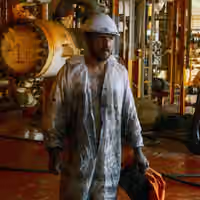
Workers operate an offshore drilling rig in the Iranian sector of the Caspian Sea, undated file photo
A widening scandal over the secret network used to move Iran's oil revenues around international sanctions has triggered growing criticism after senior officials acknowledged that intermediaries misappropriated at least $1.6 billion, with some fleeing the country.
The controversy has exposed the unofficial network of so-called trusties: companies and intermediaries entrusted with receiving and transferring oil revenues outside the international banking system.
Speaking on state television on Sunday, the head of Iran's State Inspection Organization, Zabihollah Khodaeian, said one intermediary alone had failed to return $200 million in state funds before leaving the country.
Khodaeian added that judicial authorities had opened 59 criminal cases against managers of trustee companies. Some suspects have been arrested, while others have fled abroad.
Iranian media also reported that prosecutors had sought Interpol Red Notices for 15 fugitives linked to the network.
The disclosures prompted unusually blunt criticism from Majid Reza Hariri, head of the Iran-China Chamber of Commerce.
In a public message addressed to Tehran's prosecutor, Hariri said the Interpol requests meant at least 15 trusted intermediaries had escaped with "billions of dollars" in national wealth.
"Who introduced these trusties? Who guaranteed them? And why is no action being taken against those who backed them?" he asked.
Although Hariri's estimate has not been independently verified, his comments echoed questions increasingly being raised in Iranian media over how individuals entrusted with handling billions of dollars in oil revenues could allegedly abscond without serious failures in oversight.
A product of sanctions
The trustee system emerged as international sanctions largely cut Iranian banks off from the global financial system.
Unable to receive oil payments through conventional banking channels, Tehran increasingly relied on trusted intermediaries with access to foreign companies and bank accounts to collect, hold and transfer export revenues.
Many of these intermediaries operate through countries including the United Arab Emirates, Turkey and Oman.
The arrangement became indispensable to sustaining Iranian oil exports under sanctions. But it also created a largely opaque financial architecture operating outside many of the transparency, auditing and compliance mechanisms that govern formal banking systems.
Trusties have never been clearly defined under Iranian law. Little is publicly known about how they are selected, what commissions they receive, what guarantees they provide or how their activities are supervised.
Critics say the structure also creates an inherent conflict of interest. Oil revenues can remain in intermediary accounts for days or even weeks before reaching Iran, allowing trusties to profit from holding large balances while the state bears the financial risk.
Questions over oversight
The growing scandal has also drawn attention to who ultimately oversees the network.
Oil Minister Mohsen Paknejad has previously said the Oil Ministry's responsibility ends with marketing and selling crude, while the Central Bank determines where export revenues are deposited and supervises their transfer.
The issue is especially sensitive because trusties are not ordinary commercial intermediaries. They are selected precisely because they are considered sufficiently reliable to handle some of the state's most strategically important financial transactions.
Officials maintain that such intermediaries remain indispensable as long as sanctions keep Iran largely excluded from the international banking system.
The expanding investigation, however, has transformed what was once a largely hidden mechanism of sanctions evasion into yet another damaging scandal for the Islamic Republic, raising difficult questions about both the alleged abuse and the system that allowed it to occur.