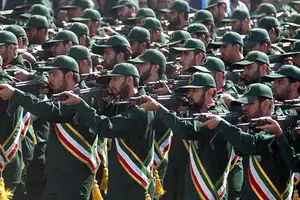
Moderate voices in Iran are sharpening their criticism of hardline calls for continued confrontation with the United States, arguing that diplomacy has become a patriotic necessity as renewed war exacts mounting economic and human costs.
The debate has intensified since Iran targeted a vessel near the Strait of Hormuz last week, prompting a renewed US military campaign that has included days of strikes on ports, bridges, airports and military facilities across Iran’s southern provinces.
Even as US Vice President JD Vance and Iranian Parliament Speaker and chief negotiator Mohammad-Bagher Ghalibaf have continued to defend diplomacy backed by military preparedness, the fighting has persisted and the prospect of a wider conflict has grown.
The criticism has been directed in part at ultrahardline figures such as Qom Seminary Chancellor Alireza Arafi, who has called for further war against the United States and an end to negotiations.
Two recent commentaries—one by former lawmaker and former National Security Committee chairman Heshmatollah Falahatpisheh, the other by political analyst Abdolrahman Fathollahi—reflect the growing push to hold hardliners accountable for the costs of confrontation.
While one focuses on political responsibility for failed diplomacy, the other highlights the burden borne by communities on Iran’s southern frontier.
‘Defeating diplomacy’
Writing in the moderate daily Toseh Irani, Falahatpisheh accused hardline factions of using what he called a distorted interpretation of religion to obstruct diplomatic opportunities.
“I believe part of these two major wars against Iran was the result of this very definition of religious beliefs by extremists, who are now turning to distorting religion to defeat diplomacy,” he wrote.
He argued that the same factions had repeatedly promised better outcomes while blocking agreements that could have reduced tensions.
“They are the exact same people who blocked two good agreements during the major periods of 2021 and 2022, claiming they would forge a better deal,” he wrote. “But in practice, not only was no agreement achieved, but two major wars were imposed on Iran.”
Falahatpisheh called for the prosecution of those he said had turned diplomatic opportunities into military conflict.
‘Patriotism from a safe distance’
A second commentary, published Thursday in Shargh, shifted the focus from political responsibility to the human cost of confrontation.
Under the title The Country’s Future and the Triangle of Extremism, Costs, and Responsibility, Fathollahi warned about the toll of intensifying US airstrikes on Iran’s southern coastal provinces.
He pointed to public campaigns calling for outspoken opponents of negotiations to be sent to the front lines, accusing them of practising what he described as “patriotism from a safe distance.”
“One certainly cannot beat the drums of war from the safe margins of the capital behind podiums, while dumping the costs of those decisions onto the people living in the front lines,” Fathollahi wrote, highlighting the plight of communities bearing the brunt of the fighting over the Strait of Hormuz.
The comments come after a week of US strikes on infrastructure across Iran’s Persian Gulf provinces, where dozens have been killed or injured and many more affected by transport disruption, electricity blackouts and water shortages during the height of summer.
For Fathollahi, the question is no longer simply one of military strategy but whether Iran’s leaders are willing to change course before the costs grow even higher.
“Rethinking certain political approaches and utilizing all expert and diplomatic capacities is not a choice,” he concluded, “but a necessity to safeguard national interests and reduce the costs imposed on society.”
Britain formally designated Iran’s Islamic Revolutionary Guard Corps as a threat to national security on Friday, making public support for the organization or assistance to it punishable by up to 14 years in prison.
The IRGC was designated alongside the Iran-linked Islamic Movement of Companions of the Right and Russia’s GRU Volunteer Corps, the first organizations placed under powers created by the National Security (State Threats) Act 2026.
The designations took effect on July 17 after Parliament approved an order submitted by Home Secretary Shabana Mahmood four days earlier.
Under the new law, it is now a criminal offence to express support for the groups, including by glorifying or encouraging activity that threatens the safety of the United Kingdom.
Providing assistance or accepting money or another material benefit from a designated organization can also lead to prosecution. Those convicted could face prison sentences of up to 14 years.
People who commit sabotage, arson or other hostile acts on behalf of the groups could be charged separately under the National Security Act 2023 and face life imprisonment.
The designation is distinct from banning an organization under Britain’s terrorism legislation. It is designed specifically to address hostile activity linked to foreign governments, including espionage, political interference, intimidation, sabotage and physical attacks.
The government says the new framework will make it easier to prosecute people working for foreign organizations because prosecutors will not always have to establish a direct connection between an individual act and a foreign government.
Outgoing Prime Minister Keir Starmer said when the measures were announced that Britain would not be allowed to become “a playground for states who want to spread fear, division and violence on our streets.”
“We have already taken tough action against the Iranian regime and those linked to it, and against Russian operatives and networks targeting our country,” he said. “These new powers will make it easier to prosecute and lock up anyone carrying out their dirty work here in Britain.”
The IRGC is one of the Islamic Republic’s most powerful military and political institutions. Its overseas Quds Force oversees Tehran’s relationships with allied armed groups and has been accused by British authorities of directing operations against dissidents, journalists and Jewish or Israeli-linked targets in Europe.
The British government said the Islamic Movement of Companions of the Right had claimed responsibility for seven attacks this year against Persian-language media and locations linked to Jewish and Israeli communities in Britain.
Those incidents included an antisemitic arson attack that damaged four ambulances belonging to the Jewish emergency service Hatzola in Golders Green, north London, on March 23.
British authorities said Quds Force members were behind the organization and had “almost certainly” directed its attacks across Europe. The allegations have not been tested in court.
The government has also cited at least 20 potentially lethal Iranian-backed plots identified by the domestic intelligence agency MI5 over a one-year period.
“Iran and Russia are using proxies and thugs to do their dirty work on our shores,” Mahmood said when she announced the intended designations. “We will find you, and we will lock you up.”
The third designated organization, the GRU Volunteer Corps, is described by Britain as a network controlled by Russian military intelligence that recruits people online to carry out arson, sabotage, harassment and other hostile activity.
Foreign Secretary Yvette Cooper said the use of proxies by Iran and Russia to conduct operations on British soil was “reprehensible.”
The designation marks a significant escalation in Britain’s response to the IRGC. Rather than banning the organization as a terrorist group, the government has created a separate route to prosecute support, recruitment, financing and operational assistance linked to hostile foreign-state activity.
Australia declined to provide a timeline for resolving delayed skilled visa applications from Iranian nationals and did not directly answer whether Iranian applicants face additional security or identity checks compared with other nationalities.
“All visa applicants, regardless of nationality, must meet the eligibility requirements set out in Australia’s migration legislation before a visa can be granted,” a Department of Home Affairs spokesperson told Iran International on Friday.
The processing times, the spokesperson said, depend on factors including application complexity, completeness, demand, ministerial priorities and migration planning levels.
“Processing times can also be affected by application processing requirements, including verification of applicant information ... and the time taken to receive clearances from external agencies, particularly for health, character and national security assessments,” the spokesperson said.
The department did not directly address the question on whether Iranian citizens undergo broader or different security screening than applicants from other countries.
The response came after images emerged of protests by Iranian applicants outside the Australian embassy in Tehran, alongside letters, official correspondence with the Department of Home Affairs, documents related to pending cases and messages from applicants inside and outside Australia.
Documents and correspondence show some applications have remained unresolved for more than two years, and in some cases more than 30 months, despite applicants completing key requirements including skills assessments, medical examinations and biometric checks.
Protests and travel restrictions
The department also did not provide a specific explanation for delays affecting Iranian skilled visa applicants who were already inside Australia when they lodged their applications.
Officials said some applicants have faced conflict-related obstacles inside Iran, including internet disruptions that hinder access to biometric appointments, medical examinations and documents such as police certificates and passports. The extensions, the department said, may be granted in such cases but applicants must still satisfy all legal visa requirements.
In recent months, groups of Iranian applicants have staged two protests outside the Australian embassy in Tehran, calling for greater transparency over prolonged processing delays and requesting decisions on their applications.
The department also referred to temporary travel restrictions affecting holders of Australian Visitor visas linked to Iranian passports. It said the Arrival Control Determination, introduced on March 26, 2026, remains in force for six months and prevents affected visa holders outside Australia from entering the country.
Any extension beyond the initial six-month period, according to the department, would require a new legal determination and a finding that continuing the restrictions serves Australia’s national interest. The government has said the measure is intended to provide time to assess conditions in Iran and associated migration risks, leaving the future of both the travel restrictions and many pending visa applications uncert
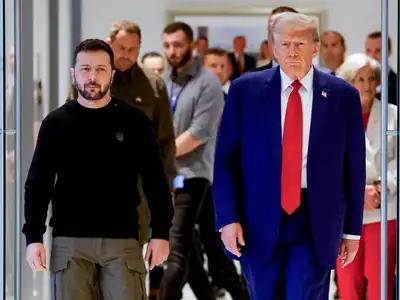
The sixth day of fighting since the collapse of the Iran-US ceasefire ended with five bridges hit in southern Iran, US forces turning back three commercial vessels near the Strait of Hormuz, and President Donald Trump declaring that Washington was “winning big in Iran.”
The developments unfolded along three parallel fronts: Iranian attacks on US facilities across the Persian Gulf, continued US strikes inside Iran and an intensifying contest over control of the Strait of Hormuz.
Iran said it launched drone attacks on US facilities in Kuwait and Bahrain early Friday, after a sixth consecutive night of American strikes on Iranian military targets.
Iran’s army said it targeted US force deployment and logistics centers in Kuwait, Iran’s IRGC-affiliated Fars news agency reported.
In Bahrain, the army said it struck US helicopters and reconnaissance aircraft at Sakhir Air Base. Sirens sounded in the country for the second time on Friday, according to the Interior Ministry.
In Qatar, several booms were heard after the government sent a second security alert to mobile phones, Reuters reported. The Defense Ministry said Qatar was intercepting several air attacks, while the Interior Ministry said a child was injured by shrapnel from an intercepted missile.
US Central Command has not confirmed the reported attacks in Kuwait or Bahrain.
At the same time, US forces continued striking targets in southern Iran.
CENTCOM said US fighter jets, drones and warships used precision munitions to hit dozens of military targets, including coastal surveillance and air defense sites, logistics infrastructure and maritime capabilities near Bandar Abbas and on Qeshm Island.
Hamshahri, a newspaper owned by Tehran Municipality, reported that five bridges in Hormozgan province were hit in the latest wave of attacks.
The death toll from strikes on bridges in Bandar Khamir rose to seven, Iran’s IRGC-affiliated Tasnim news agency reported. Iranian media also reported damage to a power substation on Kish Island and attacks on transport infrastructure in Bandar Abbas and Bandar Khamir.
The reports could not be independently verified.
Control over Strait of Hormuz
As the two sides exchanged attacks on land, their confrontation also deepened at sea.
CENTCOM said US forces redirected three commercial vessels attempting to breach the naval blockade against Iran, disabled another that failed to comply with orders and boarded the M/T Wen Yao in the Gulf of Oman to verify compliance.
US Defense Secretary Pete Hegseth shared an image from the boarding and wrote that Iran “does not control” the Strait of Hormuz.
CENTCOM said the strait and surrounding waters remained free and open, except for vessels attempting to violate what it called the US “steel wall” blockade.
Iran’s Revolutionary Guards, however, said Tehran remained in full control of the waterway and would prevent oil and gas exports through it for as long as US attacks continued.
Trump cast the military and maritime operations as signs of US momentum.
“You will see the fruits of that labor very, very shortly,” he said after declaring that Washington was “winning big in Iran.”
The possibility of a wider regional conflict emerged more clearly on Friday, when the Revolutionary Guards said they had struck a US special operations command center in Syria’s al-Tanf region, destroying a radar system and several helicopters and killing US personnel.
US Central Command has not confirmed the report.
British police charged a 39-year-old man on Friday with assisting a foreign intelligence service in a case linked to Iran, following an investigation by Counter Terrorism Policing.
Police said Vahid Aberi, of Liverpool, was charged under Section 3 of the National Security Act 2023 with assisting a foreign intelligence service. They said the foreign state to which the investigation relates is Iran.
Aberi was arrested on Wednesday in the Birmingham area and taken to a West Midlands police station. Officers also carried out searches at addresses in Birmingham and Liverpool.
He was remanded in custody and was due to appear before Westminster Magistrates' Court on Friday.
Police say no direct threat identified
Commander Helen Flanagan, head of Counter Terrorism Policing London, said the investigation reflected what she described as a sustained increase in national security casework.
"We have seen a significant and sustained increase in the tempo of our work in national security investigations in recent years," she said in a statement.
She said police had "intervened to disrupt suspected activity linked to foreign intelligence services" but declined to comment further on the allegations because criminal proceedings had begun.
Flanagan added that police had not identified any direct threat to the public, nor any threat to a community or individual, in connection with the investigation.
The charges were authorised by the Crown Prosecution Service.
Scrutiny of alleged Iran-linked activity
The case comes as Britain has intensified efforts to counter what it says is hostile activity linked to Iran.
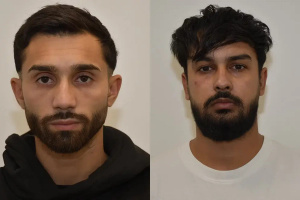
Earlier this month, a London court sentenced two Romanian nationals to a combined 20 years in prison for stabbing Iran International journalist Pouria Zeraati outside his home in Wimbledon in 2024. The judge accepted the prosecution's case that the attack was carried out on behalf of the Iranian state. Iran has previously rejected accusations that it has been involved in attacks or plots in Britain.
Separately, the British government announced this week that it intends to designate Iran's Revolutionary Guards under new state threats legislation. If approved by parliament, supporting or assisting the group under the new legal framework could carry a prison sentence of up to 14 years.
The government has said the designation is separate from proscription under Britain's terrorism laws and is intended to address foreign state-backed activity, including espionage, interference, sabotage and physical attacks.
British authorities have repeatedly said they have disrupted a number of alleged Iran-linked plots in recent years. Iran has previously dismissed British allegations that it has directed hostile activity in the UK.