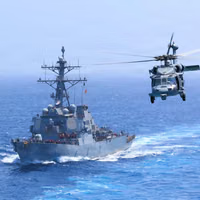
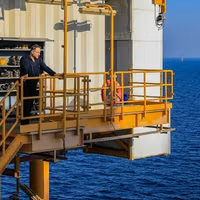
U.S. Army Soldiers work to refuel a generator at a base in the Middle East, in this handout from CENTCOM, July 24, 2026
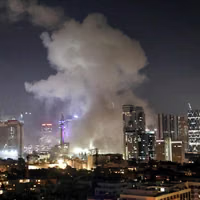
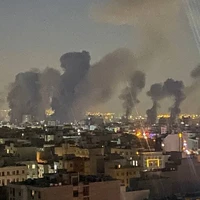
For the first time in nearly two weeks, Iran passed two nights without new US strikes, creating the first real pause in a campaign that appears to have evolved well beyond protecting shipping through the Strait of Hormuz.
Analysts increasingly see a broader effort to erode Tehran's military, economic and political capacity until negotiations become the less costly option.
President Donald Trump has oscillated between threatening "massive attacks" and calling for renewed negotiations with Tehran. According to Axios, he decided against another round of strikes on Friday despite military plans being ready to execute.
Whether the lull marks the beginning of diplomacy or merely an operational pause remains unclear. What appears more significant is how the campaign itself has evolved.
Military analyst and retired US Army officer John Spencer believes Washington's objectives now extend well beyond degrading Iran's immediate military capabilities.
Rather than seeking immediate regime change, he argues, the campaign is designed to convince Tehran's leadership that continuing the conflict will steadily erode its ability to govern, project military power and preserve the strategic leverage it has spent decades building, ultimately forcing Iran to negotiate from a position of growing weakness.
"The United States could do a lot more," Spencer told Eye for Iran. "This is about changing the regime's behavior."
The evolution is visible in the targets themselves. Early strikes focused overwhelmingly on Iran's ability to threaten shipping through the Strait of Hormuz, hitting coastal radar installations, anti-ship missile batteries, drone facilities and command-and-control centres.
More recently, however, the campaign has shifted inland toward bridges, railways, communications infrastructure and military logistics networks, particularly around Bandar Abbas.
Iran's largest commercial port and a key naval hub overlooking the Strait of Hormuz, Bandar Abbas has become increasingly isolated as transportation links and logistics infrastructure come under repeated attack.
For Spencer, that shift reflects an effort not simply to destroy weapons but to restrict Iran's ability to move forces, sustain military operations and eventually rebuild damaged capabilities.
"It could be beyond the battle of Hormuz," Spencer said. "It could be setting the conditions for future operations."
He argues the United States still retains considerable military, economic and cyber capabilities that have yet to be fully employed should Washington decide to intensify pressure further.
Regional balance shifts
Former Kuwaiti Information Minister Saad bin Tefla Al Ajmi believes the campaign has also altered Iran's wider strategic position.
He argues Tehran's regional network has suffered setbacks on multiple fronts. Hezbollah has been severely weakened, Syria no longer provides the strategic corridor it once did following Bashar al-Assad's fall, and repeated attacks have degraded Iran's nuclear infrastructure.
"Iran is now between two choices," Al Ajmi said. "The chalice of poison or suicide."
He also questioned whether Iran's increasingly fragmented decision-making structure could complicate any future negotiations.
"There is a fragmentation in the leadership in Iran now," he said. "Sometimes we have a problem of who to communicate with."
Military pressure has also coincided with a tightening domestic crackdown, with human rights groups reporting an increase in executions of protesters and political prisoners during the conflict.
Whether the two-night pause marks the beginning of diplomacy or simply the interval before another wave of strikes remains uncertain.
What the past fortnight has already revealed, however, is that Washington's objectives now appear to extend far beyond the Strait of Hormuz, towards reshaping the military and political calculations of Iran's leadership itself.
A satellite view shows tunnel entrances at Pickaxe Mountain, of the Natanz nuclear facility, near Natanz, Iran, June 30, 2026. Vantor handout via Reuters
If President Donald Trump expands US strikes on Iran, Washington could target several remaining nuclear facilities beyond Pickaxe Mountain, the Wall Street Journal reported on Saturday, citing former officials and nuclear experts.
The report said Iran's nuclear infrastructure had already been heavily damaged by Israeli strikes and the US "Midnight Hammer" operation against its main enrichment sites, but that several facilities could still be considered targets.
"It appears that the bulk of the sites that were needed to make nuclear weapons have been hit," David Albright, president of the Institute for Science and International Security and a former UN weapons inspector, told the newspaper.
"But Israel may know of new sites through intelligence, and there may be reason to strike old sites that are being rebuilt," he said.
The Journal said Pickaxe Mountain, known in Iran as Mount Kolang, remains the most likely target because Israeli intelligence believes Iran moved thousands of uranium-enrichment centrifuges into tunnels there after last year's 12-day war.
According to the report, the underground complex lies hundreds of feet beneath granite, making it difficult to destroy even with US bunker-busting bombs. Experts cited by the newspaper said Washington could instead strike tunnel entrances or other access points.
"Washington's clearest nonproliferation wins against Iran in the war were stopping all uranium enrichment at declared facilities and entombing enriched uranium stockpiles," Behnam Ben Taleblu of the Foundation for Defense of Democracies told the Journal.
"The more time elapses, however, the more crucial Pickaxe mountain appears to Iran's reconstitution effort," he said.
The Journal said other potential targets include the Taleghan 2 facility at the Parchin military complex, which satellite imagery suggests Iran has been rebuilding, although experts differ over how much of the site survived previous Israeli strikes.
It also identified support facilities at Fordow, where above-ground buildings housing centrifuges and isotope-production equipment remain, as well as parts of the Isfahan Nuclear Technology Center, where satellite imagery has shown continued vehicle activity despite previous US missile strikes.
The report added that remaining buildings at Iran's Natanz uranium enrichment plant could also be targeted if Washington expands its air campaign.
The Iran Mall gathering of Nima Takido's fans on July 24, 2026
Thousands of mostly young Iranians packed a Tehran shopping mall on Friday to meet an online celebrity, offering a striking glimpse into a Gen Z culture whose stars, communities and reference points remain unfamiliar to many outside it.
Nima Rezaei, known online as Nima Takido, has more than 935,000 YouTube subscribers and 1.5 million Instagram followers.
Iranian media reported that 5,000 free tickets had been issued for scheduled sessions at Iran Mall. Organizers were reportedly caught off guard when tens of thousands more arrived without reservations.
Teenagers traveled from several provinces and waited for hours for a chance to see him. Videos showed crowds filling the venue, turning what was intended to be a controlled fan event into a mass gathering.
The event was eventually cut short after the crowd overwhelmed the venue. Takido injured his leg in the crush and was taken for treatment.
Some Iranian reports also said his phone and wallet went missing and that security forces were called to help control the gathering.
The scenes highlighted the emergence of a parallel celebrity culture among Iran’s younger generation—one with its own stars, humor, language and communities, largely separate from television, cinema and other traditional routes to fame.
Many older Iranians had never heard Takido’s name. Yet to his young followers, he is a familiar figure whose videos and online presence have created a sense of connection built over years.
That divide is not unique to Iran. Online creators have become major cultural figures for teenagers around the world, often attracting crowds once associated mainly with film stars, musicians or athletes.
In September 2025, thousands crowded into New Jersey’s American Dream mall for an appearance by teenage YouTuber Salish Matter. The turnout overwhelmed organizers and prompted complaints about unsafe conditions and poor planning.
Takido’s event showed that the same global fan culture has taken root among young Iranians, even as they remain relatively isolated from international entertainment markets.
Nima Takido
Unlike traditional celebrities, online creators speak directly to their audiences, share parts of their daily lives and build communities through repeated, informal interactions. For young followers, that can make them feel more familiar and accessible than figures promoted through official media.
Takido belongs to a wider Persian-language creator ecosystem that includes Farshad Silent, Aria Rahmati, Pouria Putak, Nivad, KamTalam, Mia Plays and the Kouman team.
Some live outside Iran, while others produce content that rarely appears in state-controlled media. Their influence nevertheless crosses borders and reaches large audiences inside the country.
YouTube remains blocked in Iran, and users commonly rely on circumvention tools to access it. But the restriction was secondary to what the gathering revealed: a generation forming its cultural tastes and identities in spaces largely beyond the reach of traditional institutions.
File photo by ISNA shows Rajaeishahr Prison west of Tehran
As international attention remains fixed on the Iran-US war and regional escalation, human rights advocates say Tehran is intensifying another campaign largely outside the global spotlight: the execution of protesters and political prisoners.
“The bombs are making noise and the world is looking at Iran, but what about the silence that is killing innocent people every day?” Azadeh Afsahi, founder of Iran House, told Iran International’s Eye for Iran podcast.
Rights groups say the war did not create the crackdown but has provided political cover for the Islamic Republic to fast-track death sentences, conceal executions from families and intimidate a population already traumatized by the violent suppression of nationwide protests in January.
Accelerated executions raise alarm
Rights groups estimate that around 100 political prisoners and protesters have received death sentences, while hundreds more face capital charges. More than 70 people are awaiting execution in Dastgerd Prison in the central city of Isfahan, according to Iran Human Rights.
Iran Human Rights says at least 24 people have been executed in connection with the January protests since March 19, most recently Mehdi Khaneki, a 26-year-old law graduate who was put to death on July 22.
Others have been executed over alleged ties to banned opposition groups or on espionage charges.
Those facing execution include people arrested following protests in Isfahan on January 8.
Iran executed Erfan Esfandiari, reportedly 18, and Gol Mohammad Mohammadi, a 23-year-old Afghan national, on July 19. Iranian authorities accused them of involvement in the deaths of four members of the security forces.
Rights groups say the defendants were denied fair trials and access to independent legal representation. Ten other men prosecuted in the same case remain at risk of execution, according to UN investigators.
The UN Human Rights Council-mandated fact-finding mission called on Tehran on Thursday to halt the executions immediately. It said relatives of at least two prisoners had been summoned for what appeared to be final visits, raising fears that further executions could be imminent.
The mission also raised alarm over efforts to expedite protest-related proceedings. It noted that Tehran prosecutor Ali Salehi announced on July 15 that cases connected to the protests and recent hostilities had been finalized and referred to court following an order from judiciary chief Gholam-Hossein Mohseni-Eje’i to accelerate proceedings.
ARTICLE 19, citing figures compiled by Hengaw, said Iran executed 109 people in June, including three women—a 10% increase from the same month last year. Only seven of those executions were officially announced, while at least 12 families received no advance notice, according to the organization.
The lack of warning has left some relatives learning about executions through official media.
According to AFP, the family of Vahid Baniamerian, a 34-year-old physics lecturer, received no warning before his execution. A relative said they were still awaiting a Supreme Court review when reports of his imminent execution began appearing in state media.
Baniamerian was executed alongside five other men convicted of alleged membership in the outlawed People’s Mujahedin Organization.
The executions also drew a response from US President Donald Trump, who wrote “Savages!!!” while reposting an image and account of Mohammadi’s execution. He also shared posts about Esfandiari.
Trump had previously warned Tehran against executing protesters. During the January 2026 uprising, he said the United States would take “very strong action” if authorities carried out hangings and told Iranians that “help is on its way.”
Human rights advocates, however, say public condemnation has not been matched by sufficient action.
Fear of another uprising
Shahin Milani, executive director of the Iran Human Rights Documentation Center, said the regime views internal rebellion as a greater threat to its survival than the prospect of a large-scale foreign invasion.
He said the Islamic Republic may fear its own population more than US military action. “The most serious threat that they face is from internal rebellion. This is from Iranian people bringing the regime down.”
Milani said the severity of the January crackdown demonstrated how seriously the authorities viewed that threat.
“They set a new standard in their own regime for brutality,” he said.
The executions, Milani argued, are intended both to frighten the wider population and demonstrate strength to regime supporters who might otherwise consider defecting.
He said they may delay further unrest but cannot resolve the economic hardship and political discontent driving opposition to the government.
“You cannot kill your way out of economic misery and discontent,” he said, predicting renewed demonstrations could emerge within months or years.
Afsahi said the crackdown has deepened depression and trauma among survivors and victims’ families, while international attention remains concentrated on the military conflict.
“Everybody cares about the bombs, but nobody cares about the hanging that is happening every day,” she said.
Despite that trauma, Afsahi said many survivors remain prepared to protest again.
“They’re just waiting,” she said. “They’re ready for that next ignition to be able to go out again.”
Brandon Silver, an international human rights lawyer and director at the Raoul Wallenberg Centre for Human Rights, said the executions should be viewed within the broader context of Iran’s record of domestic repression.
He pointed to the country’s high rates of executions, executions of people convicted of crimes allegedly committed as children, state hostage-taking and imprisonment of journalists.
“There is an effort to obfuscate, to hide these staggering statistics,” Silver said, describing the executions as part of “an ongoing campaign of mass domestic repression.”
He argued that abuses inside Iran have repeatedly spilled beyond its borders through hostage-taking and alleged plots targeting journalists, dissidents and human rights advocates abroad.
“When they’re able to carry this out within Iran, it puts all of us everywhere in danger,” he said.
Silver called on governments to move beyond statements by expelling officials involved in repression, imposing visa bans and freezing and seizing the foreign assets of regime figures. Those assets, he proposed, should be redirected to victims of the Islamic Republic.
Iranian prisoners have also begun challenging the execution campaign from inside the country. About 1,500 prisoners sentenced to death for drug-related offenses in Unit 2 of Ghezel Hesar Prison have staged a hunger strike and sit-in since July 13. The protest began after six inmates were transferred to solitary confinement in preparation for execution.
The protest has added a rare form of resistance from inside Iran’s prisons to the growing international campaign against the executions, according to the advocates interviewed by Eye for Iran.
They said the executions may demonstrate the regime’s capacity for repression, but they also reveal its fear that the anger driving Iran’s protest movement remains unresolved.
The war may have pushed that movement out of the headlines. It has not, they warned, eliminated it.
Plane spotters watch as a Boeing B-52 Stratofortress takes off at RAF Fairford airbase, which hosts United States Air Force (USAF) personnel, amid a ceasefire between the United States and Iran, in Fairford, Gloucestershire, Britain, April 23, 2026.
Iran is using migrant smuggling routes into Britain to move covert operatives into the country, the Telegraph reported on Saturday, citing unnamed Iranian officials, people smugglers and analysts.
The newspaper said the operation was centered on Unit 700, a logistics and smuggling arm of the Islamic Revolutionary Guard Corps' Quds Force that Britain sanctioned in 2024 for facilitating activities intended to destabilize the UK and other countries.
According to the report, an Iranian official described Britain's support for US military operations against Iran as making it a target, telling the newspaper: "Our armed forces' message was very clear yesterday - stay away from the carnage."
The official also said: "At the moment we have people right there in London ... They wait for us to tell them what to do," adding that Tehran could "easily make London unsafe" and that "we do not need a missile to target London. It's easier than that."
A second unnamed Iranian official went further, saying Iran had people in Britain who could "even target their prime minister's house" if Tehran chose to do so, according to the newspaper.
Smuggling network
The Telegraph said two people smugglers familiar with routes into Europe told the newspaper that parts of the network were controlled by the Iranian government.
One smuggler was quoted as saying that "some legs of the network" used to move migrants into Europe "are actually owned by the government," while another said controlling a route meant "you can do what you like."
The report said the routes, originally established to move weapons, money and supplies to Iran-backed groups in the Middle East, were also being used to move migrants into Europe, including Britain.
Security experts skeptical
The newspaper said British security experts questioned whether Iran had the capability to establish long-term covert networks in Britain.
It quoted Lynette Nusbacher, a former senior adviser to the Cabinet Office on security matters, as saying Iran lacked the "strategic patience" to plant genuine covert agents in Britain, while Kristian Gustafson of Brunel University said Tehran's objective could instead be to create enough fear to weaken British support for US operations.
Nearly half of Iranian internet users said they were angered by the country's recent internet shutdown during the conflict with the US, while most opposed unrestricted internet access for government officials, according to a survey commissioned by the communications ministry.
The survey by the Iranian Students Polling Agency (ISPA), conducted between June 15 and June 21, found that 46.1% of internet users said the shutdown of international internet access made them "very" or "to a great extent" angry and frustrated. Another 47.1% said it caused little or no anger.
The poll found that 89.3% of Iranians aged 15 and older use the internet.
Among users, 38.8% said losing access to the global internet created serious difficulties communicating with friends and family, while 33.6% said the main impact was on entertainment, including watching videos and listening to music.
Almost one-third, or 29.6%, said their work and income would have been completely disrupted if international internet access had not been restored, underscoring the reliance of many Iranians on online connectivity for their livelihoods.
The survey also suggested the restrictions did not drive most users to state media. During the outage, 39.2% said they followed news through state television, while 21.3% relied on domestic social media platforms such as Baleh and Eitaa and 14.5% turned to satellite television channels.
The findings also highlighted widespread dissatisfaction with internet services. Some 72.3% of users said they were little or not at all satisfied with internet speed, while 56.9% said increasing internet speeds would be their top policy priority. Another 21.5% said reducing internet filtering should be the priority.
The survey found 61.1% opposed unrestricted, unfiltered internet access for government officials, while 24.6% supported such access.
The communications ministry has estimated the internet shutdown cost Iran's economy about 5 trillion rials ($58 million at the official exchange rate) a day, according to the report. The survey also found that 58% of respondents viewed internet-based businesses as a key driver of job creation.
The survey was conducted on behalf of the communications ministry among a sample of 4,545 people.