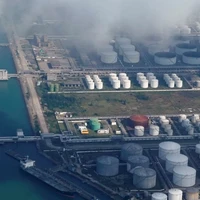
Between March and June 2026, Iran's non-oil trade with China totaled just $830 million, down from $3.3 billion during the same period last year—a decline of roughly 75%.
Kpler shipping data reviewed by Iran International also point to a sharp decline in Iranian oil exports to China.
Average daily unloadings at Chinese ports fell from 1.74 million barrels per day in April to around 550,000 barrels per day in the first half of July.
Together, the figures suggest the Strait of Hormuz closure has dealt a severe blow to Iran's economic ties with its largest trading partner.
China remains the only major buyer of sanctioned Iranian crude and was by far Iran's most important commercial partner in 2025.
The disruption has also sharply increased transportation costs. According to the head of logistics at Iran's Trade Promotion Organization, shipping a container from China to Iran now costs $8,000–$9,000, up from $2,500–$3,500before the conflict.
Transporting goods through Central Asian rail corridors has become even more expensive.
Iran hit harder than regional rivals
Although trade between China and other Persian Gulf states also declined after the Strait closure, the contraction was far less severe than in Iran's case.
Chinese customs data show Bahrain, Iraq, Kuwait, Qatar, Saudi Arabia and the United Arab Emirates recorded a combined $109 billion in bilateral trade with China during the first half of 2026, a 29% decline from a year earlier.
By contrast, total trade between Iran and China during the same six-month period fell 59%.
Trade between China and Oman proved even more resilient, remaining virtually unchanged at around $16 billion during the first half of the year.
The figures indicate that Iran has borne a disproportionately large share of the commercial costs associated with disrupting one of the world's most important shipping lanes.
Broader trade slowdown
The impact extends well beyond China.
Last year, Iran’s Arab neighbours accounted for roughly 51% of Iran's total non-oil trade. Since March, trade between Iran and all of those countries except Iraq has effectively come to a halt.
Iran itself has stopped publishing monthly foreign trade statistics since the regional war began, leaving customs data from trading partners among the few remaining indicators of the country's external commerce.
Data from other major economies point in the same direction.
According to Eurostat, trade between Iran and the European Union fell by more than half during the first three months of the conflict, dropping below €430 million.
India offered one notable exception. A one-month US sanctions waiver allowed Indian refiners to receive two cargoes of Iranian crude in May, lifting India's imports from Iran by more than 340% to about $950 million during the first five months of the year.
Even so, India's exports to Iran fell 17% to $470 million, reflecting weaker non-oil trade.
Official Turkish data painted a steadier picture. Despite a doubling of Iranian natural gas exports, overall trade between Iran and Turkey remained broadly unchanged at around $1.9 billion during the first half of the year.
The Chinese customs figures, shipping data and trade statistics from Europe suggest that while the Strait of Hormuz crisis has disrupted commerce across the region, Iran has so far paid a markedly higher commercial price than many of the countries it sought to pressure.