Iran re-arrests environmental activists from 2018 espionage case, lawyer says
Iranian security forces arrested environmental activists Houman Jokar and Sepideh Kashani at their home on Wednesday and seized their electronic devices, their lawyer said.
Lawyer Hojjat Kermani said Kashani's sister, Sima Kashani, was also arrested. He said it was not immediately clear which security agency had detained the three, according to the Emtedad news website.
Kermani said the arrests, ahead of a long public holiday and the closure of judicial offices, had increased concern among their families.
Iranian security forces arrested environmental activists Houman Jokar and Sepideh Kashani at their home on Wednesday and seized their electronic devices, their lawyer said.
Lawyer Hojjat Kermani said Kashani's sister, Sima Kashani, was also arrested. He said it was not immediately clear which security agency had detained the three, according to the Emtedad news website.
Kermani said the arrests, ahead of a long public holiday and the closure of judicial offices, had increased concern among their families.
Jokar and Kashani were among a group of environmental activists arrested in 2018 by the Revolutionary Guards' intelligence organization. They were later convicted on espionage charges after a case that drew criticism from human rights groups and UN experts over the arrests, interrogations and trial.
Jokar was sentenced to eight years in prison and Kashani to six years. The other defendants were released from Tehran's Evin prison at different times, with the last of them freed in April 2024.
One of the defendants, Iranian-Canadian conservationist Kavous Seyed-Emami, died in custody about a month after his arrest in 2018. Iranian judicial officials said he had killed himself, a conclusion rejected by his family.
The latest arrests come amid reports by rights groups of a new wave of detentions of civil, political and labor activists across Iran following recent unrest and the war with Israel and the United States.
A dust storm has affected large parts of central and eastern Iran this week, with air quality reaching hazardous levels in some areas, visibility falling and authorities closing roads in parts of the country on Thursday.
Air quality monitors showed hazardous pollution levels in parts of Kerman, Yazd, Isfahan, Markazi, Chaharmahal-Bakhtiari, and Sistan-Baluchestan provinces, according to Iranian media.
The sustainable development news site Payam-e Ma reported that air quality index readings reached 500, the highest level on the scale, at several monitoring stations in Kerman province on Thursday morning.
The site said the extent of the dust storm showed it was a regional weather event rather than pollution from local urban or industrial sources.
Experts told the outlet that simultaneous increases in airborne particles across several provinces on Iran's central plateau pointed to weather systems carrying dust across the region.
Repeated droughts, shrinking vegetation cover, dry wetlands and expanding dust sources had increased the frequency and severity of such events, they said.
"From this afternoon, the concentration of dust will gradually decrease," she told state media, adding that skies over the province would remain dusty on Friday, although conditions would improve.
Authorities issue health warnings
Authorities across affected provinces urged residents to stay indoors where possible, wear masks and avoid unnecessary outdoor activity, particularly children, older people and those with heart or lung conditions.
In Isfahan province, crisis management chief Mansour Shishehforoush said a dust mass with domestic origins had entered from Semnan province and northern parts of Isfahan.
"This condition will continue until the end of Thursday," he told IRNA.
He said authorities had ordered temporary restrictions on polluting industrial units and other measures to reduce health risks.
In Yazd province, weather official Ghasem Raji said the dust had spread across most parts of the province from Wednesday afternoon into Thursday morning.
"Horizontal visibility in Yazd city reached the critical level of 500 meters at times today," Raji told Mehr. He said relatively strong winds had carried dust into the province from neighboring areas and warned the conditions would continue through Thursday, disrupting travel.
Police in Kerman province said heavy dust and sharply reduced visibility had forced the closure of roads in both directions in Rigan, Fahraj and Narmashir counties until further notice. Authorities urged motorists to avoid the affected routes, slow down elsewhere in the province and postpone unnecessary travel.
Maryam Salajegheh, a Kerman weather official, said conditions would remain severe until Thursday afternoon.
"From this afternoon, the concentration of dust will gradually decrease," she told state media, adding that skies over the province would remain dusty on Friday, although conditions would improve.
In Chaharmahal and Bakhtiari province, a weather official said dust had moved in from central and neighboring provinces and would persist until early next week.
"With the increase in wind speed in the coming days, dust will intensify," the official, identified by state media as Qatreh, said.
Turkey’s tougher residency rules are leaving growing numbers of Iranians facing legal uncertainty, financial losses and difficult choices over whether they can remain in a country that was once among their most accessible migration destinations.
The Iranian newspaper Shargh reported on Thursday that many Iranians in Turkey have had residency renewals rejected, seen sudden changes to their legal status or, in some cases, been ordered to leave the country.
The report said some had rented homes, bought property or established businesses under rules that previously offered a relatively predictable path to renewing short-term residency permits.
Turkey became a major destination for Iranian migrants over the past decade because of its proximity, visa-free short visits and relatively accessible residency procedures.
File photo shows pedestrians walking along a shopping street in the Turkish city of Van, a popular destination for Iranian visitors.
Turkey’s tougher residency rules are leaving growing numbers of Iranians facing legal uncertainty, financial losses and difficult choices over whether they can remain in a country that was once among their most accessible migration destinations.
The Iranian newspaper Shargh reported on Thursday that many Iranians in Turkey have had residency renewals rejected, seen sudden changes to their legal status or, in some cases, been ordered to leave the country.
The report said some had rented homes, bought property or established businesses under rules that previously offered a relatively predictable path to renewing short-term residency permits.
Turkey became a major destination for Iranian migrants over the past decade because of its proximity, visa-free short visits and relatively accessible residency procedures.
Thousands of Iranians moved there for work, study, investment or family reasons, settling in cities such as Istanbul, Izmir, Antalya and Alanya.
According to Shargh, the situation began to change after the COVID-19 pandemic, as Ankara tightened migration policies affecting many categories of foreign residents.
One Iranian identified as Sina told the newspaper that immigration officials ordered him to leave Turkey for six months despite renting a home in Izmir for four years.
"I kept explaining that I had rented a house here and they couldn't do this," Sina said. "They behaved politely but kept repeating the same thing. In the end, they said if I objected, I should hire a lawyer."
Another Iranian, Reza, told Shargh he moved to Istanbul with his wife and daughter in 2021 after spending his family's savings on renting a home, furnishing it and registering a company.
When the family applied to renew their residency a year later, officials rejected the application without providing a detailed explanation despite what he described as complete documentation.
Maryam, a fashion designer who opened a small workshop in Antalya, said uncertainty over her residency prevented her from expanding her business or planning for the future.
Iranians make their way after crossing into Turkey in Van province, March 3, 2026.
Tougher enforcement
An immigration lawyer interviewed by Shargh said the changes largely reflect stricter implementation of existing rules rather than major amendments to Turkish immigration law.
The lawyer said short-term residency is not an automatic right and Turkish authorities have broad discretion to approve or reject applications after assessing individual circumstances.
Higher migration following the pandemic, pressure on the housing market, changing security and demographic priorities and restrictions on registering foreign residents in parts of major cities all contributed to tighter enforcement, the lawyer said.
The lawyer also cautioned that renting or purchasing property no longer guarantees residency and advised applicants seeking long-term stays to consider more stable legal pathways such as work permits, student visas or qualifying investment programs. Applicants whose requests are rejected generally retain the right to challenge the decisions before Turkey's administrative courts.
The experiences described by Shargh mirror accounts gathered by the Associated Press following months of conflict involving Iran, Israel and the United States, with many Iranians in Turkey describing growing uncertainty over both their legal status and finances.
"There are people who have lived on them for over 10 years," Sedat Albayrak of the Istanbul Bar Association's Refugee and Migrant Rights Center told AP in April, referring to Iranians relying on renewable short-term residence permits instead of obtaining more permanent legal status.
People walk on a small street that leads to the historical Galata Tower in Istanbul.
Nearly 100,000 Iranians lived in Turkey in 2025, according to the Turkish Statistical Institute.
The United Nations refugee agency says around 89,000 Iranians entered Turkey after the conflict began, while roughly 72,000 later departed, indicating that many crossed the border only temporarily or continued to third countries where they already held residency or citizenship.
Conflict compounds financial strain
For many Iranian residents, the recent conflict has intensified economic pressures already created by tighter immigration rules.
Nadr Rahim, who has lived in Turkey for 11 years, told AP his family depended on income from a motorcycle showroom in Iran because obtaining permission to work legally in Turkey remained difficult. Sales largely stopped after the fighting began, while internet disruptions complicated financial transfers.
"If the war continues, we will have no choice but to return," Rahim told AP. His children have grown up in Turkey and speak Persian only with difficulty, making the prospect of returning especially challenging.
Another Iranian woman, who requested anonymity, told AP she enrolled at a Turkish university mainly to secure a student visa while working long hours in service jobs to support relatives in Iran.
"I have a bad life in Turkey, and my parents have a bad life in Iran," she said. "I came to Turkey with so much hope, to support my parents and build a future. But now I feel hopeless."
AP also reported that some families have been separated because of residency complications. Bakery worker Sadri Haghshenas said her daughter returned to Tehran after the family missed a residency application deadline and feared deportation proceedings could jeopardize her chances of returning legally to Turkey.
Easy to visit, harder to stay
For Iranians hoping to settle in Turkey, obtaining or renewing residency has become increasingly difficult. Yet for many others, the country continues to serve as the nearest and most accessible destination outside Iran.
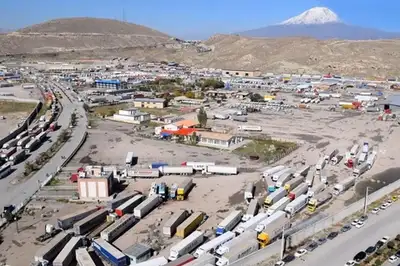
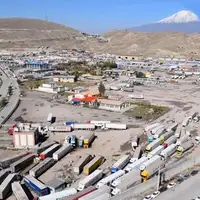
The Wall Street Journal reported on June 26 that traffic through the Kapikoy border crossing near Van has begun returning to prewar levels following the ceasefire, with Iranian visitors once again traveling to eastern Turkey for shopping, leisure and entertainment.
People shop at Grand Bazaar in Istanbul, Turkey, November 4, 2022.
Nightclub manager Hüseyin Aşan told the newspaper business at his venue, which caters largely to Iranian visitors, fell by about 70% during the conflict but has since begun recovering.
"We just came from a war, so we're going to have some fun," a visitor from Tehran told the newspaper after crossing into Turkey for a week's holiday.
Others remained uncertain about what awaited them at home. A 27-year-old medical laboratory technician returning to Iran after vacationing in Turkey told the Wall Street Journal: "I don't know who won the war, but the people lost."
Astate-TV commentator’s claim that factions want to dissolve the IRGC has revived debate over Iran’s dual military structure, the Guards’ expanding political and economic role, and whether the army-IRGC system remains an asset after a war that exposed its reach and costs.
Kharratian has often argued that Iran must preserve what he sees as its strategic leverage in any confrontation or negotiation with Washington, including its military and nuclear capabilities, control over pressure points such as the Strait of Hormuz, the impact of oil prices and political divisions inside the United States.
His latest remarks have triggered debate across Iranian media and social networks.