How Trump decided to strike Iran, new book reveals final hours
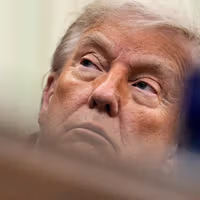
US President Donald Trump was still pursuing a nuclear deal with Iran even as military plans for an attack were falling into place, according to a new book that offers a detailed account of how diplomacy gave way to strikes on the Islamic Republic.
Regime Change, published this week, portrays a president who continued to believe diplomacy remained possible almost until the operation began.
Yet as negotiations stalled, he grew increasingly convinced Iran was vulnerable, repeatedly telling advisers he had "a good feeling" about striking and, according to the authors Jonathan Swan and Maggie Haberman, wanted to "wipe out the regime and figure out the details later."
Rising drug prices and lagging insurance coverage are pushing diabetes medication further out of reach in Iran, documents obtained by Iran International show, with one patient’s NovoMix FlexPen insulin payment rising more than 24-fold in less than two months.
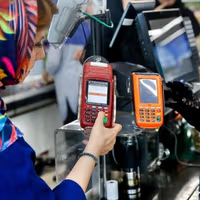
The patient paid 1,592,500 rials (about $0.91) for 15 insulin pens in early May. The same prescription, purchased from the same pharmacy in Tabriz on June 28, cost 39,092,500 rials (about $22.27), an increase of about 2,355%.
The sharp rise in the patient's bill far exceeded the increase in the price of the medicine itself. The total cost of the prescription rose from 96,862,500 rials (about $55.19) to 134,362,500 rials (about $76.56), an increase of 37,500,000 rials (about $21.37), or about 38.7%.
Rising drug prices and lagging insurance coverage are pushing diabetes medication further out of reach in Iran, documents obtained by Iran International show, with one patient’s NovoMix FlexPen insulin payment rising more than 24-fold in less than two months.
The patient paid 1,592,500 rials (about $0.91) for 15 insulin pens in early May. The same prescription, purchased from the same pharmacy in Tabriz on June 28, cost 39,092,500 rials (about $22.27), an increase of about 2,355%.
The sharp rise in the patient's bill far exceeded the increase in the price of the medicine itself. The total cost of the prescription rose from 96,862,500 rials (about $55.19) to 134,362,500 rials (about $76.56), an increase of 37,500,000 rials (about $21.37), or about 38.7%.
The receipts show the same billing categories, including the insurer's contribution, the patient's share, coverage for patients with special illnesses and pharmacy service fees. But while the drug's price increased, the Social Security Organization's reimbursement remained fixed at 96,000,000 rials (about $54.70), leaving the patient to pay the difference.
The newer receipt also included a new line item labeled "difference" worth 37,500,000 rials (about $21.37), transferring the additional cost directly to the patient. That line did not appear on the receipt issued in early May.
As a result, while the price of the drug itself increased by less than 40%, the patient's out-of-pocket payment rose more than 24-fold because the insurance reimbursement ceiling was not adjusted.
Drug prices continue to climb
Iran International reported in late April that insulin prices had already surged compared with levels before the Persian New Year (March 21), with some domestically produced brands rising by up to 212% and imported products by as much as 271%.
The latest receipts suggest prices have continued to rise since then, while also highlighting the growing burden on patients as insurance coverage has failed to keep pace with higher costs.
Pharmaceutical industry representatives say the crisis has been driven by a combination of factors, including the removal of subsidized exchange rates, the depreciation of the rial, higher prices for raw materials and packaging, rising wages, increased financing costs and supply chain disruptions linked to the recent war.
They say manufacturers have also struggled with higher working capital requirements, while delayed price adjustments and insufficient government and banking support have compounded the problem.
Since January, following the government's exchange-rate unification policy, pharmaceutical raw materials that had previously been imported at a subsidized exchange rate have instead been purchased at rates more than five times higher.
Mohammad Abdehzadeh, head of the Health Economy Commission at the Tehran Chamber of Commerce, told Donya-ye Eqhtesad on Wednesday that most medicines had been removed from the subsidized currency system since March and were now being produced using the new exchange rate.
The newspaper said Iran's pharmaceutical sector was facing twin pressures: producers struggling with sharply higher manufacturing costs and liquidity shortages, and patients increasingly forced to bear a much larger share of medicine costs out of pocket.
A suspicious small craft that approached a vessel south of Balhaf, Yemen, has departed but remains active in the area and could pose a risk to other vessels, the United Kingdom Maritime Trade Operations agency said on Wednesday.
UKMTO said the vessel’s security officer reported minor damage to the bridge.
The agency said the small craft had four people on board and was armed with an RPG.
UKMTO said it was continuing to investigate and advised vessels to transit with caution.
Iranian Deputy Foreign Minister Kazem Gharibabadi met Qatari Prime Minister and Foreign Minister Sheikh Mohammed bin Abdulrahman Al Thani in Doha to discuss implementation of the US-Iran interim deal, tate news agency IRNA reported on Wednesday.
Gharibabadi said the talks focused on following up on the deal’s provisions and strategies to speed up implementation, including in Lebanon.
He said working groups had been formed to follow up on implementation and negotiate a final agreement, but talks had not yet begun in that format.
Gharibabadi said consultations on the time and location of those talks were continuing through mediators.
A trilateral meeting between Iran, Qatar and Pakistan was also held in Doha to review implementation of the interim deal, according to the report.