The agreement has created clear political and economic winners—and at least one conspicuous loser—as governments reassess their security, energy and diplomatic priorities.
The principal beneficiaries are the Arab states of the Persian Gulf, along with China and Pakistan, all of which have a strong interest in restoring regional stability and safeguarding trade. Israel, by contrast, emerges as the most politically isolated actor, increasingly at odds with Washington's approach and the broader diplomatic direction of the region.
For much of the world, the central issue is not the ideological rivalry between Iran and Israel but the security of maritime trade.
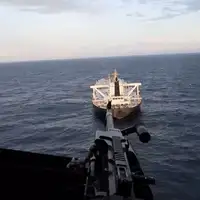
The Strait of Hormuz is a critical artery for global energy flows and for imports of food and consumer goods into the Persian Gulf. Its closure disrupted oil and gas exports, slowed economic activity and heightened inflation across the region.
According to the moderate outlet Fararu, a former British ambassador to Iran argued that many Persian Gulf states believe the agreement should have been reached much earlier given the scale of the economic damage caused by the crisis.
The Gulf Cooperation Council (GCC) states did not respond uniformly to the conflict. Qatar and Oman opposed the escalation from the outset, while Saudi Arabia and the UAE adopted more cautious positions.
Qatar played a particularly important mediating role, helping facilitate communication between Tehran and Washington. Oman, meanwhile, faced Iranian pressure to endorse the idea of tolling the Strait of Hormuz—a proposal rejected by regional states and the wider international community, which regard the waterway as an international passage rather than a commercial asset.
Despite those differences, the agreement has narrowed intra-GCC divisions. It has also deepened doubts about Washington's long-term reliability as a security guarantor, even as Iran's Arab neighbours remain dependent on American military infrastructure.
China appears to have emerged as one of the agreement's biggest beneficiaries. Throughout the crisis, Beijing's overriding concern was global economic stability.
The reopening of the Strait lowers energy import costs, supports Chinese economic recovery and reinforces Beijing's preferred image as a power that benefits from stability without becoming directly involved in regional conflicts.
Pakistan likewise stands to gain. Having played a central mediating role, Islamabad strengthens its diplomatic standing while reducing the risk that instability on its western border could spill over into its own security and economy.
For Russia, the picture is more mixed. The closure of the Strait pushed global oil prices higher, boosting Moscow's revenues. The agreement is reversing that trend, reducing those gains. On the other hand, a more stable Middle East makes it less likely that Arab states will deepen military cooperation with Ukraine, particularly in air defense—an outcome Moscow is likely to welcome.
Israel appears to be the agreement's principal political loser. Donald Trump had hoped to expand the Abraham Accords, but Arab governments are now focused primarily on securing a durable arrangement that contains Iran's nuclear program and prevents another regional war.
Israel's current government, which appears intent on undermining the agreement, has further reduced regional enthusiasm for normalization, leaving it increasingly isolated from the emerging diplomatic consensus.
The agreement has also revived debate inside Iran over whether any future nuclear arrangement can endure on its own.
Former ambassador Hossein Mousavian argues that no nuclear deal can survive unless it also addresses the deeper Iran-Israel confrontation.
In remarks quoted by Rouydad24, he described the current moment as a "golden opportunity" to transform Tehran-Washington relations, but warned that any agreement focused solely on the nuclear file would remain fragile unless embedded within a broader regional security framework.
His assessment reflects a broader recognition emerging from the conflict: the ceasefire and the reopening of the Strait of Hormuz may have created new diplomatic opportunities, but whether they endure will depend on addressing the deeper regional rivalries that have repeatedly undermined previous agreements.