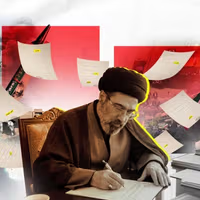
US and Israel wanted Ahmadinejad to lead postwar Iran - NYT
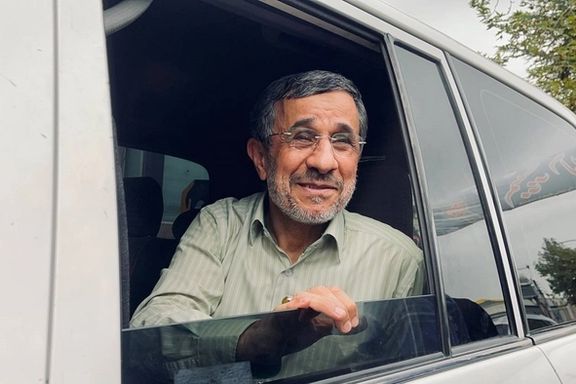
The United States and Israel entered the war against Iran with an extraordinary plan to elevate former president Mahmoud Ahmadinejad after the collapse of the Islamic Republic’s leadership, according to a New York Times report published Tuesday.
The report said President Donald Trump had publicly suggested in the opening days of the war that “someone from within” Iran should take over after Israeli strikes killed Iran’s supreme leader and other senior officials.
But according to the Times, US and Israeli officials had a far more specific figure in mind: Ahmadinejad, the hardline former president known for his anti-American and anti-Israel rhetoric.
The paper reported that Ahmadinejad had been consulted about the plan, which was largely developed by Israel, but later became disillusioned after surviving an Israeli strike on his home in Tehran during the first day of the war.
The report, citing US officials briefed on the matter, said the broader regime-change effort quickly unraveled.
A family-run financial network accused of laundering money for Iran’s Revolutionary Guards has been operating from London and moving funds through shell companies in China and the UAE, according to sanctions records and leaked documents reviewed by Iran International.
On May 11, the British government sanctioned four members of the Zaringhalam family for links to individuals whose activities contribute to instability in the United Kingdom. At least three of them are believed to reside in London.
One of the sanctioned individuals is Farhad Zaringhalam, 44, a specialist in wireless communications and financial technology who earned both his bachelor’s degree and PhD in electronics from King’s College London.
A former Nokia employee who holds British citizenship, he serves on the board of Pergas Petro Trade Group in Iran and manages a company in Singapore. An address registered under his name belongs to a company in Dubai’s Sama Tower, both of which have been sanctioned by the United States for laundering money for the IRGC.
Some members of IRGC money laundering network in London
Farhad did not respond to Iran International’s requests for comment but told the Daily Mail he would challenge the British government’s decision.
The wider Zaringhalam family has long been linked to sanctions evasion and financial networks serving the Islamic Republic.
Nasser Zaringhalam, 66, owns Berelian Exchange. Three years ago, Iran International published exclusive footage of conversations inside his exchange office in which he explicitly referred to circumventing sanctions.
In June 2025, the US Treasury Department sanctioned both Nasser and his exchange house for involvement in terrorism financing.
Documents published by WikiIran show that Nasser and his exchange office registered at least 37 shell companies in the UAE and China and maintained more than 140 bank accounts there to evade sanctions.
One document shows him asking Zagros Petrochemical Company to transfer €3 million to Fanzhian International, a shell company in China. The transaction was processed through Zhishank Bank.
The principal shareholder of Zagros Petrochemical Company is Parsian Oil and Gas Group, which belongs to Ghadir Investment Company, the holding company of the Armed Forces Social Security Organization.
The CEO of Parsian Oil and Gas Group is IRGC Brigadier General Ahmad Vahidi Dastjerdi, a former deputy defense minister.
Ahmad Vahid Dastjerdi, the commander-in-chief of the Islamic Revolutionary Guard Corps (left)
Another leaked document reviewed by Iran International indicates that Nasser Zaringhalam laundered money for Shiraz Petrochemical Company through Moderate General Trading, his UAE-based exchange house, which is also under US sanctions. The principal shareholder of Shiraz Petrochemical is likewise the Armed Forces Social Security Organization.
A separate document shows more than €890,000 transferred through a shell company into a bank account in China before the funds were moved onward to Germany.
According to available records, Nasser Zaringhalam holds citizenship from Saint Kitts and owns a house in Finchley, a district in North London with a large Iranian population.
Britain has also sanctioned Nasser’s son, Pouria Zaringhalam, 29, who holds both British and Saint Kitts citizenship. According to municipal registration records, he has lived in properties in Finchley and Canary Wharf in recent years. In Iran, he serves on the board of Mehr Shabestan Mazandaran Company. British authorities have confirmed he resides in London.
Samples from Mansour Zarrinqalam’s cooperation documents with Persian Gulf Petrochemical Industries Company
Another sanctioned family member, Mansour Zaringhalam, 63, owns Mansour Zaringhalam & Partners Company, also known as GCM Exchange. The United States sanctioned him and his exchange office last year for financing the IRGC.
One leaked document shows Mansour delivering funds belonging to Persian Gulf Petrochemical Industries Company in cash after laundering the money and transferring it back to Iran.
Persian Gulf Petrochemical Industries Company, Iran’s second-largest company by revenue, has been sanctioned for financing the IRGC Quds Force and is a major economic arm linked to the IRGC’s Khatam al-Anbiya Construction Headquarters.
In a contract reviewed by Iran International, Mansour committed himself to creating “a suitable financial structure” for transferring money and receiving foreign currency payments. Another clause stated that he would reduce transfer risks by establishing such a network “while observing security principles.”
Britain also sanctioned Fazlollah Zaringhalam, 74, brother of Nasser and Mansour. Fazlollah, who also holds British citizenship, owns Zaringhalam & Partners Exchange and resides in London, according to the British Treasury.
Eight years ago, one of Fazlollah’s sons, Farshad, who owned an exchange office in Tehran, was sentenced to ten years in prison for disrupting Iran’s foreign exchange system. Another son, Behzad, owns an exchange office in Tehran’s Saadat Abad district.
In Tehran, however, the network’s operations appear to be coordinated in part by Mitra Zaringhalam, sister of the Zaringhalam brothers. The 53-year-old owns Zarin Tehran Investment Company. Both she and her company have been sanctioned by the United States for financing terrorism.
The sanctions come amid heightened scrutiny of Iranian-linked activity in Britain following a string of incidents in North London targeting Jewish sites and media organizations opposed to the Islamic Republic.
The group Harakat Ashab al-Yamin al-Islamiya, which is close to the Iranian government, has claimed responsibility on social media for some of the attacks.
US President Donald Trump told lawmakers at the White House on Tuesday that the United States would “end the war very quickly” with Iran and repeated that Tehran would never be allowed to obtain nuclear weapons.
His comments also came hours after the Senate advanced a measure seeking to limit his authority to continue military strikes on Iran without congressional approval.
The president has in recent days alternated between signaling openness to negotiations and warning that the United States may launch “another big hit” against Iran if talks fail.
ran’s mission to the United Nations accused Washington of using the UN Security Council to spread “lies, false accusations and disinformation” against Tehran and its nuclear program.
In a sharply worded statement posted on X, the mission said “the only country in history to have used nuclear weapons” was violating international law through maritime blockades and support for Israeli military actions across the region.
“The culprit and the thief are now playing the role of prosecutor and judge,” the Iranian mission said, accusing Washington of trying to whitewash its own actions.
Rafael Grossi, the Director General of the International Atomic Energy Agency, told the UN Security Council that the situation at the Barakah nuclear power plant in the UAE remains “of grave concern” following Sunday’s drone strike.
While radiation levels remain normal and offsite power has been restored, Grossi warned that attacks on nuclear facilities devoted to peaceful purposes are “unacceptable” and carry undeniable risks for people and the environment.
Grossi said he had reiterated to the Security Council the need to uphold the “seven indispensable pillars” of nuclear safety and security.
The competing narratives surrounding the latest US-Iran standoff have become so stark that even basic questions—who is deterring whom, who wants talks and who fears escalation—now produce entirely different answers depending on which capital is speaking.
On Tuesday, Trump again underscored the volatility of the standoff, saying the United States “may have to give them another big hit” and claiming Tehran was “begging” for a deal.
Khabar Online journalist Mohammad Aref Moezzi described the current dynamic as a familiar “neither war nor peace” scenario: sustained pressure and confrontation without a clear decision to escalate into full conflict or pursue a comprehensive agreement.
Both sides, he argued, still believe they can force concessions without paying the cost of war.