• العربية
  • فارسی
Brand
  • Iran Insight
  • Politics
  • Economy
  • Analysis
  • Special Report
  • Opinion
  • Podcast
  • Iran Insight
  • Politics
  • Economy
  • Analysis
  • Special Report
  • Opinion
  • Podcast
  • Theme
  • Language
    • العربية
    • فارسی
  • Iran Insight
  • Politics
  • Economy
  • Analysis
  • Special Report
  • Opinion
  • Podcast
All rights reserved for Volant Media UK Limited
volant media logo

Iran war oil spill hits protected Persian Gulf island - AP

May 19, 2026, 14:22 GMT+1

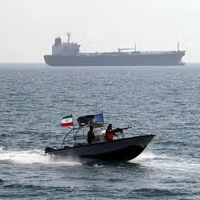
A mysterious attack on Iran’s Lavan Island refinery during the war caused an oil spill that reached nearby Shidvar Island, a protected wildlife breeding ground in the Persian Gulf, AP reported, citing videos and satellite images.

AP said Airbus satellite images from April 10 showed a fire at the Lavan refinery and an oil slick around Shidvar Island.

Mobile phone footage from April 9 showed thick black smoke rising after the strike, according to the report.

Most Viewed

Iran’s president defends US talks as he lays bare economic strain
1

Iran’s president defends US talks as he lays bare economic strain

2

Pezeshkian says Iranians must accept inflation as country is in war

3

Amnesty says Iran drove global surge in executions in 2025

4

Trump holds off planned Iran strike as Arab allies buy Tehran time

5

IRGC-linked propaganda posts targeted across platforms, Europol says

Banner
Banner

Spotlight

  • Iran finds a new weapon beneath Hormuz
    ANALYSIS

    Iran finds a new weapon beneath Hormuz

  • Iran state TV rifle displays stir unease over domestic intimidation

    Iran state TV rifle displays stir unease over domestic intimidation

  • Two years after Raisi’s crash: Iran has no sanctuary
    ANALYSIS

    Two years after Raisi’s crash: Iran has no sanctuary

  • Can Iran’s economy survive a twin squeeze from blockade and blackout?
    PODCAST

    Can Iran’s economy survive a twin squeeze from blockade and blackout?

  • China’s Iran balancing act grows more costly
    ANALYSIS

    China’s Iran balancing act grows more costly

  • Tehran media sees rising risk of war as US talks stall
    INSIGHT

    Tehran media sees rising risk of war as US talks stall

•
•
•

More Stories

Iran state TV rifle displays stir unease over domestic intimidation

May 19, 2026, 13:49 GMT+1
•
Maryam Sinaiee

Iran’s state broadcaster is facing criticism after airing programs in which presenters and government supporters handled rifles and other weapons on camera, with critics saying the displays blurred wartime messaging with intimidation at home.

Iranian state television channels have in recent days broadcast multiple programs featuring members of the Revolutionary Guards (IRGC), often with their faces covered, demonstrating the use of light and heavier weapons.

The televised demonstrations included Kalashnikov rifles, PK machine guns and shoulder-fired RPG launchers.

The channels also showed footage of women, men, teenagers and young people learning how to use and disassemble weapons in mosques and nighttime gatherings organized by government supporters.

Participants shown in the broadcasts said they had volunteered “to defend the country” and “the system.”

One of the most criticized broadcasts aired on Ofogh TV under the title “War Headquarters.”

In the program, after receiving instruction from an IRGC member, the presenter pointed a weapon toward an image displaying the flag of the United Arab Emirates and fired at it.

Relations between Iran and the UAE, long one of Iran’s largest trading partners, have sharply deteriorated following the recent regional conflict.

Reports indicate that the UAE has expelled many Iranian nationals in recent months.

The reformist newspaper Sazandegi wrote: “Shooting at the flag of a neighboring country has left public opinion shocked and astonished.”

A reader commenting on the Rouydad24 news website wrote: “Television presenters firing at the UAE flag on state TV have handed Iran’s enemies a perfect excuse for Iranophobia. Perhaps the shooting segment itself was orchestrated by infiltrators or a fifth column.”

In another televised segment, an IRGC member demonstrated shooting techniques using an unloaded Kalashnikov while aiming at an image of Israeli Prime Minister Benjamin Netanyahu displayed on a studio wall.

After him, the presenter pointed the weapon toward the forehead of US President Donald Trump and said: “I hope these bullets will one day hit their target.”

State broadcaster defends the programs

Officials from Iran’s state broadcasting organization, IRIB, defended the scenes.

Mohsen Bormahani, deputy head of IRIB, told the IRGC-affiliated Tasnim News Agency: “In wartime conditions, and in a country simultaneously engaged in struggle against all the powers and oppression in the world, it is natural for the national media to adopt a wartime posture.”

Bormahani said familiarizing young people and the general public with weapons helped them “become acquainted with the concepts of jihad, resistance, and defense, and strengthen their sense of responsibility and readiness within the framework of religious, cultural, Iranian, and Islamic values.”

He said the appearance of television hosts carrying weapons served as “a reminder of these teachings to the public.”

Hassan Abedini, political deputy of IRIB, separately told Mehr News Agency that the displays were symbolic and intended to project military readiness among government-backed war volunteers.

Media criticism and public anxiety

Several Iranian media outlets sharply criticized the broadcasts and warned that they could create widespread feelings of insecurity.

Rouydad24 wrote: “Broadcasting weapons training on television, in a country that already has an army, the IRGC, security forces, the Basij, and millions of men with mandatory military training, raises a troubling question more than it demonstrates ‘strength’: who exactly are these training programs intended for, and what situation are people being prepared for?”

The outlet added: “If the country’s official television suddenly starts teaching the general public how to use weapons, the question arises whether such an action unintentionally conveys the message that the official guarantors of security are no longer sufficient.”

Rouydad24 warned that the broadcasts presented “a future in which ordinary citizens must prepare themselves for the collapse of order – a situation where weapons have left the barracks and people are forced to defend their homes and streets themselves. This is precisely the image governments usually try never to convey to society.”

The conservative news website Khabar Online also criticized the broadcaster, writing that IRIB may have intended to signal to foreign enemies that “all segments of the nation are ready for battle,” or to project unity at home.

But it said media experts viewed the approach as poor judgment.

Warnings about psychological harm

Khabar Online warned that the broadcasts reproduced “guerrilla and paramilitary imagery that belongs in barracks, not on national television.”

It added: “Seeing a television presenter holding an assault rifle not only fails to create a sense of security, but also intensifies feelings of insecurity, anxiety, and war trauma among the public, especially children and vulnerable groups.”

The reformist newspaper Sazandegi also warned that the episode had raised serious concerns for the psychological security of society and the country’s international image.

It wrote: “Promoting militarism in general television programming creates a tense and anxious atmosphere in society. The proper place for displays of military power is training grounds and official parades, not the live studio of a nationwide television channel with a cultural and social mission.”

Critics see message to opponents

Some critics said the televised weapons displays appeared aimed less at a foreign enemy than at political opponents inside the country, amid growing public frustration and economic strain.

Iranian sociologist Hossein Ghazian told Iran International that the broadcasts symbolized political repression and were intended to pressure critics into silence while also justifying economic hardships through a wartime atmosphere.

One commenter on Rouydad24, referring to the deadly crackdown on protests in January, wrote: “This criminal cult is preparing for the massacre of defenseless and unarmed ordinary people, just like before, and dark days are certainly ahead. Otherwise, with these worn-out Kalashnikovs, against whom are they planning to fight? Are they going to fight F-35s, F-18s, and F-22s with these?”


MP says Tehran could target Persian Gulf oil fields if attacked

May 19, 2026, 13:28 GMT+1

A member of parliament’s national security committee said he does not expect the United States to attack Iran but warned Tehran would strike oil facilities across the region if military action occurs.

“I don’t think the United States will attack Iran because it would gain nothing from military action,” Ahmad Bakhshayesh Ardestani told ILNA. “But if it attacks, it will target Kharg Island and Isfahan.”

A strike on Isfahan would aim to seize “that 400 kilograms of uranium,” Ardestani said, adding that previous efforts to obtain it had failed.

The lawmaker said he believed the current state of “neither peace nor war” would continue because Washington was seeking to deepen pressure on Iran’s economy and fuel domestic unrest.

“If enemies attack us this time, we will attack their oil wells and facilities,” Ardestani said. “If they try to leave us without oil, we will not target pipelines. We will target wells so they also have no oil and fuel prices rise globally.”

Technical failures plague Iran’s virtual schooling during wartime closures

May 19, 2026, 12:36 GMT+1

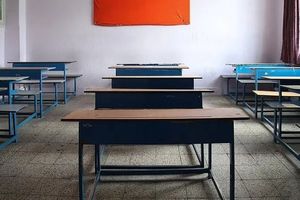
Millions of Iranian students saw remote schooling disrupted by internet outages and failures on the state-run online education platform during more than two months of school closures, renewing criticism of Iran’s virtual education system.

An opinion piece published by Etemad newspaper on Tuesday described widespread frustration among students, parents and teachers over the poor performance of the government-backed Shad platform, which authorities rely on for remote education during emergencies.

Continue reading

Technical failures plague Iran’s virtual schooling during wartime closures

May 19, 2026, 12:23 GMT+1

Millions of Iranian students saw remote schooling disrupted by internet outages and failures on the state-run online education platform during more than two months of school closures, renewing criticism of Iran’s virtual education system.

An opinion piece published by Etemad newspaper on Tuesday described widespread frustration among students, parents and teachers over the poor performance of the government-backed Shad platform, which authorities rely on for remote education during emergencies.

Schools across Iran have remained closed since the US-Israeli strikes, forcing students back into virtual classrooms years after the country’s first large-scale experiment with online education during the COVID-19 pandemic.

The article argued that many of the same problems identified during the pandemic – including low speed, weak server capacity and repeated outages – remain unresolved despite years of experience with remote learning.

  • Iranian families say rising security pressure is eroding trust in schools

    Iranian families say rising security pressure is eroding trust in schools

Iran launched the Shad network during the coronavirus outbreak to create a unified national education system after schools shut down nationwide. But users quickly reported technical shortcomings, leading many schools and teachers to rely on alternative messaging and video applications to continue classes.

Although in-person education resumed after the pandemic, the report said authorities failed to significantly improve the platform’s infrastructure despite repeated school disruptions caused by weather conditions, air pollution and energy shortages in recent years.

Internet restrictions deepen problems

The recent conflict and tensions have added new pressure because restrictions on international internet access have reduced the availability of foreign platforms previously used as alternatives during outages.

Domestic applications have also struggled under the surge in traffic from millions of users attempting to access online classes simultaneously, leaving many lessons interrupted or inaccessible.

Teachers have continued trying to keep classes running despite the limitations, often reducing instruction to brief reviews or postponing major lessons until normal schooling resumes.

A student studies at home during online classes in Iran as schools remain closed and lessons continue through the government-backed Shad platform amid ongoing disruptions.
100%
A student studies at home during online classes in Iran as schools remain closed and lessons continue through the government-backed Shad platform amid ongoing disruptions.

The mounting complaints recently prompted Iran’s State Inspectorate Organization to warn the government that the Shad platform requires updated and sufficient infrastructure to secure public satisfaction.

The oversight body said Shad remains the only widely accepted national platform for virtual education among teachers, students and parents, making its reliability critical during emergencies.

The article argued that online education cannot replace face-to-face teaching, particularly in deprived and remote regions where internet access and digital devices remain uneven.

University students face separate pressures

The disruptions have also extended into higher education. While universities have said to continue courses online, the closure of student dormitories has created financial and logistical difficulties for working students who must remain in their university cities.

  • Rising costs push poor Iranian children out of school, activist warns

    Rising costs push poor Iranian children out of school, activist warns

Students displaced from dormitories have increasingly turned to low-cost temporary accommodation, raising safety and financial concerns for families.

The report concluded that repeated national emergencies have shown Iran still lacks a reliable and accessible virtual education system capable of sustaining learning during prolonged disruptions.

Projectile falls in Iran after air defense test, injuring four, official says

May 19, 2026, 12:04 GMT+1

An air defense test in Andimeshk in Iran’s southwestern Khuzestan province caused a projectile to fall in a residential area on Tuesday, injuring four civilians, a provincial security official told state media.

Iran’s state news agency IRNA cited a provincial security official later as saying that an unknown object had fallen in a residential area of Andimeshk, injuring four people.

Valiollah Hayati, Khuzestan’s deputy governor, also said the incident damaged a shop and two vehicles.