Iran needs ‘fundamental change’ before sanctions lifted, EU chief says


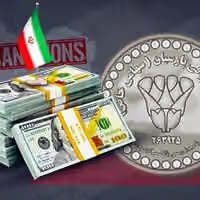
European Commission President Ursula von der Leyen said on Monday that It was too early to drop sanctions on Iran.
Speaking in Berlin, von der Leyen said the sanctions were imposed over Iran’s suppression of its own population.
“We first have to see a change, a fundamental change in Iran for the dropping of sanctions,” she said.

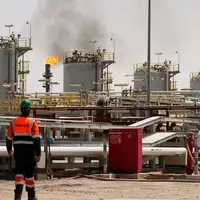


Iran Trade Promotion Organization said in a directive on Monday that the export of steel slabs and sheets were banned until May 30 as the country’s steel industry faced pressure following US-Israeli strikes.
The secretary of Iran’s steel producers’ association had earlier said work was underway on an urgent plan to import steel slabs and hot-rolled sheets.
He also urged industries to manage their raw material demand for the next two months.
Any negotiations with the United States would be aimed at Washington accepting the Islamic Republic’s conditions, an Iranian lawmaker said on Monday.
Ebrahim Rezaei, spokesman for parliament’s national security and foreign policy committee, said the United States had no choice but to accept the terms if it wanted to act “rationally.”
He said Iran’s 10 conditions included recognizing its right to enrichment, paying compensation for damages, and accepting the country’s management of the Strait of Hormuz.
Rezaei said Tehran would not retreat from those positions, adding that the situation in the Strait of Hormuz would not return to its previous status.
Iran’s internet blackout entered its 59th day on Monday after 1,392 hours of near-total disconnection from the outside world, internet monitor NetBlocks said.
“The prolonged shutdown continues to cast a veil of digital darkness over human rights violations on the ground,” it added in a post on X.
Iran’s Graphic Designers Society refused to make a collective request for the so-called “Internet Pro” access for its members, calling the tiered internet plan “discriminatory.”
The association said in a statement that designers needed internet access amid the continuing shutdown but the IGDS board “decided not to submit such an unfair request to the relevant higher authorities on behalf of all members.”
It said members could apply individually for the service, which it said carries a 10-fold higher tariff and a limited usage cap.
The association said the names of individual applicants would be published on its website for transparency.
It said free and affordable internet access was a public right and urged authorities to restore equal access for all.
“Free and affordable access to the internet is the right of all people, and we expect authorities to restore this right equally for everyone to prevent further losses for graphic designers,” read the statement.
A similar stance was taken by Iran’s nursing organization, which said it would not seek privileged access for its members while the wider public remained under restrictions.
The move comes amid a prolonged nationwide internet shutdown that has severely limited access to global connectivity and hindered communication, and economic activity across Iran.
Up to 80 million liters of fuel were lost after storage tanks were destroyed earlier this year, the Tehran governor said on Monday.
Mohammadsadegh Motamedian called for public participation to manage consumption of water, electricity, gas and fuel.
He said fuel consumption has fallen by about 50% due to reduced traffic and increased use of public transport, adding that no gas stations have been forced to shut down.