• العربية
  • فارسی
Brand
  • Iran Insight
  • Politics
  • Economy
  • Analysis
  • Special Report
  • Opinion
  • Podcast
  • Iran Insight
  • Politics
  • Economy
  • Analysis
  • Special Report
  • Opinion
  • Podcast
  • Theme
  • Language
    • العربية
    • فارسی
  • Iran Insight
  • Politics
  • Economy
  • Analysis
  • Special Report
  • Opinion
  • Podcast
All rights reserved for Volant Media UK Limited
volant media logo
ANALYSIS

Ghalibaf defends Iran-US talks amid hardline backlash

Apr 20, 2026, 02:37 GMT+1

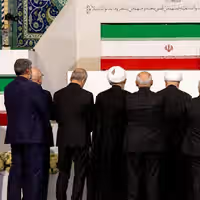
Iran’s lead negotiator and parliament speaker Mohammad-Bagher Ghalibaf defended indirect talks with the United States in a televised interview Saturday after hardline critics accused him of “betrayal” and even hinted at a “coup” over the negotiations in Islamabad.

The backlash, which has intensified in recent days across hardline media and social platforms, prompted Ghalibaf to sit for a lengthy interview on state television aimed largely at persuading critics who reject any form of diplomacy and advocate continued confrontation.

In the interview, Ghalibaf framed negotiations not as a retreat but as a continuation of the conflict by other means. Diplomacy, he said, is neither a withdrawal from Iran’s demands nor separate from the battlefield, but a way to consolidate military gains and translate them into political outcomes and lasting peace.

Most notably, perhaps, he cautioned against exaggerating Iran’s leverage, stressing that US military superiority and capabilities should not be underestimated.

Read the full article here.

Most Viewed

Ghalibaf defends Iran-US talks amid hardline backlash
1
INSIGHT

Ghalibaf defends Iran-US talks amid hardline backlash

2
INSIGHT

100 days after carnage: Iran economy reels from war, inflation, unemployment

3
INSIGHT

A nation in limbo: 100 days after the massacre, has the world moved on?

4
ANALYSIS

From instability to influence: Pakistan’s pivotal role in US-Iran diplomacy

5
ANALYSIS

100 days on: why Iran’s January protests spread across social classes

Banner
Banner

Spotlight

  • War-hit homeowners feel abandoned as Iran’s reconstruction aid fades

    War-hit homeowners feel abandoned as Iran’s reconstruction aid fades

  • 100 days on: the anatomy of Iran’s January crackdown
    INSIGHT

    100 days on: the anatomy of Iran’s January crackdown

  • Ghalibaf defends Iran-US talks amid hardline backlash
    INSIGHT

    Ghalibaf defends Iran-US talks amid hardline backlash

  • 100 days on: why Iran’s January protests spread across social classes
    ANALYSIS

    100 days on: why Iran’s January protests spread across social classes

  • From instability to influence: Pakistan’s pivotal role in US-Iran diplomacy
    ANALYSIS

    From instability to influence: Pakistan’s pivotal role in US-Iran diplomacy

  • A nation in limbo: 100 days after the massacre, has the world moved on?
    INSIGHT

    A nation in limbo: 100 days after the massacre, has the world moved on?

•
•
•

More Stories

100 days on: why Iran’s January protests spread across social classes

Apr 20, 2026, 02:12 GMT+1
•
Ata Mohamed Tabriz

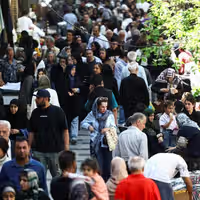
One hundred days after protests erupted across Iran in January 2026, the events continue to reveal something fundamental about Iranian society: many people now fear silence more than they fear protest.

The protests were the result of several crises converging at once. Economic collapse, political exclusion and a growing sense of humiliation pushed society beyond its tolerance threshold and created a shared feeling across social groups that life in Iran had become increasingly unlivable.

When demonstrations erupted across the country, many slogans targeted the Islamic Republic itself.

The roots of the unrest run deep in provinces that host major oil and industrial projects but have long seen little improvement in living standards.

From Abadan to Bushehr and from Kangan to Gilan-e Gharb, many of the cities that first erupted in protest are places where people have spent years asking the same question: where did the country’s oil wealth go?

President Masoud Pezeshkian’s government attempted to calm tensions by announcing direct cash payments to households after eliminating subsidized exchange rates. The payment amounted to about one million tomans—roughly seven dollars.

The gesture came at a time when food prices were soaring. Cooking oil prices had risen more than 200 percent, eggs were more than twice as expensive as a year earlier, and some shopkeepers had begun selling basic dairy products on installment plans.

For many Iranians the payment symbolized not relief but humiliation.

The middle class and the bazaar

One of the defining features of the January protests was the erosion of the social distance between Iran’s middle class and its poorer citizens.

Historically, Iran’s middle class has been a carrier of civil and political demands. But by early 2026 many middle-class families were struggling simply to avoid falling into poverty.

Political sociologists have long argued that revolutions are rarely led by the poorest members of society. They tend instead to emerge among groups that once enjoyed relative stability but now feel they are falling.

In Iran, the middle class had not only lost income but also social status. That loss helped create an unwritten alliance between middle-class citizens and poorer groups, both of whom felt they were suffering under the same policies.

Another signal that the unrest had entered new territory came when parts of Tehran’s Grand Bazaar closed on January 7.

The bazaar has historically been one of the most cautious institutions in Iran’s political life. Even during severe economic crises it has often preferred negotiation and indirect pressure to open confrontation. During the 2009 protests many merchants stayed silent, and in 2022 they largely remained on the sidelines. This time was different.

Currency volatility made supply chains chaotic and pricing unpredictable. A product purchased in the morning could be worth something entirely different by the afternoon. Many traders said they could no longer price goods reliably, and keeping shops open risked losses rather than gains.

When sections of the bazaar shut their doors, it signaled that dissatisfaction had spread beyond traditional protest groups. A conservative economic institution had concluded that the existing order itself had become a source of instability.

The collapse of reformist hopes

For some voters, President Pezeshkian had represented a final opportunity for reform and for avoiding war.

As protests intensified, however, he adopted increasingly hardline rhetoric. On January 11 he described protesters as “terrorists” and called on security forces to respond decisively.

Even some reformist figures who had supported him began to express frustration.

The shift reinforced a broader perception among many Iranians that the political system was incapable of meaningful change.

Combined with the economic crisis and the aftermath of the 12-day war, this sense of political closure deepened public despair.

From scattered anger to mass protest

The January protests also unfolded against a tense geopolitical backdrop.

Statements from foreign political figures—including remarks by Donald Trump warning Tehran against violent repression—were widely circulated among Iranian audiences. At the same time, Iran’s exiled prince Reza Pahlavi called for coordinated demonstrations and nightly slogans across the country.

Such messages helped focus attention on specific moments of protest. But they did not create the anger that drove people into the streets. That anger had been building for years.

The protests occurred as the Islamic Republic appeared to be shifting toward what might be described as a more defensive style of governance.

In this approach, economic grievances and social demands are increasingly treated as potential security threats. Limited cultural concessions—such as relaxing enforcement of the hijab law or allowing controlled concerts—serve mainly as tools for managing pressure rather than as signs of genuine reform.

The January protests tested this model. The state ultimately suppressed the demonstrations. Yet repression alone cannot address the deeper structural tensions that produced the uprising in the first place.

The streets may have emptied. But many Iranians now believe that the country cannot return to the conditions that existed before January.

From instability to influence: Pakistan’s pivotal role in US-Iran diplomacy

Apr 19, 2026, 11:16 GMT+1
•
Mahboob Shah Mahboob

Despite deep political turmoil, economic distress, militant violence, and a fraying security landscape at home, Pakistan has unexpectedly emerged as the publicly acknowledged central mediator between Washington and Tehran.

Since late February 2026, the war involving the United States, Israel, and Iran has widened, with traffic through the Strait of Hormuz becoming a major pressure point for the global economy.

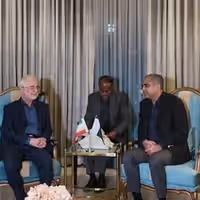
Under that pressure, a temporary ceasefire was first announced with Pakistani mediation. That was followed by rare direct talks between the United States and Iran in Islamabad.

Pakistan’s role was publicly acknowledged by both Washington and Tehran, each of which described it as the “central mediator.”

The talks held in Islamabad on April 11-12 lasted more than 20 hours and ended without an immediate agreement. Even so, the channel remained open, and efforts to prepare a second round have continued.

That process has raised a central question: was Pakistan merely passing messages, or was it managing a broader peace process?

Although the direct US-Iran talks took place in Islamabad, Pakistan’s role can be seen across several parallel tracks.

Hidden channels of communication

From the beginning of the war, Pakistan helped facilitate the exchange of messages between Washington and Tehran.

A number of Pakistani politicians have openly acknowledged that US proposals – at times in the form of specific points or clauses – were conveyed to Iran through Pakistan, and that Iran’s responses were then relayed back to Washington.

That role became particularly important at a moment when some of the Persian Gulf’s traditional mediators, including Qatar, were themselves under severe security pressure and were being targeted daily by Iran.

Structuring the agenda of the talks

By hosting the talks, Islamabad took three practical steps.

First, it provided a secure environment and the necessary logistics for both sides, which trusted Pakistan’s capacity in that area.

Second, it separated the negotiations into distinct tracks: the nuclear program, sanctions, frozen assets, the Strait of Hormuz, and regional security.

Third, it pressed for a timetable and a mechanism for a “second phase” of talks and for dialogue to continue.

Although the talks ended without an immediate outcome, Pakistan succeeded on the first two fronts. That is why it did not remain passive afterward and continued its mediation efforts in preparation for a second round.

Coordination with regional partners

Pakistan has also sought to widen support for a ceasefire and renewed talks by securing broader backing – especially from Saudi Arabia, Turkey, Egypt.

That coordination matters because it allows each side to use its influence and reduces the likelihood of disruptive action by spoilers.

Why trusting Pakistan?

Although there are countries in the region more powerful than Pakistan – India being the clearest example – trust in Pakistan has not stemmed from moral authority. It has come from necessity, leverage, and calculation.

Pakistan has long-standing security ties with the United States, as well as neighborly and working relations with Iran. Together, those ties provide a minimum level of mutual trust for both sides.

For Washington, the need was for a country able to transmit messages within a framework aligned with US interests and to provide a negotiating venue acceptable to Donald Trump’s administration.

In that context, India was not a suitable choice for the United States, because the degree of influence and leverage the Trump administration has over Pakistan does not exist in the same way over India.

At the same time, America’s Arab allies are not only under intense pressure, but are also seen by Iran as direct partners of Washington and therefore lack the credibility needed for mediation. The United States also needed an Islamic country with nuclear capability to play that role. From that perspective, Pakistan was the best available option.

Pakistan also has workable relations with Saudi Arabia, Qatar, and the United Arab Emirates, and its trust-building efforts during the talks could prove useful.

Pakistan depends on the Persian Gulf and the wider Middle East for energy, labor remittances, and regional stability. A prolonged war would therefore carry domestic economic and security costs. Those costs, in turn, increase Islamabad’s incentive to preserve the ceasefire and keep negotiations alive.

There is also a domestic political calculation. Pakistan’s government is trying to ease both internal and external pressure, particularly amid the country’s political crisis and the imprisonment of former prime minister Imran Khan. By taking part in a process in which the United States is one of the parties, Islamabad may hope to reduce pressure on Shehbaz Sharif’s government.

Economic distress is another dimension. Pakistan hopes that these talks may help it secure US economic support as well as financial aid and loans from Arab states – a need Islamabad understands well.

At the same time, Pakistan has security and defense agreements with Saudi Arabia and could, if the war dragged on, come under pressure to support Riyadh. That concern appears to have pushed Pakistan to avoid direct entry into the conflict: first by opening confrontations in Afghanistan to signal to its allies that internal instability left it unable to cooperate militarily against Iran, and then by presenting itself as a mediator for peace.

For Iran, too, Pakistan may not be the ideal mediator, but in practice there are few alternatives. Tehran has targeted many Arab countries, while Qatar – which had previously played a mediating role – has itself become a casualty of the war. That leaves Pakistan, as an Islamic country, as the remaining option. For that reason, Tehran has also welcomed Pakistani mediation.

The role of the security institutions and the army

In a crisis of this kind, guaranteeing a ceasefire and ensuring the safe passage of messages is difficult without the involvement of security institutions.

According to reports, Pakistan’s army chief is seen in Washington as a reliable channel for direct contact, and that has accelerated decision-making.

Pakistan has also previously hosted and facilitated confidential contacts between major powers, including during the period of rapprochement between China and the United States. That history suggests Islamabad has experience in closed-door diplomacy.

Reports further indicate that direct contact between the Trump administration and General Asim Munir helped smooth the decision-making process, and that Washington believes Pakistan has practical influence over security commitments, can preserve its relationship with Iran, maintain its ties to the Arab world, and is itself affected by instability in the Middle East.

Why is the army chief at the center of this diplomacy?

In this mediation effort, it has been not the prime minister or foreign minister, but Pakistan’s military chief, Field Marshal Asim Munir, who has emerged as the main figure in the negotiations.

Pakistan’s military has more than 51 years of experience dealing with US and Iranian security and military circles. Pakistani officials say responsibility for maintaining confidential channels with the political and military leadership in Tehran and Washington has been placed in Munir’s hands. In a crisis like this, security guarantees carry greater weight than purely political commitments.

Prime Minister Shehbaz Sharif said in a speech that Munir had played an especially prominent role in the talks. He added that Munir received the Iranian delegation in full field marshal dress and welcomed the American delegation in formal Western attire – a symbolic message suggesting that Pakistan was guaranteeing the process not only at the level of the civilian government, but at the level of the state and security establishment.

After the imprisonment of Imran Khan, public discontent with the army in Pakistan had risen sharply, and many came to see the military as the root of the country’s crises. Munir appears to have understood that mood clearly, and by accepting a mediating role at such a sensitive moment, he has, to a considerable extent, managed to rebuild some of the public trust that had been lost.

According to a source in the Pakistani prime minister’s office, Trump’s office contacted Munir directly 12 times after the first round of talks.

That suggests Pakistan’s army chief is effectively acting as an indirect representative of the United States while also handling the transmission of messages.

Political parties and civilian institutions in Pakistan, however, are unhappy with that role and worry that, if the talks succeed, the army’s power will grow further and the already weakened political sphere will fall more deeply under military influence.

After the first round ended, Munir traveled to Tehran to prepare the ground for a second round of talks and to convey Washington’s messages and proposals to the Iranian side. The trip was directly linked to efforts to shape the next phase and extend the ceasefire.

The prospects for success in talks

Although the first round ended without a final result, the repeated trips by Pakistan’s army chief and the pressure created by the situation in the Strait of Hormuz – on both the United States and global markets – have increased the chances of at least a partial agreement.

The path ahead, however, is far from straightforward, because the disagreements are more structural than merely technical.

Several difficult but essential steps could improve the prospects for success.

  • A step-by-step agreement: first, an extension of the ceasefire, a temporary mechanism for Hormuz, and limited sanctions relief; then deeper discussions on nuclear and regional issues.
  • A package of guarantees: balanced guarantees – rather than automatic snapback mechanisms –in the event of a ceasefire breach, with Pakistan seeking to underpin those guarantees through security channels.

Statements by Pakistani officials suggest they are trying to lay the groundwork for those two stages and hope that Islamabad will reap what they describe as “the sweetest fruit” from both Washington and Tehran.

That expectation rests on a broader calculation. Tehran no longer has the capacity for a long war and wants relief for its weak economy from sanctions pressure, while the United States has shown signs of willingness to ease some of those sanctions.

On the other side, the Trump administration is facing rising domestic political and economic pressure, while Iran has sent positive – though conditional – signals on the nuclear file.

For those reasons, hopes for the success of the talks have increased.
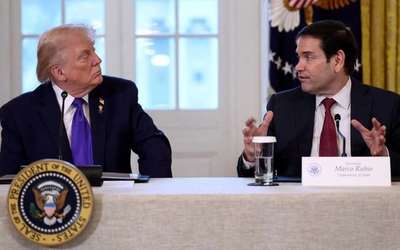
US blockade enters murky phase as tankers spoof signals and buyers hesitate

Apr 15, 2026, 01:11 GMT+1
•
Negar Mojtahedi

The US naval blockade of Iran is entering an opaque phase, with early signs of impact emerging through both buyer hesitation and deceptive shipping practices, rather than direct naval confrontations.

In the first 24 hours after the blockade took effect at 10 a.m. ET on April 13, US Central Command said “no ships made it past the US blockade” and that “6 merchant vessels complied with direction from US forces to turn around to re-enter an Iranian port on the Gulf of Oman.”

But shipping data, satellite imagery and industry monitoring suggest the real contest may be unfolding more quietly — and more ambiguously.

Maritime analysts have observed early shifts in tanker behavior near the Strait of Hormuz, with some vessels reversing course shortly after the blockade began.

Mike Schuler, managing editor of gCaptain, wrote on X that “Tankers may already be turning away from Hormuz,” citing AIS data showing “two vessels reversing course minutes after the US blockade began.”

Other vessels appear to be adapting more creatively.

TankerTrackers reported spotting a tanker departing Kharg Island while spoofing its AIS signal to suggest it had left Saudi Arabia instead.

AIS, or Automatic Identification System, is designed to broadcast a ship’s identity, location and route. But the practice of manipulating these signals has become a hallmark of so-called “dark fleet” operations, allowing sanctioned vessels to obscure their origins and evade scrutiny.

TankerTrackers noted separately that “Dark Fleet tankers in particular may change names and flags,” urging journalists to rely on IMO numbers to track vessels more reliably.

Taken together, these patterns suggest the blockade’s early phase is being defined less by visible interdictions and more by a cat-and-mouse dynamic at sea, with tankers probing the limits of surveillance and compliance.

Enforcement gaps and shadow fleet

At the same time, enforcement itself remains uneven.

Reuters reported that a sanctioned, Chinese-owned tanker — identified as Rich Starry — transited the Strait of Hormuz during the blockade period, alongside other vessels including Murlikishan and Peace Gulf.

According to TankerTrackers, Rich Starry is “a serial AIS spoofer and a designated sanctions violator with a history of transporting Iranian refined products.”

The vessel later turned back after reaching the Gulf of Oman, while other ships stopped transmitting AIS signals altogether after entering international waters, according to ship tracking data.

These movements underscore a central challenge for US enforcement: vessels can spoof tracking data, switch flags, change names and operate in legal gray zones that complicate interdiction.

Even as Washington signals control over access to Iranian ports, the persistence of such activity suggests enforcement may be partial, contested and dependent on constant monitoring.

Buyer hesitation

Beyond shipping itself, early signs indicate the blockade may be influencing buyer behavior — potentially a more decisive factor.

TankerTrackers reported that “two million barrels of Iranian crude turned up unannounced today in India,” adding later that “India won't be accepting this oil.”

That hesitation points to a broader risk for Tehran: even if cargoes can leave Iranian waters, they may struggle to find willing buyers.

Jason Brodsky, policy director at United Against Nuclear Iran, said Washington is “trying to flip the script on Iran” after Tehran sought to tighten control over Hormuz traffic earlier this month.

By signaling it can restrict Iranian access to the same waterway, he said, the United States is effectively telling Tehran, “not so fast, we have the ability to prevent you and your vessels from using the Strait of Hormuz.”

Why this may be different from sanctions

Some analysts say the blockade could alter the underlying economics of Iran’s oil trade in ways sanctions did not.

“The blockade is doing something that 20 years of sanctions couldn't actually do,” said Mohammad Machine-Chian, a senior journalist covering economic affairs at Iran International.

He said sanctions often created opportunities for regime-connected middlemen and black-market networks to profit.

By contrast, “blockade is making that business model unfeasible,” he said, suggesting pressure may now fall more directly on the networks that previously benefited from sanctions evasion.

Pressure builds over time

Still, experts caution against expecting immediate economic collapse.

Former Royal Navy commander Tom Sharpe described the blockade as “a lever of persuasion of coercion” designed to “make Iran more susceptible to negotiations.”

“The blockade on the blockade is a strong-arm tactic to make Iran more susceptible,” he said. “In other words, as a lever, this might be a good one.”

Brodsky also said the effects are likely to build over “weeks and months,” rather than producing an instant shock.

Miad Maleki, a former US Treasury official, estimated the blockade could inflict roughly $435 million in daily economic damage, underscoring the potential scale of pressure even as its early effects remain uneven.

For now, the blockade’s first real test may be less about whether ships can pass through Hormuz, and more about whether they can do so undetected — and whether buyers are still willing to take the risk once they arrive.

Why the $100 billion Hormuz toll revenue is a myth

Apr 14, 2026, 18:24 GMT+1
•
Umud Shokri

The idea that Iran could generate tens of billions of dollars annually by charging ships to pass through the Strait of Hormuz has gained traction in media commentary, but the claim does not withstand scrutiny.

Estimates circulating in public debate frequently suggest Iran could earn $40–100 billion annually by imposing transit fees on vessels using the strait, effectively turning the country into a “$100 billion gatekeeper” of global energy flows.

Yet a closer look at shipping volumes, pricing norms and international law suggests the potential revenues would likely be closer to $1–2 billion a year, even under optimistic assumptions.

According to the US Energy Information Administration, nearly 21 million barrels of oil per day passed through the strait in early 2025—around 20% of global petroleum liquids consumption and roughly a quarter of seaborne oil trade. About 20% of global LNG trade, largely from Qatar, also transits the waterway.

With petroleum cargo alone worth more than $500 billion annually, it is easy to see why the toll narrative is appealing.

Simple arithmetic of multiplying a hypothetical transit fee by daily vessel traffic quickly produces headline-grabbing estimates of tens of billions of dollars. But those calculations overlook how maritime transit actually works.

Legal and practical limits

Unlike the Suez Canal, the Strait of Hormuz is a natural waterway, not an engineered passage requiring dredging, infrastructure and navigation services.

The canal charges substantial transit fees partly because it is an artificial route requiring constant maintenance. Those fees typically range from about $200,000 to $700,000 per vessel.

Natural straits such as Hormuz operate under the transit passage regime established by the United Nations Convention on the Law of the Sea, which prohibits charging vessels simply for passage and requires non-discriminatory treatment.

Although Iran has not formally ratified the convention, these principles are widely recognized as customary international law. Oman, which shares jurisdiction over the strait and has ratified the treaty, has shown little willingness to support aggressive tolling policies.

Any unilateral attempt to impose large transit fees would likely trigger legal challenges and opposition from maritime powers and major energy importers.

The math behind the myth

Even ignoring legal constraints, realistic pricing benchmarks produce far smaller revenue estimates.

Applying Suez-style fee levels to Hormuz traffic dramatically reduces the numbers. Pre-conflict flows included roughly 10 very large crude carriers per day, alongside LNG and product tankers.

Using comparable Suez pricing (roughly $535,000 per tanker), and accounting for Oman’s jurisdictional share, Iran’s portion would likely amount to around $1.5 billion annually under ideal conditions.

And even that estimate assumes stable traffic, full compliance and minimal enforcement costs—conditions unlikely to hold if Tehran attempted to impose tariffs unilaterally.

In practice, traffic would likely fall as ships sought alternative routes or bypass pipelines such as Saudi Arabia’s East–West pipeline.

Geopolitical reality

The geopolitical constraints are equally significant.

The Strait of Hormuz is a critical energy lifeline for major economies including China, India, Japan and European states. Countries heavily dependent on Middle East energy supplies would be unlikely to accept large additional costs imposed unilaterally.

History offers a clear precedent. During the 1980s Tanker War, attacks on Persian Gulf shipping triggered international military intervention to secure maritime flows. Similar dynamics would likely emerge if transit fees were imposed on a large scale.

For Iran itself, the economic logic is also questionable. The country already struggles to monetize its oil exports because of sanctions and financial restrictions. Attempting to impose transit tariffs would likely intensify geopolitical pressure and reduce shipping volumes, offsetting much of the potential revenue.

The danger of the narrative

The biggest risk lies not in the policy itself but in the narrative surrounding it.

Inflated revenue estimates exaggerate Iran’s potential leverage over global energy markets. For Tehran, they may encourage overconfidence in the economic value of coercive maritime policies.

For external actors, they risk inflating the perceived threat and encouraging responses based on exaggerated assumptions.

The strategic value of the Strait of Hormuz lies not in its potential as a revenue-generating toll system, but in its role as a stable transit corridor for global energy flows.

The widely cited estimates are not supported by legal precedent, market behavior or geopolitical realities.

The “$100 billion gatekeeper” is not a viable strategy. It is a catchy headline for an economic illusion.

US blockade targets Iran oil boom amid regional disruption

Apr 14, 2026, 15:55 GMT+1
•
Dalga Khatinoglu

The United States moved to impose a naval blockade on Iran just as the country’s oil exports were surging to their highest levels in years, underscoring Washington’s effort to halt a wartime boom in Tehran’s energy revenues.

The move followed the collapse of negotiations in Pakistan and comes amid a war that has disrupted much of the Persian Gulf’s energy trade.

Since the launch of joint military operations by Israel and the United States, Iran has effectively closed the Strait of Hormuz. Even after the April 8 ceasefire, maritime traffic through the strategic waterway has yet to recover.

Data from the International Energy Agency show exports from Persian Gulf states have fallen sharply during the conflict, with more than 170 million barrels of their oil stranded in tankers anchored across the region, according to Kepler data.

Iran exports rise as others fall

At the same time, shipping data point to a striking countertrend: rising Iranian oil exports.

Despite the conflict, Iran has increased its daily oil loadings and exports to around 2 million barrels over the past three months.

China has raised its purchases of Iranian crude by more than 300,000 barrels per day, bringing total imports close to 1.6 million barrels daily. India, which halted Iranian oil imports in 2019, has also resumed purchases, receiving at least 2 million barrels this month.

Tehran has also opened discussions with Singapore, Taiwan, Japan and other Asian importers to expand its market share.

Reuters has reported that Iranian crude has recently been sold to some Chinese buyers at prices even higher than the Brent benchmark—an unusual development for a country that typically sells at a discount due to sanctions.

Windfall revenues

The World Bank estimates the economies of Kuwait, Qatar and Iraq, whose oil and LNG exports have been severely disrupted, could contract by between 5 and 9 percent this year.

Iran, by contrast, appears to be benefiting from both increased exports and a roughly 40 percent rise in global oil prices during the war.

Tehran has also begun collecting ad hoc transit fees from vessels passing through the Strait of Hormuz. Ships are required to register with the Islamic Revolutionary Guard Corps and transit near Iranian islands.

Reports suggest Iran is charging up to $2 million per vessel. Under normal conditions, roughly 150 ships pass through the strait each day.

Blockade seeks to cut revenue

US President Donald Trump announced the naval blockade in an effort to halt Iranian oil exports while warning that vessels paying transit fees to Iran could face seizure.

Yet Iran appears to have prepared for disruption. Kpler estimates Tehran had already stockpiled roughly 200 million barrels of crude in Asian waters before the conflict began in late February, with an additional 23 million barrels stored in the Sea of Oman.

Those reserves could allow Iran to continue supplying customers for months even without new shipments.

Although Washington has threatened sanctions against buyers of Iranian oil, it remains unclear whether China—effectively Tehran’s main customer since 2019—will comply.

The conflict is also raising wider maritime risks across the region.

Iran has attacked around 20 vessels in its southern waters over the past 50 days, while incidents are spreading beyond the Gulf.

The UK Maritime Trade Operations agency reported on April 12 that armed individuals in a small boat attempted to approach a vessel in the Bab el-Mandeb Strait, another vital energy chokepoint handling roughly 9.3 million barrels of oil and petroleum products each day.

Whether the US blockade will succeed in curbing Iran’s export surge—or further deepen disruption across global energy markets—remains uncertain.