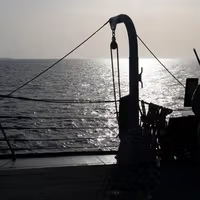
Iraq resumes southern oil exports after Hormuz disruption
Iraq resumed oil exports from its southern terminals following a halt of more than a month due to disruptions in the Strait of Hormuz, four energy sources told Reuters on Friday.



US Central Command chief Brad Cooper said on Friday American forces are fully enforcing a maritime blockade on Iranian ports and can sustain it “as long as necessary,” according to an interview with Al Arabiya.
“We are watching every Iranian ship in every port, full stop,” Cooper said, adding that US forces “have eyes on every Iranian port.”
Cooper added 19 vessels had attempted to violate the blockade since it was imposed on Monday but turned back after US warnings. “No ships have or will evade US forces,” he said.
More than 40 Iranian lawmakers warned it would be a “mistake” to continue negotiations with the United States without first securing the release of frozen Iranian assets.
“We declare that continuing negotiations while one of the stated conditions has not been fulfilled is wrong and unacceptable,” forty-one lawmakers said in a statement published by Fars News Agency.
They stressed that “unfreezing the assets of the Iranian people” was a core precondition for entering talks and called for resistance until it is achieved.
The lawmakers also accused the US of repeatedly violating the ceasefire, warning that failing to respond due to ongoing negotiations risks “normalizing this dangerous situation.”
They further criticized the lack of parliamentary oversight, noting that the legislature has not held full sessions for weeks and calling for formal meetings to resume so lawmakers can review developments and make decisions.
“Continuing negotiations in such conditions, with an untrustworthy and hostile counterpart aware of all details, requires proper, timely and transparent communication,” the statement said, urging officials to provide clearer public explanations to maintain domestic support.
The United States on Friday imposed sanctions on several commanders of Iran-aligned militias in Iraq, accusing them of carrying out attacks on American personnel.
The US Treasury Department said its Office of Foreign Assets Control (OFAC) designated seven Iraqi militia commanders linked to groups backed by Iran, including Kata’ib Hizballah, Asa’ib Ahl al-Haqq and Harakat al-Nujaba.
According to the statement, the individuals were involved in planning and executing attacks against US personnel, facilities and interests in Iraq.
Treasury Secretary Scott Bessent said Washington would not allow “terrorist militias, backed by Iran, to threaten American lives or interests,” warning that those enabling such activities would be held accountable.
The sanctions freeze any US-based assets of the designated individuals and generally prohibit transactions involving them, while also exposing foreign financial institutions dealing with them to potential penalties.
The US removal of Iran's highly enriched uranium stockpiles would not involve American ground troops, US President Donald Trump said in a phone interview with CBS News.
However, when asked who would recover the stocks from the US side, he would only say "our people."
"No. No troops. We'll go down and get it with them, and then we'll take it," Trump said.
"We'll be getting it together because by that time, we'll have an agreement and there's no need for fighting when there's an agreement. Nice right? That's better. We would have done it the other way if we had to."
Iran’s Navy commander Shahram Irani dismissed the US naval blockade as “piracy and banditry,” saying commercial shipping through the Strait of Hormuz continues despite American warnings.
“What this person (Trump) calls a naval blockade is nothing but banditry and piracy,” Irani told the state TV.
“Others need the Strait of Hormuz... He has blockaded his own friends, not us.”
He added that vessels complying with what he called "established norms and international maritime practices" continue to pass through the strait daily.
“Every day, ships that follow the rules and understand international norms are transiting. Even when the US issues warnings, they do not listen to it,” he said.