• العربية
  • فارسی
Brand
  • Iran Insight
  • Politics
  • Economy
  • Analysis
  • Special Report
  • Opinion
  • Podcast
  • Iran Insight
  • Politics
  • Economy
  • Analysis
  • Special Report
  • Opinion
  • Podcast
  • Theme
  • Language
    • العربية
    • فارسی
  • Iran Insight
  • Politics
  • Economy
  • Analysis
  • Special Report
  • Opinion
  • Podcast
All rights reserved for Volant Media UK Limited
volant media logo

Statement by the Iran International Editorial Board on escalating threats and intimidation

Iran International's Editorial Board
Apr 16, 2026, 19:00 GMT+1

Iran International condemns the attempted attack near its London studios on the evening of 15 April.

At around 8:15 pm, a suspicious vehicle was denied entry at the main entrance to our site. Shortly afterwards, incendiary devices were thrown into the car park of a neighbouring building, just metres from our studios. Our security team responded immediately, and the police and fire brigade arrived shortly afterwards. We are grateful to them for their swift response.

On 16 April, the Metropolitan Police confirmed they had arrested three people after an ignited container was thrown towards the offices of a Persian-language media organisation in north-west London. The container landed in a car park without causing damage or injury. They also said the case is not currently being treated as a terrorist incident but is being investigated by Counter Terrorism Policing London.

The police investigation is ongoing. At this stage, the motives and intentions of those involved have not been established, and we will not speculate while inquiries continue. But this was a serious incident, and it comes at a time of growing threats and intimidation directed at Iran International and those connected to its journalists.

In recent months, particularly following the recent military operation in Iran, there has been a marked increase in harassment targeting the relatives of Iran International journalists inside Iran. Security agents have raided the homes of the parents and close family members of several of our journalists. Relatives have been questioned in their homes, in some cases filmed, and pressured to identify themselves as the parents of specific journalists. Phones and other electronic devices have been confiscated. Some have also been interrogated about their bank accounts, assets, and property, despite having no connection to their relatives’ journalistic work.

These actions are part of a wider effort to restrict the free flow of information and deny the Iranian people access to independent news. They have intensified at a time when the authorities have imposed sweeping internet shutdowns and the media inside Iran remains under tight state control. As of today, Iran’s near-total internet blackout has entered its 48th day, making it the longest nation-scale shutdown of its kind on record. When internet access is cut and domestic media are tightly controlled, foreign-based Persian-language broadcasters remain among the few reliable sources of news for people inside the country.

For tens of millions of Iranians, Iran International is a principal source of independent news.

This pressure has been accompanied by public threats and punitive measures. The IRGC-affiliated Fars News Agency has reported that the Tehran Prosecutor’s Office ordered the seizure of assets and the freezing of bank accounts of more than 100 people, including 63 journalists from Iran International. At the same time, threats against Iran International have continued on Iranian state television, where repeated calls have been broadcast for the channel to be targeted by missiles. Iran International has no offices or staff in Iran or elsewhere in the region.

Iran has also continued efforts to target the computers and mobile phones of individual journalists. In several European countries and in North America, authorities have notified us of sustained cyberattacks targeting our journalists. These incidents form part of the wider intimidation and harassment directed at Iran International and its journalists.

Taken together, these actions amount to a campaign of transnational intimidation aimed at silencing independent journalism. Journalists must not be threatened or attacked, and their families must not be used as a means of pressure. Such actions constitute an attack on individual safety, press freedom, and the public’s right to know.

In May 2024, UN experts stated that threats and violence against Iran International formed part of a broader pattern of repression targeting Persian-language journalists operating abroad. In February 2023, Iran International temporarily relocated its broadcasting operations from London to Washington DC following a significant escalation in state-backed threats. In January 2024, the UK announced sanctions linked to a plot to assassinate two Iran International presenters on UK soil. In March 2024, one of our presenters was stabbed outside his London home in an attack investigated by counter-terrorism police. Together, these incidents point to a sustained effort to intimidate Iran International and silence independent Persian-language journalism beyond Iran’s borders.

We thank the British authorities for their continued support and for taking threats against journalists and media organisations seriously.

Iran International will continue its work. We remain committed to independent journalism and to reporting the facts without fear or intimidation.

Most Viewed

US blockade enters murky phase as tankers spoof signals and buyers hesitate
1
ANALYSIS

US blockade enters murky phase as tankers spoof signals and buyers hesitate

2

US tightens financial squeeze on Iran, warns banks over oil money flows

3
INSIGHT

Ideology may be fading in Iran, but not in Kashmir's ‘Mini Iran'

4
INSIGHT

Hardliners push Hormuz ‘red line’ as US blockade tests Iran’s leverage

5
VOICES FROM IRAN

Hope and anger in Iran as fragile ceasefire persists

Banner
Banner

Spotlight

  • Hardliners push Hormuz ‘red line’ as US blockade tests Iran’s leverage
    INSIGHT

    Hardliners push Hormuz ‘red line’ as US blockade tests Iran’s leverage

  • Ideology may be fading in Iran, but not in Kashmir's ‘Mini Iran'
    INSIGHT

    Ideology may be fading in Iran, but not in Kashmir's ‘Mini Iran'

  • War damage amounts to $3,000 per Iranian, with blockade set to add to losses
    INSIGHT

    War damage amounts to $3,000 per Iranian, with blockade set to add to losses

  • Why the $100 billion Hormuz toll revenue is a myth
    ANALYSIS

    Why the $100 billion Hormuz toll revenue is a myth

  • US blockade targets Iran oil boom amid regional disruption
    ANALYSIS

    US blockade targets Iran oil boom amid regional disruption

  • Iran's digital economy battered by prolonged blackout
    INSIGHT

    Iran's digital economy battered by prolonged blackout

•
•
•

More Stories

Iran blackout cripples freelancer, small business incomes

Apr 16, 2026, 10:32 GMT+1
•
Hooman Abedi

Freelancers and small business owners say their incomes have collapsed and daily operations have halted during Iran’s prolonged internet shutdown, which NetBlocks said has caused $1.8 billion in losses over 48 days.

“I work as a freelance web developer and my income has dropped to zero because of the internet outage. I am selling my belongings to cover debts,” a citizen wrote in a message to Iran International.

Another said: “As a student and computer technician, I am stuck in uncertainty. Online classes are heavily disrupted, and I cannot even access the internet to complete projects. My workplace has no customers.”

NetBlocks said on Thursday the disruption had lasted 1,128 hours, describing the shutdown as unprecedented in scale for a country with deep reliance on global connectivity. The group added that its estimate, based on its COST methodology, also reflects wider social and human rights impacts.

Digital economy grinds to a halt

The outage has hit Iran’s digital sector, which had absorbed part of the country’s unemployment pressure over the past decade. Online businesses have lost access to customers, payment systems, and essential tools tied to the global internet.

The Rokna news website said on Wednesday the disruption amounted to a shutdown of the digital economy, noting that the cut to international internet access dealt a direct blow to online businesses.

A couple walk in a park overlooking Tehran, with the iconic Milad Tower seen in the background, April 1, 2026.
100%
A couple walk in a park overlooking Tehran, with the iconic Milad Tower seen in the background, April 1, 2026.

Hundreds of small digital enterprises have been unable to maintain sales, customer communication, or after-sales services. Layoffs have spread across technology firms and media organizations, affecting employees whose work depends on stable connectivity, the outlet added.

Journalists and media workers have also faced income losses and job cuts as communication channels narrowed and publishing operations slowed, according to the report.

Workers face mounting financial strain

“I managed to connect briefly using expensive VPNs, but I have lost my job due to the internet disruption. I have loans to repay and rent to cover, and many others are in the same situation,” another citizen told Iran International.

  • War and inflation batter Iran’s workforce

    War and inflation batter Iran’s workforce

Accounts from across the country point to a broader slowdown. “Prices have increased several times over. Many people have lost their jobs. At least 50 percent of shops are closed,” one resident said, adding that only essential services such as repair shops and small markets remain partially active.

Delays in salary payments have become more common in some businesses, increasing pressure on workers already affected by rising prices. Inflation has further reduced real wages, leaving even those still employed struggling to cover basic living costs.

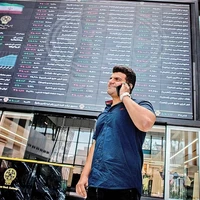
File photo of a young Iranian man who checks his phone outside a store
100%
File photo of a young Iranian man who checks his phone outside a store

Professional networks also reflect the downturn. Users on LinkedIn have publicly said they are seeking new job opportunities, indicating a rise in job seekers among skilled and experienced workers.

Experts warn of lasting damage

Economic journalist Arezoo Karimi said the losses extend beyond immediate income declines, warning of wider consequences for employment and growth.

“This means zero income for businesses that depend on international connectivity. It leads to layoffs and rising unemployment,” Karimi said, adding that daily losses run into tens of millions of dollars.

Karimi said the broader economic impact could reach several times the direct losses, pointing to reduced production and slower economic growth. Inflation, already elevated, is likely to worsen if disruptions continue.

  • Iran's digital economy battered by prolonged blackout

    Iran's digital economy battered by prolonged blackout

“Businesses are not only losing income, they are losing their position in international markets and online visibility. These are damages that cannot easily be reversed,” Karimi added.

With limited access to global markets and tools, many digital workers now face a choice between prolonged uncertainty and leaving the country.

The outage has exposed the dependence of Iran’s digital economy on stable international connectivity, with weeks of disruption enough to dismantle businesses built over years.

Iran halts petrochemical exports to supply domestic market

Apr 16, 2026, 10:23 GMT+1

Iran has halted exports of all petrochemical products until further notice to prevent shortages of raw materials and stabilize the domestic market, state-linked media reported.

A letter issued by a senior official at the National Petrochemical Company instructed producers to stop exports and redirect supply to domestic industries.

The directive said the move aims to support downstream industries and consumers following damage caused by recent attacks and to ensure adequate supply in the domestic market, the report said.

Attacks, curbs hit sector

Domestic prices for petrochemical and related products have been held at pre-conflict levels despite rising global prices, officials said, adding the measures would remain in place to support local industry and consumers.

Companies were also told to return export cargoes that have not yet cleared customs, with associated costs to be reported for possible adjustments to domestic pricing.

  • Iran petrochemical workers face layoffs as industrial crisis deepens

    Iran petrochemical workers face layoffs as industrial crisis deepens

  • Hope and anger in Iran as fragile ceasefire persists

    Hope and anger in Iran as fragile ceasefire persists

  • War damage amounts to $3,000 per Iranian, with blockade set to add to losses

    War damage amounts to $3,000 per Iranian, with blockade set to add to losses

Key petrochemical hubs in Asaluyeh and Mahshahr have been hit in recent weeks, including strikes on utilities supplying feedstock to plants, disrupting production.

The US military has also begun blocking shipping traffic in and out of Iran’s ports this week, a move aimed at reducing Iran’s export revenues as Tehran and Washington consider a second round of talks.

Economic strain deepens

The measures come as Iran faces mounting economic pressure, with reports sent by citizens to Iran International describing factory closures and layoffs in industrial hubs due to shortages of raw materials and weak demand.

Residents said businesses have struggled with disrupted supply chains and an ongoing internet shutdown, which has further strained operations and added to rising prices.

US blockade enters murky phase as tankers spoof signals and buyers hesitate

Apr 15, 2026, 01:11 GMT+1
•
Negar Mojtahedi

The US naval blockade of Iran is entering an opaque phase, with early signs of impact emerging through both buyer hesitation and deceptive shipping practices, rather than direct naval confrontations.

In the first 24 hours after the blockade took effect at 10 a.m. ET on April 13, US Central Command said “no ships made it past the US blockade” and that “6 merchant vessels complied with direction from US forces to turn around to re-enter an Iranian port on the Gulf of Oman.”

But shipping data, satellite imagery and industry monitoring suggest the real contest may be unfolding more quietly — and more ambiguously.

Maritime analysts have observed early shifts in tanker behavior near the Strait of Hormuz, with some vessels reversing course shortly after the blockade began.

Mike Schuler, managing editor of gCaptain, wrote on X that “Tankers may already be turning away from Hormuz,” citing AIS data showing “two vessels reversing course minutes after the US blockade began.”

Other vessels appear to be adapting more creatively.

TankerTrackers reported spotting a tanker departing Kharg Island while spoofing its AIS signal to suggest it had left Saudi Arabia instead.

AIS, or Automatic Identification System, is designed to broadcast a ship’s identity, location and route. But the practice of manipulating these signals has become a hallmark of so-called “dark fleet” operations, allowing sanctioned vessels to obscure their origins and evade scrutiny.

TankerTrackers noted separately that “Dark Fleet tankers in particular may change names and flags,” urging journalists to rely on IMO numbers to track vessels more reliably.

Taken together, these patterns suggest the blockade’s early phase is being defined less by visible interdictions and more by a cat-and-mouse dynamic at sea, with tankers probing the limits of surveillance and compliance.

Enforcement gaps and shadow fleet

At the same time, enforcement itself remains uneven.

Reuters reported that a sanctioned, Chinese-owned tanker — identified as Rich Starry — transited the Strait of Hormuz during the blockade period, alongside other vessels including Murlikishan and Peace Gulf.

According to TankerTrackers, Rich Starry is “a serial AIS spoofer and a designated sanctions violator with a history of transporting Iranian refined products.”

The vessel later turned back after reaching the Gulf of Oman, while other ships stopped transmitting AIS signals altogether after entering international waters, according to ship tracking data.

These movements underscore a central challenge for US enforcement: vessels can spoof tracking data, switch flags, change names and operate in legal gray zones that complicate interdiction.

Even as Washington signals control over access to Iranian ports, the persistence of such activity suggests enforcement may be partial, contested and dependent on constant monitoring.

Buyer hesitation

Beyond shipping itself, early signs indicate the blockade may be influencing buyer behavior — potentially a more decisive factor.

TankerTrackers reported that “two million barrels of Iranian crude turned up unannounced today in India,” adding later that “India won't be accepting this oil.”

That hesitation points to a broader risk for Tehran: even if cargoes can leave Iranian waters, they may struggle to find willing buyers.

Jason Brodsky, policy director at United Against Nuclear Iran, said Washington is “trying to flip the script on Iran” after Tehran sought to tighten control over Hormuz traffic earlier this month.

By signaling it can restrict Iranian access to the same waterway, he said, the United States is effectively telling Tehran, “not so fast, we have the ability to prevent you and your vessels from using the Strait of Hormuz.”

Why this may be different from sanctions

Some analysts say the blockade could alter the underlying economics of Iran’s oil trade in ways sanctions did not.

“The blockade is doing something that 20 years of sanctions couldn't actually do,” said Mohammad Machine-Chian, a senior journalist covering economic affairs at Iran International.

He said sanctions often created opportunities for regime-connected middlemen and black-market networks to profit.

By contrast, “blockade is making that business model unfeasible,” he said, suggesting pressure may now fall more directly on the networks that previously benefited from sanctions evasion.

Pressure builds over time

Still, experts caution against expecting immediate economic collapse.

Former Royal Navy commander Tom Sharpe described the blockade as “a lever of persuasion of coercion” designed to “make Iran more susceptible to negotiations.”

“The blockade on the blockade is a strong-arm tactic to make Iran more susceptible,” he said. “In other words, as a lever, this might be a good one.”

Brodsky also said the effects are likely to build over “weeks and months,” rather than producing an instant shock.

Miad Maleki, a former US Treasury official, estimated the blockade could inflict roughly $435 million in daily economic damage, underscoring the potential scale of pressure even as its early effects remain uneven.

For now, the blockade’s first real test may be less about whether ships can pass through Hormuz, and more about whether they can do so undetected — and whether buyers are still willing to take the risk once they arrive.

US tightens financial squeeze on Iran, warns banks over oil money flows

Apr 14, 2026, 22:35 GMT+1
•
Negar Mojtahedi

The US Treasury has warned banks in the Middle East and East Asia to halt Iran-linked transactions or face potential sanctions, signaling a stepped-up enforcement push targeting the financial networks that move Tehran’s oil revenues.

After the US military blockade targeting vessels entering and leaving Iranian ports, the Trump administration on Tuesday stepped up pressure with a financial offensive aimed at the banks and front-company networks that keep Iranian oil revenue moving.

In a post on X late Tuesday, the Treasury Department said it was “moving aggressively with Economic Fury, maintaining maximum pressure on Iran.”

The department warned that foreign financial institutions should be on notice, saying it is prepared to use “the full range of available tools and authorities” and is “prepared to deploy secondary sanctions against foreign financial institutions that continue to support Iran’s activities.”

This also puts greater pressure on jurisdictions that have quietly functioned as financial corridors for Iran’s sanctions-evasion networks.

Banks in the Persian Gulf, Hong Kong and China now face a stark choice: continue facilitating Iran-linked flows and risk losing access to the dollar system or cut those ties before Treasury acts.

That marks a significant escalation.

The maritime blockade was designed to squeeze Iran’s physical oil exports.

This new move targets the financial arteries behind them.

The money trail behind the shadow fleet

According to a Treasury letter shared with Al-Monitor, Washington has evidence that banks in the UAE, Oman, Hong Kong and China allowed Iranian funds linked to illicit activities to move through their systems.

This appears to be the first step toward imposing secondary sanctions, a measure that could cut those institutions off from the US financial system.

That would sharply raise the cost of doing business with Iran far beyond the tankers themselves.

The Treasury letter states that Iran processed at least $9 billion through US correspondent accounts in 2024 using front companies, especially in Hong Kong and the UAE and warned that similar activity continued after 2024.

For Tehran, this is potentially as serious as the naval pressure in Hormuz.

Even if cargoes still find ways to leave Iranian waters through spoofed AIS signals, ship-to-ship transfers or shadow fleet workarounds, the proceeds still need to land somewhere.

That is the vulnerability Washington now appears to be targeting.

The waiver clock is now ticking

Treasury also confirmed that the short-term authorization allowing the sale of Iranian oil already stranded at sea is set to expire in the coming days and “will not be renewed.”

Reuters separately reported the waiver will expire on April 19, tightening pressure on cargoes that had been temporarily allowed to move.

That creates a second countdown alongside the naval blockade.

The first clock is storage. The second is finance.

Cargoes that remain offshore may soon face not only delivery risk, but payment risk as well.

That could hit the shadow fleet where it hurts most: not whether it can move the oil, but whether anyone can safely pay for it.

This also puts greater pressure on jurisdictions that have quietly functioned as financial corridors for Iran’s sanctions-evasion networks.

Banks in the Persian Gulf, Hong Kong and China now face a stark choice: continue facilitating Iran-linked flows and risk losing access to the dollar system or cut those ties before Treasury acts.

War damage amounts to $3,000 per Iranian, with blockade set to add to losses

Apr 14, 2026, 20:51 GMT+1
•
Hooman Abedi

War damage to Iran’s economy has reached $270 billion in 40 days, equivalent to roughly $3,000 per person, according to official figures, with losses expected to grow as trade disruptions deepen under a US blockade of Iranian ports.

Fatemeh Mohajerani, the spokesperson for the Iranian government, said on Tuesday losses from the US-Israeli military campaign are estimated at around $270 billion.

The New York Times, citing three Iranian officials and two economists, reported that early estimates broadly align with that figure, placing the damage at roughly $300 billion or higher.

Preliminary estimates by the US-based think tank Foundation for Defense of Democracies also suggest Iran absorbed roughly $150–$300 billion in economic damage.

Using a population of about 92 million, the lower estimate of $150 billion translates to roughly $1,600 per person, rising to nearly $3,250 per person under the higher estimate.

These figures reflect national wealth lost through destruction, halted production and disrupted trade.

Iran’s central bank has warned President Masoud Pezeshkian that rebuilding the country’s war-damaged economy could take more than a decade, sources familiar with internal deliberations told Iran International.

In a stark assessment delivered to the president in recent days, senior economic officials said the damage inflicted during the 40-day war with the United States and Israel—combined with Iran’s already fragile economic situation—could take up to 12 years to repair.

Industrial sectors bear largest losses

Petrochemicals account for the largest share of damage. Iran’s petrochemical sector, with annual sales of $29.1 billion, has seen about 85% of export capacity disrupted following strikes on major hubs including Mahshahr and South Pars. Estimated losses range from $30 billion to $50 billion.

Energy infrastructure has also been heavily affected. Refineries, storage depots and gas facilities have been struck, weakening a sector that generated about $78 billion in exports in 2024. Losses are estimated at $15 billion to $25 billion.

Explosion at Iran's Mahshahr petrochemical complex during US-Israeli strikes
100%
Explosion at Iran's Mahshahr petrochemical complex during US-Israeli strikes

Steel production, which underpins both industrial output and reconstruction, has been severely reduced, with about 70% of capacity disrupted. Losses are estimated at $5 billion to $10 billion.

Beyond physical losses, the war has triggered a sharp contraction in output.

Experts estimated a decline of more than 10% in GDP, equivalent to $34 billion to $44 billion in lost economic activity, affecting an economy that was already under strain before the conflict.

Beyond physical damage, policy-driven disruptions have compounded the losses.

Internet shutdown

A nationwide internet blackout beginning Feb. 28 has imposed additional costs.

Direct losses are estimated at $37 million to $42 million per day, totaling $1.5 billion to $2.5 billion over more than five weeks.

  • Iran's digital economy battered by prolonged blackout

    Iran's digital economy battered by prolonged blackout

Afshin Kolahi, a member of Iran’s Chamber of Commerce, said Monday indirect losses could raise the daily figure to $70 million to $80 million due to disruption to online businesses.

Online sales fell by about 80% during the shutdown, while the Tehran Stock Exchange lost 450,000 points within four days.

100%

The shutdown is affecting multiple layers of the economy simultaneously, according to economic analyst Masoumeh Taherkhani.

“The Iranian economy is damaged at three levels by internet disruption, starting with the digital core, which employs between four and five million people,” Taherkhani told Iran International. “Then the platform layer collapses, and finally the broader economy is affected in a way that spreads across production and services.”

Taherkhani said the combined effect leads to widespread job losses. “When the economy is fully stagnant, the outcome is unemployment for workers, and that is not something that can easily be reversed,” she said.

Trade disruption and self-inflicted losses

Disruptions linked to the Strait of Hormuz have added further pressure, with estimated losses of $5 billion to $15 billion.

100%

The restrictions have affected imports of essential goods and weakened non-oil exports, contributing to supply chain disruptions across the economy.

A US naval blockade targeting Iran’s maritime trade routes is expected to deepen losses.

Sanctions strategist and former US Treasury official Miad Maleki estimated that cutting off seaborne trade could eliminate about $435 million in daily economic activity, equivalent to roughly $13 billion per month.

  • What the US naval blockade would mean for Iran’s economy

    What the US naval blockade would mean for Iran’s economy

Iran relies on the Persian Gulf for more than 90% of its trade, leaving it highly exposed to sustained disruption.

Oil exports of about 1.5 million barrels per day – generating roughly $139 million daily – could be halted almost entirely, removing the country’s main source of foreign currency.

What the losses could have funded

The scale of damage corresponds to investment levels that could have reshaped core sectors of the economy.

A large combined-cycle power plant with capacity of around 1,000 to 1,500 megawatts typically costs between $600 million and $1 billion to build, depending on technology and fuel infrastructure.

At the lower estimate of $150 billion in losses, Iran could have financed roughly 150 to 250 such plants. At the upper estimate of $300 billion, that rises to between 300 and 500 plants, enough to eliminate electricity shortages and significantly expand export capacity.

In housing, average construction costs for a modest apartment unit range between $30,000 and $50,000. With $150 billion, between 3 million and 5 million housing units could have been built. At $300 billion, that increases to roughly 6 million to 10 million units, enough to address shortages across major urban areas.

100%

High-speed rail construction typically costs between $20 million and $40 million per kilometer. The lower estimate of losses could have funded approximately 3,750 to 7,500 kilometers of rail, while the higher estimate could support up to 15,000 kilometers, connecting major cities nationwide.

A modern hospital costs between $200 million and $500 million to construct and equip. The lower-end losses could have built 300 to 750 hospitals, while the higher estimate could fund up to 1,500 facilities, expanding healthcare access across the country.

What it means for individual Iranians

The per capita loss of up to $3,250 represents a substantial share of annual income for many households.

With average monthly earnings between $150 and $200, an individual earns roughly $1,800 to $2,400 per year, meaning a $3,250 equivalent exceeds a full year of income for many citizens.

If such an amount were available, it could cover between 12 and 20 months of living expenses for an average worker. Families could use it toward housing costs, including down payments or completing home purchases in smaller cities.

Small businesses could be launched with startup capital of $2,000 to $5,000, enabling self-employment in sectors such as retail, services or online commerce. Households could also afford private healthcare, education or relocation costs that are otherwise beyond reach.

100%

Even the lower estimate per person represents several months of income, providing a buffer against inflation, job loss or unexpected expenses.

The overall range reflects damage already incurred, with additional losses building as trade, production and financial flows remain disrupted.

At up to $3,250 per person and rising, the economic toll underscores the scale of damage to Iran’s productive capacity, with long-term implications for recovery and growth.