• العربية
  • فارسی
Brand
  • Iran Insight
  • Politics
  • Economy
  • Analysis
  • Special Report
  • Opinion
  • Podcast
  • Iran Insight
  • Politics
  • Economy
  • Analysis
  • Special Report
  • Opinion
  • Podcast
  • Theme
  • Language
    • العربية
    • فارسی
  • Iran Insight
  • Politics
  • Economy
  • Analysis
  • Special Report
  • Opinion
  • Podcast
All rights reserved for Volant Media UK Limited
volant media logo
SPECIAL REPORT

Jihad Nasr: The infrastructure empire inside Iran’s state economy

Amirhadi Anvari
Amirhadi Anvari

Iran International

Mar 30, 2026, 11:28 GMT+1Updated: 11:34 GMT+1

Jihad Nasr spent decades at the center of Islamic Republic projects spanning water, housing and energy, as well as nuclear-linked construction and overseas ventures, as a state-backed network built under reformist-era politics dug deep into Iran’s infrastructure economy.

Most Viewed

Iran’s president offers resignation, citing total takeover by IRGC commanders
1
EXCLUSIVE

Iran’s president offers resignation, citing total takeover by IRGC commanders

2

Tehran cafe sealed over gig deemed ‘satanic activity’

3

Hardline MP draws backlash over post seen as swipe at Mojtaba Khamenei

4
INSIGHT

No breakthrough yet, but Iranians are betting on one

5
EXCLUSIVE

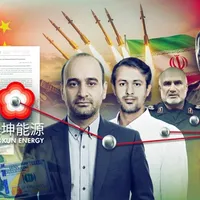
Leaked documents link Chinese firms to IRGC missile fuel network

Banner
Banner

Spotlight

  • No breakthrough yet, but Iranians are betting on one
    INSIGHT

    No breakthrough yet, but Iranians are betting on one

  • Leaked documents link Chinese firms to IRGC missile fuel network
    EXCLUSIVE

    Leaked documents link Chinese firms to IRGC missile fuel network

  • Hardline MP draws backlash over post seen as swipe at Mojtaba Khamenei

    Hardline MP draws backlash over post seen as swipe at Mojtaba Khamenei

  • Was the Iran war leverage or a lifeline for Tehran?
    PODCAST

    Was the Iran war leverage or a lifeline for Tehran?

  • Names of some Iran protest victims vanish from Tehran cemetery database

    Names of some Iran protest victims vanish from Tehran cemetery database

  • How four Khamenei family names map the Islamic Republic’s inner circle
    INSIGHT

    How four Khamenei family names map the Islamic Republic’s inner circle

•
•
•

More Stories

Trump’s Iran remarks leave markets guessing

Mar 30, 2026, 04:06 GMT+1
Trump’s Iran remarks leave markets guessing
100%
US President Donald Trump delivers remarks at the Future Investment Initiative (FII) Institute's summit at the Faena Forum in Miami Beach, Florida, US, March 27, 2026.

US President Donald Trump offered an upbeat but confusing picture of his approach to Iran on Sunday, saying a deal could come soon even as he floated the possibility of seizing Iranian oil and hinted at military options that could deepen the conflict.

Speaking to reporters aboard Air Force One, Trump said Washington was making progress in “direct and indirect” negotiations with Tehran and that a deal could emerge quickly.

But he also said he would like the United States to “take the oil in Iran” in an interview with the Financial Times, floating the idea of seizing Kharg Island, the terminal through which most of Iran’s crude exports pass.

“I could only say that we’re doing extremely well in that negotiation. But you never know where they’re at, because we negotiate with them, and then we always have to bomb them,” he told reporters.

“I think we’ll make a deal with them, pretty sure. But it is possible we won’t.”

Markets have struggled to interpret the shifting signals. Oil prices have surged more than 60 percent over the past month amid fears the war could disrupt global energy supplies, with Brent crude trading near $116 a barrel.

Hours before Trump’s remarks, Iran’s parliament speaker Mohammad Bagher Ghalibaf posted a cryptic message on social media using trading jargon that many interpreted as a jab at the US president and his announcements.

“Pre-market so-called ‘news’ or ‘Truth’ is often just a setup for profit-taking. Basically, it’s a reverse indicator,” he wrote. “Do the opposite: If they pump it, short it. If they dump it, go long.”

Ghalibaf has been mentioned in several unofficial reports as playing a leading role in contacts with Washington. Trump referred to him in the FT interview, saying he had authorised more Pakistan-flagged ships to pass through the Strait of Hormuz.

Aboard Air Force One shortly afterward, Trump suggested that “regime change” had effectively already taken place and that he was now dealing with “professionals.”

“We’re dealing with different people than anybody’s dealt with before. It’s a whole different group of people,” he said. “So I would consider that regime change, and frankly they’ve been very reasonable.”

But the president’s remarks left observers unsure whether diplomacy or escalation would shape the next phase of the conflict, which shows little sign of subsiding after a month of fighting.

Pakistan has renewed its offer to mediate between Washington and Tehran. Prime Minister Shehbaz Sharif said after talks with the foreign ministers of Turkey and Egypt that Islamabad stood ready to help bring both sides to the negotiating table.

The Wall Street Journal reported that Trump is weighing a plan that could involve US forces entering Iran to seize its stockpile of enriched uranium, a move that would represent a dramatic escalation if pursued.

The day the Iran war reached a school in Minab

Mar 30, 2026, 03:19 GMT+1
•
Maryam Sinaiee
The day the Iran war reached a school in Minab
100%
Children killed in the strike on Shajareh Tayyebeh School in Minab, Iran, on February 28, 2026

Newly released surveillance footage appears to show repeated strikes hitting a primary school in the southern Iranian city of Minab on the first day of the war, an attack Iranian authorities say killed more than 100 children and teachers.

The Shajareh Tayyebeh primary school, located in Minab in Hormozgan province, served boys and girls aged 7 to 12.

The school building stood in an area that once formed part of a Revolutionary Guards naval base but had reportedly been separated from the military compound by a wall for several years. Iranian officials say the school was privately run.

Research by Amnesty International’s Crisis Evidence Lab and its Iran team says US authorities could—and should—have known the building was a school and failed to take feasible precautions to avoid civilian harm.

Amnesty said the findings point at best to a serious intelligence failure by the US military and warned the strike could constitute an indiscriminate attack in violation of international humanitarian law.

Reuters has reported that two sources familiar with the matter said the strike may have resulted from outdated intelligence used during targeting, while an internal US military review found American forces were likely responsible for the attack.

The first strike occurred around 10 a.m. on February 28, when students were resting during a break. The explosion destroyed roughly half of one of the school’s buildings.

Mikail Mirdoraghi (9) killed in the school strike
100%
Mikail Mirdoraghi (9) killed in the school strike

Teachers gathered surviving children in the school’s prayer hall and called parents to collect them. Shortly afterward, a second missile struck the same building, killing many of the remaining children, teachers and some parents who had rushed to the scene.

Iranian officials, including the mayor of Minab and the Ministry of Education, say the school was struck three times in total.

Images published by Iranian media in the days after the attack showed rescue workers pulling remains, severed limbs and children’s backpacks from beneath the rubble.

Iranian authorities say 168 people were killed, including about 120 children, as well as teachers and several parents who had come to retrieve their children after the first explosion. Nearly 100 others were reported injured.

The Norway-based human rights group Hengaw says it has independently identified 58 victims so far, including 48 children and 10 adults.

Behind the casualty figures are the stories of children whose lives ended in ordinary moments between lessons.

Among them were three girls—Mahdis Nazari, 7, and Sonar and Niayesh Salehi, both 9—members of their school’s skating team. Photos shared online before the attack show them at training sessions and competitions.

Iran’s skating federation later confirmed their deaths.

100%

Another child whose story has circulated widely online is nine-year-old Mikail Mirdoraghi, a third-grade student. A photograph of him standing on the stairs of his home with a water bottle slung over his shoulder, waving goodbye, has been widely shared.

Mikail’s family had moved from Andimeshk in Khuzestan province to Minab because of his father’s job. After the attack, his 31-year-old mother, Shakiba Derikvand, identified his body among victims placed in refrigerated vehicles.

He was found lying beside his friend Alireza, still clutching his school backpack. His body was largely intact, though his face was bloodied, his mother said.

He was buried three days later in Andimeshk. A widely circulated image shows his grandfather lying beside the flower-covered grave.

“Mikail was afraid of the dark,” he reportedly said. “We always slept beside him. I don’t want him to be alone here at night.”

One of the most haunting details to emerge is a drawing Mikail reportedly made the night before the strike.

Found later in his backpack, it shows a school building with the Iranian flag above it, five children standing in the yard and three missiles descending toward them.

Unlocking Iran's potential: a trillion-dollar opportunity for America in a free Iran

Mar 30, 2026, 00:32 GMT+1
•
Saeed Ghasseminejad , Shervin Pishevar
Unlocking Iran's potential: a trillion-dollar opportunity for America in a free Iran
100%
An Iranian offshore oil rig in the Persian Gulf, undated file photo

The United States can seize the moment to support regime change and forge a strategic partnership with a democratic Iran that could yield over $1 trillion in revenue for American firms over the next decade.

This is not wishful thinking; it's a conservative estimate grounded in Iran's untapped potential, benchmarked against its neighbors like Turkey, the UAE, and Saudi Arabia.

A free Iran represents the single largest untapped pro-American economic opportunity of the 21st century. Conservative modeling shows over $1 trillion in US export revenues, millions of American jobs, decisive energy-price stabilization, and the permanent collapse of the world’s most dangerous state sponsor of terrorism, without US occupation or nation-building.

Iran is the last large greenfield market opportunity in the world. It combines industrial sophistication, underinvestment, labor arbitrage, and a large population base. We can turn the North Korea of the Middle East into the South Korea of the region.

What makes Iran different is the rare convergence of scale, capability, and readiness. Iran is not a fragile post-conflict state; it is a compressed modern economy held back by ideology, not capacity.

It graduates roughly 250,000 engineers annually, with STEM penetration rivaling that of advanced industrial nations, and has a global diaspora poised for immediate reverse brain drain. Its 90-million-plus, urbanized population sits in a demographic sweet spot, young, educated, and consumer-ready, creating instant market scale.

Geographically, Iran is a natural Eurasian bridge, linking the Caspian Sea to the Persian Gulf and serving as a credible alternative logistics corridor between East and West.

Unlike hydrocarbon-only economies, Iran combines energy abundance with deep industrial and manufacturing capability, enabling it to build, not merely extract.

Finally, Iran’s vast diaspora is highly productive and skilled economically and professionally. In America alone, Iranian Americans have helped create trillions of dollars in value and millions of jobs via such companies. We estimate that millions in the diaspora will return at least part-time and invest in the vast potential to rebuild Iran into an economic powerhouse.

For 47 years, the Islamic Republic has squandered Iran's vast resources on terrorism, proxy wars, and nuclear ambitions, leaving its economy in ruins and its infrastructure crumbling. But imagine a free Iran—a secular, democratic nation restored to its pre-1979 glory as a US ally, recognizing Israel, and joining an expanded Abraham Accords, perhaps rebranded as the Cyrus Accords in honor of ancient Persian tolerance.

Under a committed, democratic Iranian government, anchored by investment protections and US-approved financing, the country would embark on a "catch-up" phase of massive modernization. Half of that $1 trillion in US sales could materialize in the first five alone, concentrated in high-value sectors that create millions of American jobs.

Take aviation, where Iran's fleet is a relic of sanctions and neglect. Replacing at least 250 wide-body jets, narrow-body aircraft, infrastructure upgrades, and maintenance services, could generate $150 billion over a decade. This isn't charity; it's smart business, revitalizing an industry starved of growth.

The transportation and automotive sectors offer another $150 billion. With demand for a million electric vehicles, think Tesla, plus passenger cars, trucks, agricultural machinery, and EV charging networks, American innovators stand to dominate. Iran's roads and farms have been starved of investment; a free market would unleash pent-up demand for quality US products.

Even in military and security, opportunities abound for $250 billion modernization: command systems, ISR technology, training, and sustainment. A post-regime Iran would pivot from sponsoring Hezbollah and Hamas to partnering against terrorism, creating long-term contracts for US defense firms while bolstering regional stability.

The energy sector alone could deliver $300 billion in non-ownership revenues through services, reconstruction, equipment, and technology licensing. Upstream drilling tech, midstream pipelines, downstream refining upgrades, and risk-management services would flow to companies like ExxonMobil and Halliburton. Iran's reserves are among the world's largest; a reliable, transparent supplier could help stabilize global prices and reduce dependence on adversaries such as Russia.

Beyond these, additional sectors from water infrastructure and AI networks to biotechnology, healthcare, finance, and entertainment could add $350 billion. U.S. firms in IT, pharmaceuticals, and consumer goods would tap into an educated, 90+ million-strong market eager for American products. Tourism could boom with resorts and hotels, while mining critical minerals would secure supply chains for American tech. Wall Street could be the main driver of many of the deals, which will generate significant fees and other services revenue.

Iran's prolonged underinvestment means explosive growth post-opening, outpacing even the post-Soviet Eastern Europe boom. Unlike risky ventures elsewhere, this would be backed by vast natural resources and a government that prioritizes U.S. ties and includes safeguards against corruption.

Critics will cry "interventionism," but the Iranian people are already fighting—with bare hands against foreign mercenaries like Hezbollah, Hashd al-Shabi, and Fatemiyoun. They need the regime’s killing capacity neutralized—its surveillance, command nodes, and imported mercenaries degraded—so civil resistance can succeed.

A free Iran isn't just good for Iranians; it's the biggest strategic global win for America since winning WWII and defeating the Soviet Union. It offers the largest economic and peace dividend since the fall of the Soviet Union. It would dismantle the axis of evil, secure the Middle East, and deliver prosperity that echoes and expands the pre-Khomeini era when Iran was a pillar of peace. Iran can catch up on what it lost in 47 years in just 10 years.

The regime is a rotting corpse; let's bury it and build a future where Iran and America thrive together. The opportunity is here; let’s seize it.

Rift deepens between Iran’s president and Guards chief over war, economy

Mar 28, 2026, 21:17 GMT+0
Rift deepens between Iran’s president and Guards chief over war, economy
100%
Iran's President Masoud Pezeshkian (left) and Revolutionary Guards Chief-Commander Ahmad Vahidi

Serious disagreements have emerged between Iran’s President Masoud Pezeshkian and IRGC chief-commander Ahmad Vahidi over how to manage the war and its damaging impact on people’s livelihoods and the economy, sources with knowledge of the matter told Iran International.

Pezeshkian has criticized the approach of the Islamic Revolutionary Guard Corps regarding escalating tensions and continuing attacks on neighboring countries, warning about the economic consequences of the situation, according to the sources who spoke on condition of anonymity.

He has stressed that without a ceasefire, Iran’s economy could face total collapse within three weeks to one month, the sources said.

On March 7, Pezeshkian in a video message apologized for what he called “fire at will” attacks by the country’s armed forces on neighboring countries and instructed them to stop such attacks.

However, the attacks continued shortly after the release of his message.

Call for restoration of executive power

Informed sources told Iran International that Pezeshkian has called for executive and managerial powers to be returned to the administration, a demand that has been firmly rejected by Vahidi.

In response to the criticism, the IRGC commander blamed the current situation on the government’s failure to implement structural reforms before the conflict began, the sources said.

In recent days, Israeli media have also reported signs of divisions within Iran’s ruling system. The Times of Israel, citing a senior Israeli official, wrote: “There are signs of cracks in the Iranian regime. We are now creating conditions for its overthrow, but ultimately everything depends on the Iranian people.”

The Israeli outlet Ynet also reported similar internal divisions earlier this month.

Economic impacts

As the war enters its fifth week, its economic effects are increasingly visible. Reports from major cities indicate that many ATMs are out of cash, not functioning, or physically inaccessible, while online banking services for several major banks, including Bank Melli, are periodically disrupted.

Government employees have told Iran International that salaries and benefits for large segments of workers have not been paid regularly over the past three months.

In February, before the outbreak of the ongoing war, average inflation for basic necessities reached triple digits, estimated between 105% and 115%.

Iran still depends on Hormuz despite years of workarounds

Mar 27, 2026, 01:45 GMT+0
•
Dalga Khatinoglu
Iran still depends on Hormuz despite years of workarounds
100%
FILE PHOTO: Luojiashan tanker sits anchored in Muscat, as Iran vows to close the Strait of Hormuz, amid the US-Israeli conflict with Iran, in Muscat, Oman, March 7, 2026

Iran’s plans to reduce its reliance on the Strait of Hormuz appear to have delivered little practical change so far, according to tanker-tracking data from Kpler obtained by Iran International.

For more than a decade, Tehran has invested heavily in the Jask oil terminal, a project designed to shift part of its crude exports to the Gulf of Oman and create an alternative export route outside the Persian Gulf in times of crisis. Yet the data suggests the terminal has so far played only a marginal role in Iran’s export system.

According to Kpler data, Iran loaded an average of about 1.84 million barrels per day (bpd) of crude during the first 25 days of March. The contribution of the Jask terminal remained minimal.

Average loadings from Jask stood at roughly 81,000 bpd during this period—less than 5% of Iran’s total crude exports.

Historical patterns suggest this limitation may be structural. Iran first initiated exports from Jask in October 2024 amid heightened military tensions with Israel. Even then, volumes remained modest at around 77,000 bpd. In March 2025, exports from the terminal averaged roughly 54,000 bpd.

This is despite the fact that Jask is connected to Iran’s main oil-producing regions through a pipeline stretching nearly 1,000 kilometers, an infrastructure investment intended to enable significant export capacity outside the Persian Gulf.

In practice, Iran’s dependence on Kharg Island remains overwhelming.

Kpler data indicates that more than 84% of Iran’s oil exports in March were loaded from Kharg, while Jask accounted for just 4.4%. Another roughly 10% originated from the Soroush and South Pars terminals in the Persian Gulf.

Such concentration creates a clear strategic vulnerability: any disruption at Kharg could severely cripple Iran’s oil exports.

The question has gained renewed relevance as the war between Iran and the United States and Israel has intensified. The Strait of Hormuz—through which roughly a fifth of global oil trade passes—has become a central point of tension, with Tehran periodically restricting maritime traffic.

At the same time, reports have emerged of expanding US military operations in the region, including contingency planning involving strategic islands near the Strait of Hormuz that could be used to control access to the waterway.

In such a scenario, Iran’s continued reliance on export infrastructure concentrated around Kharg would leave its oil trade exposed to disruption.

Overall, the export data underscores a fundamental reality: despite years of investment, Iran has not succeeded in meaningfully reducing its dependence on the Strait of Hormuz—or, more critically, on the Kharg export hub.

In a volatile regional environment, that dependence represents a significant structural weakness.