• العربية
  • فارسی
Brand
  • Iran Insight
  • Politics
  • Economy
  • Analysis
  • Special Report
  • Opinion
  • Podcast
  • Iran Insight
  • Politics
  • Economy
  • Analysis
  • Special Report
  • Opinion
  • Podcast
  • Theme
  • Language
    • العربية
    • فارسی
  • Iran Insight
  • Politics
  • Economy
  • Analysis
  • Special Report
  • Opinion
  • Podcast
All rights reserved for Volant Media UK Limited
volant media logo
EXCLUSIVE

Rift deepens between Iran’s president and Guards chief over war, economy

Mar 28, 2026, 21:17 GMT+0
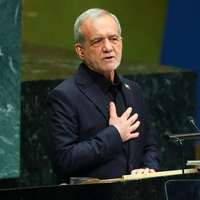
Iran's President Masoud Pezeshkian (left) and Revolutionary Guards Chief-Commander Ahmad Vahidi

Serious disagreements have emerged between Iran’s President Masoud Pezeshkian and IRGC chief-commander Ahmad Vahidi over how to manage the war and its damaging impact on people’s livelihoods and the economy, sources with knowledge of the matter told Iran International.

Pezeshkian has criticized the approach of the Islamic Revolutionary Guard Corps regarding escalating tensions and continuing attacks on neighboring countries, warning about the economic consequences of the situation, according to the sources who spoke on condition of anonymity.

He has stressed that without a ceasefire, Iran’s economy could face total collapse within three weeks to one month, the sources said.

On March 7, Pezeshkian in a video message apologized for what he called “fire at will” attacks by the country’s armed forces on neighboring countries and instructed them to stop such attacks.

However, the attacks continued shortly after the release of his message.

Call for restoration of executive power

Informed sources told Iran International that Pezeshkian has called for executive and managerial powers to be returned to the administration, a demand that has been firmly rejected by Vahidi.

In response to the criticism, the IRGC commander blamed the current situation on the government’s failure to implement structural reforms before the conflict began, the sources said.

In recent days, Israeli media have also reported signs of divisions within Iran’s ruling system. The Times of Israel, citing a senior Israeli official, wrote: “There are signs of cracks in the Iranian regime. We are now creating conditions for its overthrow, but ultimately everything depends on the Iranian people.”

The Israeli outlet Ynet also reported similar internal divisions earlier this month.

Economic impacts

As the war enters its fifth week, its economic effects are increasingly visible. Reports from major cities indicate that many ATMs are out of cash, not functioning, or physically inaccessible, while online banking services for several major banks, including Bank Melli, are periodically disrupted.

Government employees have told Iran International that salaries and benefits for large segments of workers have not been paid regularly over the past three months.

In February, before the outbreak of the ongoing war, average inflation for basic necessities reached triple digits, estimated between 105% and 115%.


Most Viewed

100 days after carnage: Iran economy reels from war, inflation, unemployment
1
INSIGHT

100 days after carnage: Iran economy reels from war, inflation, unemployment

2
OPINION

The Hormuz get out of jail card turned to a grave

3
EXCLUSIVE

Iranian assaulted in London amid concern over threats to regime critics

4

IRGC fires at Indian vessel in Hormuz

5
PODCAST

Too early to tell who is winning Iran war, experts say

Banner
Banner

Spotlight

  • From instability to influence: Pakistan’s pivotal role in US-Iran diplomacy

    From instability to influence: Pakistan’s pivotal role in US-Iran diplomacy

  • A nation in limbo: 100 days after the massacre, has the world moved on?
    INSIGHT

    A nation in limbo: 100 days after the massacre, has the world moved on?

  • 100 days after carnage: Iran economy reels from war, inflation, unemployment
    INSIGHT

    100 days after carnage: Iran economy reels from war, inflation, unemployment

  • The Hormuz get out of jail card turned to a grave
    OPINION

    The Hormuz get out of jail card turned to a grave

  • How Tehran bends its own red lines to boost state rallies
    INSIGHT

    How Tehran bends its own red lines to boost state rallies

  • Iran blackout cripples freelancer, small business incomes
    VOICES FROM IRAN

    Iran blackout cripples freelancer, small business incomes

•
•
•

More Stories

'Iran’s threat is global': Experts call Diego Garcia strike a wake-up call

Mar 27, 2026, 20:56 GMT+0
•
Negar Mojtahedi

Iran’s recent attempted strike on a joint UK–US military base in the Indian Ocean, some 4,000 km from its territory, marks more than an escalation — it is a wake-up call for the West, experts told Iran International.

On March 20, Iran fired two long-range ballistic missiles at the Diego Garcia base, a target long considered beyond its declared range of around 2,000 kilometers.

Iran’s attempted long-range strike — which US officials say did not hit its target — marks the first time Tehran has demonstrated the ability to reach as far as Diego Garcia.

For years, Iran claimed its missile range was capped at around 2,000 kilometers. That claim now appears increasingly untenable.

The attempted strike exposes a reality that can no longer be ignored, experts told this week's episode of Eye for Iran: Tehran’s missile capabilities extend far beyond the Middle East, its hardened arsenal has withstood sustained US and Israeli strikes, and the conflict is now colliding with critical global pressure points — from the Strait of Hormuz to the growing likelihood of a broader military phase.

A threat no longer abstract

Iran’s ballistic missile threat is no longer abstract — it is real and expanding.

Both Janatan Sayeh, an Iran expert at the Foundation for Defense of Democracies (FDD), and Farzin Nadimi, a defense and military expert with the Washington Institute for Near East Policy, warned on the Eye for Iran podcast that Tehran’s capabilities now extend far beyond previously stated limits — potentially reaching as far as the United Kingdom.

“This should not come as a surprise,” Sayeh said. He noted that Iranian missiles and drones have already been used on European soil through Russia.

“The difference now is that the regime itself can launch them directly from Iranian territory," said Sayeh.

The shift marks a critical evolution — from indirect projection of force to direct long-range capability — underscoring the growing reach of Iran’s arsenal.

Even if unsuccessful, the Diego Garcia strike signals a move from regional containment to global reach — with direct implications for Europe and beyond.

In his State of the Union address last month, President Donald Trump cautioned that Iran’s missile program could soon put the United States within reach — a claim that, in light of recent developments, is no longer theoretical.

Missile cities: A durable arsenal

That expanded reach is underpinned by an infrastructure designed not just to deter — but to endure.

Nadimi said Iran has long possessed the technical ability to extend the range of its missiles, including through payload modification and dual-use space-launch technology.

More significantly, he described a vast network of hardened underground facilities — some “the size of a small city” — buried deep beneath mountainous terrain and reinforced structures, making them extraordinarily difficult to destroy.

These so-called “missile cities” are often positioned near — and in some cases beneath — civilian infrastructure, including residential neighborhoods and public spaces, complicating targeting while increasing their survivability.

“Many of these missile bases are so deep that even the most powerful bunker-buster bombs cannot reach them… some are as deep as 500 meters and the size of a small city," Nadimi told Eye for Iran.

Strait of Hormuz: Global Stakes

The implications extend far beyond military capability.

The Strait of Hormuz — through which roughly one-fifth of the world’s oil supply passes — has emerged as a central pressure point in the conflict.

Disruptions tied to the war have already rattled global energy markets, with prices reacting to uncertainty around shipping routes and potential escalation.

Joel Rubin, former Deputy Assistant Secretary of State in the Obama administration, warned on Eye for Iran that Iran’s actions reflect a broader strategic calculus.

“This is how Iran behaves,” he said. “They are willing to disrupt and destroy the global economy to protect themselves.”

Dr. Walid Phares, foreign policy expert, advisor to past US presidents and author, described the Strait not as a theoretical chokepoint, but as an active military theater — where Iranian missile systems along the coastline could trigger direct US intervention to secure global shipping lanes.

President Donald Trump has repeatedly said the United States would reopen the Strait “with or without” allied support — underscoring the scale of the economic stakes.

“Which tells me that ground forces, limited special forces, Marines, now we understand, may be used," said Phares, author of Iran: An Imperialist Republic and US Policy.

Talks as strategy, not solution

Even as diplomatic efforts continue, both sides appear to be using negotiations as part of a broader strategic game.

Rubin pointed to a narrowing political and economic window in Washington, suggesting the US is unlikely to sustain prolonged negotiations as domestic pressure builds.

Phares also framed talks not as a pathway to de-escalation, but as part of a parallel track where diplomacy unfolds alongside active military preparation.

In this environment, negotiations are not replacing escalation — they are occurring within it.

Toward escalation: troops and targets

On the ground, signs of a deeper military phase are becoming more pronounced.

The Pentagon is weighing sending up to 10,000 additional ground troops to the Middle East, according to reporting by The Wall Street Journal and Axios — a move that would significantly expand US combat presence in the region.

The deployment would include infantry and armored units, adding to thousands of Marines and paratroopers already moving into position.

Officials say forces could be staged within striking distance of Iran, including near Kharg Island, a critical oil export hub that handles the vast majority of the country’s crude exports.

Military planners are also reportedly developing options for a “final blow,” including a large-scale bombing campaign and the potential use of ground forces.

No final decision has been made — but the scale and positioning of forces point toward preparation, not restraint.

A region already shifting

At the same time, regional dynamics are beginning to shift.

The United Arab Emirates has publicly warned — in a Wall Street Journal op-ed by its ambassador to Washington — that a simple ceasefire is not enough, signaling growing alignment among US partners around the need for a more decisive outcome.

In Lebanon — long considered firmly within Iran’s sphere of influence — mounting pressure on Hezbollah, moves to marginalize IRGC influence, and the withdrawal of Iran’s ambassador from Beirut point to potential cracks in Tehran’s regional posture.

For many observers, the attempted strike toward Diego Garcia marks a turning point because of what it revealed: the range and the probable intent, all are now visible.

Iran’s former diplomats warn of prolonged regional war

Mar 26, 2026, 21:14 GMT+0
•
Behrouz Turani

Former Iranian diplomats are warning that the war between Iran, the United States and Israel could fundamentally reshape the Middle East’s security order, with some predicting a prolonged conflict and deeper regional instability.

The comments come as U.S. President Donald Trump said Thursday he would pause planned strikes on Iran’s energy infrastructure for 10 days until April 6, saying the move followed a request from Tehran and that negotiations were continuing.

Iranian officials have confirmed receiving proposals for talks but say they are reviewing them while insisting Iran will not accept ultimatums.

The war, now entering its fourth week, has already drawn in multiple regional actors and heightened tensions around strategic chokepoints such as the Strait of Hormuz, raising concerns that a wider confrontation could disrupt global energy flows and destabilize the region further.

Saba Zanganeh, a former diplomat close to the office of Iran’s Supreme Leader, told the moderate outlet Fararu on March 25 that the conflict should prompt regional governments to reconsider their security policies and alliances.

He said regional governments have often acted as secondary players under foreign influence, worsening conflicts rather than resolving them. The current war, he added, offers a stark lesson that continuing the existing model will deepen regional crises.

He argued that decades of instability stem from what he described as “a flawed strategic paradigm shared by regional states and external powers,” which he said has repeatedly produced destruction and fragmentation in countries including Iraq, Syria, Lebanon, Libya, Sudan, Somalia and Yemen.

Hossein Mousavian, Iran’s former ambassador to Germany, offered a more confrontational assessment.

Speaking to Etemad Online, he said Iranian officials increasingly view Persian Gulf Arab states as partners in the conflict, sharing what he described as a common objective of the “complete destruction of Iran.”

Mousavian said Tehran is preparing for the possibility of a broader confrontation involving the United States and its regional allies.

Another former diplomat, Kourosh Ahmadi, suggested the conflict may last far longer than initially expected.

Speaking to Fararu, he noted that both Trump and Israeli Prime Minister Benjamin Netanyahu first suggested the war might last only four to seven days before revising their estimates to several weeks. Even those expectations may prove unrealistic, he said.

Ahmadi pointed to Iran’s ability to restrict or control shipping in the Strait of Hormuz as a decisive factor in prolonging the conflict. As long as Tehran maintains that leverage over one of the world’s most critical energy chokepoints, he argued, the war is unlikely to end quickly.

“Israel seeks the collapse and incapacitation of Iran, not merely political concessions,” he said, arguing that Washington’s goals were more limited and often diverged from that of Israel.

Despite their different emphases, the three former diplomats share a similar underlying assessment: the current conflict risks evolving into a prolonged regional crisis whose consequences could reshape the Middle East for years.

Children as young as 12 can join war support, IRGC says

Mar 26, 2026, 12:33 GMT+0

An official from Iran’s Revolutionary Guards said the minimum age for participation in war-related support roles has been lowered to 12, according to remarks aired on state media.

Rahim Nadali, a cultural official with the Guards in Tehran, said an initiative called “For Iran” was recruiting participants to assist with activities such as patrols, checkpoints and logistics.

“Given that the age of those coming forward has dropped and they are asking to take part, we lowered the minimum age to 12,” he said, adding that 12- and 13-year-olds could now take part if they wished.

The comments were broadcast as part of state media coverage of the war effort.

The announcement has revived concerns over the use of minors in security-related roles in Iran.

During the 2022 protests triggered by the death of Mahsa Amini, images shared on social media appeared to show children and teenagers in military-style uniforms and protective gear, drawing criticism from child rights advocates.

The move comes despite Iran’s commitments under the Convention on the Rights of the Child, which prohibits the use of children in military activities.

  • Over 3 Million Child Laborers in Iran, Activist Warns

    Over 3 Million Child Laborers in Iran, Activist Warns

Human rights groups have also repeatedly accused Iranian authorities of killing child protesters during past crackdowns. The Center for Human Rights in Iran said security forces killed more than 200 children during a wave of protests in early 2026.

Amnesty International and Human Rights Watch have also documented cases of children being shot, detained and abused during demonstrations, saying government forces have used lethal force against minors in violation of international law.

IRGC rhetoric frames US island assault as chance to capture troops

Mar 26, 2026, 02:29 GMT+0
•
Behrouz Turani

Some Tehran commentators say any US attempt to seize Iranian islands in the Persian Gulf could play directly into the IRGC’s long-standing strategy of capturing American troops for leverage.

Much of the commentary in Iranian media and political circles frames such a scenario as an opportunity rather than a risk for Tehran, arguing that deploying US forces on Iranian territory would expose them to capture by the Islamic Revolutionary Guard Corps (IRGC) and potentially inflict a political humiliation on Washington.

The idea has deep roots in Iran’s political rhetoric. Mohsen Rezai, the former IRGC commander who once floated the proposal of capturing US troops and demanding large sums for their release, now serves as a senior military adviser to Iran’s new Supreme Leader, Mojtaba Khamenei.

Former IRGC commander Hossein Kanani Moghaddam said last week that one scenario allegedly considered by the United States involved focusing on Iran’s southern islands and attempting to seize them to gain control over Persian Gulf oil routes.

“If Trump were to deploy air and naval forces along with Delta Force commandos in a ground operation, the battlefield would shift entirely in our favor,” Kanani Moghaddam said. “By killing or capturing American soldiers, we could raise the level of US losses to a point where they would quickly regret their actions.”

He added that such losses could trigger a political backlash in Washington and even lead to impeachment proceedings against President Donald Trump.

The prospect of an occupation of an Iranian island has also been linked in Iranian commentary to the broader diplomatic standoff between Tehran and Washington.

Despite Trump’s references to “constructive negotiations,” Iranian officials argue that US military threats undermine any possibility of diplomacy.

On March 25, Foreign Ministry spokesman Esmail Baghaei said Iran had already experienced “two catastrophic examples” of trusting US diplomacy. “Over the past nine months, the United States has attacked Iran twice in the middle of negotiations,” he said. “This was a betrayal of diplomacy.”

In a March 23 interview with the Iranian outlet Fararu, Jalal Sadatian, Iran’s former chief diplomat in London, said Trump could not simultaneously threaten military action against Iranian territory while expecting Tehran to accept ceasefire proposals.

Sadatian also warned that Iranian retaliation could expand beyond direct confrontation with US forces. He pointed to the IRGC’s earlier warnings that electricity-generation facilities and desalination plants in regional countries could be targeted if Iran’s own critical infrastructure were attacked.

According to Sadatian, Tehran had long warned that any attack on Iran would trigger a broader regional war. He argued that Washington underestimated Iran’s willingness and ability to strike US bases across the region.

IRGC pressured Pezeshkian to appoint Zolghadr as security chief

Mar 25, 2026, 21:18 GMT+0

Masoud Pezeshkian appointed Mohammad Bagher Zolghadr as secretary of Iran’s Supreme National Security Council under direct pressure from senior commanders of the Islamic Revolutionary Guard Corps, including newly installed IRGC chief Ahmad Vahidi, according to informed sources.

The sources, who spoke on condition of anonymity due to the sensitivity of the matter, said the appointment was imposed on Pezeshkian and other members of the council amid intensifying internal struggles within the Islamic Republic’s new leadership and as part of the IRGC’s effort to consolidate full control over power.

According to the sources, following the killing of Ali Larijani—and with no visible sign of Mojtaba Khamenei participating in decision-making—the IRGC selected Zolghadr as the new secretary of the Supreme National Security Council.

Despite opposition from some remaining senior officials and Pezeshkian’s own dissatisfaction, the Guards compelled the president to issue the appointment decree.

Mehdi Tabatabaei, deputy for communications and information at Pezeshkian’s office, confirmed the appointment on Tuesday in a post on X, writing: “With the opinion and approval of the esteemed leader of the Islamic Revolution, and by decree of President Masoud Pezeshkian, Mohammad Bagher Zolghadr has been appointed secretary of the Supreme National Security Council.”

Sources told Iran International that the move reflects the diminishing role of Pezeshkian’s government and other power centers within the Islamic Republic’s highest security decision-making body.

It also highlights the IRGC’s expanding dominance over the country’s power structure, particularly over the Supreme National Security Council.

Mohammad Bagher Ghaziani, better known as Mohammad Bagher Zolghadr, currently also serves as secretary of the Expediency Council. In 2021 he replaced Mohsen Rezaei in that position by decree of Sadegh Amoli Larijani.

Following the killing of Mohammad Pakpour, Ahmad Vahidi was introduced as commander-in-chief of the IRGC, although no formal appointment decree signed by Mojtaba Khamenei—the Islamic Republic’s new leader and commander-in-chief—has been made public.

Vahidi Shahcheraghi, known as Ahmad Vahidi, had previously been appointed deputy commander of the IRGC by former Supreme Leader Ali Khamenei on December 27, 2025, replacing Ali Fadavi. After Hossein Salami was killed during the 12-day war, Ali Khamenei had named Mohammad Pakpour as IRGC commander-in-chief.

Despite the absence of any publicly released decree signed by Mojtaba Khamenei, Vahidi has now been introduced as commander-in-chief of the IRGC.

At the same time, Mohsen Rezaei, a former IRGC commander, has reportedly been appointed as Mojtaba Khamenei’s military adviser under a decree attributed to the new leader.

Since Mojtaba Khamenei was introduced as the Islamic Republic’s third supreme leader, he has not appeared in public, and only a few written messages attributed to him have been released.

US President Donald Trump and senior members of his administration—including Vice President J.D. Vance and Defense Secretary Pete Hegseth—have said Mojtaba Khamenei is alive but seriously wounded. They have also emphasized that there is no sign of him actively exercising authority in the Islamic Republic.

Senior Israeli officials, including Prime Minister Benjamin Netanyahu, have likewise reported that Mojtaba Khamenei was injured and warned that there is no guarantee he will survive.