• Iran Insight
  • Politics
  • Economy
  • Analysis
  • Special Report
  • Opinion
  • Podcast
All rights reserved for Volant Media UK Limited
volant media logo
  • العربية
  • فارسی
Brand
  • Iran Insight
  • Politics
  • Economy
  • Analysis
  • Special Report
  • Opinion
  • Podcast
  • Iran Insight
  • Politics
  • Economy
  • Analysis
  • Special Report
  • Opinion
  • Podcast
  • Theme
  • Language
    • العربية
    • فارسی

Two charged in killing of Iranian-Canadian dissident Masood Masjoody

Mar 14, 2026, 19:40 GMT
Masood Masjoody is shown in this undated handout photo from IHIT.

Two people have been charged with first-degree murder in connection with the death of Masood Masjoody, a former instructor at Simon Fraser University and an outspoken critic of the Islamic Republic, the Integrated Homicide Investigation Team (IHIT) said.
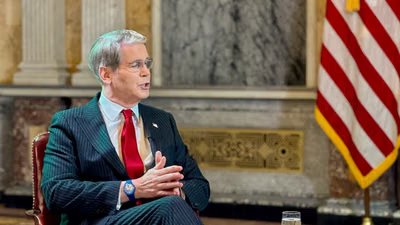
The charges were laid Friday against Mehdi Ahmadzadeh Razavi, 48, of Maple Ridge, and Arezou Soltani, 45, of North Vancouver. Both are accused in the killing of Masjoody, 45, who was reported missing last month.

Masjoody was first reported missing on February 2. According to the Canadian police, Burnaby Royal Canadian Mounted Police (RCMP) began investigating after neighbors raised concerns about his sudden disappearance. Officers soon determined that the circumstances were unusual and suggested possible criminal activity.

The case was later transferred to the Integrated Homicide Investigation Team (IHIT), which worked alongside Burnaby RCMP and several specialized units as the investigation expanded.

On March 6, investigators located Masjoody’s remains in Mission, British Columbia.

Authorities say the victim and the two accused were known to each other, though the motive for the killing has not yet been determined.

Social media posts indicate Masjoody had a history of activism related to events in Iran. IHIT spokesperson Sgt. Freda Fong said last month that investigators were examining whether his disappearance could be connected to that activism.

Masjoody was known for his online presence and commentary on Iranian politics. Members of the Iranian-Canadian community say he had spoken out against individuals he believed were linked to Iran’s Islamic Revolutionary Guard Corps (IRGC).

Masjoody made allegations about individuals he believed had ties to Iranian security institutions. In online posts, he alleged that Colonel Alireza Soltani — the incumbent IRGC commander in the Maku Free Trade Zone in northwestern Iran — is the uncle of one of the accused, Arezou Soltani.

He also alleged that her father, Ataollah Soltani, is a retired member of Iran’s Islamic Revolution Committees and previously served as commander of a committee outpost in the village of Khalakhaleh in Maku County.

Those claims have not been independently verified by investigators, and police have not indicated whether they are connected to the homicide investigation.

Police say further details about the case will be provided during a media update scheduled for Saturday afternoon in British Columbia.

“We understand this case has impacted the Iranian community and has generated widespread concern and public interest,” Fong said in a news release.

“While the motive is still under investigation, we can say the victim and two accused were known to each other.”

Shortly after his disappearance, Iranian-Canadian activist Nazanin Afshin-Jam posted to X that Masjoody had been “under threat for months” after attempting to expose alleged IRGC affiliates in Canada.

Masjoody was also known in academic circles as a mathematician who had previously worked as an instructor.

Investigators say the approval of first-degree murder charges marks a significant milestone in the case.

Most Viewed

Trump says regime change in Iran will happen but not ‘immediately’
1

Trump says regime change in Iran will happen but not ‘immediately’

2
ANALYSIS

Iran raises ‘human shield’ fears by rallying supporters to the streets

3
EXCLUSIVE

Iran pays Lebanon parliament speaker $500,000 a month to maintain influence

4

IRGC threatens harsher crackdown if protests return

5
OPINION

Russia gains from Iran war but risks more if it drags on

Banner
Banner

Spotlight

  • Iranians catalog tragedies blamed on the regime to counter antiwar narrative
    INSIGHT

    Iranians catalog tragedies blamed on the regime to counter antiwar narrative

  • Iran pressuring women footballers who defected in Australia to return
    EXCLUSIVE

    Iran pressuring women footballers who defected in Australia to return

  • Iran raises ‘human shield’ fears by rallying supporters to the streets
    ANALYSIS

    Iran raises ‘human shield’ fears by rallying supporters to the streets

  • Russia gains from Iran war but risks more if it drags on
    OPINION

    Russia gains from Iran war but risks more if it drags on

  • Allies rally, rivals brace after Mojtaba Khamenei’s rise
    INSIGHT

    Allies rally, rivals brace after Mojtaba Khamenei’s rise

  • Checkpoint attacks open new front in Iran war
    INSIGHT

    Checkpoint attacks open new front in Iran war

•
•
•

More Stories

Iran pressuring women footballers who defected in Australia to return

Mar 14, 2026, 10:40 GMT
•
Raha Pourbakhsh

A member of Iran’s women’s national football team staff who sought asylum in Australia along with several of her players is trying to persuade the others not to follow suit but instead return to Iran, informed sources told Iran International.

Sources said Zahra Meshkinkar, a member of the team’s technical staff, has been relaying messages from Iran's football authorities to players in an effort to convince them to abandon asylum plans and return home.

The effort comes after several members of the Iranian delegation sought protection abroad during the AFC Women’s Asian Cup in Australia.

The team’s equipment manager, known as “Flor,” and player Mohaddeseh Zolfi were among the latest members of the delegation to apply for asylum, following five other players who had already taken similar steps.

The remaining members of the squad later traveled to Malaysia, where they are currently staying while officials consider possible routes for their return to Iran amid the US-Israeli airstrikes.

Semi-official news agency ISNA on Saturday posted an image of players Mona Hamoudi and Zahra Sarbali as well as the coaching staffer Zahra Meshkin-Kar apparently minutes before traveling to Malaysia to join their team members.

"These three, after withdrawing their asylum request in Australia, will join the rest of the national team players tonight," the report said.

Sources previously told Iran International that players have been kept under tight supervision at their hotel in Kuala Lumpur.

Journalists and outside visitors have been barred from entering, and several players have had their mobile phones confiscated. Others were allowed to keep their phones only under the supervision of security personnel linked to the Iranian Football Federation.

Pressure on the players began before the team left Iran and continued during the tournament and afterward. Mohammad Rahman Salari, a member of the football federation’s board, has played a central role in enforcing restrictions and repeatedly collecting and inspecting the phones of players and staff.

Fatemeh Bodaghi, traveling with the delegation as the team’s manager, has also been described by sources as monitoring players’ social media activity and reporting developments to officials in Tehran. Zeinab Hosseinzadeh, the team’s physiotherapist, has also been cited as among those exerting pressure on players.

The crisis surrounding the team began earlier in the tournament when the players refused to sing the Iranian national anthem before their opening match against South Korea. The silent protest occurred shortly after the escalation of conflict involving Iran and the killing of Supreme Leader Ali Khamenei.

  • Iran women’s football team kept under tight security in Kuala Lumpur

    Iran women’s football team kept under tight security in Kuala Lumpur

State media quickly labeled the act as “wartime treason,” and officials warned the players they could face serious consequences if they refused to return to Iran.

The Iranian judiciary also issued a statement urging the athletes to return to the country “for the sake of their families,” a warning widely interpreted as indirect pressure on the players through their relatives.

Farideh Shojaei, the vice president for women’s affairs at the Iranian Football Federation, is also accompanying the delegation. She previously said officials were exploring possible routes for the team’s return to Iran amid ongoing US-Israeli airstrikes, including the possibility of traveling overland through Turkey after attempts to fly through the United Arab Emirates failed.

The developments have drawn international attention and concern from human rights groups, which warned that the players could face punishment if forced to return to Iran after their protest during the tournament.

Why Iran's Kharg Island is central to Strait of Hormuz security

Mar 14, 2026, 08:34 GMT
•
Hooman Abedi

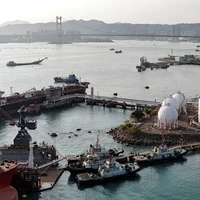
Kharg Island, a narrow coral outcrop in the northern Persian Gulf, has emerged as one of the most strategically important locations in the confrontation involving Iran, the United States and Israel, given its role in Iran’s oil exports and the security of the Strait of Hormuz.

Despite being only about five miles long, the island serves as the main hub for Iran’s crude oil exports and hosts military assets around the Strait of Hormuz.

Recent US strikes targeting military infrastructure on the island – while deliberately sparing its oil facilities – have underscored Kharg’s importance at the intersection of energy markets, maritime security and regional military strategy.

Iran’s oil lifeline

Kharg Island is the backbone of Iran’s crude oil export system. Energy analysts estimate that roughly 90% of the country’s crude exports pass through terminals on the island, making it one of the most critical pieces of economic infrastructure for the Islamic Republic.

Tanker tracking data shows that in 2025 the island handled about 96% of Iran’s crude exports, equivalent to roughly 1.54 million barrels per day out of a national total of about 1.6 million barrels per day.

The scale of Kharg’s infrastructure dwarfs other Iranian export facilities. The island’s loading terminals were originally designed to handle up to seven million barrels per day and can service eight or nine supertankers at once. More than 50 crude storage tanks on the island can hold over 34 million barrels.

Most of the crude shipped from Kharg arrives via pipelines from mainland oil fields in southern Iran rather than being produced on the island itself.

Other export facilities operate on a far smaller scale. Lavan Island can process roughly 200,000 barrels per day, with storage capacity of about 5.5 million barrels. Sirri Island provides around 4.5 million barrels of storage. The energy hub at Assaluyeh handles gas condensate rather than crude oil, meaning it does not function as a major oil export terminal.

Iran has also attempted to create alternative export routes outside the Persian Gulf. A terminal under development at Jask, on the Gulf of Oman, has a projected capacity of about one million barrels per day, but storage capacity there is only about two million barrels, far below the scale of Kharg.

For this reason, Kharg is widely considered to be the centerpiece of Iran’s crude export system. Much of the infrastructure and export data referenced here has also been highlighted in recent analysis by sanctions and financial analyst Miad Maleki on X.

A military hub in the Persian Gulf

Kharg Island is not only an economic asset but also an important military location.

Access to the island is tightly restricted and guarded by Iran’s Islamic Revolutionary Guards Corps (IRGC). The IRGC Navy maintains a presence there, including the 112th Zolfaghar Surface Combat Brigade, a unit operating fast-attack boats designed for asymmetric naval warfare in the Persian Gulf.

These vessels are typically equipped with anti-ship missiles, rockets and naval mines, allowing them to threaten commercial shipping or larger naval vessels operating nearby.

Military infrastructure around the island includes coastal missile launchers, radar systems, surveillance networks and drone facilities used to monitor activity across the northern Persian Gulf.

Iran’s regular navy, known as the Army Navy, also operates in the broader Bushehr–Kharg region, using helicopters and boats for maritime patrols and potential mine-laying operations.

Together, the IRGC Navy and the conventional navy maintain a presence that could pose risks to shipping lanes during periods of conflict.

The Strait of Hormuz factor

Kharg’s strategic importance is closely tied to the Strait of Hormuz, located southeast of the island.

The narrow maritime passage connects the Persian Gulf to the Gulf of Oman and the wider Indian Ocean. About 20% of the world’s oil supply passes through this chokepoint every day.

Tankers carrying crude from Saudi Arabia, Iraq, Kuwait, Qatar and the United Arab Emirates all transit the strait before reaching global markets.

Although Iran itself contributes only 3–4% of global oil supply, its geographic position along the Strait of Hormuz gives it the ability to threaten a far larger portion of global energy flows.

Iran’s naval doctrine emphasizes the use of asymmetric tactics, including naval mines, fast-attack boats and anti-ship missiles.

Iran is believed to possess between 2,000 and 6,000 naval mines. Even a limited number could disrupt maritime traffic in the narrow waterway. Military analysts note that clearing mines is a slow and complex process requiring specialized ships, drones and helicopters.

Why the US struck Kharg

The United States early Saturday targeted military assets on Kharg Island as part of a broader campaign aimed at protecting maritime traffic in the Strait of Hormuz.

US President Donald Trump said American forces struck military targets on the island while deliberately avoiding its oil infrastructure.

“Moments ago, at my direction, the United States Central Command executed one of the most powerful bombing raids in the history of the Middle East and totally obliterated every military target in Iran’s crown jewel, Kharg Island,” Trump wrote in a post on Truth Social.

Trump said the operation specifically avoided damaging oil facilities.

“Our weapons are the most powerful and sophisticated that the world has ever known but, for reasons of decency, I have chosen not to wipe out the oil infrastructure on the island,” he wrote.

The strikes targeted military equipment including missile boats, speedboats, launchers, drones and coastal batteries associated with Iranian forces stationed there.

The strategy appears aimed at removing threats to minesweeping operations rather than disrupting global oil supply.

Commercial tankers cannot be safely escorted through the Strait of Hormuz while facing missile, drone and mine threats from nearby Iranian bases. Neutralizing these capabilities allows specialized naval vessels and drones to begin clearing mines from shipping lanes.

Trump warned that the decision to spare Kharg’s oil facilities could change if Iran interferes with maritime traffic.

“Should Iran, or anyone else, do anything to interfere with the free and safe passage of ships through the Strait of Hormuz, I will immediately reconsider this decision,” he wrote.

Oil exports continue despite strikes

Despite the military strikes, oil operations on Kharg appear to have continued.

Shipping data indicates that tankers have continued loading crude from the island’s terminals. One very large crude carrier (VLCC) was reported to have completed a two-million-barrel loading shortly after the strikes.

Satellite imagery showing flames on the island does not necessarily indicate damage to oil facilities. Gas flaring, a routine process used in oil operations, occurs regularly on Kharg and can appear as fires in satellite images.

Kharg has also demonstrated resilience in past conflicts. During the Iran-Iraq War in the 1980s, Iraqi forces repeatedly bombed the island and destroyed several storage tanks. Despite the damage, Iran continued exporting more than 1.5 million barrels of oil per day.

More than six decades after exports began there in 1960, Kharg Island remains both Iran’s primary energy gateway and a key strategic point in the security architecture of the Persian Gulf.

As long as a large share of the world’s oil continues to pass through the Strait of Hormuz, the small island will remain one of the most consequential pieces of infrastructure in the region.

Mass arrests, intensifying crackdown sweep Iran amid attacks

Mar 14, 2026, 07:57 GMT
•
Reza Akvanian

Iranian authorities have launched a sweeping wave of arrests and tightened domestic repression as US and Israeli strikes continue to hit military facilities and security institutions tied to the Islamic Republic.

Hundreds of people have been detained across the country over the past two weeks, according to information reviewed by Iran International and local reports. Many detainees’ identities, locations of detention and legal status remain unknown.

Arrests have been reported in multiple provinces including East and West Azarbaijan, Alborz, Isfahan, Tehran, Khuzestan, Kordestan, Kerman, Kohgiluyeh and Boyer-Ahmad, Gilan, Lorestan and Yazd. Authorities have accused detainees of offenses such as “disturbing public opinion,” “propaganda against the system,” “online activities,” “disrupting public security,” and “cooperation with hostile countries.”

State television and security-linked outlets have simultaneously broadcast forced confessions from some detainees, raising concerns among rights advocates that the statements could be used to justify prosecutions. Human rights organizations have repeatedly criticized the Islamic Republic for using televised confessions obtained under pressure as evidence in court proceedings.

Officials have accompanied the crackdown with increasingly explicit threats.

Ahmadreza Radan, commander of Iran’s police, said more than 80 people had been arrested for spreading “disturbing content” online. He added that thousands of others had received warning text messages over posts deemed to spread panic.

Radan also warned that police would respond forcefully to any street protests, saying officers would be “ready to pull the trigger” if demonstrations occur.

Meanwhile, state television aired a program in which a presenter threatened government opponents, saying authorities would eventually pursue them whether they were inside or outside the country.

Security agencies have also reported new arrests linked to alleged espionage. The Islamic Revolutionary Guards Corps said six people were detained in Kordestan province and one individual was killed during an operation. The Guards-affiliated Fars website reported that intelligence forces arrested 50 people in Kohgiluyeh and Boyer-Ahmad province. The Intelligence Ministry said at least 30 others were detained on accusations of spying for the United States and Israel.

Authorities have also targeted those documenting the conflict. The ministry warned that filming or photographing strike locations could amount to acting as the “enemy’s fifth column.” Guards intelligence officials said some individuals who sent images of attacks to media outlets had already been arrested.

Internet disruptions have further limited the flow of information. The monitoring group NetBlocks reported that a nationwide internet blackout continues for hundreds of hours.

The group warned the shutdown posed a direct threat to civilians by restricting access to vital information. With communications cut in many areas, families of detainees say they often do not know where relatives are being held.

Threats have also extended beyond Iran’s borders. The office of Iran’s prosecutor general issued a statement warning Iranians abroad that assets could be seized and severe penalties imposed if authorities determine they have “cooperated with the enemy.”

The statement broadly defined such cooperation as providing intelligence or engaging in activities benefiting Israel, the United States or other “hostile states.” Officials said legal proceedings against such individuals had entered an “operational phase,” including asset identification and confiscation.

At the same time, reports have emerged of expanded security deployments in cities nationwide. Revolutionary Guards and Basij units have established checkpoints in urban areas, with citizens reporting aggressive searches of vehicles and mobile phones.

A resident of Tehran told Iran International that police at a checkpoint in Haft-e Tir Square forced him to unlock his phone and searched through his calls, photos and videos.

Another resident in Isfahan said Basij personnel threatened him and his family with weapons during an inspection at a busy city square. According to the witness, officers treated civilians as if they were the enemy.

Security checkpoints themselves have increasingly become targets in the ongoing conflict. Video circulating online shows drone strikes hitting Basij checkpoints and equipment in Tehran.

The Fars website reported that at least 10 Basij and security personnel stationed at checkpoints in the capital were killed in strikes on Wednesday evening. Additional attacks on similar positions have been reported in other cities.

The Israeli military later said its air force had targeted Basij checkpoints and personnel in Tehran, describing them as part of the Islamic Republic’s internal security apparatus used to suppress dissent.

Data from the US-based Armed Conflict Location & Event Data Project recorded at least 18 Israeli strikes on Basij checkpoints on Wednesday alone, most of them in Tehran.

The arrests and heightened street controls come as Iran’s prison system is already under severe strain following previous protest crackdowns that saw tens of thousands detained. Human rights groups say many prisons face overcrowding, poor sanitation and shortages of basic supplies.

At the same time, some detention facilities and intelligence buildings have reportedly been damaged in airstrikes, raising further uncertainty about where newly arrested individuals are being held.

With communication restrictions still in place and many detentions unacknowledged by authorities, families and rights advocates say concerns are growing about the fate of hundreds of people detained during one of the most volatile periods in Iran in years.

The unseen leader: What Khamenei Jr’s absence reveals about IRGC’s role

Mar 13, 2026, 21:40 GMT
•
Negar Mojtahedi

The mystery surrounding Iran’s new supreme leader may reveal more about the Islamic Republic’s power structure and the role of the Revolutionary Guards than Mojtaba Khamenei himself, analysts said on the Eye for Iran podcast, as Khamenei Jr remains unseen.

When Mojtaba Khamenei was officially announced as Iran's new supreme leader on March 8, the moment that followed was unusual.

There was no televised address to the nation. No appearance before officials or supporters. Instead, a message attributed to Mojtaba Khamenei was read aloud.

Five days after being declared Iran’s new supreme leader, Khamenei still has not appeared publicly or delivered a video message — an absence that has fueled speculation about his condition and about who is actually exercising power inside the Islamic Republic.

But for some analysts, the mystery surrounding Mojtaba Khamenei is less important than what it reveals about how the Iranian system actually functions.

“I suppose we can say Mojtaba Khamenei has become something like Schrödinger’s cat,” historian Dr. Shahram Kholdi said during a panel discussion on Eye for Iran, suggesting the new leader appears simultaneously present and absent.

The lack of any public appearance has triggered a range of theories — that he may be injured, that he is being kept hidden for security reasons, or that others are effectively running the system in his name.

Yet regardless of which theory proves correct, analysts say the moment highlights a deeper shift: power inside Iran increasingly appears to rest with the security apparatus.

“This is a textbook case of the tail wagging the dog,” Kholdi said. “The IRGC used to be the tail. Now it’s the one wagging the dog.”

For decades the Islamic Republic has functioned through overlapping networks of clerical authority, political institutions and security forces. But Iranian political analyst Shayan Samii says the balance within that system has steadily shifted toward the Revolutionary Guards.

“In reality, the IRGC is running the show,” Samii said. “These figures who appear in front of the cameras are often the face presented to the public, but the real decisions are made within the security apparatus.”

Samii argues that Mojtaba Khamenei himself has long been closely tied to that structure, acting as a conduit between the office of the supreme leader and the Revolutionary Guards. His sudden elevation to Iran’s highest position — combined with his continued absence from public view — has only made that power dynamic more visible.

“If you are elevated to the highest position in the land, normally you would appear on television,” Samii said. “You would address the nation. The fact that we have not seen that raises serious questions.”

At the same time, developments on the ground may be testing the very institutions that sustain the regime.

Phase Two of the war

Israeli strikes have targeted security checkpoints in Tehran linked to the Basij militia — the paramilitary force responsible for suppressing protests and maintaining internal control.

For former US national security official John Hannah, that shift could prove significant.

“The question is whether this begins to catalyze fractures within the security services,” Hannah said in an interview on Eye for Iran. “Will Basij members begin not showing up to their posts? Will the regime manage to maintain cohesion?”

For authoritarian systems, he noted, the loyalty of the security forces is often decisive.

“One of the crucial elements in bringing down a regime like this is fractures among the people who hold the guns,” Hannah said.

Still, Hannah cautioned that predicting the outcome remains difficult. Authoritarian regimes can appear stable for years before suddenly unraveling.

“It happens slowly, slowly — and then suddenly,” he said.

Israeli analyst Avi Melamed argues that what is unfolding inside Iran may ultimately represent a broader restructuring of power rather than an immediate collapse.

“What we are seeing,” he said, “is a reconfiguration of power.”

That reconfiguration, analysts say, could reshape not only Iran’s internal politics but the strategic balance across the Middle East.

For now, however, the central mystery remains unresolved.

Iran’s new supreme leader has yet to appear publicly.

And as pressure mounts on the regime’s security apparatus, the question facing Iran may be less about where Mojtaba Khamenei is — and more about who truly governs behind him.

You can watch Eye for Iran on YouTube or listen on any podcast platform of your choosing.

Trump says regime change in Iran will happen but not ‘immediately’

Mar 13, 2026, 15:54 GMT

US President Donald Trump said on Friday regime change in Iran could eventually occur though it may not happen immediately, citing the Iranian authorities’ violent repression of protesters as a major obstacle to a popular uprising.

Speaking on Fox News Radio's The Brian Kilmeade Show, Trump said security forces loyal to the Islamic Republic routinely shoot demonstrators in the streets, making it difficult for unarmed civilians to challenge the regime despite growing pressure from the ongoing conflict.

“They literally have people in the streets with machine guns, machine-gunning people down if they want to protest,” Trump said, referring to Iran’s security forces. “That’s a pretty big hurdle to climb for people that don’t have weapons.”

Trump said that while change inside Iran will eventually happen, it is unlikely to occur quickly under such conditions.

“It’ll happen,” he said, “but it probably will be — maybe not immediately.”

The US president made the remarks while discussing the internal situation in Iran amid the escalating war between Iran, Israel and the United States. Trump argued that the regime maintains control largely through force, describing the security forces as an “evil group of people” who shoot protesters “right through the head.”

Iran’s Islamic Revolutionary Guards Corps warned on Thursday that opponents could face a blow “even stronger than January 8,” signaling the possibility of a renewed and harsher crackdown if street protests resume.

More than 36,500 Iranians were killed by security forces during a two-day crackdown on nationwide protests on January 8–9.

  • IRGC threatens harsher crackdown if protests return

    IRGC threatens harsher crackdown if protests return

Trump said the presence of armed units on the streets makes it extremely difficult for ordinary Iranians to take action against the government.

“You’re talking about people that go out shooting protesters,” he said. “So when someone says go out and protest, that’s a pretty high standard.”

The comments came after Israeli Prime Minister Benjamin Netanyahu announced that the current conflict will create conditions for political change inside Iran.

Trump said continued military pressure on Iran's regime could weaken the authorities over time.

“They’re going to be in worse shape as time goes by,” Trump said, adding that US and Israeli strikes have severely damaged Iran’s military capabilities.