• Iran Insight
  • Politics
  • Economy
  • Analysis
  • Special Report
  • Opinion
  • Podcast
All rights reserved for Volant Media UK Limited
volant media logo
  • العربية
  • فارسی
Brand
  • Iran Insight
  • Politics
  • Economy
  • Analysis
  • Special Report
  • Opinion
  • Podcast
  • Iran Insight
  • Politics
  • Economy
  • Analysis
  • Special Report
  • Opinion
  • Podcast
  • Theme
  • Language
    • العربية
    • فارسی
ANALYSIS

Iran raises ‘human shield’ fears by rallying supporters to the streets

Mar 13, 2026, 20:29 GMT

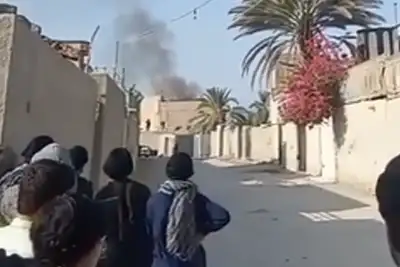
Iranian officials are urging citizens to fill the streets as Israeli strikes hit security sites, while opposition figures warn the calls aim to create civilian “human shields” around security forces under attack.

Critics argue that such calls expose civilians to danger. The diaspora-based Dadban volunteer lawyers group warned against encouraging civilians to gather near security installations.

“Encouraging civilians to gather near security centers or checkpoints that may become targets effectively turns them into human shields,” the group wrote in a statement. “Such actions knowingly expose civilians to danger and place direct responsibility on those issuing the calls.”

Continue reading

Most Viewed

Iran keeps oil flowing to China as Hormuz pressure forces reserve release
1
INSIGHT

Iran keeps oil flowing to China as Hormuz pressure forces reserve release

2
EXCLUSIVE

Desertions, shortages and army-IRGC rift strain Iran’s military

3
INSIGHT

Checkpoint attacks open new front in Iran war

4

Iran’s unseen new leader issues first message in writing

5

Trump says regime change in Iran will happen but not ‘immediately’

Banner
Banner

Spotlight

  • Iran raises ‘human shield’ fears by rallying supporters to the streets
    ANALYSIS

    Iran raises ‘human shield’ fears by rallying supporters to the streets

  • Russia gains from Iran war but risks more if it drags on
    OPINION

    Russia gains from Iran war but risks more if it drags on

  • Allies rally, rivals brace after Mojtaba Khamenei’s rise
    INSIGHT

    Allies rally, rivals brace after Mojtaba Khamenei’s rise

  • Checkpoint attacks open new front in Iran war
    INSIGHT

    Checkpoint attacks open new front in Iran war

  • Power vs piety: Khamenei Jr inherits legitimacy dilemma of Iran's theocracy
    ANALYSIS

    Power vs piety: Khamenei Jr inherits legitimacy dilemma of Iran's theocracy

  • Can widening the war save Iran’s rulers?
    ANALYSIS

    Can widening the war save Iran’s rulers?

•
•
•

More Stories

Iran raises ‘human shield’ fears by rallying supporters to the streets

Mar 13, 2026, 20:23 GMT
•
Maryam Sinaiee

Iranian officials are urging citizens to fill the streets as Israeli strikes hit security sites, while opposition figures warn the calls aim to create civilian “human shields” around security forces under attack.

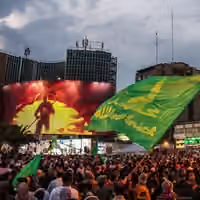
On Friday, several Iranian officials including the judiciary chief, the top security official, the foreign minister and many others demonstrated alongside Islamic Republic supporters in anti-Israel Quds Day rallies.

In one video from the rallies, Judiciary Chief Gholamhossein Mohseni Ejei was seen surrounded by a large number of bodyguards and participants forming what critics call a human shield as an airstrike hit an area nearby.

In an apparent move to avoid airstrikes, Ejei decided not to sit on the officials’ podium during Friday prayers, instead sitting among ordinary worshippers.

Before the Quds Day rallies, Iranian authorities had urged supporters of the Islamic Republic to pour into the streets despite the threat of airstrikes.

“This smallest soldier of yours has three requests from you: street, street, street,” parliament speaker Mohammad-Bagher Ghalibaf posted on X on Wednesday. “Your children in the armed forces have put their lives in their hands to defend Iran. Strengthen them by keeping the streets.”

A video circulating on social media also shows pro-government religious singer Meysam Motiee, speaking after several checkpoints were targeted in Tehran the same night, urging civilians to help protect security forces. “The US and Zionists have serious plans to take back the streets from the faithful forces.”

However, critics argue that such calls expose civilians to danger. The diaspora-based Dadban volunteer lawyers group warned against encouraging civilians to gather near security installations.

“Encouraging civilians to gather near security centers or checkpoints that may become targets effectively turns them into human shields,” the group wrote in a statement. “Such actions knowingly expose civilians to danger and place direct responsibility on those issuing the calls.”

Online users say that after some of these strikes, checkpoint personnel have moved their positions to busier streets. Some posts allege that instead of conducting vehicle searches as thoroughly as before, members of the Basij militia now stop cars primarily to create congestion around these checkpoints.

People urged to stay home

In contrast to these calls for street presence, opposition figures and foreign leaders have urged Iranians to stay indoors for the time being.

Iran's exiled prince Reza Pahlavi, who has said he is prepared to lead a transitional period after the Islamic Republic, warned that the coming days would be decisive and that people need to stay home.

In a video message on Thursday, he urged citizens not to approach “government, military and law-enforcement centers, or housing complexes affiliated with the repression apparatus.”

“The Islamic Republic is using schools, mosques, and other public locations to hide its forces and create human shields,” he said.

Addressing state employees directly, Pahlavi urged them not to risk their lives for the survival of the government. Instead, he called on them to “use your access and capabilities to disrupt repression and help the people.”

Similar appeals have come from abroad. Israeli Prime Minister Benjamin Netanyahu addressed Iranians in a Persian-language message published by an official Israeli account.

“We are delivering heavy blows to the Revolutionary Guards and Basij forces, both in the streets and at checkpoints,” he said, promising that the attacks would continue.

“I say to the people of Iran: the moment you can begin a new path of freedom is getting closer every day. We stand with you, we help you, but ultimately everything depends on you.”

Police commander Ahmad-Reza Radan had warned in a televised interview earlier this week that anyone taking to the streets would be treated as an “enemy” and said security forces had their “fingers on the trigger” and were ready to shoot.

In a mass text message reportedly sent to mobile phones across the country on Thursday, the intelligence arm of the Revolutionary Guards (IRGC) also threatened harsh consequences for street protests.

The message warned that if those it described as “domestic traitors” or “neo-ISIS elements” attempted demonstrations, they would face a response “stronger than January 7.”

The IRGC's statement effectively acknowledged the Islamic Republic's role in the massacre of at least 36,500 protesters during the brutal crackdown in January.

"The IRGC intelligence organization forgot that before the war, they used to deny the killing of people and say it was the work of terrorists. Today, they threatened people that if they come out to the streets, we'll give you a harsher response than on January 7," one user posted on X.

A statement attributed to the new supreme leader Mojtaba Khamenei on Thursday signaled no change in the government’s approach. Many Iranians on social media widely interpreted the message as confirmation that the policy of suppressing dissent would continue.

The confrontation has spilled onto social media as well, where supporters of the establishment and critics exchange threats and mockery.

One pro-establishment user wrote on X: “This time we are waiting even more than the Prince and Netanyahu for you to come to the streets… If you really want an uprising, don’t delay. Come to the streets.”

Some critics responded to the visible participation of pro-establishment citizens in rallies, including the annual Quds Day rally, with historical comparisons. “Hitler, Mussolini, Saddam, and Gaddafi could bring crowds many times larger than this to the streets,” one user wrote. “We all know how that ended.”

Others used sarcasm to encourage militia members to remain at checkpoints despite the risk of Israeli drone strikes.

“We wish you well,” one user wrote mockingly. “Please do not leave your posts under any circumstances. Your strong presence at checkpoints lets millions of Iranians smile with relief. They can watch and wave to you from afar.”

Power vs piety: Khamenei Jr inherits legitimacy dilemma of Iran's theocracy

Mar 11, 2026, 17:54 GMT
•
Shahram Kholdi

Iran’s new supreme leader Mojtaba Khamenei inherits not merely his father’s office but also the constitutional ambiguities and political compromises that accompanied Ali Khamenei’s own controversial elevation nearly four decades earlier.

The death of Khamenei in the February 2026 US–Israeli airstrikes on Tehran has triggered the most consequential constitutional transition in the Islamic Republic since 1989—and revived a question that has long shadowed the system since its founding: whether supreme authority rests primarily on religious legitimacy or political power.

Within days, Iranian state media announced that the Assembly of Experts had selected his son, Mojtaba Khamenei, a figure long powerful behind the scenes but lacking broad clerical standing, as the new Supreme Leader.

The office of Supreme Leader is defined primarily by Articles 5, 107, 109 and 110 of the Constitution of the Islamic Republic of Iran.

Article 5 establishes the principle of velayat-e faqih, entrusting governance during the occultation of the Twelfth Imam to a qualified jurist combining religious authority with political competence. Article 107 assigns the Assembly of Experts the responsibility of selecting the Supreme Leader, while Article 109 sets out the required qualifications, including justice, political insight and administrative ability.

The precedent of 1989

When Khomeini died in June 1989, the Islamic Republic faced an immediate leadership vacuum. No obvious successor possessed comparable clerical stature.

The Assembly of Experts ultimately chose Ali Khamenei, then president, despite his limited standing as a senior jurist; the constitution was soon revised to accommodate the decision, stating that the leader need not possess the full recognition as a grand ayatollah.

The amendment reflected political calculation rather than abstract principle.

The episode established an enduring precedent: constitutional interpretation could adapt to political necessity. In practice, legitimacy rested not only on religious authority but also on institutional alignment and security power.

Mojtaba Khamenei now confronts a similar dilemma. Like his father in 1989, he is not widely recognised within the traditional hierarchy of Shiʿi scholarship as a senior jurist.

Wartime succession

Under Article 107, the Assembly of Experts must deliberate and appoint the Supreme Leader, ordinarily implying a formal session. Yet Mojtaba’s selection occurred amid ongoing war and severe disruption following the airstrikes that killed Ali Khamenei.

Public information about the process remains sparse. It is unclear whether the assembly gathered physically, voted remotely or reached its decision through emergency consultation. Iranian state media confirmed his appointment but provided few procedural details.

Such ambiguity does not necessarily invalidate the decision within the Islamic Republic’s flexible constitutional practice. Still, the opacity surrounding the process has intensified debate over the legitimacy of the succession.

For more than a decade Mojtaba sought to strengthen his clerical credentials. Beginning in 2009, he taught dars-e kharej—advanced jurisprudence seminars traditionally led by senior clerics aspiring to marjaʿ status. Observers widely interpreted the move as preparation for a possible future succession.

Reports from Persian-language sources suggest some senior grand ayatollahs objected to what they saw as a politically engineered effort to manufacture clerical authority. Attempts were reportedly made to obtain written attestations of Mojtaba’s ijtihad, though evidence of broad clerical recognition remains limited.

After roughly thirteen years, Mojtaba suspended the classes in September 2024 as succession speculation intensified.

Power without office

Power in the Islamic Republic has rarely flowed through formal titles alone. It often moves through the networks surrounding the Supreme Leader.

Over two decades Mojtaba emerged as one of the most influential yet least publicly visible figures in the Iranian state. His authority derived not from elected office but from his role inside Beit-e Rahbari, where he functioned as a gatekeeper to his father—managing access, filtering political actors and coordinating with security institutions.

In practice this amounted to a tightly controlled security network of clerical aides, intelligence officials and Revolutionary Guard commanders whose influence depended less on formal office than on proximity to the Leader.

This informal authority allowed Mojtaba to cultivate a patronage base closely tied to the IRGC. The United States Treasury sanctioned him in 2019, stating that he acted on behalf of the Supreme Leader while maintaining close relationships with IRGC elements and the Basij militia.

The Guards connection

The relationship between the Supreme Leader and the Revolutionary Guards deepened decisively during the 2009 post-election unrest.

Following the disputed presidential vote that returned Mahmoud Ahmadinejad to power, mass protests erupted across Iran. The Revolutionary Guards and Basij militia ultimately played the decisive role in suppressing the demonstrations.

The events of 2009 reaffirmed the supremacy of the Supreme Leader while strengthening the alliance between the leadership and the security apparatus. Many analysts argue Mojtaba played a coordinating role inside the Leader’s office during the crisis.

One figure embodied the partnership between the Supreme Leader and the Revolutionary Guards more fully than any other: General Qasem Soleimani, commander of the Quds Force.

Soleimani maintained unusually direct access to Ali Khamenei and operated with a degree of autonomy rare within the Islamic Republic’s formal hierarchy, shaping Tehran’s regional military strategy across Iraq, Syria and beyond.

His killing by a United States drone strike in January 2020 removed a central node in the system that linked the Leader to the Guards’ external operations.

Although the IRGC remained institutionally powerful, no successor fully replicated Soleimani’s combination of battlefield authority, political influence and personal access to the Supreme Leader..

Continuity and uncertainty

Another turning point came with the death of President Ebrahim Raisi in a helicopter crash in 2024.

Long viewed as a plausible successor with stronger clerical credentials, Raisi’s absence narrowed the field and sharpened attention on Mojtaba Khamenei, whose embedded position within Beit-e Rahbari and longstanding ties to the security apparatus left him uniquely placed when wartime succession arrived.

Mojtaba Khamenei’s accession does not resolve the deeper tensions within the Islamic Republic. Like his father in 1989, he assumes power without universally recognised clerical authority. His legitimacy rests instead on political coalition, institutional continuity and the support of the Revolutionary Guards.

At the same time, the war that accompanied his elevation has destabilised the very networks that sustained his rise. The destruction of Beit-e Rahbari and the deaths within the leadership circle have left the inner workings of the system partially obscured.

Mojtaba inherits the same contradiction that shaped his father’s rise: a system that claims religious authority yet repeatedly turns to political necessity in moments of crisis.

In 1989, that necessity elevated Ali Khamenei as the republic emerged from the long shadow of the Iran–Iraq War. In 2026, it has elevated his son amid war once again—leaving the durability of Iran’s constitutional order dependent, as before, less on theology than on power.

Can widening the war save Iran’s rulers?

Mar 11, 2026, 07:33 GMT
•
Reza Haji Hosseini

Tehran’s decision to widen the war is an attempt to project strength but may better be understood as a survival strategy—one rooted in deliberate escalation and shaped by a logic akin to mutually assured destruction.

Following US and Israeli attacks on the killing of Supreme Leader Ali Khamenei, Iran’s leadership followed through with a long-standing threat: expanding the conflict beyond its borders and drawing neighboring states into the confrontation.

One notable example came on February 1, roughly a month before Khamenei was killed in a joint US–Israeli missile strike on February 28, when he said that if the United States attacked Iran militarily, the conflict would become “regional.”

Today, the armed forces of the Islamic Republic—led by the Islamic Revolutionary Guard Corps—appear to be implementing that doctrine by expanding hostilities beyond Iran’s borders.

The logic is to link the fate of the Islamic Republic to the stability of the wider region: as the state faces mounting internal and external pressures, it seeks to entangle neighboring countries in the crisis, raising the costs of continued confrontation.

This approach resembles elements of Nixon’s “madman theory” and Israel’s “Samson option,” reflecting a strategic logic akin to mutually assured destruction. Whether such a strategy can deter adversaries—or instead isolate Tehran further—remains uncertain.

Several neighboring countries have now been drawn into the conflict. States along the Persian Gulf have been targeted, and missile and drone strikes have also been directed toward Azerbaijan and Turkey.

In some cases, countries that previously maintained relatively cooperative relations with Tehran, including Qatar, have found themselves on the receiving end of these attacks.

The responses of neighboring governments suggest that widening the conflict could ultimately produce stronger regional opposition rather than easing pressure on Tehran. From their perspective, the concern is precedent: if such attacks occur once, what guarantees exist that they will not happen again?

This concern increases the likelihood of coordinated responses designed to prevent further escalation.

The strategy also reflects long-running domestic pressures on the system. Over the course of its existence, the Islamic Republic occasionally managed to regain some degree of public support at critical moments—including the elections of Mohammad Khatami in 1997 and 2001, the high participation in the 2009 election, and the victories of Hassan Rouhani in 2013 and 2017.

But the broader trajectory has been one of declining engagement and growing disillusionment. By the time of the 2024 presidential election—officially won by Masoud Pezeshkian—turnout had fallen sharply, reflecting wider frustration shaped by years of repression and repeated cycles of protest.

Demonstrations in 1999, 2009, 2019 and 2022 were met with force, while the downing of the Ukrainian passenger plane and the large-scale crackdown in January 2026 further deepened mistrust between the state and society.

At the same time, nearly five decades of governance have left Iran confronting multiple structural crises, including environmental degradation, water scarcity, energy shortages, mounting economic pressure on households, systemic corruption and widening inequality.

Together, these pressures have steadily eroded confidence in the system and narrowed expectations for reform from within.

Against this backdrop, widening the conflict may appear to the leadership less a choice than a calculation: that survival at home increasingly depends on raising the stakes abroad. Yet this logic carries obvious risks.

Attempts to regionalize the confrontation could deepen Iran’s isolation and accelerate pressures already bearing down on the system.

Taking into account both long-term domestic trends and the current military situation—including damage to Iran’s military capabilities and the widening of hostilities—the future of the Islamic Republic remains uncertain.

International politics rarely unfolds along a single predictable path, and multiple outcomes remain conceivable. Still, history suggests that political systems under sustained internal strain and external pressure often appear stable until they do not.

As Iran confronts war with the United States and Israel abroad while continuing to face mistrust and periodic unrest at home, the strategy of widening the conflict may prove less a path to survival than a reflection of the system’s mounting vulnerability.

Hormuz disruption tests limits of global energy markets

Mar 11, 2026, 03:05 GMT
•
Dalga Khatinoglu

Failure to restore shipping through the Strait of Hormuz is beginning to show what prolonged disruption could mean for global energy markets.

Early volatility has been sharp but manageable, yet the longer the disruption lasts, the greater the risk that physical shortages—rather than price swings—will drive the crisis.

In recent days, Iranian attacks have expanded to energy infrastructure across Arab Gulf states alongside the continued closure of Hormuz.

On March 9, an oil refinery in the United Arab Emirates was targeted. Qatar has halted liquefied natural gas production, while Iraq and Kuwait have each reduced oil output by roughly 70 percent.

Brent crude briefly surged more than 25 percent to $115 a barrel as markets opened Monday before retreating after the Group of Seven said it was considering releasing 300–400 million barrels from strategic reserves.

Prices later eased to about $98—still roughly 30 percent above prewar levels—suggesting markets are bracing less for an immediate collapse than for a sustained disruption.

Before traffic through Hormuz was disrupted, roughly 20 million barrels per day of oil and petroleum products passed through the corridor, most of it bound for Asia. In addition, about 330 million cubic meters of liquefied gas moved through the same route daily.

Saudi Arabia and the United Arab Emirates have diverted part of their exports through alternative pipeline routes, but those volumes remain well below what previously moved through the strait.

Energy consultancies including Wood Mackenzie and Kpler warned early that global markets could withstand severe volatility for only three to four weeks without a reopening of the waterway.

Strategic reserve releases could cushion the shock temporarily, but even a 300–400 million barrel release would offer only limited relief—particularly if attacks continue to damage infrastructure or delay the restoration of export capacity.

Released reserves would also need to be replenished relatively quickly, limiting their long-term utility as a buffer.

The gas market is even more exposed. About one-fifth of global LNG trade previously passed through Hormuz, and there are few viable substitutes for QatarEnergy’s supplies. Global gas prices have nearly doubled at a moment when European storage levels are at their lowest since 2022, with facilities less than 30 percent full.

Hormuz also carries a substantial share of global trade in sulfur and chemical fertilizers—a reminder that prolonged disruption could have broader consequences for food prices and inflation beyond the immediate energy shock.

The strategic stakes are becoming increasingly explicit. On Monday night, President Donald Trump warned that the United States would respond “20 times harder” if shipping through Hormuz were not restored.

On Tuesday, Iran’s security chief Ali Larijani responded on X with a defiant message: “The Strait of Hormuz will either be a strait of peace and prosperity for all or will be a strait of defeat and suffering for warmongers,” adding, “beware lest you be the ones to vanish.”

For now, markets are absorbing the shock. But the longer disruption persists, the less the outcome will depend on price volatility and the more it will hinge on physical supply—a shift that strategic reserves and alternative routes alone cannot offset.

A leader no one has seen: The unusual debut of Mojtaba Khamenei

Mar 10, 2026, 18:00 GMT
•
Hooman Abedi

Two days after he was announced as Iran’s new Supreme Leader, Mojtaba Khamenei remains absent from public view, raising questions his swift selection was meant to pre-empt.

Supporters of the Islamic Republic have gathered in several cities to show loyalty to the new leader. The officialdom has congratulated him in unison. But Khamenei Jr is yet to appear.

There has been no speech, no televised address and very few photos or videos of the new leader. The only recording attributed to him so far is a short old video announcing that his religious classes have been canceled.

The lack of information has been so striking that even state media appears uncertain about how to present him to the public.

Older photographs have been circulated, stylized illustrations or AI-generated renderings have appeared online to fill the visual vacuum. These images are not presented as authentic photos but symbolic representations.

The situation raises a central question: what scenario may explain the unusual debut of Iran’s new Supreme Leader?

  • The ascendency of Khamenei Jr was a long-planned improvisation

    The ascendency of Khamenei Jr was a long-planned improvisation

Scenario one: delayed unveiling

The simplest explanation is that the Islamic Republic intends to introduce Mojtaba through a carefully managed televised address or recorded message once security conditions allow.

In this scenario, the leadership transition would be framed as orderly and unified, with Mojtaba reiterating familiar themes of resistance, continuity and cohesion under wartime pressure.

Even so, the delay itself invites scrutiny. Authorities could cite security concerns, but the absence of even a brief recorded message—particularly after the steady stream of congratulatory statements from senior officials—has raised questions about the pace and choreography of the transition.

For now, the silence has only heightened curiosity about how and when the new leader will first address the public.

Mojtaba Khamenei greets Qassem Soleimani, former commander of the Islamic Revolutionary Guard Corps’ Quds Force. (Undated)
Mojtaba Khamenei greets Qassem Soleimani, former commander of the Islamic Revolutionary Guard Corps’ Quds Force.

Scenario two: leadership by statement

A second possibility is that Mojtaba may initially govern largely through written statements rather than public appearances. Such an approach would allow the system to project continuity while limiting exposure during a volatile security moment.

Iran’s leadership has long relied on tightly managed messaging, and written statements attributed to Mojtaba could reiterate established positions while reinforcing the central role of the Islamic Revolutionary Guards Corps, which appears to wield growing influence over wartime decision-making.

State television has already described Mojtaba as a veteran of the “Ramadan war,” part of an emerging narrative that presents him as shaped by wartime experience. Under this scenario, his absence would reflect caution rather than weakness.

Mojtaba Khamenei (center) attends a religious gathering in Tehran. (Undated)
Mojtaba Khamenei (center) attends a religious gathering in Tehran.

Scenario three: managed vacuum

A third possibility is that Mojtaba’s continued absence reflects deeper uncertainty within the leadership itself.

The Islamic Republic is operating under sustained Israeli and US strikes, and the rapid announcement of his succession may have served primarily to prevent internal competition at a moment of acute vulnerability.

Another explanation is that Mojtaba may have been injured in the same attacks that killed his father and other senior figures—a scenario that would help explain both the speed of his appointment and his continued absence.

Naming him quickly could have forestalled rivalries among powerful factions while allowing the Revolutionary Guards and other security institutions to consolidate operational control.

In such circumstances, Mojtaba would function largely as a symbolic leader while practical authority remained concentrated within the security establishment, the Islamic Revolutionary Guard Corps in particular.

Presenting an absent or wounded successor could also suppress dissent by discouraging open criticism of someone portrayed as a victim of the same war that killed the previous Supreme Leader.

Mojtaba Khamenei attends a pro-government rally in Tehran, surrounded by supporters waving Iranian flags and anti-US banners. (Undated)
Mojtaba Khamenei attends a pro-government rally in Tehran, surrounded by supporters waving Iranian flags and anti-US banners.

Continuity and risk

Such a strategy, however, carries risks. If the leader continues to remain unseen for an extended period, public skepticism could deepen further, particularly among a population already wary of official narratives.

The lack of clarity may also reinforce uncertainty within the elite at a time when the system is under exceptional strain.

In the short term, projecting continuity appears to be the system’s priority. By naming a successor quickly, even if still absent, the establishment in Tehran may hope to signal stability to both domestic and international audiences.

Whether that image can be sustained, however, may ultimately depend on one simple question: when and if Iran’s new Supreme Leader finally appears.

The longer he remains unseen, the more his absence risks becoming a political fact in its own right—one that could deepen uncertainty at a moment when Tehran can least afford it.