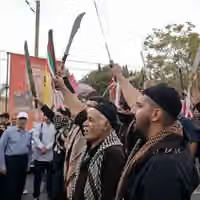
A protester burns images of Supreme Leader Ali Khamenei
Iran’s Supreme Leader Ali Khamenei was killed in Saturday’s airstrikes, marking the end of more than three decades at the helm of the Islamic Republic and closing a chapter in Iran’s modern history that many Iranians had long hoped to see concluded.
While the wound of the massacre of January 2026 where over 36,000 were killed still feels fresh on the body of society, the death of Tehran’s dictator Ali Khamenei has pushed Iran and the region into a sensitive and unprecedented phase.
Khamenei, who for more than three decades was the central pillar of the Islamic Republic, has exited the scene of power at a moment when the Islamic Republic’s political and military structure is on permanent high alert, the economy is under the strain of mass poverty and a severe erosion of legitimacy, society is filled with the anger and mourning of the January massacre, and the Islamic Republic’s future has sunk into a dense fog of ambiguity, fear, and questions about the regime’s own survival.
In his absence, a system whose vital levers—from the judiciary and the armed forces to regional policy and the state broadcaster—were shaped under the guidance at the very top of the pyramid faces a profound crisis: over succession, over managing the consequences of an unfinished war, and over confronting the compressed and accumulated fury that has flared in streets and society in recent years.
Khamenei’s death is not merely the end of one leader’s life, but the end of an era in which ideology, repression, security, and “resistance” were embodied in a single figure.
Now, the Islamic Republic must navigate its future without Khamenei, in an atmosphere of doubt, fear, and intra-elite rivalry.
From Mashhad to the Leader’s Office
Seyyed Ali Hosseini Khamenei was born in April 1939 in Mashhad, a city of major significance in Shiism. His father, Seyyed Javad Khamenei, was a traditional, ascetic cleric who lived simply.
Ali Khamenei entered the seminary as a child and, after studying in Mashhad, went to Qom to continue his religious education—where he became acquainted with figures such as Ruhollah Khomeini and Akbar Hashemi Rafsanjani and, influenced by Khomeini’s political view of Islamic jurisprudence, was drawn into the struggle against the Pahlavi monarchy.
In the 1960s and 1970s, Khamenei was repeatedly arrested, imprisoned, and exiled for revolutionary activities against the Shah’s rule. These experiences—especially alongside his speeches and ideological translations of works by Arab Islamists—played an important role in shaping his intellectual identity.
He also became an active figure in transmitting the concept of “Islamic government” to a younger generation of clerics and revolutionaries.
Consolidation after 1979 Revolution
After the 1979 revolution, Khamenei quickly entered the Islamic Republic’s power structure. He became a member of the Revolutionary Council, played a role in rebuilding the army and establishing the Islamic Revolutionary Guard Corps (IRGC), and was also active in the Islamic Republic’s propaganda apparatus.
In the first decade of the Islamic Republic, Khamenei was considered part of the central decision-making core—both because of his closeness to Khomeini and because of his skill in building networks of loyalty among clerical and military ranks.
In 1981, while delivering a speech at the Abuzar Mosque in Tehran, he was targeted in a bombing. The explosion of a tape recorder placed in front of him permanently paralyzed his right arm.
The incident turned him into a symbol of a “cleric harmed on the path of the revolution” and, symbolically, cemented his standing in the memory of the regime’s supporters.
The presidency and the bond with the IRGC
After the assassination of then-president Mohammad-Ali Rajaei, Khamenei became president in 1981 and remained in office for two four-year terms.
His presidency coincided with the Iran–Iraq war. In practice, he played the role of mediator between the IRGC and the government of the time led by Prime Minister Mir-Hossein Mousavi.
Although the presidency had limited power in the Islamic Republic’s structure, Khamenei—backed by influential Khomeini ally Akbar Hashemi Rafsanjani, who prevented him from being sidelined—used the opportunity to establish strategic ties with IRGC commanders and security circles, networks that later became the foundations of his absolute leadership.
An unexpected selection, powerful consolidation
In June 1989, after Khomeini’s death, the Islamic Republic faced a challenge in choosing his successor.
The Constitution at the time deemed only a “source of emulation” (marjaʿ-e taqlid) qualified to lead, but Khamenei did not hold that clerical rank. Even so, in an emergency session of the Assembly of Experts—and with Hashemi Rafsanjani playing a prominent role—he was chosen as interim leader.
In that session, he openly declared his own opposition to being selected as leader.
In parts of his remarks at the meeting (later released as audio and video), Khamenei stressed that he neither had the requisite jurisprudential qualification for leadership nor agreed with the principle of concentrating power in one person.
He even said in a protesting tone: “One really must weep tears of blood for an Islamic society in which even the possibility [of leadership] of someone like me is raised…”
But after consultations, political pressure within the Assembly, and the prominent and decisive role of Hashemi Rafsanjani—who said in the session, “I heard in the Imam’s will that he considered Mr. Khamenei fit for leadership”—the meeting moved toward selecting Khamenei as interim leader.
At the end of the session, he accepted the responsibility and said: “If you have decided so, I do not object, but I say clearly that this is heavier for me than anything.”
A few months later, the Constitution was amended and the requirement of being a “source of emulation” was removed.
In November 1989, the Assembly of Experts convened again and formally and permanently appointed Khamenei as leader of the Islamic Republic.
That session was one of the most important turning points in the Islamic Republic’s history, because it showed that leadership was shaped not only on the basis of jurisprudential stature, but through a mixture of political expediency, structural cohesion, and behind-the-scenes interventions.
What was initially seen as a temporary and conservative choice, in practice became the beginning of building one of the most powerful and centralized person-centered structures in the Islamic Republic.
Absolute authority: from guardianship of the jurist to a parallel state
Khamenei gradually turned the institution of the Supreme Leader into an all-encompassing power that had the final say in every arena—from security and foreign policy to the economy and culture.
He turned the Execution of Imam Khomeini’s Order Headquarters (Setad) into one of Iran’s wealthiest economic institutions and, through it, oversaw vast holdings in real estate, industry, banks, and media.
Institutions such as the judiciary, the Guardian Council, the IRGC, the state broadcaster, and even the Supreme National Security Council were effectively subordinate to the leader’s direct view. Khamenei became not only commander-in-chief, but also the ultimate arbiter of the judiciary and the Islamic Republic’s principal policymaker.
Under his leadership, the IRGC shifted from a revolutionary military force into the main actor in politics, the economy, and security within the Islamic Republic.
By directly delegating powers, massive budgets, and transnational missions to the IRGC, Khamenei turned it into the backbone of regime preservation and the executive arm of the guardianship of the jurist.
Khamenei’s political mindset was deeply conspiratorial. In most of his speeches, he spoke of an “enemy” using terms such as “global arrogance” and a “network of infiltration,” and attributed every domestic event—from student protests and the Green Movement to the uprisings of 2017, 2019, 2022, and 2025—to designs from London, Washington, and Tel Aviv.
Within this framework, demands such as civil liberties, women’s rights, or protests against the economic crisis were portrayed not as genuine social grievances, but as part of an “enemy project”—both to make repression appear legitimate and to cast any criticism of the system as treason and foreign dependence.
Regional strategy: 'Axis of Resistance'
With the aim of confronting Israel and the United States, Khamenei established a regional strategy known as the “axis of resistance”: an uneven alliance of proxy groups and aligned governments formed through the Islamic Republic’s financial, military, and ideological support.
From Hezbollah in Lebanon and Shiite militias in Iraq to the Houthis in Yemen and Bashar al-Assad’s regime in Syria, this axis expanded over two decades under Khamenei’s direct supervision.
But in 2024 and 2025, this strategy came under repeated blows. Israeli attacks shattered Hamas’s military structure in Gaza; Syria after Bashar al-Assad’s fall moved to redefine its relations with Tehran’s axis; and the United States’ military campaign against the Houthis in the Red Sea and Yemen severely weakened the Islamic Republic’s influence in that region.
Structural hostility to the West, especially the United States, along with chronic distrust of Europe, pushed Khamenei toward the doctrine of “looking to the East.” Throughout his years of leadership, he repeatedly emphasized that “the East should be preferred over the West,” and in practice, by deepening strategic dependence on Russia and China—from long-term economic and military contracts to security coordination—he sought to define the Islamic Republic’s survival under the protective umbrella of those two powers.
This pivot both placed Iran in a more subordinate geopolitical position vis-à-vis Moscow and Beijing and entrenched its isolation from the Western world.
Confrontation with the West, the nuclear program, and isolation
Khamenei was always deeply suspicious of the West, especially the United States, and repeatedly warned that “Western cultural infiltration” was a fundamental threat to the Islamic Republic.
Internationally, Tehran’s nuclear program was one of the central files of his leadership.
Despite a religious decree against nuclear weapons, he advanced the enrichment program and in 2015 gave conditional support to the JCPOA, but after the United States withdrew from it in 2018, he replaced diplomatic engagement with a strategy of “active resistance,” and the Islamic Republic’s ties with Russia and China strengthened.
In June 2025, this approach faced unprecedented military responses by Israel and the United States. Israel launched an operation against nuclear and missile facilities in Iran, including attacks on the enrichment sites at Natanz and Fordow and military facilities in Isfahan.
The strikes were accompanied by the simultaneous killing of nearly 30 senior IRGC commanders and figures tied to Iran’s nuclear program.
A few days later, the United States also carried out an independent operation dubbed “Midnight Hammer,” launching a series of precise airstrikes against Iran’s nuclear infrastructure deep inside the country.
Protests, repression, and the accumulation of grievance
In confronting popular protests, Khamenei consistently resorted to the “foreign enemy” scenario.
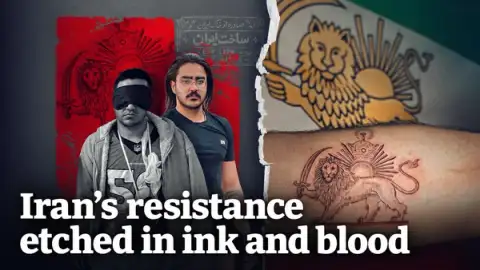
From the 1999 student movement to the 2009 Green Movement, the economic protests of 2017 and 2019, the “Woman, Life, Freedom” uprising of 2022, and the 2026 Lion and Sun Revolution, all were met with severe security repression.
During the 2009 protests, in an unusual Friday prayer sermon, instead of listening to the voice of millions of protesters, he complained: “You can’t compete within the framework of the system with those who do not accept the system.”
He portrayed himself as the victim of an enemy plot whose target was not the election but “the very principle of the guardianship of the jurist.” From then on, this became his fixed template for interpreting every form of protest: protests had no social, economic, or gender roots; they were all directed from London, Tel Aviv, and Washington.
In the case of the state killing of Jina (Mahsa) Amini, he even refused to meet the Amini family and in his speeches described the young protesters as duped by “American-Zionist projects.”
His understanding of the uprising of women and youth was largely framed not as a legitimacy crisis but through the language of conspiracy and infiltration.
This approach pushed the gap between the people and the apex of power to its peak, and the question of the regime’s legitimacy became a broad, pervasive, even intergenerational public issue.
The brutal massacre of January 2025
In the final months of Khamenei’s political life, the accumulated social and economic crisis turned into a nationwide explosion in January 2026 whose scale and intensity reached unprecedented dimensions even compared with the uprisings of 1999, 2009, 2017, 2018, 2019, and 2022.
From late December 2025, strikes and protests by merchants and shopkeepers in Tehran against the free fall of the rial and runaway price surges quickly spread to dozens and then hundreds of cities, and in less than two weeks became a full-scale uprising with explicit demands for overthrowing the ruling system and directed against Khamenei personally.
On the evenings of 8 and 9 January 2026, millions poured into the streets across all 31 provinces, and the streets of Tehran, Mashhad, Isfahan, Shiraz, Tabriz, Ahvaz, and dozens of other cities fell out of government control for hours.
Khamenei ordered the protests to be suppressed “by any means necessary,” and security and military forces moved in under an explicit order to “shoot to kill.” The order came alongside a complete cutoff of the internet and communications, paving the way for the bloodiest street crackdown in the Islamic Republic’s history.
Reports from hospitals, leaked security documents, and estimates by international media speak of tens of thousands killed and hundreds of thousands wounded. Some sources have spoken of more than 36,000 deaths in just the two days of 8 and 9 January and hundreds of thousands wounded in clashes in more than 400 cities and flashpoints, while even the government’s official figures acknowledge thousands killed.
The January massacre was not only Khamenei’s last major repressive decision, but also a pivotal point in the complete collapse of his political legitimacy and that of the system he ruled.
From that point on, even parts of the “gray” segment of society—previously suspended between fear, caution, or indifference—came to view the ruling power not as merely an incompetent government, but as an overtly criminal structure and an occupier vis-à-vis its own society.
Regionally and internationally, the January massacre also fixed the image of the Islamic Republic’s leader as a dictator ready to resort to mass killing to preserve power, and it redefined the meaning of “stability” under his rule in the blood of thousands of Iranian citizens.
The end of a dictator
Khamenei steered the Islamic Republic through crises after the revolution’s early years, the war, intra-elite conflicts, and the succession vacuum after Khomeini, bringing it to an apparently durable cohesion. But the cost of that “stability” was paid not by the governing structure but by Iranian society: repeated political repression, social closure, the crushing of civil institutions, exile of dissenting voices, and global isolation.
By turning the office of the Supreme Leader into the center of gravity for all decisions, he effectively concentrated the system around himself and reduced elected structures to ceremonial, ineffectual bodies.
Independent institutions were shut down or absorbed one after another. The state broadcaster, the judiciary, the army, education, culture, even the economy ultimately shared one thing: “the leader’s satisfaction.”
His personality was a mix of an outwardly humble appearance, a literary manner, and an inward intolerance. Though he spoke of morality and justice, in practice he tolerated no discordant voice.
His dealings with opponents—from insiders labeled reformists to street protesters—were either in the language of threat or through the instruments of repression.
He was surrounded not by critical elites but by a narrow circle of loyal security figures, aligned clerics, and IRGC men.
This intellectual closure became political closure and ultimately led to the collapse of the relationship between the system and the people.
Now, without him, the Islamic Republic faces the greatest test of its survival from within and without.
A machinery that had built power around one man must now stand without him.
Khamenei’s death could be the start of collapse, a power vacuum, disorder, and fissures at the apex of the Islamic Republic—or perhaps a historic opportunity for reconstruction and reconsideration.
The Khamenei chapter in Iran’s history has closed—a chapter in which the ruler defined himself as above the law, above society, and even above the revolution.
Whether this end marks the beginning of a transition or the start of a new crisis, the shadow he cast over contemporary history will remain for years to come.
An illustration showing an ancient Iranian soldier and a Revolutionary Guard member holding a weapon together, displayed during a November 7 ceremony in Tehran where a statue of pre-Islamic Persian King Shapur I was unveiled.
Tehran’s unveiling of a towering statue depicting the Roman Emperor Valerian kneeling before pre-Islamic Persian King Shapur I has renewed criticism of the Islamic Republic’s appeal to nationalist sentiment following the June war with Israel.
For over forty years, the theocracy purged ancient Persian history from schoolbooks, replacing it with post-Islamic narratives. But after the 12-day conflict with Israel, officials have turned to the distant pre-Islamic past to rally a divided society.
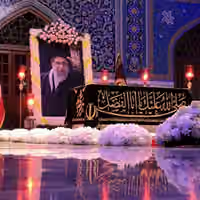
From murals of ancient kings and soldiers to patriotic songs added to Shi’ite mourning ceremonies performed before Supreme Leader Ali Khamenei, Tehran now embraces imagery once deemed heretical by its own revolutionary ethos.
The statue unveiled in Tehran's Revolution Square
'Kneel before Iran' campaign
Tehran’s Revolution (Enghelab) Square was the scene of an unusual spectacle on Friday as officials unveiled a massive bronze statue depicting Roman Emperor Valerian kneeling in submission before Sassanid King Shapur I, commemorating Iran’s victory at the Battle of Edessa (260 AD).
The event was held under the slogan “Kneel before Iran,” part of what authorities describe as a campaign to project “national unity and historical pride” following the June war with Israel.
Tehran Mayor Alireza Zakani, a staunch ultraconservative, said on X: “Enmity with Great Iran can only end in kneeling before this historic nation.”
Municipal official Davood Goodarzi said the installation would be accompanied by visual displays depicting “other victories of Iranians over foreign aggressors,” including the defeat of British forces by local commander Rais-Ali Delvari, Mirza Kuchak Khan’s resistance against Russian troops, and Surena’s triumph over Rome at the Battle of Carrhae in 53 BCE.
The goal, Goodarzi said, is “strengthening concepts such as national dignity, social unity, and Iranian identity.”
The statue, he said, would remain temporarily at Revolution Square before being moved to a city gateway “where it will stand as the first emblem of Iran before diplomats and foreign visitors.”
Unveiled women were allowed to attend the unveiling ceremony—an uncommon scene at events organized by Tehran’s ultra-hardline municipality.
The turn to the pre-Islamic past
The sharp reversal also recalls remarks once made by Khamenei. In a 2011 speech, he asserted that “all the great military victories of this nation came after Islam,” dismissing pre-Islamic accounts as “things that are not documented.”
In 1987, he had said that prophets triumphed over kings such as Cyrus and that “nothing remains of these monarchs in history but names remembered with derision.”
Nevertheless, pro-government social media accounts have now gone so far as to circulate posters equating Khamenei himself with Shapur, showing him standing with a staff as Benjamin Netanyahu and Donald Trump kneel before him. The caption reads: “You will kneel before Iran.”
Image circulating by hardliners on social media
'Hypocrisy'
Pro-government figures have hailed the move as a patriotic success. Conservative political reporter Hossein Saremi posted: “Today’s grand Iranian gathering showed that people and the state share one essence: Iran itself. Nothing can take our homeland away.”
Others, however, called the spectacle “hypocrisy.” Journalist Gholamhossein Pashaei wrote on X: “Every year you close Pasargadae to stop people from celebrating Cyrus Day, yet you unveil Shapur’s statue in Enghelab Square with drums and fireworks during Fatimiyya (mourning period)!”
Dissident commentator Hamid Asafi called the ceremony “a perfect snapshot of the Islamic Republic’s contradictions.”
On Telegram he wrote: “A week ago they closed Cyrus’s tomb out of fear of the crowds, and now they glorify Shapur in the same breath. The Islamic Republic fears living history but poses for selfies with its corpse.”
He added: “They know people no longer respond to rosaries and sermons. That’s why they’ve brought history back to the stage—in a controlled costume. If they can’t erase the past, they’ll try to own it.”
The irony deepened as UNESCO formally recognized Cyrus’s Charter as one of the earliest human-rights documents.
President Masoud Pezeshkian wrote on X: “Iran, the cradle of dialogue, justice, and coexistence, can still inspire peace today.”
Users swiftly replied, questioning how such pride could coexist with a government that blocks access to Cyrus’s tomb each year to those wishing to visit it on his birthday.