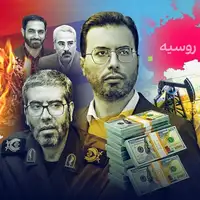
The United States is weighing options to target Iranian political and military leaders as well as nuclear and ballistic missile facilities, as it assembles its largest concentration of air power in the Middle East since the 2003 Iraq invasion, The Wall Street Journal reported on Wednesday.
US and foreign officials told the newspaper that options presented to President Donald Trump range from a broad campaign aimed at killing scores of Iranian leaders in a bid to topple the government, to a more limited air operation focused on nuclear and missile targets.
The military buildup includes F-35 and F-22 fighter jets, additional command-and-control aircraft, strengthened air defenses and a second aircraft carrier, the USS Gerald R. Ford, enabling what officials described as the capacity for a sustained, weeks-long campaign.
Both scenarios would likely involve a potentially weeks-long operation, the report said, underscoring the scale of the current US military posture in the region.
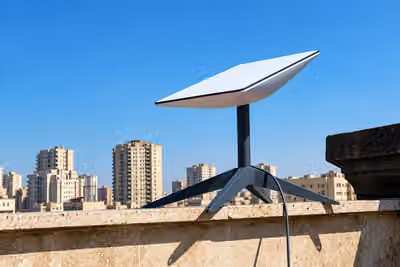

Satellite images published by Reuters on Wednesday show Iran repairing and reinforcing key military and nuclear‑linked sites amid stalled nuclear negotiations with the United States and an expanding US military presence in the region.
The imagery shows a new facility at the Parchin military complex covered with a concrete shield and soil, while tunnel entrances at the Isfahan nuclear site have been backfilled.
Tunnel access at Natanz and missile bases damaged during last June’s 12‑day conflict with Israel have also been strengthened.
The reconstruction appears designed to address weaknesses exposed during the brief war, when Israeli strikes targeted Iranian nuclear and military infrastructure and Tehran responded with missiles and drones.
The United States held five rounds of negotiations with Iran over its disputed nuclear program last year, for which Trump set a 60-day deadline.
When no agreement was reached by the 61st day on June 13, Israel launched a surprise military offensive, followed by US strikes on June 22 targeting key nuclear facilities in Isfahan, Natanz and Fordow.

The fortification work comes as indirect nuclear talks in Geneva remain unresolved. Iran is preparing a written proposal to address US concerns, while Washington has reinforced its regional military posture, including carrier strike groups and additional naval assets, amid concerns that diplomacy could stall.

The Reuters report said the combination of hardened facilities, ongoing military readiness, and persistent diplomatic negotiations reflects Tehran’s dual strategy of safeguarding strategic infrastructure while keeping open the possibility of a negotiated settlement.

The United States has long insisted that Iran must completely halt its uranium enrichment program, stop supporting its armed allies in the Middle East and accept restrictions on its ballistic missile program.
Iran’s Supreme Leader Ali Khamenei said on Monday the United States will never succeed in toppling the Islamic Republic and warned that even the world’s strongest military can suffer crippling blows.
Iran is rushing military and domestic preparations for possible US strikes if nuclear negotiations collapse, amid its most severe regime threat in decades, Wall Street Journal reported on Wednesday.
Leaders are dispersing command authority via “mosaic defense,” hardening nuclear sites (Isfahan, Pickaxe Mountain tunnels), deploying IRGC naval units to the Strait of Hormuz, and conducting air-defense drills. A Russian warship joined planned exercises near the USS Abraham Lincoln.
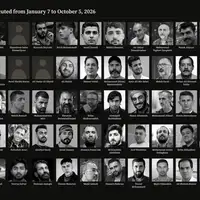
“Domestically, over 53,000 arrests and more than 7,000 deaths from recent protests have triggered intensified crackdowns, including monitoring points in Tehran, hospital record hunts, and arrests of dissidents like Narges Mohammadi,” the report said.
Israel’s ambassador to the United Nations, Danny Danon on Wednesday criticized Iran’s appointment as vice‑chair of the UN Special Committee on the Charter of the United Nations, calling it a “moral absurdity.”
“A regime that violates the basic principles of the UN cannot sit in a leadership position that deals with strengthening them,” he said.
Iran secured the position without a formal vote at the committee’s opening session. The committee, a subsidiary of the UN Legal Committee, meets annually to discuss Charter principles and ways to strengthen them, though consensus rules limit its practical impact and in recent years it has become a venue for broader political disputes among member states.
Senior US officials have told President Donald Trump that the military is prepared for potential strikes on Iran as early as this weekend, CBS News reported on Wednesday.
“The president has not made a final decision, and discussions remain fluid as the White House weighs escalation risks,” the report said. “The Pentagon has begun relocating some personnel from the Middle East to Europe and the US amid concerns over possible Iranian retaliation.”

Student walkouts at schools across Iran this week underscored the continuing political presence of a younger generation that has remained deeply engaged despite months of arrests and repression.
The action, observed in numerous high schools and junior-high schools, followed a call earlier in the week by the country’s teachers’ union—one of the few remaining independent professional bodies whose members and leaders repeatedly face summons, detention and imprisonment.
The union had urged students and educators to honor those killed during the January protests, many of whom were themselves teenagers or in their early twenties.
Human rights organizations and media reports indicate that young people made up a significant share of those killed, wounded or detained during the crackdown, reinforcing the central role of Generation Z in Iran’s protest movement.
Videos circulating online on Wednesday appeared to show students—many of them girls—refusing to attend classes and instead gathering in schoolyards to sing patriotic songs in apparent solidarity with the victims.
Justice Minister Amir Hossein Rahimi acknowledged this week that a number of minors remain in detention in connection with the protests, adding that authorities were working to secure the release of some underage detainees.
At the center of unrest
Iran’s Generation Z has played a visible role in successive waves of unrest, including the nationwide protests of recent years.
Lists compiled by human rights organizations indicate that a large share of those killed or arrested were under 30, including university students and minors.
The involvement of younger Iranians reflects both demographic realities and deeper social changes.
Iran’s Generation Z has grown up during a period defined by economic instability, international isolation and increasing social restrictions. These conditions have shaped their expectations and political outlook in ways that differ from earlier generations.
A distinct identity
In a recent commentary published in the reformist newspaper Etemad, political analyst Abbas Abdi argued that Iran’s younger generation faces “multiple layers of pressure,” reflecting economic hardship, social constraints and limited political representation.
He identified several sources of tension, including declining economic opportunities, widening gaps between official norms and social realities, and what he described as the political marginalization of younger citizens.
These pressures, he wrote, have contributed to a growing sense of disconnection between younger Iranians and the country’s political establishment.
Abdi also emphasized that Generation Z is the first generation in Iran to grow up fully connected to digital networks, with access to global information and alternative sources of identity formation.
This shift has altered traditional patterns of socialization and authority. Younger Iranians are often less receptive to hierarchical forms of political messaging and more inclined toward decentralized and informal forms of expression and mobilization.
The outlook
While the state retains significant coercive capacity, the persistence of youth participation in protests suggests that underlying social and generational tensions remain unresolved.
Abdi warned that failure to address these generational pressures could deepen long-term instability, arguing that sustainable political order ultimately depends on the ability of governing institutions to adapt to social change.
The student walkouts this week, though limited in scope, reflected the enduring political consciousness of a cohort that has come of age during one of the most turbulent periods in Iran’s recent history—and whose role is likely to remain central in shaping the country’s political trajectory.