Iran fortifies sites as nuclear talks stall and US tensions rise
Satellite images trace damage and reconstruction at Iran’s Parchin military complex from October 2024 through February 2026, including strike impact, rebuilding work and the site being covered in concrete. 2026 Planet Labs PBC and Vantor/Handout via REUTERS.
Satellite images published by Reuters on Wednesday show Iran repairing and reinforcing key military and nuclear‑linked sites amid stalled nuclear negotiations with the United States and an expanding US military presence in the region.
The imagery shows a new facility at the Parchin military complex covered with a concrete shield and soil, while tunnel entrances at the Isfahan nuclear site have been backfilled.
Tunnel access at Natanz and missile bases damaged during last June’s 12‑day conflict with Israel have also been strengthened.
The reconstruction appears designed to address weaknesses exposed during the brief war, when Israeli strikes targeted Iranian nuclear and military infrastructure and Tehran responded with missiles and drones.
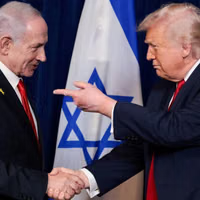
The United States held five rounds of negotiations with Iran over its disputed nuclear program last year, for which Trump set a 60-day deadline.
When no agreement was reached by the 61st day on June 13, Israel launched a surprise military offensive, followed by US strikes on June 22 targeting key nuclear facilities in Isfahan, Natanz and Fordow.
Satellite images show the Parchin military complex before Israeli strikes in October 2024 (left) and the site covered with concrete in January 2026 (right). Planet Labs PBC/Handout via REUTERS
The fortification work comes as indirect nuclear talks in Geneva remain unresolved. Iran is preparing a written proposal to address US concerns, while Washington has reinforced its regional military posture, including carrier strike groups and additional naval assets, amid concerns that diplomacy could stall.
Satellite images show a building at Iran’s Qom missile base with roof damage on July 16, 2025 (top), and the same site with a new roof on Feb. 1, 2026 (bottom). Planet Labs PBC/Handout via REUTERS
The Reuters report said the combination of hardened facilities, ongoing military readiness, and persistent diplomatic negotiations reflects Tehran’s dual strategy of safeguarding strategic infrastructure while keeping open the possibility of a negotiated settlement.
Satellite images show Iran’s Shiraz South missile base before reconstruction on July 3, 2025 (right), and after repair and clearance work on Jan. 30, 2026 (left). Planet Labs PBC/Handout via REUTERS
The United States has long insisted that Iran must completely halt its uranium enrichment program, stop supporting its armed allies in the Middle East and accept restrictions on its ballistic missile program.
Iran’s Supreme Leader Ali Khamenei said on Monday the United States will never succeed in toppling the Islamic Republic and warned that even the world’s strongest military can suffer crippling blows.