Israel’s ambassador to the United Nations, Danny Danon on Wednesday criticized Iran’s appointment as vice‑chair of the UN Special Committee on the Charter of the United Nations, calling it a “moral absurdity.”
“A regime that violates the basic principles of the UN cannot sit in a leadership position that deals with strengthening them,” he said.
Iran secured the position without a formal vote at the committee’s opening session. The committee, a subsidiary of the UN Legal Committee, meets annually to discuss Charter principles and ways to strengthen them, though consensus rules limit its practical impact and in recent years it has become a venue for broader political disputes among member states.
Senior US officials have told President Donald Trump that the military is prepared for potential strikes on Iran as early as this weekend, CBS News reported on Wednesday.
“The president has not made a final decision, and discussions remain fluid as the White House weighs escalation risks,” the report said. “The Pentagon has begun relocating some personnel from the Middle East to Europe and the US amid concerns over possible Iranian retaliation.”

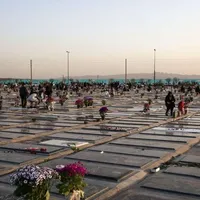
Student walkouts at schools across Iran this week underscored the continuing political presence of a younger generation that has remained deeply engaged despite months of arrests and repression.
The action, observed in numerous high schools and junior-high schools, followed a call earlier in the week by the country’s teachers’ union—one of the few remaining independent professional bodies whose members and leaders repeatedly face summons, detention and imprisonment.
The union had urged students and educators to honor those killed during the January protests, many of whom were themselves teenagers or in their early twenties.
Human rights organizations and media reports indicate that young people made up a significant share of those killed, wounded or detained during the crackdown, reinforcing the central role of Generation Z in Iran’s protest movement.
Videos circulating online on Wednesday appeared to show students—many of them girls—refusing to attend classes and instead gathering in schoolyards to sing patriotic songs in apparent solidarity with the victims.
Justice Minister Amir Hossein Rahimi acknowledged this week that a number of minors remain in detention in connection with the protests, adding that authorities were working to secure the release of some underage detainees.
At the center of unrest
Iran’s Generation Z has played a visible role in successive waves of unrest, including the nationwide protests of recent years.
Lists compiled by human rights organizations indicate that a large share of those killed or arrested were under 30, including university students and minors.
The involvement of younger Iranians reflects both demographic realities and deeper social changes.
Iran’s Generation Z has grown up during a period defined by economic instability, international isolation and increasing social restrictions. These conditions have shaped their expectations and political outlook in ways that differ from earlier generations.
A distinct identity
In a recent commentary published in the reformist newspaper Etemad, political analyst Abbas Abdi argued that Iran’s younger generation faces “multiple layers of pressure,” reflecting economic hardship, social constraints and limited political representation.
He identified several sources of tension, including declining economic opportunities, widening gaps between official norms and social realities, and what he described as the political marginalization of younger citizens.
These pressures, he wrote, have contributed to a growing sense of disconnection between younger Iranians and the country’s political establishment.
Abdi also emphasized that Generation Z is the first generation in Iran to grow up fully connected to digital networks, with access to global information and alternative sources of identity formation.
This shift has altered traditional patterns of socialization and authority. Younger Iranians are often less receptive to hierarchical forms of political messaging and more inclined toward decentralized and informal forms of expression and mobilization.
The outlook
While the state retains significant coercive capacity, the persistence of youth participation in protests suggests that underlying social and generational tensions remain unresolved.
Abdi warned that failure to address these generational pressures could deepen long-term instability, arguing that sustainable political order ultimately depends on the ability of governing institutions to adapt to social change.
The student walkouts this week, though limited in scope, reflected the enduring political consciousness of a cohort that has come of age during one of the most turbulent periods in Iran’s recent history—and whose role is likely to remain central in shaping the country’s political trajectory.

Iran’s education ministry sent threatening text messages to families after students boycotted school classes in solidarity with last month's nationwide protests and to commemorate slain protesters, people familiar with the matter told Iran International.
A screenshot of a text message sent to one family shows education officials pointed to students’ absence on Feb. 17 and 18, warning disciplinary action would be taken if the absences continued.
Sources told Iran International that education authorities had earlier threatened students with grade deductions over their absence.
In recent days, some students have taken down and burned photos of Supreme Leader Ali Khamenei and his predecessor Ruhollah Khomeini in classrooms, often singing along patriotic songs.

The second round of Iran–US nuclear talks was met with a muted and often critical reaction in Tehran, where official outlets questioned Washington’s commitment after American negotiators left Geneva within hours despite Iran’s offer to continue discussions.
Iran’s Foreign Minister Abbas Araghchi nonetheless described the talks as positive overall but cautioned that reaching a final agreement would take time. He said both sides agreed to begin drafting potential agreement texts, exchange documents and schedule a third round.
In Tehran, however, many voices sharply criticized what they portrayed as a lack of seriousness on the American side.
The government’s official daily, Iran, accused Washington of “part-time diplomacy,” arguing that the brief visit by US representatives Steve Witkoff and Jared Kushner suggested an oversimplified approach to Tehran’s nuclear file.
“That’s the challenge of negotiating with non-diplomatic figures,” the paper wrote in an editorial, adding that if diplomacy is to replace pressure and tension, it must rely on “a clear and durable decision at the highest political levels.”
‘Side job for businessmen’
Commentators linked the criticism in part to the Americans’ decision to leave Geneva for separate negotiations related to the war in Ukraine, contrasting it with Tehran’s readiness for prolonged talks backed by a large expert team.
Reza Nasri, an analyst close to Iran’s foreign ministry, echoed the criticism on X, writing: “Witkoff and Kushner are treating Geneva like a diplomatic fast-food restaurant… Global stability is not fast food. Serious diplomacy requires focus and real intent, not a side job for businessmen.”
The website Nour News, close to senior security official Ali Shamkhani, also questioned Washington’s priorities in an article titled “Where is the real time-wasting?” It argued that accusations of stalling better applied to the US, which it said relied heavily on media optics and insufficiently specialized envoys.
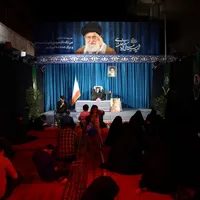
The diplomatic exchanges unfolded amid heightened rhetoric and military signaling. Ahead of the Geneva meeting, Iran’s Supreme Leader Ayatollah Ali Khamenei reiterated his hardline stance, invoking a historical Shiite reference to stress resistance to US pressure.
Tehran media also highlighted an Islamic Revolutionary Guard Corps (IRGC) naval exercise in the Persian Gulf, describing it as a deterrent message coinciding with nuclear diplomacy.
Iran’s financial markets reacted negatively to the Geneva talks, partly influenced by reports of an increased US military posture in the region. On Wednesday, the Iranian rial weakened again, with the dollar rising nearly 1.2 percent to around 1,630,000 rials.
Risk of talks collapsing
Political analyst Mohammad Soltaninejad cautioned that drafting preliminary texts does not signal a final deal is near.
“Even if agreement is reached on some issues, that does not necessarily mean the US will act accordingly,” he told the news outlet Entekhab.
Soltaninejad said Iran is seeking tangible sanctions relief, while the US may prefer to maintain economic pressure to gain leverage on Tehran’s missile program, raising questions about whether the sides can easily align their economic and security interests.
Another analyst, Mostafa Najafi, said in an online interview that the risk of negotiations collapsing appears higher than scenarios involving even a limited agreement to manage tensions.
Moderate journalist Ahmad Zeidabadi offered a more optimistic assessment, writing on his Telegram channel that the talks still have a chance of success.
He warned, however, that fear of domestic hardliners in Iran or pressure from supporters of Israeli Prime Minister Benjamin Netanyahu in the US could derail a potentially beneficial agreement for both sides.
US president Donald Trump said on Wednesday if Iran refuses to make a deal, the United States may need to use Diego Garcia, hinting at possible military action from the strategic Indian Ocean base.
“Should Iran decide not to make a Deal, it may be necessary for the United States to use Diego Garcia, and the Airfield located in Fairford, in order to eradicate a potential attack by a highly unstable and dangerous Regime — An attack that would potentially be made on the United Kingdom, as well as other friendly Countries,” Trump posted on Truth Social.