Reports from Tehran by a British Muslim commentator depicting normalcy and freedom after Iran’s violent crackdown on dissent have triggered a backlash, with critics accusing authorities of using foreign voices to legitimize their narrative.
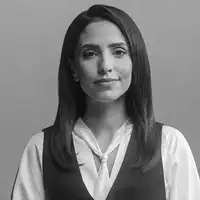
Bushra Shaikh, who was in Tehran for the state-backed 22 Bahman rally marking the anniversary of the 1979 revolution, wrote on X that she walked through the gathering without wearing a headscarf and faced no interference.
“Yes, I walked the entire rally in Tehran without a hijab and guess what happened? Absolutely nothing,” she wrote. “There is evidently more of a relaxed tone around hijab—I experienced it for myself.”
Critics said her experience reflected selective tolerance, pointing out that she had to wear a headscarf when appearing on Iran’s English-language state broadcaster.
Community notes attached to her posts added context, stating that hijab remains legally mandatory in Iran and that enforcement has been widely documented by human rights organizations.
In her posts and interviews, Shaikh also challenged Western coverage of Iran, arguing that the government enjoys broad public support and that sanctions—not hijab laws or political repression—are the public’s primary concern.
She further accused Israel’s Mossad and its alleged agents of killing civilians and security forces during unrest to inflate casualty figures.
Her comments prompted widespread condemnation online. Many Iranian users said her reporting echoed official narratives and ignored the risks faced by Iranian women who defy compulsory veiling.
One user wrote that Shaikh’s ability to appear unveiled at the rally was the result of sacrifices made by protesters. “
The same Bushra Shaikh, who today is reporting without hijab in Revolution Street for Western eyes in praise of freedom of dress, is the result of the blood of hundreds of youths who died right here three years ago,” the post said.
The controversy unfolded as state media aired interviews with several unveiled women at the rally—an unusual sight at official events. Government outlets presented the interviews as evidence of broad public support, including among women who do not adhere to strict dress codes.
Amjad Amini, the father of Mahsa (Jina) Amini, whose death in morality police custody in 2022 sparked nationwide protests, responded by reposting an image of one such interview.
•
•
“They killed my innocent daughter over a few strands of hair, and no one was held accountable,” he wrote on Instagram. “And now they film girls with bare heads … at official ceremonies and broadcast it, and no one cries out that Islamic rules have been broken. Strange times.”
Hijab enforcement in Iran has shifted unevenly since the Woman, Life, Freedom protests of 2022 and 2023, which forced authorities into a partial retreat in the face of widespread defiance. Increasing numbers of women now appear unveiled in public spaces, particularly in major cities.
But compulsory hijab remains law, and enforcement continues in institutional settings, including government offices, schools and universities.
Responding to Shaikh’s posts, US-based women’s rights activist Atieh Bakhtiar wrote on X that her experience did not reflect reality for most Iranian women.
“If thousands hadn’t died … the Islamic Republic would’ve arrested her and beaten her,” she said. “Instead, she’s their mouthpiece now.”
Social media platform X removed premium verification badges from senior Islamic Republic officials, triggering a surge of blue-ticked parody accounts that impersonate them and blurring the line between official statements and satire.
Within hours of the badges disappearing, accounts styled as satirical versions of Foreign Minister Abbas Araghchi and senior official Ali Larijani began drawing thousands of views and followers.
One parody account using Larijani’s name published a post arguing that anyone who believes a meaningful agreement can be reached with the Islamic Republic is naïve.
Another account in Araghchi’s name, which was suspended later, published the monarchist slogan “Long live the King.”
X also removed blue ticks from accounts attributed to Judiciary chief Gholamhossein Mohseni Ejei and parliament speaker Mohammad Bagher Ghalibaf, according to a review of the platform.
An account using the name of Supreme Leader Ali Khamenei posted a message suggesting he seek refuge with the Taliban. “If our friendly neighboring brothers, the Taliban, kindly issue six-month tourist visas, the situation is dire,” the post read.
Separately, parody accounts posing as parliament speaker Mohammad Bagher Ghalibaf and late Quds Force commander Qassem Soleimani posted mocking replies in comment threads.
One fake Ghalibaf account warned the United States that if it repeated a hostile act “once more, it will become twice,” mimicking official rhetoric in an exaggerated, satirical tone.
A parody account impersonating former president Ebrahim Raisi posted a Valentine’s Day message lamenting that “no one sent us a teddy bear,” while another billed itself as “the first president in Iran’s history to be eaten by a bear” – a darkly comic nod to the online satire that has persisted around his death.
Most of the new profiles visibly carry the label “Parody account,” a designation that appears when a user identifies their profile as satirical.
Under X rules, accounts that present themselves as real individuals without clearly disclosing their unofficial nature can face suspension, prompting many users to add the parody label to reduce the risk of removal.
A parody account created in Khamenei’s name drew nearly 9,000 followers within hours. Similar accounts impersonating Araghchi and Larijani quickly grew to more than 20,000 and about 12,000 followers, respectively.
Official silence, media warning
Islamic Republic officials have not formally addressed the wave of impersonations. The Guards-linked Tasnim website wrote that following the removal of blue verification badges, several fake accounts misusing Larijani’s name and image had become active.
The episode follows earlier disputes between Iranian authorities and the platform. In November, X introduced a location feature showing the approximate origin of posts.
The update exposed numerous pro-government figures and individuals tied to the Islamic Republic posting from inside Iran, enjoying a tiered, privileged internet, where most users must bypass state restrictions on social media through tools such as VPNs.
The platform also replaced the Islamic Republic flag emoji with the pre-1979 Lion and Sun emblem for accounts set to Iran, prompting criticism from pro-government users and praise from some opposition voices.
A tightening security atmosphere inside schools across several Iranian cities has prompted a new wave of student absences, according to messages sent to Iran International, with families saying classrooms no longer feel like safe spaces for their children.
In recent weeks, parents and students from Mashhad, Gorgan, Tehran and other cities across Iran have described schools shifting from educational environments to spaces marked by heightened monitoring and questioning.
A student in the religious city of Mashhad said school officials and affiliated forces had searched students’ mobile phones and, in some cases, searched schoolbags.
After this started, a few of my classmates stopped coming to school, the student added.
Similar accounts have emerged from girls’ schools in Gorgan, northern Iran. Several students told Iran International that inspections were accompanied by what they described as an atmosphere of intimidation, leading some families to temporarily withdraw their children from classes.
Rising absenteeism amid safety fears
No official figures have been released on attendance rates, but interviews with teachers in Tehran and Alborz province suggest that classroom numbers have dropped in some schools.
“In a class of 25, some days fewer than half are present,” a high school teacher in Tehran said, requesting anonymity due to the sensitivity of the issue. “Parents say they do not consider the situation safe.”
Schoolgirls in Iran raise fists in protest; a handwritten sign reads, “This is the final battle, Pahlavi will return.”
A mother of an eighth-grade student in eastern Tehran said she had allowed her child to stay home for several days. “School should be the safest place for a child,” she said. “When I hear about inspections and questioning, it is natural to hesitate.”
The latest reports follow earlier accounts of security forces and Basij members entering schools in cities including Abadan in the south, Arak and parts of Mazandaran province, north of Iran.
Families previously reported that students were asked to sign written pledges without their parents present. In Bandar Abbas, Malayer and Gorgan, students were questioned about their families and protest-related activities. In Arak and Sari, some educational facilities were said to have been used as bases for security forces.
‘Deep rupture' between families and schools
Saba Alaleh, a Paris-based clinical psychologist and socio-political psychoanalyst, told Iran International that the developments point to a structural break in trust.
“We are witnessing a profound psychological and social rupture between families and schools,” she said.
“This rupture is not limited to recent events; it is the result of years of accumulated distrust.”
Experiences during the Woman, Life, Freedom protests in 2022, when schools were described as spaces of fear and pressure, intensified that mistrust, Alaleh said.
“A school should provide a sense of security. When it becomes associated with surveillance and threat, it transforms into a source of anxiety,” she added.
She warned that exposure to inspections and questioning could have lasting consequences for children. “When students experience constant monitoring, education can lose its meaning,” she argued.
“This can lead to declining motivation, deeper distrust and even identity confusion.”
Healthy psychological development, Alaleh explained, depends on a functional partnership between family and school.
“When that bond collapses, children may find themselves caught between conflicting value systems, complicating their social and identity development,” she added.
Long-term consequences for education
Nahid Hosseini, a London-based researcher on women’s affairs and education, said the recent developments reflect a broader crisis within the education system.
“When an educational environment is perceived as unsafe, it is natural for parents to withhold their children,” she told Iran International. “But the result is the deprivation of millions of students from their right to education.”
With Iran’s student population estimated at more than 15 million, Hosseini said sustained absenteeism and declining trust in schools could have far-reaching social and economic consequences.
“Schools should be spaces of stability and growth. When they become associated with fear, the cost is borne not only by students but by society as a whole.”
A sanctuary no longer certain
For many families, the issue is no longer limited to temporary absences but to a broader shift in how they view the institution of schooling.
“In the past, even if there were problems, we still believed school was fundamentally safe,” a mother in Tehran said. “Now I feel my child is under pressure there.”
In the absence of transparent communication about the scope and purpose of security measures inside schools, distrust appears to be widening.
Experts warn that once a school loses its standing as a safe haven, rebuilding that trust may prove far more difficult – with implications that could shape a generation’s relationship with formal education for years to come.
The latest US-Iran diplomacy may reflect coordinated pressure rather than compromise, analysts told Iran International’s Eye for Iran podcast, describing Washington and Jerusalem as playing a potential “good cop, bad cop” strategy.
Middle East analyst Dr. Eric Mandel said the contrasting public tones adopted by US President Donald Trump and Israeli Prime Minister Benjamin Netanyahu should not necessarily be read as disagreement.
“This could be a giant ruse — Netanyahu and Trump playing bad cop, good cop,” Mandel said, arguing that diplomacy may be designed to demonstrate that all political options were exhausted before stronger measures are considered.
Former US ambassador John Craig echoed that assessment.
“The pressure is deliberate,” Craig said, adding that talks could represent “a prequel… to military action,” as Washington increases its force posture in the region.
Military buildup alongside diplomacy
That military posture has become increasingly visible. President Donald Trump has said he is considering sending a second US aircraft carrier to the Middle East as tensions with Tehran escalate, describing an expanding naval deployment intended to reinforce American leverage.
“We have an armada that is heading there and another one might be going,” Trump said in an interview with Axios, signaling that additional forces could be deployed if diplomacy fails.
The United States has already positioned the USS Abraham Lincoln carrier strike group, accompanied by destroyers armed with long-range Tomahawk missiles, within the US Central Command area covering the Middle East.
The Pentagon has also moved additional fighter jets, air defense systems and other military assets into the region.
Defense planners are weighing further options should Trump authorize a broader buildup, including the possible deployment of additional carrier groups.
The military movements come as Washington pursues indirect talks with Iranian officials over Tehran’s nuclear program — the first such discussions since US strikes targeted three major Iranian nuclear facilities last June was held in Oman last week. A second meeting is set to continue this week in Geneva.
At the same time, the Trump administration has warned US commercial vessels to avoid parts of the Strait of Hormuz and the Gulf of Oman.
Netanyahu struck a notably cautious tone following his meeting with Trump in Washington, the seventh between the two leaders since the US president returned to office.
Speaking before departing the United States, the Israeli prime minister said Trump believes Iran could still be pushed into accepting what he called “a good deal,” but made clear he remains doubtful.
“I do not hide my general skepticism about the possibility of reaching any agreement with Iran,” Netanyahu said, stressing that any deal must address ballistic missiles and Tehran’s regional proxy network in addition to its nuclear program.
Trump, meanwhile, warned that failure to reach an agreement would be “very traumatic for Iran,” while urging Tehran to move quickly toward accepting US conditions.
Pressure grows as unrest inside Iran deepens
The diplomacy is unfolding against the backdrop of one of the deadliest crackdowns in the Islamic Republic’s history. Iranian security forces opened fire on nationwide protests on January 8-9 with at least 36 thousand killed in a matter of days as demonstrations spread across multiple cities.
Voices connected to people inside Iran, shared on Eye for Iran, suggest that the internal crisis is shaping how many Iranians now view international negotiations.
Mina, an Iranian speaking on the program whose friends were killed or imprisoned during the protests, described a level of desperation.
“There are people in Iran who watch the air traffic every night to see if there are fewer airplanes in the sky,” she said. “Maybe tonight intervention will come.”
Her account reflects a growing sentiment among some protesters who, after years of failed reform movements and escalating repression, say they no longer believe internal change alone is possible.
Many, she said, now see outside pressure — including potential military action — as the only remaining path to ending the rule of the Islamic Republic.
Analysts say that reality adds urgency to the current diplomatic moment. Washington emphasizes negotiations, while Israel highlights the risks of delay, creating what Mandel described as a coordinated messaging strategy rather than a clear policy divide.
“The president wants to show he has gone to the nth degree diplomatically,” Mandel said.
“But that doesn’t mean other options disappear.”
Craig argued the visible military buildup is intended to shape Iranian calculations during talks, warning Tehran may attempt to prolong negotiations to buy time — a pattern seen in previous nuclear negotiations.
Netanyahu’s skepticism mirrors longstanding Israeli concerns that agreements focused narrowly on nuclear restrictions fail to address broader threats posed by Iran’s missile program and proxy forces operating across the region.
The Israeli leader also announced he would not return to Washington next week for a planned Board of Peace gathering and will instead address the AIPAC conference virtually, a move that has fueled speculation about the urgency surrounding current Iran discussions.
“If you told me tonight something dramatic happened,” Mandel said, “I wouldn’t be surprised.”
President Massoud Pezeshkian’s increasingly public confrontations with Iran’s state broadcaster have exposed the limits of his authority, underscoring how one of the country’s most powerful institutions operates beyond the reach of its elected government.
The tensions erupted most visibly on Wednesday, when Pezeshkian angrily confronted the head of state television during a cabinet meeting, accusing the broadcaster of refusing to show his administration’s progress.
The exchange was being aired live before the broadcast was abruptly cut off.
During a visit to Golestan Province the following day, Pezeshkian became embroiled in a heated argument on live television with a provincial commander of the Islamic Revolutionary Guard Corps (IRGC) over the military’s role in development projects.
This time, the cameras kept rolling. The commander looked directly into the lens and declared that the IRGC had fulfilled its duties—and that the government had not.
Together, the incidents offered a rare public glimpse into the president’s inability to control institutions that shape both policy and public perception in the Islamic Republic.
Moderate and reformist outlets have rallied to Pezeshkian’s defense, portraying the clash as a sign of the broadcaster’s unchecked power.
“For state TV, news is not the priority; controlling the narrative is,” read a commentary on Rouydad24. If the president’s message does not align with the broadcaster’s preferred narrative, the report said, “it will either ignore him or cut the broadcast.”
An editorial on Khabar Online added that the network’s decision to cut Pezeshkian’s speech reflected “a kind of intoxication with power” and an exaggerated sense of confidence.
“Even if the highest executive authority in the country takes a position against this broadcaster, it feels powerful enough to ignore it entirely,” the editorial said.
Clashes between Iranian presidents and state television are not new. Every president except Akbar Hashemi Rafsanjani, whose brother ran the broadcaster during much of his presidency, faced friction with the organization.
Mohammad Khatami, Mahmoud Ahmadinejad, and Hassan Rouhani all had public disputes with IRIB, the Islamic Republic’s state broadcaster. Rouhani barred a former IRIB chief from cabinet meetings, while Ahmadinejad withheld the network’s allocated budget to punish its managers.
But Pezeshkian’s confrontations come at a moment of growing public dissatisfaction and economic strain, weakening his ability to assert authority. He had promised salary increases of 21% to 43% for government employees, but with inflation running at 60%, even those raises would leave workers falling behind rising prices.
At the same time, Pezeshkian has publicly acknowledged the emotional toll of recent unrest, saying he “can hardly sleep at night” after January’s bloody crackdown. Yet his government’s inability to improve economic conditions or assert control over powerful institutions has reinforced perceptions of weakness.
What much of the media avoids stating openly is that Iran’s state broadcaster answers only to the Supreme Leader. As long as he approves of its conduct, no other authority—not even the president’s—can compel it to change course.
The result is a system in which the elected president can be openly challenged, contradicted, or even silenced by unelected institutions.
Iran’s Fajr Film Festival went ahead this year as planned. But it did so in a country still reeling from bloodshed, and the red carpets beneath its guests carried a symbolic weight that many in the film community found difficult to ignore.
Some chose not to attend. Others did, and the result was a festival that felt unusually detached from the public mood—less a national cultural event than a carefully managed display of continuity.
Now in its 44th year, the festival took place less than forty days after tens of thousands of protesters were killed during the government’s crackdown. Under those circumstances, the decision to proceed on schedule was bound to draw scrutiny.
The nature of the festival itself has evolved over time, with an increasing share of films produced by state institutions or affiliated organizations. This year, too, such bodies as municipal authorities and even the judiciary appeared among the producers.
This has contributed to a growing perception, particularly among independent filmmakers, that the festival increasingly reflects official priorities rather than the diversity of Iranian cinema.
That perception was reinforced by a number of high-profile absences. Some directors and actors announced they would not attend.
The actor Elnaz Shakerdoost, one of Iran’s most recognizable performers, publicly questioned the timing of the festival and announced she would step away from acting. “Which festival? Which celebration?” she wrote. “I will not attend any celebration, nor will I ever again play a role in this land that smells of blood.”
Other films were screened without their directors or cast present. In several cases, producers appeared alone at press conferences. The director Soroush Sehat and the cast of his widely discussed film declined to attend altogether, leading organizers to cancel its press session.
These absences altered the character of the festival’s public discussions. Press conferences often featured only those filmmakers who had chosen to participate, some of whom criticized colleagues who had stayed away.
Mohammad Hossein Mahdavian, a director known for films focusing on Iran’s security institutions, described actors who declined to attend as “cowards.”
Many film critics and journalists opted not to cover the event. Even Film Emrooz, a long-established cinema magazine known for its cautious editorial line, did not publish its customary festival issue.
Public turnout appeared subdued as well. Organizers sought to maintain the appearance of normal activity, but attendance remained visibly lower than in previous years.
The closing ceremony reflected similar tensions. Several winners did not appear to accept their Simorgh awards. President Massoud Pezeshkian attended and praised those who had participated, signaling the government’s continued investment in the festival’s symbolic importance.
One award recipient attempted to acknowledge the broader context, alluding to the recent violence while accepting his prize. His remarks, however cautiously phrased, underscored the gap between the official narrative of continuity and the unresolved trauma still shaping public life.
Iran’s film industry has long occupied a complex position—both an instrument of national identity and a space for independent artistic expression. This year’s festival highlighted how difficult it has become to sustain that balance.