Iran issues death sentence for 19-year-old protester


Branch 15 of Iran’s Revolutionary Court, headed by Judge Abolghassem Salavati, has issued a death sentence for Mohammadamin Biglari, a 19-year-old detained during protests in Tehran, according to information shared with Iran International.
The case has been sent to Iran’s Supreme Court.
According to the information received, Biglari works at a men’s barbershop in Tehran and was arrested on January 8 while returning home from work.
The report said his mother has died and that authorities only informed his father of the arrest three weeks later, after he spent weeks searching for his son, including among bodies at Kahrizak morgue.
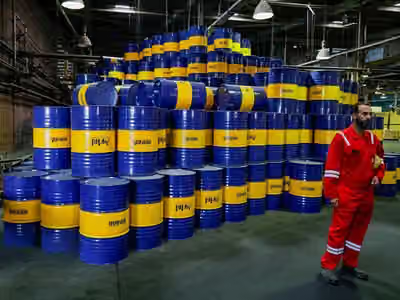
Iran’s armed forces chief Abdolrahim Mousavi warned US President Donald Trump that any conflict with Iran would be lesson for him, and questioned Washington’s stated interest in negotiations.
“Trump must know that a battle with Iran would be a lesson for him, and entering it would cause him to no longer swagger around the world,” Mousavi said.
He also challenged Trump’s approach, asking why the US president talks about negotiations if he intends to pursue war.
An Iranian lawmaker dismissed a major rally in Munich as a staged “show,” despite Munich police estimating that about 250,000 people attended.
Morteza Mahmoudi, a Tehran MP, alleged that monarchist supporters had lured people from across Europe with “empty promises” and heavy spending, including travel and ticket costs, according to remarks carried by Iranian media.
He said the turnout was “very small” and alleged the crowd was inflated because it mixed with visitors attending a nearby pre-planned event, calling the global coverage of the rally “embarrassing.”
Iranian President Masoud Pezeshkian said the January unrest was “unimaginable,” arguing that authorities cannot solve the crisis by papering over the problem.
Using a medical metaphor, Pezeshkian said Iran must “treat the disease,” adding that his administration came to solve people’s problems rather than add to them.
He said public sentiment has been deeply harmed, saying the prevailing mindset in society has “taken a wound.”
Families of slain protesters are increasingly turning Iran’s 40th-day mourning ceremonies into acts of open defiance, replacing religious rites with dancing, music and wedding-style symbolism.
Relatives at Mohammad-Hossein Alikhani’s 40th-day ceremony at his graveside performed a mourning dance rather than holding a conventional Islamic service.
Video received by Iran International showed chanting and rhythmic movement instead of prayer recitations.
Alikhani, 25, was shot dead by security forces on January 8 in Tehran’s Fallah neighborhood.
At the memorial for 22-year-old athlete Erfan Bozorgi, family members carried symbolic wedding trays used in engagement ceremonies.
The ritual, known as tabagh-keshi, is typically associated with celebration, not mourning.
Bozorgi was killed by a gunshot wound to the head early in January in Marvdasht, Fars province.
Footage from Khorramabad showed drums and wind instruments played at Amirhossein Shakerami’s graveside, accompanied by a mourning dance.
Clapping and upbeat rhythms replaced the mournful tone that normally defines Iranian funerals.
Shakerami, 20, was shot in the abdomen during protests in Karaj on January 8 and later died of his injuries.

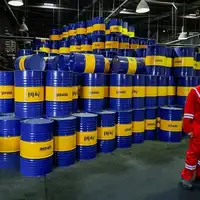
Iran will allow importers of basic goods to receive and sell oil cargoes from next year under an expanded barter scheme aimed at securing essential supplies, Agriculture Minister Gholamreza Nouri Ghezeljeh said on Sunday.
Under the new arrangement, companies that import staple goods will be introduced by the Agriculture Ministry to the Oil Ministry to receive oil shipments, which they will sell in order to finance their imports, he said.
“One of the good methods of supplying goods is barter with oil, and we have increased the ceiling for oil barter with basic goods imports,” Nouri Ghezeljeh said, according to IRIB.
He said the value of oil bartered for basic goods imports this year had been raised from $1 billion to $1.5 billion by year-end. The share allocated to basic goods and animal feed imports will increase further next year, alongside changes in the implementation method.
Previously, the Oil Ministry provided cargoes to oil traders, who sold the shipments and then arranged imports. From next year, importers themselves will be introduced to receive oil cargoes directly, he said.
Iran has increasingly relied on barter arrangements to secure essential goods amid US sanctions restricting its access to the global financial system.