• Iran Insight
  • Politics
  • Economy
  • Analysis
  • Special Report
  • Opinion
  • Podcast
All rights reserved for Volant Media UK Limited
volant media logo
  • العربية
  • فارسی
Brand
  • Iran Insight
  • Politics
  • Economy
  • Analysis
  • Special Report
  • Opinion
  • Podcast
  • Iran Insight
  • Politics
  • Economy
  • Analysis
  • Special Report
  • Opinion
  • Podcast
  • Theme
  • Language
    • العربية
    • فارسی

Sanctioned Iranian banker built €400mn European property empire - FT

Jan 26, 2026, 07:20 GMT
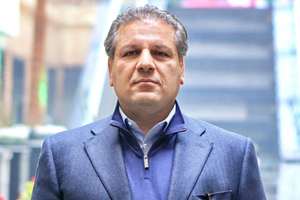
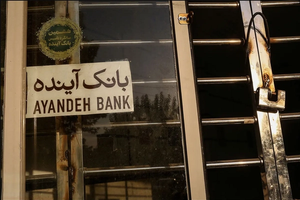
Ali Ansari, a co-founder of Iran’s failed Ayandeh Bank

Ali Ansari, an Iranian businessman under UK sanctions for allegedly financing Iran’s Islamic Revolutionary Guards, built a European property portfolio worth about €400 million, according to a Financial Times investigation based on corporate filings.

The outlet reported that the assets include luxury properties across several European countries, ranging from a golf resort in Mallorca to a ski hotel in Austria.

The holdings were structured through a complex network of offshore companies registered in jurisdictions including Luxembourg, St Kitts and Nevis, as well as Austria, Germany and Spain.

Ansari is not under European Union sanctions.

The findings show how wealthy Iranians with close ties to the ruling system have continued to acquire high-value assets in the West despite sanctions.

The report comes as Iran has been shaken by widespread protests fueled by a collapsing currency, high inflation, and public anger over corruption. Protesters have accused elites of enriching themselves while living standards for much of the population have sharply deteriorated.

Most Viewed

Can widening the war save Iran’s rulers?
1
ANALYSIS

Can widening the war save Iran’s rulers?

2

Britain bans London Quds Day march run by pro-Islamic Republic group

3

Tehran checkpoints hit in reported drone attacks

4

UNESCO warns of rising risks to Iran’s historic sites

5

US Senators urge probe of strike that killed scores of children in Iran

Banner
Banner

Spotlight

  • Allies rally, rivals brace after Mojtaba Khamenei’s rise
    INSIGHT

    Allies rally, rivals brace after Mojtaba Khamenei’s rise

  • Checkpoint attacks open new front in Iran war
    INSIGHT

    Checkpoint attacks open new front in Iran war

  • Power vs piety: Khamenei Jr inherits legitimacy dilemma of Iran's theocracy
    ANALYSIS

    Power vs piety: Khamenei Jr inherits legitimacy dilemma of Iran's theocracy

  • Can widening the war save Iran’s rulers?
    ANALYSIS

    Can widening the war save Iran’s rulers?

  • Hormuz disruption tests limits of global energy markets
    ANALYSIS

    Hormuz disruption tests limits of global energy markets

  • Inside the dramatic escape of Iranian women footballers seeking asylum
    INSIGHT

    Inside the dramatic escape of Iranian women footballers seeking asylum

  • UK-sanctioned Iranian tycoon owns £33.7 million London mansion – report

    UK-sanctioned Iranian tycoon owns £33.7 million London mansion – report

  • Ayandeh Bank collapse lays bare Iran's economic rot

    Ayandeh Bank collapse lays bare Iran's economic rot

•
•
•

More Stories

Iran’s two crypto economies: state guile and household survival

Jan 25, 2026, 19:18 GMT
•
Mohamad Machine-Chian

Cryptocurrency is a rare tool embraced by both Iran’s rulers and its citizens—used at the top to enrich elites to dodge sanctions and at the bottom to survive the economic devastation wrought by their policies.

Blockchain forensics firm Chainalysis estimates that Iran’s crypto ecosystem exceeded $7.78 billion in 2025.

Any figure attached to Iran’s crypto economy is of course partial: both the state and private users have powerful incentives to conceal activity, whether to limit sanctions exposure or avoid domestic scrutiny.

What is increasingly clear, however, is that the state now dominates a large share of that volume.

Chainalysis estimates that the Islamic Revolutionary Guard Corps processed more than $3 billion in crypto transactions last year. Israel’s counter-terror financing authority has published a seizure order listing 187 crypto addresses worth roughly $1.5 billion in Tether, a crypto denomination pegged to the dollar.

New findings by the blockchain analytics and crypto-compliance firm Elliptic link Iran’s central bank to at least $507 million in purchases of dollar-pegged Tether (USDT).

That stockpile could supplement constrained foreign-exchange reserves and help authorities lean against sudden spikes in the rial’s parallel market.

In effect, USDT can function as an off-balance-sheet foreign-exchange buffer: accumulated outside correspondent banking channels, mobilized through intermediaries, and sold into rial markets via local exchanges and over-the-counter desks when pressure builds.

  • Tehran leaders wiring huge sums of money out of Iran, US Treasury says

    Tehran leaders wiring huge sums of money out of Iran, US Treasury says

Access, however, is not evenly distributed. Reports indicate state blessing for—or "whitelisting"—internet connectivity for certain traders, even as much of the country has endured a pervasive internet blackout since a deadly crackdown on protestors ramped up on Jan. 8.

When the rial comes under pressure, connectivity itself becomes an instrument of intervention: stablecoin-based market operations still require traders who can connect, quote prices, and settle transactions.

Alternate reality for households

Iran’s central bank has imposed limits on currency trading and transaction flows, while rolling out an anti-speculation tax regime covering gold, jewelry, foreign currency and cryptocurrencies.

The effect has been to raise the cost of traditional inflation hedges while signaling that policymakers now view household portfolio shifts as a macroeconomic risk.

The central bank has moved to cap individual crypto holdings at $10,000, despite warnings from Iranian traders and economists that such restrictions would choke savings and push activity further underground.

On the mining side, the divide is even starker. State-linked and religious institutions are among the largest players, in part because electricity tariffs in Iran are not uniform.

Iran International has reported repeated allegations of crypto mining at state-sponsored sites, including mosques, which benefit from reduced energy rates—an obvious advantage in an industry where profitability hinges on power costs.

The result is effectively two mining economies: small operators running rigs at home or in workshops, attempting to stay invisible, and state-linked actors with access to cheaper electricity, larger facilities, and more predictable protection.

Authorities have periodically blamed illegal neighborhood miners, but some experts see that focus as a way to deflect attention from deeper problems of grid management and governance.

Where the cheapest power is concentrated in privileged institutions and enforcement is uneven, the largest rents accrue not to households plugging in a single machine, but to organized actors with access.

Iran has become a cutting-edge battlefield of monetary adaptation. The central bank experiments with stablecoins to stabilize the rial, while households use the same rails to escape it.

A tightly capped, KYC-only micro-saver lane could offer households limited protection for modest savings while increasing transparency and helping isolate state-connected networks operating at scale.

The unresolved question is whether regulated crypto channels can be structured to distinguish household self-preservation from state-linked finance—or whether policy choices will continue to push both into the same shadows.

Whether the state and its beleaguered citizenry can defy mounting economic pressure may hang in the balance.

Iran says 40 Iranians in ICE custody to be flown home

Jan 25, 2026, 14:49 GMT

Iran said about 40 Iranian citizens will be returned from the United States to Iran on Sunday, after being held for months in US immigration detention centers.

The acting head of Iran’s Interests Section in Washington told state news agency IRNA that the group will depart from Mesa Airport in Arizona, make a brief stop in Egypt and return to Iran via Kuwait.

Abolfazl Mehrabadi added the office coordinated with US immigration authorities to issue return travel documents for the detainees.

The flight is the third to repatriate Iranian asylum seekers and others whose immigration cases were halted and who were detained by US immigration authorities for various reasons.

The planned deportation has drawn criticism in the United States, with Democratic Representatives Yassamin Ansari and Dave Min, citing human rights concerns in Iran.

Iran’s foreign ministry confirmed on December 7 that 55 Iranian nationals had been detained to be deported from the United States amid President Donald Trump’s tightened immigration policies.

On September 29, a plane carrying 120 Iranians including three women landed in Iran, an Iranian expelled from the United States told Iran International, adding that detainees had faced mistreatment in US facilities and that force was used during their transfer.

  • US deports over 100 Iranians in rare deal with Tehran - NYT

    US deports over 100 Iranians in rare deal with Tehran - NYT

'A moment like no other': US-based think tank urges Trump to sap Iran

Jan 24, 2026, 14:40 GMT
•
Negar Mojtahedi

After unprecedented mass killings of protestors whose full scope lies concealed behind Iran's internet iron curtain, the Washington-based pro-Israel think tank JINSA urges Donald Trump to seize the moment to destroy the mutual foe of Israel and the United States.

The non-profit Jewish Institute for National Security of America, founded in 1976, advocates for a strong US military relationship with Israel and researches conflict in the Middle East.

JINSA president and CEO Michael Makovsky and the group’s vice president for policy Blaise Misztal told Iran International’s English-language podcast Eye for Iran that decades of containment, deterrence and nuclear diplomacy have failed because the Islamic Republic itself should be destroyed.

“It should be US policy to seek the collapse of this regime,” Makovsky said.

They said hesitation now — after mass killings of protesters across Iran — risks emboldening Tehran at the theocracy's weakest moment.

“We don’t say regime change,” Makovsky said. “The regime will fall … only when the Iranian people bring it down. But it should be US policy … to seek the collapse of this regime.”

The last months, Misztal said, have created a rare strategic opening: Iran’s nuclear clock has been set back, its regional proxies weakened and Iranians themselves have returned to the streets demanding freedom.

“This is a moment like no other,” he said. “I don’t know when the stars will align like this again… why not make it now? When is a better time than now?”

The duo urged the Trump administration to abandon negotiations, intensify pressure on the Revolutionary Guards and build the infrastructure needed to help Iranians defeat the Islamic Republic.

Misztal said previous administrations focused on Iran’s nuclear program, terrorism sponsorship and ballistic missile development as separate threats without tying them back to what he called the ideological nature of the theocracy.

“Yes, it’s a problem that Iran is the world’s greatest state sponsor of terrorism. Yes, it is a problem that it’s pursuing nuclear weapons,” he said. “But all of that stems from it being the Islamic Republic of Iran.”

Trump’s Promises and a Moment of Decision

Their warnings come as President Donald Trump faces rising scrutiny over his own rhetoric. Earlier this month, Trump vowed support for protesters and issued a direct warning to Tehran.

“I tell the Iranian leaders: You better not start shooting, because we’ll start shooting, too,” he said.

But Makovsky warned that after mass killings and widespread arrests, the absence of immediate consequences risks damaging US credibility.

“The Iranians have called his bluff for now,” he said. “If he doesn’t do it, it will go down as a tragic mistake.”

In recent days, Trump has said a US "armada" is heading toward the Middle East, with the aircraft carrier USS Abraham Lincoln and several guided-missile destroyers expected to arrive in the region soon as Washington signals it is positioning military assets amid escalating uncertainty.

The growing tensions are now rippling far beyond Iran itself.

Major European airlines have begun suspending flights across parts of the Middle East, citing security concerns. Air France has canceled flights to Tel Aviv and Dubai, British Airways has halted evening service to Dubai and KLM has suspended routes to Israel, Saudi Arabia and the UAE.

Industry officials say cancellations are expected to increase gradually as carriers reassess airspace restrictions and passenger safety in a rapidly deteriorating regional environment.

A Cold War–Style Pressure Campaign

Misztal framed the strategy as a modern version of what the United States pursued against Soviet communism: strengthening civil resistance while weakening the ruling system from within.

“The strategy of regime collapse has been precisely what the United States pursued throughout the Cold War,” he said.

He argued that Washington should encourage defections, isolate elites in authority, cut off funding streams and expand opposition communications.

“One of the things we recommended is a quarantine of Iran’s oil exports,” Misztal said, “so that it doesn’t keep getting the money to rebuild its forces to pay the Basij or the IRGC.”

Both analysts warned that Iran’s leadership is entering what they described as its most dangerous phase, amid mass violence at home and the potential for war abraod.

“A showdown of some kind” is coming, Misztal said, and “the next showdown will be the last one."

Iran adopts ‘military posture’ against free flow of information, report says

Jan 23, 2026, 22:45 GMT

Iran’s Supreme Leader Ali Khamenei ordered state media and security bodies to adopt a militarized approach toward controlling information, according to a new report by media freedom advocacy group DeFFI.

The Defending Free Flow of Information Organization (DeFFI) said its 2025 annual report documented 264 cases of intensified judicial and security pressure against journalists and media outlets, including arrests, interrogations, trials and operational disruptions.

The report says Iranian authorities now treat independent journalism as a security issue, framing the flow of information as a threat that requires a coordinated response by judicial, intelligence and media bodies.

According to DeFFI, 225 journalists and media outlets faced judicial or security measures last year, with 148 new judicial cases filed against media workers. At least 14 journalists were detained or had prison sentences enforced, while 8 media outlets were shut down or banned.

The report found that 34 female journalists were among those targeted and that judicial and security institutions violated legal rights in at least 396 documented instances.

The most frequently used charge against journalists was “spreading falsehoods,” applied in 106 cases, DeFFI added.

Sentences issued to 25 journalists and media managers collectively exceeded 30 years in prison, alongside nearly 293 million tomans (more than $2,000) in fines and five years of internal exile, according to the report.

The findings come as Iran has been under a near-total internet blackout since January 8, imposed amid nationwide anti-government protests.

The shutdown has severely restricted public access to global online platforms while allowing state-linked media and select institutions to remain connected.

Internet monitoring and human rights groups say the blackout, which has lasted for hundreds of hours, is among the longest and most comprehensive imposed by government in Iran.

US warned Iraq of oil sanctions, freezing ties over Iran ties - Reuters

Jan 23, 2026, 18:30 GMT

US officials told Iraqi leaders Washington would starve Baghdad of oil revenue if it kept up economic links with Iran and would suspend ties if politicians deemed close to Iran became ministers, Reuters reported on Friday citing sources.

The warnings would mark a sharp uptick in rhetoric on Iraq by the administration of US President Donald Trump as it pursues its maximum pressure campaign of sanctions against its Mideast arch-nemesis Iran.

Citing three Iraqi officials and a source familiar with the matter, the news agency reported that US Charge d'Affaires in Baghdad Joshua Harris conveyed the warnings in conversations over the past two months with Iraqi officials from across its fractured political spectrum.

Iran relies closely on the banking sector its Western neighbor, where recent parliamentary polls kept Shi'ite Muslim parties in the ascendant and delivered gains for politicians from the kaleidoscope of militias and parties backed by Tehran.

The Islamic Republic's own economic lifeline of oil exports is under heavy pressure from US sanctions, even if export levels remain buoyant one year into Trump's second term, and Iraqi financial instruments help it skirt US curbs.

Following a 2003 US invasion, the United States has maintained de facto control over Iraqi oil revenues and its preponderant banking and financial puts the funds within its reach.

"The United States supports Iraqi sovereignty, and the sovereignty of every country in the region," Reuters quoted a US State Department spokesperson as saying in response to a request for comment. "That leaves absolutely no role for Iran-backed militias that pursue malign interests, cause sectarian division, and spread terrorism across the region."

US warnings also broached cutting off engagement with Baghdad if 58 members of parliament Washington views as linked to Iran are elevated by Prime Minister Shia al-Sudani to cabinet positions.

"The American line was basically that they would suspend engagement with the new government should any of those 58 MPs be represented in cabinet," Reuters quoted an Iraqi officials as saying.

"They said it meant they wouldn't deal with that government and would suspend dollar transfers," the source added.

Forming the new cabinet is due to take months and the US moves did not appear to be linked to a recent deadly crackdown on protestors in Iran, which resulted in new US sanctions on Iranian officials and oil shipping networks.