A social media post by a prominent Silicon Valley investor has ignited an unusual discussion among global entrepreneurs: what it would take to invest in a future Iran after the fall of the Islamic Republic.
Josh Wolfe, co-founder of Lux Capital, a New York-based venture capital firm known for backing deep-tech companies in fields such as artificial intelligence, semiconductors, aerospace, and biotechnology, asked fellow investors on X whether they were prepared to deploy capital in a “free Iran” once political conditions change.
Addressing American investors, family offices, and asset managers, Wolfe urged them to begin thinking about how to support Iranian technologists and entrepreneurs when Iran is free and... opportunity is unleashed.”

A social media post by a prominent Silicon Valley investor has ignited an unusual discussion among global entrepreneurs: what it would take to invest in a future Iran after the fall of the Islamic Republic.
Josh Wolfe, co-founder of Lux Capital, a New York-based venture capital firm known for backing deep-tech companies in fields such as artificial intelligence, semiconductors, aerospace, and biotechnology, asked fellow investors on X whether they were prepared to deploy capital in a “free Iran” once political conditions change.
Addressing American investors, family offices, and asset managers, Wolfe urged them to begin thinking about how to support Iranian technologists and entrepreneurs when Iran is free and... opportunity is unleashed.”
The post quickly drew attention from senior figures across the technology and investment world, reflecting growing interest in frontier markets shaped by geopolitical transformation.
Among the most prominent responses came from Jeff Huber, a veteran Silicon Valley executive who previously led Google Maps and Google Ads before co-founding Triatomic Capital, an investment firm focused on infrastructure, energy transition, and advanced technologies.
Huber replied in Persian, writing simply, “Count on me,” a gesture that was widely shared among Iranian users as a sign of solidarity and intent.
Another notable response came from Michael Granoff, founder and managing partner of Maniv Mobility, an Israeli venture capital firm specializing in transportation and energy technologies.
Granoff pointed to his firm’s experience investing in the United Arab Emirates following the Abraham Accords, which normalized relations between Israel and several Arab states.
“We’d love to be the first to invest in a free Iranian startup,” Granoff wrote, explicitly linking potential investment in Iran to precedents set by rapid capital flows following political normalization elsewhere in the region.
The exchange also attracted responses from Iranian entrepreneurs in the diaspora, including business founders and professionals based in Canada, Australia, and Europe, many of whom offered to contribute expertise in healthcare, technology, and management during a future reconstruction phase.
While some users criticized the discussion as premature amid ongoing repression and protests inside Iran, the reaction from high-profile investors indicated a broader shift: the idea that Iran’s post-Islamic Republic future is no longer viewed solely through a political or security lens, but increasingly as a potential economic and technological opening.

Mohammad Jafar Montazeri, head of Iran’s Supreme Court, rejected foreign involvement in Iran’s unrest on Sunday and criticized US President Donald Trump during a ceremony marking the anniversary of the killing of Qassem Soleimani.
“The Iranian nation will never allow foreigners to interfere in the country’s affairs,” Montazeri said.
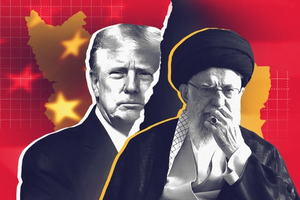
Referring to Trump, he added: “By God’s Trump’s malicious plans will fail.”
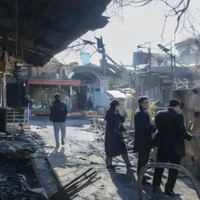
Iranian security forces fired tear gas and confronted merchants and protesters in central Tehran on Sunday, as authorities moved to reopen major shopping centers after several days of closures.
Witnesses said security forces targeted merchants at Alaeddin shopping center and Charsou mall, firing tear gas and clashing with shopkeepers who had kept their businesses closed.
Videos received by Iran International showed crowds gathering outside Charsou mall, chanting “bi-sharaf” (“shameless”) at security forces.
Videos also showed security forces firing tear gas toward merchants outside Alaeddin shopping center and engaging in physical confrontations.
Footage also showed motorcycle-mounted security units deployed along Jomhouri Street, a key commercial artery in central Tehran.
The Telegram channel Civil Protest of the Bazaar reported a large-scale security deployment across Tehran’s bazaar and said some merchants were forced to reopen shops.
Amnesty International Australia on Sunday called on Iranian authorities to halt the crackdown on protesters and urged international action to address what it described as serious human rights violations.
In a statement issued by its Iran National Network, Amnesty International Australia said the right to protest was fundamental and accused the Islamic Republic of using violence, detention and intimidation against demonstrators.
“The systematic killing, detention, and intimidation of peaceful protesters are grave violations of international human rights law and constitute crimes under international jurisdiction,” the statement said.
The group called for an immediate end to the use of lethal and so-called less-lethal force against civilians, warning that such orders could trigger individual criminal responsibility under international law.
It also demanded the unconditional release of all people detained for protesting or dissent, an immediate halt to executions, and unrestricted access for United Nations-mandated investigators and human rights monitors.
Amnesty International Australia further called for international pressure and support for what it described as the Iranian people’s right to determine their own future.
“The current authorities must cooperate with the establishment of a neutral, temporary transitional authority, under international supervision, to stabilize the country and prepare for a free, fair, and verifiable national referendum,” the group said in a statement.
“The right to protest is a cornerstone of a free world.”

Protests continued across Iran for a seventh day and night on Saturday, with demonstrations reported in scores of cities and a sharp rise in fatalities marking one of the most violent phases of the unrest so far.
Videos and eyewitness accounts received by Iran International showed security forces opening fire on protesters in several locations, most notably in Malekshahi, a city in Ilam province, where state-linked media confirmed multiple deaths following clashes.
Based on information shared with Iran International, during protests in Malekshahi at least five protesters were killed by direct fire from security forces, and around 30 others were wounded.
Footage from the city showed wounded protesters and scenes of chaos after live ammunition was used.
Overall, at least 15 protesters and one member of the security forces have been reported killed during seven days of demonstrations, according to rights group HRANA.
Iran International was able to confirm that dozens more were wounded by live fire or pellet guns, while arrests were reported across several provinces.
The unrest, initially driven by economic grievances, has increasingly taken on a political character, with protesters chanting slogans against clerical rule and the Supreme Leader, as well as calling for a return of monarchy.


Demonstrations were reported in major cities as well as smaller provincial centers, despite heavy security deployments and warnings from authorities.
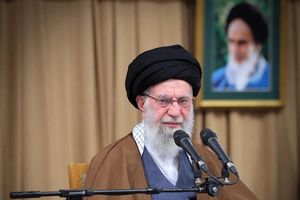
In his first public remarks since the protests began, Supreme Leader Ali Khamenei described participants as “rioters” and called for their suppression, signaling a hardening official stance as the unrest entered its second week.