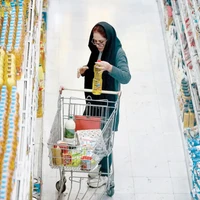
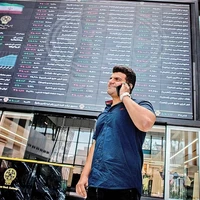
Three days after merchants ignited strikes across Iran, the country’s bazaar is now openly defying the Islamic Republic, marking a historic break between conservative traders and a state accused of sacrificing livelihoods to missiles and security spending.
Historically, in Iran, religious institutions and conservative merchants—the Bazaaris—were inseparable allies. It was the Bazaaris who bankrolled the anti-state revolution of 1979, famously chartering the plane that carried Ayatollah Khomeini back to Tehran.
Yet, 46 years later, the Islamic Republic has managed to alienate its oldest and most critical constituency. For the Iranian merchant today, that alliance is dead, and commerce has become a losing game.
Three days after merchants ignited strikes across Iran, the country’s bazaar is now openly defying the Islamic Republic, marking a historic break between conservative traders and a state accused of sacrificing livelihoods to missiles and security spending.
Historically, in Iran, religious institutions and conservative merchants—the Bazaaris—were inseparable allies. It was the Bazaaris who bankrolled the anti-state revolution of 1979, famously chartering the plane that carried Ayatollah Khomeini back to Tehran.
Yet, 46 years later, the Islamic Republic has managed to alienate its oldest and most critical constituency. For the Iranian merchant today, that alliance is dead, and commerce has become a losing game.
Despite having no hand in inflation, merchants are often blamed as price gougers. If they reject state-mandated pricing, they are accused of hoarding and tampering with the market; if they comply, they may not be able to afford to restock their inventory, selling their way into bankruptcy.
Simultaneously, the centralized allocation of foreign currency for imports drags on for months, while exporters are forced to sell their hard-earned foreign currency at losses due to state pressure.
The atmosphere grew more volatile last week with the announcement of a new gasoline pricing policy, which exacerbated existing anxieties about the economy.
The release of the next year’s budget was the last straw. With oil revenues projected to cover a mere 5% of administrative costs, the government wants the public to foot the bill through deficit spending and significant tax increases.
The trade-off is stark: while every subsidy has been stripped from the ledger, the budget for security and defense has increased. By prioritizing the military and security over public welfare, the state has effectively transferred the entire burden onto the people’s dinner tables.
The market is rejecting this pressure. Merchants argue that they are being suffocated to fund the state's regional ambitions. Facing chronic 60% inflation and the weight of sanctions, business owners can no longer survive, let alone profit.
The message from the bazaar is clear: the economy cannot sustain the vows to rebuild the missile arsenal.
The state’s response to the protests has been predictable: a photo-op meeting with a handpicked group of supportive businessmen and the scapegoating of the Central Bank Governor.
The dismissal of Mohammad-Reza Farzin had been on the table for months, held in reserve as a sacrificial offering. Now, with protests spreading throughout the country, the administration offers his firing as a promise of change.
But the Iranian people see through this theater. They know the Central Bank Governor is not an independent policymaker, but a mere functionary. Replacing him with Abdolnaser Hemmati—a recycled official previously fired from the same post over rial's devaluation—signals continuity, not reform.
Public slogans reveal that the bazaar and the street are now speaking with one voice. The grievances have moved beyond daily economics; they challenge the specific governing priorities that drive this decline. The public understands that their economic distress is not an accident of mismanagement, but the calculated cost of the state's strategic choices.
This leaves the Islamic Republic with a binary choice: abandon regional ambitions and missile proliferation to return to the negotiating table, or double down on repression.
As evidenced by the direct fire opened on protesters yesterday, the regime has chosen the path of force. The market’s message is unmistakable: the people want fundamental change. The government’s answer is not reform, but bullets.

Free speech. Open dialogue. People having access to one another, the ordinary ability to speak freely and exchange ideas. These might be the downfall of the system patiently built up by Supreme Leader Ali Khamenei, not foreign weapons.
A public sphere not mediated by state television or controlled narratives. People simply talking to each other, in real time, in a forum beyond the reach of power.
That is the fear.
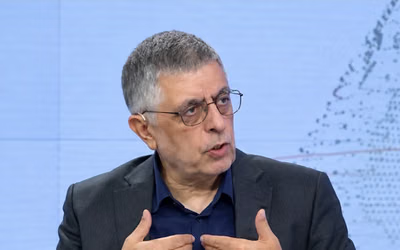
I say this not as a theorist or a politician, but as the host of a nightly call-in program that attempts, modestly and imperfectly, to make such exchanges possible.
The experiment is simple.
There are no slogans, no marching crowds, no images calibrated for cable news. Instead, there is a microphone, a live line, and an invitation so unassuming it almost sounds apolitical: talk. Not perform. Not chant. Not rehearse ideology. Just talk, to one another, in real time, about what has gone wrong, what hurts, what frightens, and what still feels imaginable.
A society that cannot speak to itself is condemned to repeat its errors. A society that can speak cannot be governed indefinitely by myth.
Fractured by fear
Iran is among the most politicized societies in the world, yet genuine political dialogue is structurally impossible.
Families learn which subjects to avoid at the dinner table. Schools train obedience rather than inquiry. State media speaks incessantly but listens to no one.
Even social media, often romanticized as a space of resistance, is fractured by fear, surveillance, and mutual suspicion.
The result is not apathy, but exhaustion.
Questions accumulate without resolution. Why does a country rich in oil and gas fail to provide reliable electricity? Why do rivers vanish while neighboring desert states manage water abundance?
Why does each generation inherit fewer prospects than the one before it? Is war inevitable? Is collapse? Is change possible without catastrophe?
These questions never cohere into shared understanding.
Online, coordinated campaigns flood debates with distraction and distortion, contaminating the very spaces where collective reflection might otherwise take shape. Fragmentation serves power.
A society arguing with itself is a society distracted from those who govern it.
The most dangerous conflict in Iran today is not between the state and the people, but among the people themselves, along ideological, generational and emotional fault lines.
In the aftermath of the recent brief war with Israel, many Iranians found themselves at a crossroads, unsure whether the future demanded silence, rupture, or something harder and more fragile.
Dialogue, in this context, is not reconciliation with power, nor a plea for moderation as a moral posture. It is not an elite exercise in rhetoric.
Real dialogue is untidy. It requires listening to voices one distrusts. It rests on a radical premise: that no one, neither the dissident nor the conscript, neither the exile nor the factory worker, is disposable by default.
The right to speak, and to hear
On my program, I try to create space for that premise to be tested. The format is open, live, and unfiltered. Callers speak without ideological vetting. What matters is not agreement, but participation.
Recently, callers from Tehran, Rasht, Shiraz and Zahedan spoke openly about leadership, foreign intervention, a monarchy versus a republic, internet shutdowns, nonviolent resistance and the ethics of accountability if the Islamic Republic falls.
Some urged speed. Others warned against vengeance. Some placed hope in figures abroad. Others insisted that change must be rooted domestically.
At one point, a caller argued that anyone associated with the state must be punished. Another responded that a society cannot be rebuilt on the promise of mass retribution. Justice, he said, requires distinction, between those who committed crimes and those who merely survived within a coercive system.
In most democracies, such an exchange would pass unnoticed. In Iran, it is revolutionary.
It is precisely this kind of public, imperfect, unscripted reasoning that authoritarian systems fear most.
The Islamic Republic today appears brittle. Its supreme leader speaks of progress while citizens search for medicine and hard currency. Parliament performs loyalty. The judiciary enforces obedience. State media manufactures fake optimism. Yet none of these institutions command belief.
What they cannot tolerate is unity that does not require uniformity.
A national conversation produces legitimacy, among citizens. It generates shared language, moral boundaries, and, eventually, political imagination. Once people agree on what the problem is, power loses its monopoly on explanation.
Speech connects. Connection organizes.
Silence, by contrast, is a slow death. It corrodes trust. It persuades people that their doubts are solitary.
They are not. Iran does not lack courage. It lacks space.
Every Thursday night, that space opens briefly on my show, long enough to remind people that the most radical demand is not vengeance, or even freedom, but the right to speak, to be heard, and to understand one another before history forces the conversation in blood.
That, ultimately, is what terrifies Iran’s supreme leader.

Power politics in Tehran has reached a stage where even the most routine public affairs—a film festival, an environmental report or the World Cup draw—spiral into controversy, as if the system cannot tolerate anything resembling normalcy.
Last week, an international film festival was held in the historic city of Shiraz. To emphasize the festival’s international character, organizers invited one of Turkey’s most acclaimed filmmakers Nuri Bilge Ceylan to head the jury.
The announcement angered hardliners, who framed it as a cultural intrusion. Culture Ministry officials who organized the event did not dare explain the meaning of “international.” Even if they had, few would have listened.
While the festival attempted to celebrate cinematic creativity in a conspicuously muted way—so as not to provide ammunition to political rivals—security forces in Tehran raided a private birthday gathering of Iranian filmmakers and arrested several for drinking.
It was another reminder that even culture, perhaps especially culture, cannot escape the state’s instinctive need to police spontaneity.
On air sagas
That same week, cleric Abdolrahim Soleimani Ardestani sparked outrage during a live debate on a popular YouTube-based platform when he asserted that a Shi'ite Imam was killed by his wife after discovering he had taken a second wife.
Fundamentalists and hardliners swiftly accused him of insulting religious sanctities—an allegation that could carry the death penalty—ultimately forcing him to apologize.
In the same week, a local official in the western province of Kohgiluyeh and Boyer-Ahmad openly questioned President Masoud Pezeshkian’s water policy during a televised event.
Visibly angry, Pezeshkian shouted that the dams in question were not signed off by him. The live broadcast was abruptly cut off when the official produced documents that proved the president wrong.
A mundane administrative event turned combustible in a system where power is perpetually on edge.
Everything—even football
Then came the 2026 World Cup draw in Washington DC, and the saga surrounding entry permits for Iran’s delegation.
Tehran first announced it would boycott the event after the United States issued visas to only four of the nine delegates—a high number, as countries typically send one to four representatives.
After two weeks of heated debate in Tehran, the boycott was abandoned and two delegates were sent to the draw following “consultations with the Foreign Ministry.”
Predictably, no one asked why such consultations had not taken place before the hasty boycott. Nor did anyone question why the federation or government failed to protest the ban on Iranian spectators traveling to the US for the 2026 World Cup.
Sports diplomacy became yet another venue where reflexive posturing overtakes basic competence.
Strange as it may seem, this was simply another ordinary week in Iran—a week where the smallest acts are politicized, the simplest decisions are derailed, and the state’s fear of normalcy turns daily life into a continuous cascade of avoidable crises.

In Iran today, the riskiest act is neither protest nor journalism. It's conversation.
Around eleven o’clock on a winter Thursday night in Tehran, when smog hangs low and the city braces for yet another morning of inflation, something improbable happens.
People lift their phones and dial into a live call-in program that invites them to do what the state has discouraged for nearly 50 years, speak to one another without fear. In no other broadcast media do Iranians speak so freely.
Conversation, elsewhere, is a habit. In Iran, it is an act of retrieval. The Islamic Republic has regulated public expression so thoroughly that even a modest exchange, an honest memory, an unfiltered admission can feel subversive.
Authoritarian systems seldom fear noise, they fear permeability, the small openings through which private truth seeps back into collective life.
Conversation cannot, on its own, remake a country.
But it can remind people that they still constitute a public, and that a public, once it begins to speak, is difficult to extinguish.
On Thursday nights in Tehran, beneath a sky thick with pollutants and unspoken truths, that public can be heard, quietly but insistently, returning to life.
Each week I begin my program the same way: "What should Iran talk about tonight?" And the phone lines come alive.
Nostalgia
The first caller, a woman in Tehran named Artemis, speaks with the steadiness of someone who has carried a sentence around all day.
We know what we have lost, she begins, political rights, economic stability, clean air, the artists and scientists driven into exile. But we do not talk enough about what survived. Our culture, our sense of who we were.
She identifies as a monarchist, yet her critique is directed at her own camp. When monarchists scream and insult online, she says, they betray the very values they claim to defend, dignity, coexistence.
She pauses. Iran was once a place where different voices lived safely, she claims: we should try to be those voices again. It is a simple thought, but in a country where political language has been battered for decades, simplicity can sound radical.
Then the tone of the program shifts. A man named Ehsan calls from abroad with the urgency of someone carrying unresolved grief.
The time for talk is over, he declares. Forest fires, a collapsing currency, students expelled from school—none of it, he argues, will change until Iranians swear an oath to reclaim their homeland.
His language is harsh, almost martial, yet the emotion beneath it is unmistakably human: grief straining toward agency.
'I was wrong'
Then, a quieter voice enters the line, one woven deeply into Iran’s cultural memory.
Esfandiar Monfaredzadeh, the composer behind the defining soundtracks of pre-revolution Iranian cinema and several anthems that accompanied the uprising of 1979, speaks with a calm that cuts through the evening’s tension.
To many, he embodies the contradictions of that era, an artist who lent his talent to a revolution that promised liberation and delivered something narrower. What he does next is rare for his generation.
"I was wrong," he says. "I hope the generations after me can forgive us."
The confession does not land softly for everyone. A woman named Irandokht calls in, her voice tight with exhaustion. You left, she tells him. We stayed. And we live with what followed.
Her anger is not directed solely at him, it is aimed at the long silence surrounding his generation, decades in which few publicly reckoned with how a movement born in the language of justice hardened into repression.
Monfaredzadeh listens and responds without defensiveness. Under the Shah, he explains, Iranians had social and cultural freedoms, but not political ones.
Under the Islamic Republic, even those limited freedoms contracted. Until political freedom exists for everyone, he says, monarchists, republicans, leftists, Islamists, there can be no future worth building.
Other callers widen the frame. A woman from Karaj admits that during recent protests many workers stayed home out of fear of losing their salaries, leaving young demonstrators exposed.
Another describes an improvised referendum, the clanging of pots and pans from balconies, a city speaking through metal because speech itself had become unsafe.
I close the program the same way each week, Take good care of the person sitting next to you, I say, and sign off the national dialogue.
Then I sit for a moment longer and think to myself, we have a long way to go, yet the possibility of change feels close.
So close, no matter how far.

Iran held large-scale state funerals this week for unidentified soldiers from the 1980s war with Iraq, nearly six months after its 12-day clash with Israel, and amid deepening public distrust fueled by ongoing security, economic, and environmental crises.
For years, ceremonies known as the “burial of anonymous martyrs” have served as a tool for mobilizing Islamic Republic loyalists and projecting an image of grassroots support.
The latest round came on Monday, when Major General Abdolrahim Mousavi, Iran’s armed forces chief of staff, praised what he called the “unparalleled and indescribable presence” of devout citizens at the receptions and funeral processions, framing their attendance as an act of obedience to the Supreme Leader.
In the Islamic Republic’s terminology, an "anonymous martyr” is a body buried without a confirmed identity — often never identified even decades later.
More than 36 years after the Iraq war’s end, the true nature of what lies in many of these coffins remains unclear. Images and past reports suggest some contain only fragments of bone.
Mahmoud Tavallaie, the former head of Iran's Institute for Advanced Biotechnology Research, acknowledged in 2022 that many remains had deteriorated in harsh conditions, making scientific identification impossible in numerous cases.
Psychology of glorifying death
Speaking to Iran International, social psychoanalyst Saba Alaleh said the state has long elevated death into a sacred, heroic ideal in order to maintain psychological control over society.
“Iran’s rulers try to turn death into a total value — one tied to loyalty, sacrifice, and obedience,” she said, noting that this glorification feeds a narrative in which dissent is framed as disrespect for the dead. “Authoritarian systems like the Islamic Republic constantly rely on such displays of blood-earned legitimacy.”

Alaleh argued the Islamic Republic seeks to instill a persistent sense of indebtedness and guilt, reinforcing the message that “people died for this system, so you must follow their path and have no right to oppose it.”
Symbolism and political agenda
Asked what the state aims to achieve through these ceremonies, Alaleh said their primary purpose is to stage symbolic power.
“These funerals help the Islamic Republic reassert the revolutionary moral codes of 1979,” she said. Anyone objecting to them is quickly portrayed as insulting the sacrifices of others, creating social pressure against dissent.
Official data from the war years show 116 unidentified soldiers were buried during the conflict itself, though authorities now say there were roughly 50,000 unidentified dead in total, with over 30,000 later identified and returned to their families.
Citing updated figures, Iranian officials say more than 13,000 bodies have been interred across roughly 1,300 memorial sites and 3,000 locations nationwide — from city squares and universities to mosques, seminaries, and military zones. Tehran’s Behesht-e Zahra cemetery alone houses over 4,000 such graves.

Why public spaces?
The Islamic Republic says burials in public or academic spaces reflect local demand, but critics argue the practice serves to symbolically “occupy” civic environments.
Student activists in the 2000s repeatedly protested the installation of tombs on campuses, viewing them as a pretext for increased presence of security forces.
Clashes erupted at several universities — including Shahid Rajaee, Iran University of Science and Technology, Sharif University, and Amirkabir — as students demanded referendums on the burials. Despite opposition, the burials proceeded, often backed by the municipality, the Revolutionary Guards, and hardline political bodies.

Institutional machinery
Until 2018, the armed forces’ Missing in Action Search Committee oversaw excavation, transfer, and burial operations. A multi-agency structure now coordinates locations, logistics, and ceremonies, with representatives from the Cultural Heritage Organization, the Martyrs Foundation, the Interior Ministry, and the armed forces.
These funerals are typically held during major religious periods such as Fatimiyya — the days when Shiites mourn the death anniversary of Prophet Muhammad's daughter Fatima — though the coffins also appear during other state and religious commemorations, maintaining a continuous symbolic presence in public life.