Iranian skier who had fled to Germany makes homecoming, praises Khamenei
Iranian Olympic skier Atefeh Ahmadi, who applied for asylum in Germany in 2023 after leaving Iran during a training trip to Europe, has returned to the country and publicly expressed gratitude to the Supreme Leader for facilitating her homecoming.
The sudden reversal and the stilted language of the announcement of her return in an Instagram post led to concerns by some about her wellbeing.
“I must tell you that I am present in my country, Iran. Undoubtedly, my country, my homeland, and my soil are the safest place in the world for me. As an Iranian, Iran is always my safe home,” the post said. “With the support and help of the Supreme Leader, I will return to the warm family hearth.”
A Quranic verse follows the message in Arabic: “When He decrees a matter, He only says to it, ‘Be,’ and it is.”
Ahmadi, 23, was the only Iranian woman to compete at the 2022 Beijing Winter Olympics and had been seen as one of the country’s top alpine skiing prospects.
Ahmadi remained in Europe after a training and competition trip in early 2023 and applied for asylum in Germany, later appearing in media and campaign material that highlighted her story as a refugee athlete.
The announcement sparked mixed reactions among Iranians on social media. Some users accused authorities of pressuring Ahmadi or using her case for propaganda.
Iranian intelligence agents and police have routinely compelled dissidents to recant their views and disavow past activism in social media posts, sometimes even mandating a set number of favorable posts in exchange for restored internet access.
“It’s unclear how they made that place unsafe for the poor girl and how much pressure they put on the family in Iran for her to write ‘My homeland is the safest place in the world for me.’ As long as the Islamic Republic exists, no person in the world will have security,” one user posted on X.
Others framed her decision as a personal choice driven by homesickness, economic insecurity abroad or family ties. Accounts close to the government praised the move.
“Atefeh Ahmadi, the former national athlete of Iran’s skiing team who had sought refuge in Germany, has returned to the country with the support of His Holiness the Supreme Leader,” one account said. “Praise be to God, we have a compassionate leader who, like a father, keeps an eye on all his children and supports them.”
Winter rain fell on Tehran on Wednesday after the driest autumn in over 50 years, providing temporary relief from a severe water shortage that the country's ruling clerics have led prayers to end but looks set to persist.
Capital residents shared moments of joy as they beheld the showers and expressed hope that the traditional rainy season could provide relief from a crisis that Iran's president has warned may doom the city.
“Even the rain could not defeat the heavy air pollution of Tehran, but for a short amount of time, the beauty of the northern mountains are visible,” a user posted on X.
"I know not everyone is feeling well; but I hope that wherever you are, this short rain has at least warmed our hearts for a moment with the beauty of nature," posted another user.
Iran is in its sixth consecutive year of drought, with reservoirs at historic lows. Tehran's Latyan Dam is at its lowest in six decades, Karaj (Amir Kabir) holds under 10% capacity, and Mashhad's dams are below 3%.
Nationwide, 19-22 major dams are under 15-20% capacity, while groundwater extraction exceeds recharge, causing land subsidence in Tehran and other areas.
The prolonged dry period has pushed reservoir levels across Iran to historic lows. The country’s Karkheh Dam hydroelectric plant was forced to halt power generation last week due to the shrinking water level in its reservoir.
Officials said the dam’s basin has endured years of drought, with water now flowing only through lower outlets to meet downstream needs.
Water specialists quoted by local media say that if current patterns continue, significant parts of Tehran could face severe supply instability within the next decade.
The crisis is mainly due to decades of mismanagement. Agriculture uses 80 to 90 percent of the country's water but with less than 40 percent efficiency.
Too many dams have been built, leaky pipes waste 15 to 30 percent of supply, wastewater recycling stands at only about 20 percent compared to 85 to 98 percent in neighboring countries, and conservation efforts remain weak.
President Masoud Pezeshkian warned in November that without substantial rain, Tehran faces what he called "Day Zero", necessitating water rationing or even partial evacuation of the capital. Nightly pressure cuts, heavy consumer penalties, and unannounced outages are already common; some cities have already begun rationing.
Recent rain offers hope but is insufficient to refill reservoirs or reverse depletion. Iran risks ongoing shortages in drinking water, farming, hydropower and potential unrest, with calls for structural reforms over water management and agriculture growing.
Barry Rosen, a hostage during the 1979 US embassy takeover in Tehran, told Iran International that the recent deportations of Iranian nationals back to Iran echoes the oppression he faced as a captive.
“I feel distressed,” Rosen told Iran International. “It seems as if I’m living the situation that I had as a hostage. My due process and the loss of my human rights now seem to be equal to those ... who are now being sent back to Iran."
The first US deportation flight to Iran departed in late September with 120 deportees, representing a rare moment of cooperation between Washington and Tehran.
Many say they fled Iran fearing persecution including Christian converts, LGBTQ Iranians and dissidents. The Trump administration has defended its immigration crackdown as a measure to make America safer and remove what it deems “illegal alien criminals.”
Millions of immigrants entered the United States illegally under President Joe Biden and Trump's pledge to seal US borders and conduct mass deportations helped deliver him re-election last year.
Iran is on a growing list of countries from which Trump has banned entry to the United States. In the wake of a deadly attack by an Afghan immigrant on national guard troops last month, the administration said even green card holders from the flagged countries might face expulsion.
Some Iranians had already been deported to third countries earlier in the Trump administration.
Among them is 27-year-old Christian convert Artemis Ghasemzadeh who crossed the southern border seeking asylum but was instead handcuffed, shackled and flown by US authorities to a remote camp in Panama.
Iran International spoke to her in March. “We are not criminals,” she said in a voice message, explaining that she fears execution if returned to Iran.
Rosen, the co-founder of the research and information non-profit Hostage Aid Worldwide, said he was disturbed, alarmed and angry to learn about Iranians at risk of persecution being deported - not only religious minorities, but anyone who could be targeted by the state.
“I just read a story about two Christian Iranians who would be sent back and there seems to be no regard by the government that there would be persecution for them,” he said. “It really gets me. I'm very angry in in many ways because I feel there’s a sense of hopelessness."
Faith leaders in Virginia have also raised alarms after US Customs and Border Protection arrested two Iranian Christian sisters — Mahan and Mozhan Motahari — in the US Virgin Islands despite the women having documents allowing them to remain in the country while their asylum cases proceed, according to Religion News Service (RNS).
Their attorney told RNS that CBP publicly posting photos of the sisters without
They remain detained in Florida while their lawyer seeks to expedite their case.
For Rosen the deportations conflict with values he believes the United States has long claimed to uphold.
“What’s happening right now is all these people who thought of America as the shining light on the hill, they’re losing their human rights in the United States, something that I could never conceive of in my entire life.”
Attorney Mahsa Khanbabai, an Elected Director of the Board of Governors for the American Immigration Lawyers Association (AILA) told Iran International that the United States is contravening its founding principles.
"The Constitution doesn’t apply sometimes to some people — it applies to all people, all of the time," said Khanbabai, "It’s hypocritical for the US to criticize Iran for human rights violations while unfairly targeting Iranians here by weaponizing immigration laws to get around due process rights."
Khanbabai underscore the broader systemic issue Rosen has been warning about.
Rosen served as a Peace Corps volunteer in Iran from 1967 to 1969, returned as press attaché in 1978 and was taken hostage during the upheaval of the revolution.
He says he never imagined he would one day defend Iranian refugees in the United States but feels compelled because of his connection to the country he once called his “second home.”
“I feel that we’re living in the dark ages in the United States right now,” he said. “It’s absolutely ugly.”
Barry Rosen in an interview with Iran International's Negar Mojtahedi during the United Nations General Assembly (UNGA) in 2024.
Iran has asked the United Nations to intervene after the United States expanded restrictions on the movement and activities of its diplomats, the foreign ministry said on Thursday.
Washington, Tehran said, had intensified restrictions on members of Iran’s mission, including banking hurdles and limits on routine purchases, after earlier curbs imposed during September’s UN General Assembly.
"The United States took action this week to impose maximum pressure on the Iranian regime by restricting their UNGA delegation’s movement and access to wholesale club stores and luxury goods," the state department said in a statement in September.
"We will not allow the Iranian regime to allow its clerical elites to have a shopping spree in New York while the Iranian people endure poverty, crumbling infrastructure, and dire shortages of water and electricity."
In the statement, the ministry said these measures were intended “to disrupt the normal and legal duties of Iranian diplomats.”
“The imposition of extensive restrictions on the residence and movement of Iranian diplomats, tightening restrictions on bank accounts, and imposing restrictions on daily purchases are among the pressures and harassment,” the ministry said.
Washington barred three mission staff
The ministry also criticized the US State Department for blocking continued work by three employees of Iran’s mission. It did not specify when the expanded limits began, though Iranian diplomats were previously permitted to travel only between the UN, their mission, the ambassador’s residence and John F. Kennedy International Airport.
The appeal comes after five rounds of indirect nuclear negotiations between Iran and the United States ended earlier this year. Those talks preceded a 12-day air war in June in which Israel and US forces struck Iranian nuclear sites, an escalation that deepened the diplomatic rupture.
The UN has not publicly addressed the request, but Tehran’s appeal signals mounting friction in an already strained diplomatic environment.
Iran’s Supreme Leader Ali Khamenei on Wednesday suggested a US pressure campaign on Venezuela aimed to seize its territory and oil wealth in lengthy diatribe against hegemony of Western countries.
The 86-year-old theocrat styles himself a divinely-appointed protector of the oppressed worldwide and his remarks were couched as a general description of how weaker nations are usurped by more powerful ones led by the United States.
Speaking at a ceremony marking the birth anniversary of Fatemeh Zahra — the daughter of the Prophet Mohammad and a revered figure in Shia Islam — Khamenei said the motives behind what he called hegemonic pressure differ across regions.
“Sometimes it is about expanding territory,” he said, pointing to “what the Americans are doing with some Latin American countries.”
Western designs can also aim at extracting commodities," he said. “They apply pressure so they can take a country’s underground resources — its oil, for example."
Iran's relationship with Washington and Western Europe is at a low ebb since the United States joined a surprise Israeli military offensive against the country in June.
Britain, France and Germany then triggered the reimposition of international sanctions which have throttled Iran's already ailing economy.
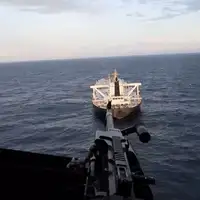
Khamenei’s remarks came a day after the United States seized a Venezuela-linked tanker accused of transporting sanctioned Iranian and Venezuelan oil.
Washington says the tanker was part of a network tied to Hezbollah and Iran’s Revolutionary Guards.
Iran’s embassy in Caracas condemned the operation as an illegal act, calling it “robbery in the Caribbean Sea” and a violation of international maritime law.
US forces have mounted the largest buildup of forces in the Caribbean since the 1962 Cuban missile crisis and President Donald Trump has suggested the policy aims at the removal of leftist populist President Nicolas Maduro and has vowed attacks on land.
US air strikes on alleged drug boats in the region have killed at least 87 people.
'Hearts and minds'
Khamenei added that Western states also push to “reshape cultural and religious life,” often by influencing lifestyles and social norms through media. “They try to change how people live, think and believe,” he said.
But he said the most consequential objective is what he described as an engineered identity transformation. “More fundamental than all of these is the effort to change a nation’s identity,” he said.
Iranian officials accuse the West of seeking to foment sedition and rebellion in the country including by fomenting opposition to mandatory veiling laws for women.
The death of a young woman, Mahsa Amini, in morality police custody in 2022 led to nationwide protests dubbed the Woman, Life, Freedom movement which were quashed with deadly force.
Khamenei added that attempts to alter Iran’s cultural and religious foundations stretch back a century. “For a hundred years they have tried to rewrite who we are — our religion, our history, our culture,” he said. “The Islamic Revolution cleared that away, but the pressure continues. And resisting this pressure is essential.”
Khamenei said Iran is progressing despite economic and political pressures. “By God’s grace, the Islamic Republic is moving forward,” he told the audience of religious reciters. He said Iranians continue to show the world that Islam stands for “steadfastness, strength, honesty and justice.”
He also said the country faces a sustained “media and propaganda war” aimed at undermining public morale. “The enemy learned it cannot gain this land through military pressure,” he said. “So it turned to changing hearts and minds. We are standing firm, but the threat is real.”
Iran’s presidential chief of staff said the government has begun revoking all forms of unfiltered internet access granted to select users – including senior officials – as scrutiny intensifies over privileged connections unavailable to the general public.
The change is already underway and applies to “everyone who uses such lines,” Mohsen Haji-Mirzaei told reporters on Thursday. Any revision of national filtering policy, he added, lies exclusively with the Supreme Cyberspace Council, not the Supreme National Security Council. “The council decided on filtering, and the council must decide on changes,” he said.
Unequal access exposed by platform updates
Iran maintains some of the world’s strictest online controls, blocking X, Facebook, YouTube, Telegram and WhatsApp for ordinary users, who rely on unstable VPNs frequently disrupted by authorities.
But recent updates on X revealed that several lawmakers, government spokespeople and pro-government media figures were posting from inside Iran without VPNs. The disclosures pointed to their use of government-issued unrestricted mobile lines, often referred to domestically as “white SIMs,” which bypass national filtering and throttling systems.
The revelations triggered widespread public anger, highlighting a stark digital divide between citizens and officials at a time when President Masoud Pezeshkian had campaigned on restoring open access.
His administration has yet to lift filtering; in his first meeting of the Supreme Cyberspace Council, Pezeshkian instead stressed implementing the Supreme Leader’s directives on internet governance and ordered action against the thriving VPN market.
Limited room for reform
Asked whether cabinet members would also lose their privileged access, Haji-Mirzaei replied: “Anyone who has such a line.” The council, he said, had set conditions for reconsidering filtering and that preparatory work was underway.
The shift follows weeks of public backlash over unequal access, showing how the administration has so far failed to deliver on its pledge to ease restrictions within Iran’s tightly controlled online system.
Iranian officials have provided no details about the conditions of Ahmadi’s return, including whether she will rejoin the national team or what guarantees she has received.