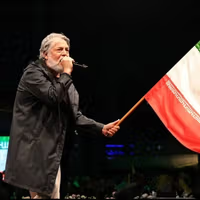
Iran’s Foreign Minister Abbas Araghchi said that the Western powers “must decide whether they choose cooperation or confrontation,” ahead of his meeting with his European counterparts in New York to discuss the looming snapback of UN sanctions on Iran.
“At different times, the Islamic Republic of Iran has been tested, and they know that we do not respond to the language of pressure and threats. Rather, we respond in the language of respect and dignity. If there is a solution, it is only a diplomatic one,” Araghchi said.
He added that he hoped consultations in the coming days would lead to progress, but warned that “otherwise, the Islamic Republic of Iran will take the measures it must.”
Araghchi warned that Iran's Cairo agreement with the UN nuclear watchdog will lose its validity, and Tehran will respond if the UN sanctions on Iran are restored on September 28.

Moderates are pushing for President Masoud Pezeshkian to meet Donald Trump at the United Nations in hopes of easing mounting pressure on Iran, but entrenched hardline opposition makes such a breakthrough highly unlikely.
That pressure is set to intensify with the automatic return of UN sanctions on September 28, unless a last-minute diplomatic breakthrough materializes.
Amid decades of bitter discord following the 1979 Iranian Reovlution, no US President has ever met his Iranian counterpart. US President Barack Obama spoke with President Hassan Rouhani by phone while the latter was in New York in 2013.
Reformists argue the question is not whether Pezeshkian should meet Trump, but whether he can secure Supreme Leader Ali Khamenei’s mandate to resume the pursuit of a nuclear deal. Without it, they say, the trip risks becoming another empty exercise.
“If the trip is going to be like last year or like those of past presidents, it is better not to go,” former Tehran mayor Gholamhossein Karbaschi told the moderate outlet Jamaran.
“If they want real change, he must first go to the Leader and other decision-makers and secure the necessary powers. Then he can meet senior American, European and regional officials.”
‘Courage required’
The reformist daily Sazandegi ran the headline “A Speech Is Not Enough,” urging Pezeshkian to act decisively.
Prominent centrist figure Hossein Marashi argued in an editorial that only “courageous decisions” could help avoid renewed sanctions.
Other moderates, including Amir Eghtenaei and Mohammad Atrianfar, pressed for clarity from Khamenei before departure, warning that without it the trip would yield “only repetitive words in routine meetings.”
Reformist author Abbas Abdi went further In Tehran’s other moderate daily, Etemad: unless Pezeshkian resolves the matter at home, he argued, the UN visit will be “pure loss.”
“When you return,” Abdi warned, “we should know whether the person who went to the UN was Pezeshkian representing the Iranian nation, or merely a shadow of his rivals wearing his clothes.”
‘Romantic illusion’
The "rivals" have of course been hard at work to head off any grand gestures in New Yorkk.
Kayhan, funded by the Supreme Leader’s office, derided the proposal as a “childish prescription” that would send a message of weakness.
In a biting editorial, it accused reformists of being so servile to the United States they would “probably even kiss Trump’s seat if asked.”
Javan, the IRGC-linked daily, called the idea “banana peels under Pezeshkian’s feet,” reminding readers that Trump himself tore up the 2015 nuclear deal.
Even the more measured Farhikhtegan said Washington has shown “no willingness to talk to Iran,” branding reformist hopes “romantic illusions.”
The past speaks
Analyst Amirali Abolfath told the moderate daily Ham-Mihan that even if Pezeshkian and Trump met, “just as Trump’s meetings with Putin or his letters to Kim Jong-un did not change US policy, this will not either.”
Others warned of humiliation.
President Trump could treat Pezeshkian as he did Ukraine’s Volodymyr Zelensky, hardline journalist Pouyan Hosseinpour warned, “reducing the encounter to a moment of spectacle.”
This hardline consensus mirrors earlier UNGA seasons, when moderate presidents Mohammad Khatami and Hassan Rouhani likewise floated engagement but bowed to resistance at home.
The likely outcome is the same: no meeting, and a course set for confrontation as snapback sanctions take hold.
Diplomatic efforts to resolve the dispute over Iran's nuclear program are at a "difficult juncture," AFP reported citing the UN nuclear watchdog's chief Rafael Grossi.
"It's obviously quite a difficult juncture. It's a very difficult situation we are facing right now," he said, adding that talks between involved parties were planned in New York for Monday.

"If we have an atomic bomb and do not even use it, no one will dare to attack us," said Ahmad Aryaeinejad, a lawmaker from Malayer in western Iran.
Aryaeinejad, one of 71 signatories of a letter to Iran’s Supreme National Security Council urging changes in the country’s nuclear doctrine, made the remarks in an interview with Tehran-based Didban news website.

Iran’s goal of achieving 8% economic growth, a key target of its seventh five-year development plan, faces steep hurdles, with economists warning that key drivers such as investment, productivity, and financing are faltering, the daily Samt reported on Monday.
“Economic growth requires prerequisites such as a favorable business environment, sound economic governance, access to technology and adequate financing. Each of these can be likened to an engine powering growth. The problem is that none of these engines are running,” wrote the paper, which covers industry, mining and trade.
According to the report, the government’s latest decree estimates Iran would need nearly 80 quadrillion rials (about $80 billion) in combined private, public and cooperative investment in the current Iranian year (started on March 21) to hit the 8% target, factoring in capital depreciation, labor contributions and productivity gains. Current financing plans leave a shortfall of about 27.9 quadrillion rials (about $28 billion).
The report listed funding sources ranging from banks and capital markets to foreign investment, the sovereign wealth fund and private savings. But it warned that reliance on public budgets and banks alone is insufficient.
Economist Vahid Shaghaghi-Shahri told the paper: “At present all our engines of economic growth have not only stalled but are working in reverse. In this context, even preventing negative growth should be considered an achievement.”
He cited housing, oil revenues and productivity as sectors in decline, while financial channels needed to supply about $200 billion annually are blocked by sanctions, low investor confidence and structural weaknesses.


Another economist, Mehdi Pazouki, argued that “without economic health no rational investor will commit to Iran.”
He said previous development programs had all set 8% growth targets that were never achieved. “When energy shortages restrict production and the business climate is hostile, such a goal is at best rhetorical,” he told the paper.
Both experts stressed the need for international engagement and domestic reforms. Pazouki said: “For meaningful growth we must first restore international relations and improve the business environment. Otherwise, capital will continue to flow abroad instead of into domestic industry.”
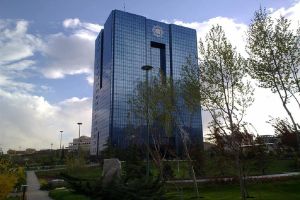
The report comes amid starkly different official data. Iran’s Central Bank recently announced growth of more than 3% in 2024, comparing Iran favorably to the US and eurozone, while the IMF in May projected growth of just 0.3% this year with inflation topping 43%.
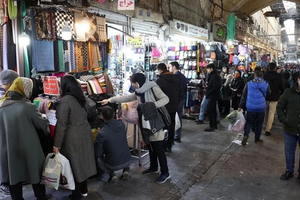
Independent analysts say power shortages, a plunging rial and tighter US sanctions have pushed the economy toward stagnation.
Shaghaghi warned that unless Iran activates its “engines of growth,” negative GDP growth could emerge as early as 2026. “It is better to set realistic goals in line with our economic conditions and avoid rhetorical targets,” he said.
The government has prepared plans for special conditions and a governance framework for such circumstances, Mohammadreza Aref, First Vice President of Iran said on Monday.
“We are not volunteers for war or the return of sanctions, and economic forecasts have been made in case the snapback mechanism is implemented,” Aref said.
“The government is ready to confront any tyrannical behavior and the smallest hostile move will be met with a decisive response by the Islamic Republic.”
“The nation and our governments performed well against the West’s unjust sanctions,” he added.