Diplomatic efforts to resolve the dispute over Iran's nuclear program are at a "difficult juncture," AFP reported citing the UN nuclear watchdog's chief Rafael Grossi.
"It's obviously quite a difficult juncture. It's a very difficult situation we are facing right now," he said, adding that talks between involved parties were planned in New York for Monday.

"If we have an atomic bomb and do not even use it, no one will dare to attack us," said Ahmad Aryaeinejad, a lawmaker from Malayer in western Iran.
Aryaeinejad, one of 71 signatories of a letter to Iran’s Supreme National Security Council urging changes in the country’s nuclear doctrine, made the remarks in an interview with Tehran-based Didban news website.

Iran’s goal of achieving 8% economic growth, a key target of its seventh five-year development plan, faces steep hurdles, with economists warning that key drivers such as investment, productivity, and financing are faltering, the daily Samt reported on Monday.
“Economic growth requires prerequisites such as a favorable business environment, sound economic governance, access to technology and adequate financing. Each of these can be likened to an engine powering growth. The problem is that none of these engines are running,” wrote the paper, which covers industry, mining and trade.
According to the report, the government’s latest decree estimates Iran would need nearly 80 quadrillion rials (about $80 billion) in combined private, public and cooperative investment in the current Iranian year (started on March 21) to hit the 8% target, factoring in capital depreciation, labor contributions and productivity gains. Current financing plans leave a shortfall of about 27.9 quadrillion rials (about $28 billion).
The report listed funding sources ranging from banks and capital markets to foreign investment, the sovereign wealth fund and private savings. But it warned that reliance on public budgets and banks alone is insufficient.
Economist Vahid Shaghaghi-Shahri told the paper: “At present all our engines of economic growth have not only stalled but are working in reverse. In this context, even preventing negative growth should be considered an achievement.”
He cited housing, oil revenues and productivity as sectors in decline, while financial channels needed to supply about $200 billion annually are blocked by sanctions, low investor confidence and structural weaknesses.


Another economist, Mehdi Pazouki, argued that “without economic health no rational investor will commit to Iran.”
He said previous development programs had all set 8% growth targets that were never achieved. “When energy shortages restrict production and the business climate is hostile, such a goal is at best rhetorical,” he told the paper.
Both experts stressed the need for international engagement and domestic reforms. Pazouki said: “For meaningful growth we must first restore international relations and improve the business environment. Otherwise, capital will continue to flow abroad instead of into domestic industry.”
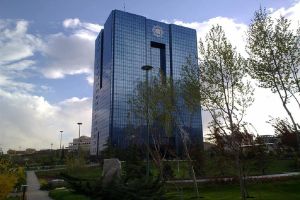
The report comes amid starkly different official data. Iran’s Central Bank recently announced growth of more than 3% in 2024, comparing Iran favorably to the US and eurozone, while the IMF in May projected growth of just 0.3% this year with inflation topping 43%.
Independent analysts say power shortages, a plunging rial and tighter US sanctions have pushed the economy toward stagnation.
Shaghaghi warned that unless Iran activates its “engines of growth,” negative GDP growth could emerge as early as 2026. “It is better to set realistic goals in line with our economic conditions and avoid rhetorical targets,” he said.
The government has prepared plans for special conditions and a governance framework for such circumstances, Mohammadreza Aref, First Vice President of Iran said on Monday.
“We are not volunteers for war or the return of sanctions, and economic forecasts have been made in case the snapback mechanism is implemented,” Aref said.
“The government is ready to confront any tyrannical behavior and the smallest hostile move will be met with a decisive response by the Islamic Republic.”
“The nation and our governments performed well against the West’s unjust sanctions,” he added.
71 members of parliament sent a letter to the Supreme National Security Council and the heads of the three branches of power, urging a “review of the Islamic Republic’s defense doctrine,” Iranian media reported Monday.
The lawmakers wrote that the use of nuclear weapons “was the subject of the Supreme Leader’s 2010 fatwa,” but argued that building and stockpiling them “as deterrence is another matter.”


Dozens of Iranian lawmakers have called for a fundamental shift in the country’s defense policy, urging authorities to consider building a nuclear weapon as a deterrent, Iranian media reported on Monday.
Seventy-one members of parliament signed a letter to Iran’s Supreme National Security Council and the heads of the executive, legislative, and judicial branches, demanding a “review of the Islamic Republic’s defense doctrine,” according to the daily Hamshahri Online.
In their letter, the lawmakers wrote, “We respectfully request that, since the decisions of that council acquire validity with the endorsement of the Leader of the Revolution, this matter be raised without delay and the expert findings communicated to the parliament.”
The lawmakers argued that while the use of nuclear weapons would contradict a 2010 religious edict by Supreme Leader Ali Khamenei prohibiting them, developing and maintaining such weapons “as a deterrent is another matter,” the outlet said.
“In Shia jurisprudence, a change in circumstances and conditions can alter the ruling. Moreover, safeguarding Islam -- which today is bound to the preservation of the Islamic Republic -- is among the paramount obligations. On this basis, the original prohibition can, as a secondary ruling, be transformed into a permissibility.”
The initiative was led by Hassan-Ali Akhlaghi Amiri, a lawmaker from the holy city of Mashhad, Hamshahri reported.


Iran has long insisted that its nuclear program is for peaceful purposes only and cites Khamenei’s fatwa against nuclear weapons as proof of its intentions. The United States and its European allies accuse Tehran of seeking the capability to produce nuclear arms, a charge Iran denies.
The calls from lawmakers come as Iran faces the prospect of renewed United Nations sanctions under a “snapback” mechanism set to take effect on September 28, after European powers accused Tehran of failing to honor the 2015 nuclear deal.
Iran is not known to have made any decision to pursue nuclear weapons, and the government has not commented on the lawmakers’ letter.