• العربية
  • فارسی
Brand
  • Iran Insight
  • Politics
  • Economy
  • Analysis
  • Special Report
  • Opinion
  • Podcast
  • Iran Insight
  • Politics
  • Economy
  • Analysis
  • Special Report
  • Opinion
  • Podcast
  • Theme
  • Language
    • العربية
    • فارسی
  • Iran Insight
  • Politics
  • Economy
  • Analysis
  • Special Report
  • Opinion
  • Podcast
All rights reserved for Volant Media UK Limited
volant media logo

Questionable growth: How Iran’s government skews economic data

Dalga Khatinoglu
Dalga Khatinoglu

Oil, gas and Iran economic analyst

Mar 16, 2025, 07:39 GMT+0Updated: 08:50 GMT+0
The Central Bank of Iran

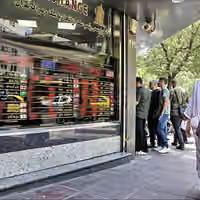
Amid the worsening economic crisis and deteriorating living conditions, the economic institutions of the Islamic Republic are attempting to present a picture of economic growth.

Mohammad Reza Farzin, the governor of Iran’s Central Bank, unveiled the institution’s new report at a press conference on March 13, presenting various charts to journalists and describing the country’s economic situation as undergoing "acceptable progress."

He even displayed a chart comparing Iran’s economic growth with countries such as the United States, Saudi Arabia, and the Eurozone, based on estimates from the International Monetary Fund (IMF). He tried to persuade the public that Iran's economic growth surpasses these countries, and only India and China show higher growth rates than Iran.

In fact, prices for essential goods have increased by an average of 100% since Iran’s currency began a steep dive in September 2024, and a severe energy shortage shut down many industries.

The surprising issue is that IMF’s estimates about Iran’s economic growth is based on the statistics provided by Iran’s Central Bank to this international entity. Given the opaque and securitized nature of the Islamic Republic’s economy, no international institution has an independent estimate of Iran’s GDP growth.

The another issue is that different institutions of the Islamic Republic even provide contradictory estimates of economic growth, which also starkly contradict other economic indicators.

For example, while Iran’s Statistics Center has reported the country’s GDP growth in the first nine months of the current fiscal year (starting March 21, 2024) at 3.1%, the Central Bank has put this figure at 3.7%.

Contradictions with other indicators

The economic growth rates reported by Iran’s Central Bank and Statistics Center are based on constant 2021 prices. However, their figures conflict with other key economic indicators.

For instance, the Statistics Center claims that the agricultural sector grew by 3.3% from March to December 2024. Yet, its own labor market data shows a steady decline in agricultural employment since 2021, with the sector's share of national employment dropping from 15.4% to 13.7%.

Customs data further challenges these growth claims, showing that Iran’s agricultural imports surged from $11.5 billion to nearly $18 billion over the same period. Meanwhile, agricultural exports, which account for only a third of that amount, have remained largely stagnant. Despite these indicators, the Central Bank reports an even higher agricultural growth rate of 3.7% for the first nine months of the fiscal year.

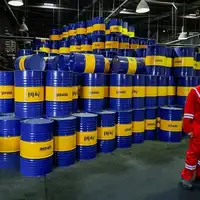
The natural gas sector presents another discrepancy. While official data from Iran’s Oil Ministry and the International Energy Agency (based on 2024 statistics) indicate that Iran’s gas production growth has remained below 2%, the Statistics Center reports a significantly higher 5.7% growth rate.

Similarly, the industrial sector data raises concerns. Industry insiders report that widespread electricity shortages in the summer and combined electricity and gas shortages in the autumn led to the shutdown of 30% to 40% of industrial capacity for months. Yet, the Central Bank claims that industrial output still managed to grow by 1% in the summer and 3.4% in the autumn.

Further complicating the picture, a previous Central Bank report submitted to the Iranian Parliament’s Research Center estimated industrial growth at 1.7% for the summer and 2.9% for the autumn—figures that contradict its latest claims.

Discrepancies in inflation data

These contradictions are not limited to economic growth estimates. Even inflation statistics from the Central Bank and the Statistics Center differ significantly. While the Central Bank has reported Iran’s 2024 inflation rate at 45%, the Statistics Center has placed this figure at 35%.

Even more surprisingly, the International Monetary Fund, relying on data from Iran’s Central Bank, has reported Iran's 2024 inflation rate below 30%.

The exact real inflation rate in the country remains unclear. However, recent domestic media reports, indicate a sharp doubling of prices for food items, medicines, and other essentials. Meanwhile, official entities estimate much lower figures for these items.

Most Viewed

Ideology may be fading in Iran, but not in Kashmir's ‘Mini Iran'
1
INSIGHT

Ideology may be fading in Iran, but not in Kashmir's ‘Mini Iran'

2
INSIGHT

Hardliners push Hormuz ‘red line’ as US blockade tests Iran’s leverage

3
VOICES FROM IRAN

Hope and anger in Iran as fragile ceasefire persists

4

US sanctions oil network tied to Iranian tycoon Shamkhani

5

Iran International says it won’t be silenced after London arson attack

Banner
Banner

Spotlight

  • Hardliners push Hormuz ‘red line’ as US blockade tests Iran’s leverage
    INSIGHT

    Hardliners push Hormuz ‘red line’ as US blockade tests Iran’s leverage

  • Ideology may be fading in Iran, but not in Kashmir's ‘Mini Iran'
    INSIGHT

    Ideology may be fading in Iran, but not in Kashmir's ‘Mini Iran'

  • War damage amounts to $3,000 per Iranian, with blockade set to add to losses
    INSIGHT

    War damage amounts to $3,000 per Iranian, with blockade set to add to losses

  • Why the $100 billion Hormuz toll revenue is a myth
    ANALYSIS

    Why the $100 billion Hormuz toll revenue is a myth

  • US blockade targets Iran oil boom amid regional disruption
    ANALYSIS

    US blockade targets Iran oil boom amid regional disruption

  • Iran's digital economy battered by prolonged blackout
    INSIGHT

    Iran's digital economy battered by prolonged blackout

•
•
•

More Stories

Trump authorizes dozens of airstrikes on Yemen in warning signal to Iran

Mar 15, 2025, 18:41 GMT+0

US President Donald Trump on Saturday ordered large-scale military strikes against dozens of targets in Yemen controlled by Tehran-backed Houthi militants, warning Iran about the consequences of its continued support for the rebels.

"Today, I have ordered the United States Military to launch decisive and powerful Military action against the Houthi terrorists in Yemen," Trump said in a post on his Truth Social account.

He urged the Houthis' sponsors in Iran to "immediately stop their support."

"Do NOT threaten the American People, their President... If you do, BEWARE, because America will hold you fully accountable and, we won’t be nice about it!" the US president said in his warning to Iran.

The New York Times cited US officials as saying the Saturday airstrike, the most significant military action of Trump’s second term so far, "was also meant to send a warning signal to Iran."

The airstrikes against Yemen's Houthis may continue for days or even weeks, Reuters reported, citing an American official.

Trump said the Houthis "waged an unrelenting campaign of piracy, violence, and terrorism against American, and other, ships, aircraft, and drones."

"The Houthis have choked off shipping in one of the most important Waterways of the World, grinding vast swaths of global commerce to a halt, and attacking the core principle of Freedom of Navigation upon which International Trade and Commerce depends," he said.

Trump warned the Houthis that their time is up. "Your attacks must stop, starting today. If they don’t, hell will rain down upon you like nothing you have ever seen before!"

Following the Hamas attack on Israel on October 7, 2023, and the beginning of the Gaza war, the Houthis started massive missile and drone strikes against commercial vessels in an effort to pressure for a ceasefire in Gaza. They imposed a blockade in the Red Sea region, significantly disrupting global shipping routes.

Shortly after Trump's inauguration, Iran directed its allied forces across the Middle East including the Houthis to act with restraint, the Telegraph reported, citing a senior Iranian official in Tehran.

“Forces and allies in the region have been instructed to act with caution as [the regime] feels an existential threat with Trump’s return,” the Iranian official said.

However, the Houthis for the first time fired surface-to-air missiles at a US F-16 fighter jet over the Red Sea last month in what officials described as a significant escalation in the Iran-backed group's ongoing conflict with the US military.

They also fired a surface-to-air missile at an American MQ-9 Reaper drone that the US military was flying over Yemen.

The Houthis have earlier shot down several MQ-9 Reaper drones over the past year. Every single one of these drones costs about $32 million, according to a Congressional report.

Iran's IRGC vows devastating response to potential US attack

Mar 15, 2025, 17:40 GMT+0

The Islamic Republic will give the most severe response should the US president carries out his threat to use the military option against Tehran, the chief-commander of Iran's Revolutionary Guard warned on Saturday.

"We stand firmly against any threat, and if a threat is carried out, we will respond in the most severe manner—decisive, crushing, and devastating," IRGC Chief-Commander Hossein Salami said.

Trump has in a letter to Iran’s Supreme Leader Ali Khamenei offered talks toward a deal on its nuclear program and warned that the alternative was a military intervention.

Salami downplayed Trump's offer of talks as superficial, saying, "The enemy deceitfully talks about direct negotiations under the shadow of threats. Enemies are untrustworthy and do not honor any commitments or agreements."

The IRGC commander said it was the United States that tore up the 2015 nuclear deal between Tehran and world powers and "turned to violent and aggressive measures such as pressure, sanctions, and threats."

"The Iranian nation deeply understands its enemy and never pays attention to its superficial words."

Iran unveils national AI platform prototype

Mar 15, 2025, 16:55 GMT+0

Iran has unveiled a prototype of its national artificial intelligence (AI) platform, developed in collaboration with Sharif University of Technology.

The platform, designed to operate on domestic languages and remain functional even with internet disruptions, is slated for full release by March 2026, according to the Vice Presidency for Science, Technology and Knowledge-Based Economy.

"This platform is a living entity and must be constantly updated," said ‌‌Vice-President Hossein Afshin, during the unveiling ceremony.

A scene from the unveiling ceremony of Iran’s national artificial intelligence (AI) platform in Tehran, March 15, 2025
100%
A scene from the unveiling ceremony of Iran’s national artificial intelligence (AI) platform in Tehran, March 15, 2025

He outlined a phased rollout, with initial testing and optimization in 2025, followed by limited access for experts and knowledge-based companies, a public beta release, and the final version in March 2026.

Framing the project as a strategic move in a global "war of chips and algorithms.”

Afshin and other officials present in the ceremony cited the platform's open-source nature and domestic infrastructure as key advantages, which they said will ensure its functionality even under sanctions or internet disruptions.

"If they want to sanction us, Iran has already obtained this technology," Afshin said.

"We are moving forward with the world," said Hamidreza Rabiei, head of the Advanced Information and Communication Technology Research Institute. "We are not taking any API from any foreign platform, and if the internet is cut off, nothing will happen to the platform because we are connected to the national internet."

The project, involving nearly 100 researchers and experts, aims to address Iran's lagging AI development compared to regional peers.

"We do not have a good situation in AI indicators compared to the countries of the region," said Hossein Asadi, director of the Rapid Processing Center and Sharif University's representative in the project. He cited declining research articles and slow growth in AI-focused companies as evidence.

A key partner in Iran's new AI platform, Sharif University is under international sanctions for its involvement in military and ballistic missile projects. The university, which maintains close ties with the Ministry of Defense, the Islamic Revolutionary Guard Corps (IRGC), and the IRGC Air Force, has faced sanctions from the European Union, the United Kingdom, and Japan.

A demo of the AI platform was unveiled during a visit of Iran's Supreme Leader Ali Khamenei to an exhibition called "Pioneers of Progress" in late January.

Hossein Assadi (right) unveils a demo of the AI platform during a visit of Iran's Supreme Leader Ali Khamenei and Vice-President Hossein Afshin (left) to an exhibition in January 2025.
100%
Hossein Assadi (right) unveils a demo of the AI platform during a visit of Iran's Supreme Leader Ali Khamenei and Vice-President Hossein Afshin (left) to an exhibition in January 2025.

According to the creators, the platform's features include a GPU-based processing infrastructure, large language and multi-modal models, intelligent agents, and application layers for various industries.

The country’s first AI platform was unveiled a few months after a European Union report raised concerns about Iran's increasing reliance on AI-driven technologies for surveillance and suppression, highlighting the development of systems aimed at enforcing state control over digital information.

The report, titled "Artificial intelligence (AI) and human rights: Using AI as a weapon of repression and its impact on human rights," detailed how Iran is deploying AI-based tools to enhance its monitoring capabilities.

"Examples include the use of facial recognition technology during protests, the use of AI-driven bots and automated accounts to amplify content favorable to the regime, and the use of AI-based tools to produce content in different languages, in order to reach a global audience,” read the report.

Specifically, the report points to Iran's development of the National Information Network (NIN), a domestically focused internet infrastructure designed to isolate Iranian users from the global web.

The network, the report said, significantly strengthens the government's ability to impose censorship and restrict access to counter-narratives disseminated on foreign websites.

According to the report, Iran's AI development is bolstered by partnerships with Chinese entities, including major companies supplying technology to its police and military. Hardware imports, primarily from the UAE but also from China, Turkey, and India, further support these capabilities.

Iran very close to acquiring nuclear weapons, UN watchdog warns

Mar 15, 2025, 14:56 GMT+0

The Islamic Republic is very close to developing a nuclear weapon, the United Nations' nuclear watchdog warned on Saturday, as the world awaits Tehran's response to Donald Trump's offer of either nuclear talks or the possibility of airstrikes on its atomic sites.

"Iran has an extremely ambitious and extensive nuclear program, under which it is enriching uranium to nearly weapons-grade levels," Rafael Grossi, the director general of the International Atomic Energy Agency (IAEA) said.

Speaking in an interview with Argentine online newspaper Infobae, Grossi said Iran’s nuclear situation is relatively contained right now.

However, he warned, "it remains very close to the nuclear threshold—meaning it could potentially acquire atomic weapons."

US President Donald Trump has sent a letter to Iran’s Supreme Leader Ali Khamenei offering talks toward a deal on its nuclear program, he told Fox Business Network on March 7, but warned that the alternative was a military intervention.

Khamenei on Wednesday said Trump's past withdrawal from a 2015 nuclear deal renders diplomacy with him pointless now and vowed harsh retaliation to any attack by the United States or its allies.

In his Saturday interview with Infobae, Grossi said Tehran has a history of violating its nuclear commitments.

"At times, Iran has failed to meet its international obligations, leading to serious tensions," the UN nuclear watchdog's chief said.

Iran denies seeking a nuclear weapon but the UN's nuclear watchdog last week pointed to a sharp rise in Tehran's stockpile of highly enriched uranium.

The IAEA has argued in the past that there is no credible civilian use for uranium enriched to 60%, which is a short step from weapons-grade 90% enriched fissile material.

Iran's president warns of 'God's wrath' over Tehran's water crisis

Mar 15, 2025, 09:02 GMT+0

Iranian President Masoud Pezeshkian has issued a stark warning about Tehran's critical water shortage and land subsidence, calling it God's wrath and urging immediate, collaborative action from officials and experts.

Speaking at a meeting of the Tehran Province Planning and Development Council on Saturday, Pezeshkian highlighted the severe imbalance between resources and consumption in the capital.

"The imbalance between resources and consumption is God's wrath because we have ruined God's blessing," he said, citing dangerously depleted groundwater reserves and a 36-centimeter land subsidence in Varamin, southeast of Tehran province.

He emphasized the urgency of the situation, contrasting it with international standards. "This statistic is very dangerous, while outside Iran when there are 2-3 centimeters of subsidence, they hold emergency meetings," Pezeshkian said. "The danger is at Tehran's doorstep."

Pezeshkian called for a unified effort to address Tehran's multifaceted challenges, including education, infrastructure, and water management. "The problems of education, road and water development must be solved," he urged.

Iran’s water reserves have fallen to critical levels, accelerating the risk of shortages and forcing officials to consider rationing months before peak summer demand.

Tehran's water supply is critically strained as key dams plummet to record lows, worsening a nationwide drought. Latian and Mamlou dams are at 12% capacity, Lar at 1%, and Karaj at 7%. Nationwide rainfall is 82.9% of normal, and dam inflow is only 42%. Officials urge a 20% reduction in water use, as 19 provinces face water stress.

In a report on the state of stored water behind dams, the Ham-Mihan newspaper wrote last week: "The situation of the country's dams is so critical that water shortages and rationing will occur earlier than summer, and the state of Tehran's water resources has reached a crisis level unprecedented in recent years."

Last Friday, Tehran’s water and wastewater company, Abfa, announced that water consumption had spiked 20 percent, reaching a record 48,000 liters per second. Officials attributed the surge to preparations for the Iranian New Year.

According to Abfa, rainfall since the start of the current water year has been the lowest in 57 years. “Without additional rainfall, current reserves should meet demand for at least the next three months,” it said.