71 members of parliament sent a letter to the Supreme National Security Council and the heads of the three branches of power, urging a “review of the Islamic Republic’s defense doctrine,” Iranian media reported Monday.
The lawmakers wrote that the use of nuclear weapons “was the subject of the Supreme Leader’s 2010 fatwa,” but argued that building and stockpiling them “as deterrence is another matter.”


Dozens of Iranian lawmakers have called for a fundamental shift in the country’s defense policy, urging authorities to consider building a nuclear weapon as a deterrent, Iranian media reported on Monday.
Seventy-one members of parliament signed a letter to Iran’s Supreme National Security Council and the heads of the executive, legislative, and judicial branches, demanding a “review of the Islamic Republic’s defense doctrine,” according to the daily Hamshahri Online.
In their letter, the lawmakers wrote, “We respectfully request that, since the decisions of that council acquire validity with the endorsement of the Leader of the Revolution, this matter be raised without delay and the expert findings communicated to the parliament.”
The lawmakers argued that while the use of nuclear weapons would contradict a 2010 religious edict by Supreme Leader Ali Khamenei prohibiting them, developing and maintaining such weapons “as a deterrent is another matter,” the outlet said.
“In Shia jurisprudence, a change in circumstances and conditions can alter the ruling. Moreover, safeguarding Islam -- which today is bound to the preservation of the Islamic Republic -- is among the paramount obligations. On this basis, the original prohibition can, as a secondary ruling, be transformed into a permissibility.”
The initiative was led by Hassan-Ali Akhlaghi Amiri, a lawmaker from the holy city of Mashhad, Hamshahri reported.


Iran has long insisted that its nuclear program is for peaceful purposes only and cites Khamenei’s fatwa against nuclear weapons as proof of its intentions. The United States and its European allies accuse Tehran of seeking the capability to produce nuclear arms, a charge Iran denies.
The calls from lawmakers come as Iran faces the prospect of renewed United Nations sanctions under a “snapback” mechanism set to take effect on September 28, after European powers accused Tehran of failing to honor the 2015 nuclear deal.
Iran is not known to have made any decision to pursue nuclear weapons, and the government has not commented on the lawmakers’ letter.
Nearly 90 percent of people after the 12-day war want the construction of an atomic bomb, said a state TV program on Monday.
The remarks were made during a conversation between a host and Mostafa Khoshcheshm, a government-affiliated strategic affairs analyst.
In recent days, following the start of the snapback mechanism, a number of parliament members have called for building nuclear weapons.
Iran should expel the ambassadors of Germany, Britain and France in response to the activation of the snapback mechanism, Hossein Kanani-Moghaddam, secretary-general of Iran’s Green Party, said on Monday.
“Iran must downgrade its relations with these countries to the lowest possible level, and they must pay the cost of their actions,” Kanani-Moghaddam added.
Iran will not allow Western states to inspect its ships after the return of UN Security Council sanctions, a lawmaker said Tuesday.
“We will not permit our ships to be inspected,” said Salar Velayatmadar, a member of the parliament’s National Security Committee.
Tehran has measures to prevent such restrictions and can continue exports and arms shipments in various ways because destination countries need its weapons, Velayatmadar said.
Only financial transfers from arms sales “might face some trouble,” and both partner states and Iran have arrangements to resolve that problem, Velayatmadar added.

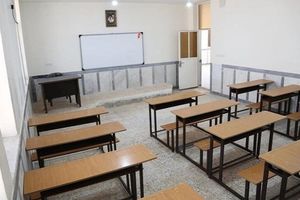
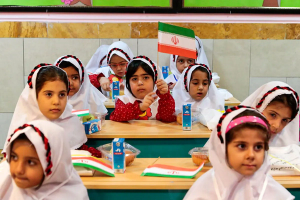
Mounting education costs in Iran are forcing growing numbers of children from low-income families out of school and into the workforce, a labor activist warned, as families say even public schools are demanding fees despite constitutional guarantees of free education.
“Turning education into a commodity has deprived many working-class children of their right to study,” labor activist Maziar Gilaninejad told labor news outlet ILNA.
He cited official figures and media reports showing steep increases in school-related expenses, including a 30% rise in stationery prices, costs of about 3.5 million rials (about $35) for basic supplies for one elementary student, and reports of 750,000 children leaving school due to poverty.
He added that the result is “a direct link” between rising dropouts and the growth in child labor, with many minors pushed into hazardous workshops to support their families.
“The reality is families need their children’s wages as much as they cannot afford school fees,” he said.


Parents have echoed the concerns. Earlier this month, Iran International reported that families are often asked to pay “voluntary” enrollment fees or provide unpaid labor, such as cleaning classrooms, to secure places for their children. In some cases, schools have withheld report cards until payments were made.
University tuition has also surged, with students reporting fees doubling at some institutions in recent semesters.
“Education is becoming an exclusive path for the wealthy,” Gilaninejad said, citing data that the top 3,000 scorers in this year’s university entrance exam came almost entirely from affluent families.
Article 30 of Iran’s constitution guarantees free education, but Iran spends just 2.93% of GDP on education, well below the global average of 4.4%, according to the Global Economy data service.
Gilaninejad said neglecting this obligation risks producing “a generation systematically sidelined from opportunity” and perpetuating cycles of poverty.