he European Union and the United Kingdom on Monday expressed deep concern over Iran’s expanding nuclear program and its destabilizing activities both in the Middle East and on European soil, according to a joint statement released after high-level talks.
“We continue to be deeply concerned by the dangerous expansion of Iran’s nuclear program, alongside its behavior in the region and on European soil,” the statement read.

Iran’s top military commander has announced a sharp increase in the country’s air defense capabilities, including a fivefold boost in detection and tracking systems.
“The country’s air defense readiness—especially in detection, identification, and elimination of aerial threats—has advanced significantly compared to last year,” Major General Mohammad Bagheri, the chief of staff of Iran’s armed forces, was quoted as saying on Monday by IRGC-Tasnim News Agency.
Bagheri said radar and surveillance systems monitoring foreign movements have increased fivefold, while systems for intercepting and destroying enemy aircraft have improved by two to three times.
He added that Iran’s command-and-control systems are functioning efficiently and that the country’s airspace is under constant surveillance.
“Our air defense forces control the skies 24/7 and regularly conduct drills to prepare for any possible scenario,” he said.
Bagheri warned Iran’s adversaries that any violation of its airspace would have serious consequences. “Enemies of the Iranian nation should know that any intrusion will result in extensive damage and costs far greater than they expect,” he said.
Last October, Israel carried out a major strike on Iranian targets, destroying large sections of the country’s air defense infrastructure.
The attack followed two massive airstrikes from Tehran against the Jewish state while Israel was also fighting Iran's allies across its borders amid the Gaza war.
Reports in Fox News and the Wall Street Journal said all of Iran’s S-300s were taken out of action.
Israeli Prime Minister Benjamin Netanyahu said at the time: “We severely damaged Iran’s defense systems and its ability to export missiles."
At the time, the Institute For The Study of War said the Israeli military had conducted precision strikes targeting around 20 locations across Iran, including facilities tied to the Iranian drone and missile programs and air defense network.
"Even though the strikes caused relatively little visible destruction, they will likely have significant and long-lasting consequences by disrupting Iran’s ability to produce certain kinds of ballistic missiles for itself and its partners as well as by severely degrading Iran’s ability to defend against future air attacks," the analysis said at the time.

The European Union and the United Kingdom on Monday voiced deep concern over Iran’s expanding nuclear program and its continued imprisonment of foreign nationals, according to a joint statement issued after high-level talks.
“We continue to be deeply concerned by the dangerous expansion of Iran’s nuclear program, alongside its behavior in the region and on European soil,” the statement read.

The EU and UK also condemned what they described as Iran’s use of “hostage diplomacy,” calling for an immediate end to the detention of foreign nationals under politically motivated charges.
"We condemn Iran’s unjust detention of foreign nationals and call on Iran to halt its practice of hostage diplomacy," read the statement.
In January the European Parliament adopted a motion for a resolution condemning Iran’s detention of European Union citizens, labelling the practice as “hostage diplomacy" accusing Iran of using the prisoners for political ends.
Despite mounting tensions, both sides reaffirmed their commitment to securing a negotiated resolution to Iran’s nuclear issue and maintaining regional stability.
The joint statement also expressed support for political progress in Syria and Lebanon, backing efforts toward peace, stability, and reform in both countries.
The remarks come amid stalled nuclear diplomacy and rising concern among Western powers about Iran’s growing stockpile of enriched uranium and regional influence through proxy groups.
A senior Iranian lawmaker said on Monday that nuclear talks would be “meaningless” if Washington’s opposition to any level of uranium enrichment by Iran reflects the US government’s official position.
“If remarks by [US negotiator] Witkoff against enrichment represent the firm stance of the US government, then continuing the negotiations is pointless and futile,” said Ebrahim Rezaei, spokesperson for Iran’s parliamentary National Security and Foreign Policy Committee, on X.
Rezaei added that Iran would not negotiate over its right to enrich uranium on its own soil and would make no concessions on its missile, drone, or defense capabilities, which he called essential to national security.

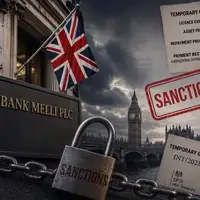
European powers risk losing relevance in nuclear diplomacy with Iran by pushing for the reactivation of UN sanctions through the so-called "snapback" mechanism, Iranian outlet Nour News said on Monday.
In an analysis, Nour News — which is linked to Iran’s Supreme National Security Council — argued that European powers, sidelined in the direct US-Iran talks now mediated by Oman, are attempting to force their way back into the process by threatening to invoke the snapback clause of the 2015 nuclear deal.
The mechanism could reinstate all UN sanctions on Tehran, but Nour News warned that such a move would harm Europe’s own security and undermine diplomatic progress.
“Europe knows that triggering snapback sanctions would be like drawing a double-edged sword,” the outlet wrote. “It may cost them more than it would Iran... Europe's approach is less about pressure and more about reclaiming influence.”
The next round of Iran-US nuclear talks is expected to take place this weekend in Rome, Laurence Norman, a reporter for The Wall Street Journal, reported on X.
This comes as Iran’s foreign ministry spokesman Esmail Baghaei earlier in the day said that no date or location has been finalized for the next round of nuclear negotiations with the United States.
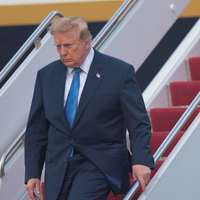
President Donald Trump’s envoy to the Middle East on Sunday said talks with Iran may take place in Europe.