Iran says air defense capabilities have multiplied as country rebuilds

Iran’s top military commander has announced a sharp increase in the country’s air defense capabilities, including a fivefold boost in detection and tracking systems.

Iran’s top military commander has announced a sharp increase in the country’s air defense capabilities, including a fivefold boost in detection and tracking systems.
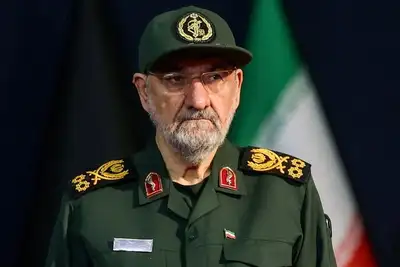
“The country’s air defense readiness—especially in detection, identification, and elimination of aerial threats—has advanced significantly compared to last year,” Major General Mohammad Bagheri, the chief of staff of Iran’s armed forces, was quoted as saying on Monday by IRGC-Tasnim News Agency.
Bagheri said radar and surveillance systems monitoring foreign movements have increased fivefold, while systems for intercepting and destroying enemy aircraft have improved by two to three times.
He added that Iran’s command-and-control systems are functioning efficiently and that the country’s airspace is under constant surveillance.
“Our air defense forces control the skies 24/7 and regularly conduct drills to prepare for any possible scenario,” he said.
Bagheri warned Iran’s adversaries that any violation of its airspace would have serious consequences. “Enemies of the Iranian nation should know that any intrusion will result in extensive damage and costs far greater than they expect,” he said.
Last October, Israel carried out a major strike on Iranian targets, destroying large sections of the country’s air defense infrastructure.
The attack followed two massive airstrikes from Tehran against the Jewish state while Israel was also fighting Iran's allies across its borders amid the Gaza war.
Reports in Fox News and the Wall Street Journal said all of Iran’s S-300s were taken out of action.
Israeli Prime Minister Benjamin Netanyahu said at the time: “We severely damaged Iran’s defense systems and its ability to export missiles."
At the time, the Institute For The Study of War said the Israeli military had conducted precision strikes targeting around 20 locations across Iran, including facilities tied to the Iranian drone and missile programs and air defense network.
"Even though the strikes caused relatively little visible destruction, they will likely have significant and long-lasting consequences by disrupting Iran’s ability to produce certain kinds of ballistic missiles for itself and its partners as well as by severely degrading Iran’s ability to defend against future air attacks," the analysis said at the time.

Iran on Monday criticized the United States for what it called inconsistent and hostile conduct in the ongoing nuclear talks, rejecting Washington’s demand for zero uranium enrichment ahead of a possible new round of negotiations mediated by Oman.
Speaking at a press briefing in Tehran, Iranian Foreign Ministry spokesman Esmail Bagahei said, “The difficulty of negotiating with the US lies in the fact that you are dealing with a party that respects none of the established norms of a diplomatic process.”
“The very act of imposing sanctions while claiming to pursue diplomacy with the Islamic Republic of Iran shows a lack of seriousness and goodwill,” he added, warning that Washington’s shifting positions undermined trust.
“The Americans’ shifting position on enrichment is like a game of snakes and ladders—just as we make progress, the US adopts a different stance,” Bagahei said, referring to recent comments by US nuclear envoy Steve Witkoff that Washington would not accept any level of uranium enrichment in a future agreement.
Bagahei stressed that Iran’s enrichment program was “non-negotiable,” calling it both a legal right under the Non-Proliferation Treaty (NPT) and a national achievement.
“Uranium enrichment is not some kind of fantasy that we can simply suspend or stop. It is a technology and a necessity to ensure the uninterrupted functioning of Iran’s nuclear industry,” he said. “We cannot give it up.”
Iranian Foreign Minister Abbas Araghchi also dismissed Witkoff’s remarks, saying they were “completely at a distance from the reality of the negotiations.”
In a post on X on Sunday, Araghchi wrote: “If the US is interested in ensuring that Iran will not have nuclear weapons, a deal is within reach, and we are ready for a serious conversation to achieve a solution that will forever ensure that outcome. Enrichment in Iran, however, will continue with or without a deal.”
He accused the US of contradictory messaging. “Iran can only control what we Iranians do, and that is to avoid negotiating in public—particularly given the current dissonance we are seeing between what our US interlocutors say in public and in private, and from one week to the other,” Araghchi said.
Next round of talks expected soon
Elsewhere in his press conference, Baghaei said the date and location for the next round of indirect US-Iran nuclear talks have not been set. Araghchi, however, said on Sunday that the date is set and will soon be announced by Oman, which is mediating.
Baghaei denied reports of parallel negotiations between other Iranian and US officials, specifically between Ali Shamkhani – Iran's former top security official and currently an advisor to the Supreme Leader -- and US Secretary of State Marco Rubio.
“There are no parallel negotiations. The only negotiation process that exists is this indirect one, led by the Iranian foreign minister and the US president’s special envoy,” Bagahei said.
The US and Iran have held four previous rounds of talks in Muscat and Rome. Witkoff said on Sunday that the next round could take place in Europe later this week.
President Donald Trump said Thursday the US was “very close” to a deal but issued a warning on Friday. “They have a proposal. More importantly, they know they have to move quickly or something bad—something bad’s going to happen,” he told reporters aboard Air Force One.
Baghaei said on Monday, “We have not received any written proposal from the United States, and their verbal offers constantly shift,” echoing remarks made by Foreign Minister Abbas Araghchi the previous day.
Iran to respond if E3 triggers snapback
Iran’s foreign ministry spokesman also warned on Monday that Tehran will respond to any hostile action, including a possible move by European countries to trigger the snapback mechanism—a process that would automatically reimpose UN sanctions on Iran under the 2015 nuclear deal.
“We will not leave any hostile action without a response,” Baghaei said. “There is no legal basis for activating the snapback mechanism, and the insistence of some European countries on doing so is baseless.”
“If the Europeans use the snapback mechanism, we will definitely take measures in response,” he added.

Iran’s foreign ministry has criticized the Arab League’s support for the United Arab Emirates’ claim to three Iranian islands in the Persian Gulf, calling the position a breach of international law.
“The three islands of Greater Tunb, Lesser Tunb, and Abu Musa are an inseparable part of the territory of Iran,” foreign ministry spokesman Esmail Baghaei said in a statement on Monday.
“The Islamic Republic of Iran considers any claim in this regard to be contrary to the fundamental principles of the United Nations Charter and international law—namely, respect for the territorial integrity and national sovereignty of countries, as well as the principle of good neighbourliness.”
His remarks came in response to the Baghdad Declaration issued at the conclusion of the 34th Arab League Summit, a gathering of Arab heads of state held Saturday in Iraq’s capital.
The statement repeated the Arab League's support, first announced last year, for the UAE’s sovereignty over the three islands administered by Iran since 1971.
The three Persian Gulf islands have historically been part of Iran, as supported by historical and geographical documents.
However, the United Arab Emirates has repeatedly laid claim to the territory, describing the situation as “the continued occupation by the Islamic Republic of Iran", and an issue which has now become a sticking point in the relationship between the two countries.
The Arab League called on Iran to resolve the dispute either through direct negotiations or by referring the matter to the International Court of Justice.
Baghaei said raising the issue in the final communiqué of the Arab League summit was unacceptable and urged the organisation to “refrain from addressing baseless claims.”

Iran and the United States remain at odds over uranium enrichment as the two sides prepare for a possible new round of nuclear negotiations, with Washington demanding a complete halt and Tehran insisting enrichment will continue under any circumstances.
President Donald Trump’s envoy to the Middle East on Sunday said Washington will not accept any level of uranium enrichment in a potential agreement with Tehran.
“We cannot allow even one percent of an enrichment capability,” he told ABC News.
“Everything begins from our standpoint with a deal that does not include enrichment.”
Iranian Foreign Minister Abbas Araghchi swiftly rejected Witkoff’s remarks, calling them unrealistic and disconnected from the state of negotiations. “I think he is completely at a distance from the reality of the negotiations,” Araghchi told IRGC-affiliated Tasnim News Agency.
In a post on X, Araghchi stressed that uranium enrichment in Iran will not be halted under any scenario.
“If the US is interested in ensuring that Iran will not have nuclear weapons, a deal is within reach, and we are ready for a serious conversation to achieve a solution that will forever ensure that outcome,” Araghchi posted on X. “Enrichment in Iran, however, will continue with or without a deal.”
He also accused the United States of inconsistency in its messaging. “Iran can only control what we Iranians do, and that is to avoid negotiating in public—particularly given the current dissonance we are seeing between what our US interlocutors say in public and in private, and from one week to the other."
Next round of US-Iran talks
Araghchi on Sunday said that a date for the next round of talks has been set and will be announced soon by Oman, which is acting as a mediator, but denied that Tehran had received any formal written proposal from the US.
Witkoff, for his part, said the US had already conveyed its position at the highest level. “(Trump) has directly sent letters to the supreme leader. I have been dispatched to deliver that message as well, and I've delivered it,” he said.
Witkoff said that the next round of negotiations may take place in Europe in the coming days.
“We think that we will be meeting sometime this week in Europe. And we hope that it will lead to some real positivity,” he said.
Iran and the United States have already held four rounds of talks in Muscat and Rome.
Trump said Thursday that the US was “very close” to securing a deal with Iran but warned on Friday that Tehran must act quickly. “They have a proposal. More importantly, they know they have to move quickly or something bad—something bad’s going to happen,” he told reporters aboard Air Force One.

Iran's nuclear talks with Britain, France and Germany in Istanbul turned tense on Friday, as the European envoys pushed for expanded enforcement authority under a potential US-Iran deal to restore UN sanctions on Tehran, the Iranian daily Farhikhtegan reported.
The Istanbul meeting, held at Iran’s consulate and attended by political directors from the UK, France, and Germany, saw the Europeans propose language that would give them standing power to reimpose UN sanctions, irrespective of US participation in any agreement.
According to the report published on Sunday, the European side demanded the right to activate sanctions unilaterally under a "snapback-plus" cause in any deal reached between Iran and the US.
The Iranian delegation firmly rejected the proposal, Farhikhtegan wrote, warning that any such move could provoke Tehran to reconsider its membership in the Non-Proliferation Treaty (NPT).
One unnamed Iranian official was quoted as saying: “Iran has no objection to Europe’s presence in negotiations, but this cannot mean granting them enforcement privileges that exceed the original terms.”
Iran's Foreign Minister Abbas Araghchi was asked on Sunday if the Istanbul talks signaled a renewed European willingness to engage. He replied, "The issue is that the Europeans have always had such a will, but their capabilities are limited."
"At the moment, the Europeans are not involved in our talks with the Americans, which is not something we welcome. It seems they haven't reached an internal consensus on this issue," he told IRNA on the sidelines of the Tehran Dialogue Forum.
"We will continue our talks with Europe and believe that the more mutual understanding exists between us, the better. We want Europe to play its role, though they themselves have diminished that role."
Snapback mechanism
The Farhikhtegan report said that European envoys threatened to trigger the so-called snapback mechanism and raised the prospect of broader sanctions should their demands be sidelined—remarks that further escalated tensions during the Istanbul meeting.
Iran's Deputy Foreign Minister Majid Takht-Ravanchi confirmed on Sunday that the snapback issue was raised in recent discussions with the Europeans.
“The Europeans are aware of our position on this matter,” he said. “If any misuse occurs in this regard, we will not remain passive and will take measures within the framework of the NPT.”
The snapback mechanism is a provision within the 2015 Iran nuclear deal (JCPOA) that allows for the reimposition of UN sanctions on Iran if it is found to be in “significant non-performance” of its commitments. This process is outlined in UN Security Council Resolution 2231, which endorsed the JCPOA.
Under the mechanism, any JCPOA participant—France, Britain, Germany, Russia, China, and arguably the US—can file a complaint to the UN Security Council. If the Council does not pass a resolution to continue sanctions relief within 30 days, all previously lifted UN sanctions are automatically reinstated.
Crucially, this reimposition cannot be blocked by a veto from any permanent member of the Security Council. Although the US withdrew from the JCPOA in 2018, it could still influence other participants to trigger snapback.

Iran’s Revolutionary Guards and Azerbaijani special forces began a joint military exercise in Nagorno-Karabakh on Sunday in a rare display of bilateral military cooperation in the South Caucasus region.
The Aras or Araz-2025 drill, named after the border river Aras, is being held in areas reclaimed from Armenia by Azerbaijan during its 2020 military operation and will continue through May 21, according to officials from both countries.
Iran’s delegation, including senior commanders from the Islamic Revolutionary Guard Corps (IRGC) Ground Forces, crossed into Azerbaijan via the Bileh Savar border in Iran’s Ardabil province.
Brigadier General Vali Madani, IRGC’s deputy ground forces operations commander and the joint drill’s lead officer, said the exercise aims to bolster border security and enhance coordination in response to potential regional threats.
The drill comes amid ongoing peace efforts between Azerbaijan and Armenia following decades of conflict over Nagorno-Karabakh. Iran, which shares borders with both countries, has voiced support for a permanent peace agreement.
Iranian officials say such cooperation contributes to regional stability. "This exercise is a significant step toward strengthening mutual trust and security along shared borders," Madani said.
A previous joint exercise between Iranian and Azerbaijani special forces took place in December 2023 in Iran’s Ardabil province.
Tehran has expressed support for the peace deal framework agreed in March between Armenia and Azerbaijan, which includes Armenia’s recognition of Azerbaijani sovereignty over Karabakh.
Iran has also positioned itself as a mediator and supporter of post-conflict reconstruction and regional development.
However, the relationship between the two sides has undergone friction in recent years, including Tehran's anger at Baku's opening an embassy in Tel Aviv two years ago, and more recently, regarding the two nations' growing economic and military ties.
Earlier this year, Kamal Kharrazi, chairman of Iran’s Strategic Council on Foreign Relations and a top adviser to Supreme Leader Ali Khamenei, warned Azerbaijan about its growing ties with Israel.
“Countries should take their neighbors’ sensitivities into consideration,” Kharrazi told Hikmet Hajiyev, assistant to the president of Azerbaijan for foreign policy affairs, in a January meeting in Tehran.
Only in December, Azerbaijani President Ilham Aliyev had condemned comments by Hassan Ameli, the Friday Prayer leader of Ardabil, who accused Baku of collaborating with Israel.