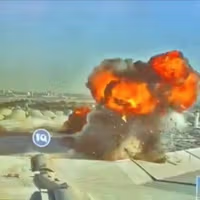
Why did the Houthis suddenly agree to a ceasefire—and what does it reveal about Iran’s influence?
In this Eye for Iran segment, expert Fatima Abo Alasrar argues the surprise pause wasn't about peace—it was a power play by Tehran to show Trump it controls the region’s escalation switch.
Iranian daily Farhikhtegan reported Saturday that Foreign Minister Seyed Abbas Araghchi’s trip to Riyadh includes delivering a response to a letter from Saudi King Salman, citing informed sources.
“One of the key points of Araghchi’s visit to Saudi Arabia is delivering a reply to the letter sent by King Salman,” the paper wrote.
In April, Saudi Defence Minister Prince Khalid bin Salman visited Tehran and delivered a letter to Supreme Leader Ali Khamenei from Saudi King Salman bin Abdulaziz, according to Iranian state media.
Iran’s ultra-hardline Kayhan newspaper, managed by a representative of Supreme Leader Ali Khamenei, warned Saturday that Tehran should not be deceived by US President Donald Trump’s apparent diplomatic overtures, including his calls for negotiations or signs of retreat.
“Trump is not a temporary phenomenon but a mindset rooted in narcissism, delusions of superiority, and threat-based tactics,” Kayhan wrote in an editorial. “He seeks to keep the world in a constant state of fear and uncertainty.”
The editorial argued that Trump’s behavior—friendly or hostile—should be seen as tactical rather than sincere. “Do not be fooled by smiles, talk of negotiation, or gestures of retreat,” the paper said. “Both Trump’s friendship and enmity are tools of deception, not indicators of real boundaries.”
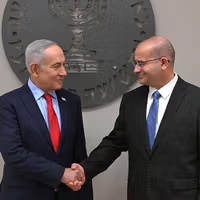
Kayhan also dismissed reports of a rift between Trump and Israeli Prime Minister Benjamin Netanyahu over Iran, calling such narratives a “deception operation” meant to justify continued talks. “Trump’s posture is dangerous, but it reflects deeper US power structures—not just personal choices,” the paper added.
Former Iranian lawmaker Heshmatollah Falahatpisheh said US President Donald Trump is steering nuclear talks with Iran away from Israeli involvement, pursuing what he called a “fully American” framework, Iranian news agency ILNA reported Saturday.
“In the past, Obama and even Biden kept Israel informed during talks. Now, Trump is pursuing a mechanism that is entirely American,” said Heshmatollah Falahatpisheh, former chair of Iran’s parliamentary national security committee.
He said Trump’s focus appears to be economic, not military. “His priority is new investments and mutual ties, from his private businesses to US national interests,” Falahatpisheh added.
The Trump administration enters a new round of nuclear talks with Iran in Oman without a clear position on key demands, as internal divisions persist, The Wall Street Journal reported Friday.
While President Trump has described the negotiations as “going well,” officials told the Journal that the US approach has been “mixed” and marked by “significant internal debate.”
Special envoy Steve Witkoff has held three rounds of indirect talks with Iranian counterparts and is expected to meet again this weekend. He has proposed lifting sanctions and taking military action off the table if Iran agrees to dismantle its nuclear program and purchase enriched uranium from the US.
However, “there’s no firm US position on what dismantlement looks like,” one official said. Trump, who previously called for “total dismantlement,” said Wednesday, “We haven’t made that decision yet.”
So far, Iran has sought to keep its centrifuges and shown no sign of dismantling any of its nuclear work, the Journal reported.
Iran's former defense minister and former national security chief Ali Shamkhani
Nearly two years after stepping down as the Secretary of Iran’s Supreme National Security Council (SNSC), Ali Shamkhani appears determined to maintain influence over Tehran’s evolving nuclear diplomacy.
The showy kingpin's sensitive interventions into the negotiations, through social media statements in his own name and high stakes leaks by his multi-lingual media outlet, signal he is determined to remain at the heart of diplomacy.
Though no longer officially at the helm of Iran's top security apparatus, Shamkhani retains considerable sway as a political adviser to Supreme Leader Ayatollah Ali Khamenei and a member of the Expediency Discernment Council.
His tenure as security chief ended in May 2023, but Nour News - the multilingual media outlet he founded in 2020 - ensured his public profile would continue to loom large.
Shamkhani and Tehran-Washington talks
Shamkhani’s comments are frequently picked up by Iranian and foreign media outlets, turning his posts into unofficial barometers of Tehran’s policy direction.
A prolific user of the social media platform X, Shamkhani regularly posts in a range of languages—Persian, English, Hebrew, Russian, and Chinese—indicating his wish to be recognized by international audience as an insider with close knowledge of the talks.
Ahead of the first round of indirect Tehran-Washington negotiations in Muscat last month, Shamkhani made headlines by declaring that Iran’s Foreign Minister Abbas Araghchi would attend the talks “with full authority.”
The phrasing, widely interpreted as confirmation that Araghchi was carrying a full mandate from Supreme Leader Khamenei himself, was seen as a rare public affirmation of Iran’s seriousness about reaching an agreement.
More recently, Shamkhani said that both the US intelligence community and the International Atomic Energy Agency (IAEA) had come to accept that Iran does not possess nuclear weapons.
“Both are determined to continue on the right path of talks,” he wrote in several languages, adding, “Sanction removal and recognition of Iran’s right to industrial enrichment can guarantee a deal.”
The tone of Shamkhani’s post suggested a softening of stance and marked a contrast between his earlier, more hardline tone and this new language suggesting diplomatic flexibility.
Shamkhani was among the officials who strongly supported a law that the Parliament passed in December 2020 against the wishes of then-president Hassan Rouhani--- named the Strategic Action Plan to Lift Sanctions and Protect the Nation's Interests.
The legislation required Iran’s Atomic Energy Organization to enrich uranium to 20 percent purity—well above the 3.67 percent limit set by the 2015 Joint Comprehensive Plan of Action (JCPOA)—and to install advanced centrifuges.
Nour News
Much of Shamkhani’s media influence flows through Nour News, a news outlet linked closely to his political network. Launched in Persian in early 2020 and later expanded into English, Arabic and Hebrew, Nour News plays an outsized role in shaping news on Iran’s nuclear talks.
The site frequently publishes exclusive reports on nuclear talks and other matters, often citing anonymous “informed sources.” These reports are widely shared by both domestic and international media, reinforcing the outlet’s reputation as a semi-official voice.
But the interventions have been less welcome at home.
Nour News cited an anonymous source saying the fourth round of talks would focus on “humanitarian and security concerns," without elaborating, suggesting discussions had expanded beyond the nuclear dossier—a detail never disclosed by negotiators.
“Agencies and esteemed officials who receive classified reports must protect them. Leaking information to favored outlets undermines national interests,” retorted Mohammad Hossein Ranjbaran, an adviser to Iran’s foreign minister Abbas Araghchi.
“There’s a difference between building media credibility and childish competition for scoops."
Skeletons in the closet
Shamkhani’s interventions could be aimed at repairing his stature after espionage and corruption controversies dented his reputation.
His departure from the SNSC in May 2023 came amid the fallout from one of the most sensitive espionage cases in the Islamic Republic’s recent history.
Akbari had long been known as a close associate and adviser to Shamkhani, raising questions about internal security breaches at the highest levels of the Iranian state.
Though authorities never directly linked Shamkhani to Akbari’s alleged espionage, the execution cast a pall over his continued leadership of the SNSC.
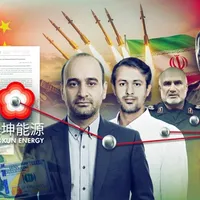
Shamkhani has also faced persistent allegations of corruption, particularly concerning his family's business dealings. These ventures have been linked to circumventing US sanctions by facilitating oil exports through so-called ghost fleets.