Iran’s state TV calls second round of talks with US 'constructive'
Iran’s state TV said the second round of talks with the United States was constructive.
Iran’s state TV said the second round of talks with the United States was constructive.
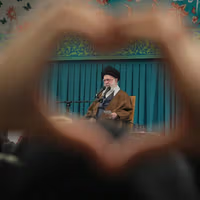
As nuclear negotiations between Iran and the United States entered their second round in Rome on Saturday, Iran's top officials convened in Tehran for a joint meeting, bringing together the heads of the executive, legislative, and judicial branches, according to state media.

The meeting was attended by President Masoud Pezeshkian, parliament speaker Mohammad Bagher Ghalibaf, and judiciary chief Gholamhossein Mohseni Ejei.
Rome’s selection as a venue for nuclear negotiations between Iran and the United States signals a bid by Italy to position itself as a diplomatic bridge in international crises, Italian Defense Minister Guido Crosetto said Saturday.
“It recognizes a role that Italy has built up—anchored to historic alliances but open to dialogue with all,” Crosetto said during a visit in Taranto.
He added that Italy can serve as a venue “to build peace, to build security, to help create the conditions—even in parts of the world that feel closer than we realize—for ending conflict, ending war, and, in some way, ending terrorism.”