Iranian state media identifies one casualty in Israeli strikes
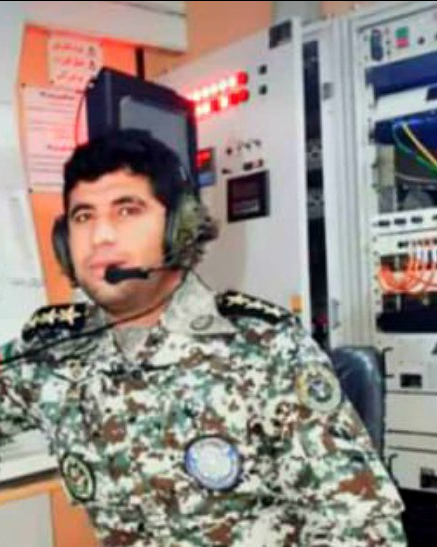
Several Iranian domestic media outlets report that Hamzeh Jahandiddeh, a member of Iran’s armed forces, was among those killed in Mahshahr during the overnight Israeli strikes.
Several Iranian domestic media outlets report that Hamzeh Jahandiddeh, a member of Iran’s armed forces, was among those killed in Mahshahr during the overnight Israeli strikes.






"It is essential that the public remains calm," government spokesperson Fatemeh Mohajerani said following Israeli overnight attacks on military sites in Iran.
"As the official statements from the national air defense indicate, only limited damage has been incurred," she continued.
"The country is currently in a normal state, and even flights have resumed regular operations as of 9 a.m.," Mohajerani added.
British Prime Minister Keir Starmer urged Iran to refrain from retaliating to the overnight Israeli strikes, calling for restraint from all sides.
"I am clear that Israel has the right to defend itself against Iranian aggression. I'm equally clear that we need to avoid further regional escalation and urge all sides to show restraint. Iran should not respond," Starmer said on Saturday.
Israel views Iran as an existential threat post Oct 7 and has the will and desire for a long war with the Islamic Republic, one that could have devastating consequences for civilians on both sides, a military expert told Iran International.
Speaking on the Eye for Iran podcast, Afshon Ostovar, an associate professor of national security affairs at the Naval Postgraduate School and author of Wars of Ambition, said Iran pushed Israel to feel an existential threat. The interview was recorded before Israel's October 26 attack on Iran's missile sites.
"Israel sees this war post October 7th as an existential conflict. If you take Iran's leaders at their word, then this is exactly what they wanted," said Ostovar.
Ostovar emphasized that the Iranian government and IRGC must now confront the reality of provoking Israel, especially after Oct 7.
That perception of Iran by Israel will likely shape how the war is carried out, and it’s not going to be a one-time strike, but likely a long conflict carried out in stages.
Iran International first broke the story of a senior Israeli insider who gave a hint that Israel’s strike on Iran would signal ‘start of long war’.
“This attack is just the beginning of a long war between Israel and Iran,” said Brigadier General (res.) Amir Avivi. “There will be a big attack, but one of many."
Avivi, a close friend and Caesarea neighbor of Prime Minister Benjamin Netanyahu, is regularly consulted by key government ministers.
He had warned that Israel’s endgame was to prevent Iran from becoming a nuclear power.
Ostovar said that as the war drags on, the risk of targeting nuclear facilities increases, potentially leading to radiation fallout. That could have long-term impacts for civilians.
"When you attack nuclear facilities, there's spillage, radiation escapes. You have a huge humanitarian crisis potentially on hand."
For decades Iran and Israel have engaged in a shadow war through proxies, sophisticated cyber-attacks, covert operations and exchanging threating war of words. Since its inception in 1979, the Islamic Republic of Iran has said it would ‘wipe Israel off the wipe’. That is now seemingly starting to become a reality and if you take Iranian leaders by their word, then this is what they wanted and now they must face the consequences, said Ostovar.
Israel has covertly targeted military and nuclear facilities in Iran, killed scientists and commanders through alleged Mossad operations, but the reality of a direct and long-term war between the two enemies is a growing danger.
What is Iran capable of
But just how much force can Iran conduct? To answer that question, one must first determine what Iran's military capabilities are to understand how the war could be carried out.
Since Iran’s air force is outdated, the only way it could conduct a war against Israel is either through missiles or drones.
Iran has proven that it can penetrate Israel air defense systems, but they have been largely ineffective in terms of the damage that their missiles can inflict.
According to the International Institute for Strategic Studies ’annual assessment in 2023, the Iranian Armed forces are among the largest in the Middle East. At least 580,000 personal and about 200,000 trained reserves divided between the traditional conscripted army and the Islamic Revolutionary Guard Corps (IRGC).
But it would be highly unlikely, said Ostovar, that this conflict would see armed personal getting involved since Iran and Israel don’t share a border, and that leaves missiles and drones as the only feasible means for war.
The accuracy of Iran’s long-vaunted missile program has been called into question. A recent report by experts shared exclusively with The Associated Press suggested one of the advanced missiles Tehran would use in any future attack against Israel is far less accurate than previously thought.
Analysts at the James Martin Center for Nonproliferation Studies examined the Iranian strike on the Nevatim Air Base 65 kilometers (40 miles) south of Jerusalem in the Negev Desert. They believe Iran used its Emad missile, and assuming the target was the Israeli F-35I fighter jet hangars, the James Martin analysts measured the distance between the hangars and the impact zones of the missiles. The study concluded an accuracy range of 1.2 kilometers, which is far less than what Iran claims.
Despite that, Ostovar said it can still have devastating impacts for Israeli citizens.
In Iran’s Oct 1 attack on Isarel, 181 ballistic missiles were fired, and 30 of them got through Israel’s air defense system.
If those missiles were to target civilians' populations instead of a military base in the middle of the desert, then those 30 missiles could cause real harm and damage to people, said Otsovar.
Farzin Nadimi, a Senior Fellow at the Washington Institute, specializing in the security and defense affairs of Iran and the greater region, spoke in a previous episode of Eye for Iran . Nadmi said Iran’s missiles have had failures of launching and crashing before their intended target, but other times it can be successful and deadly.
While Hamas has been decimated and Hezbollah has been severely weakened, Ostovar points to a recent missile attack launched by Hezbollah at Israeli’s Prime Ministers seaside home that proves Iran’s proxies can still do damage.
According to Ostovar, Iran has one of the largest arsenals of ballistic missiles and drones in the Middle East including cruise missiles and anti-ship missiles, in addition to ballistic missiles with ranges up to 2,000 kilometers.
Tehran also has a large inventory of drones with ranges of around 1,200 to 1,550 miles, some of which are reportedly being used by Russia in Ukraine.
Israel is advanced in every aspect of its military compared to Iran, from its aircraft to its missiles, radar, to its anti-air defense system, said Ostovar.
The author and national security expert told Iran International Israel officials won't stop at just one strike, and Iranian officials will fire back, and as the war expands the potential for hurting people on both sides also increase.
“That's my worry is that this war expands to civilian targets because once that happens then people on both sides are going to suffer greatly."
To find out more and see why Ostovar believes neither side can actually win this conflict and how allies and the region would react, watch the full episode on YouTube or listen on Spotify, Castbox, Apple or Amazon.
A new public opinion poll suggests conflicted Iranian attitudes toward foreign policy, with a majority blaming it for domestic economic woes but approving of the country’s military role in the Middle East.
The survey was conducted by polling firm Stasis in association with Washington DC-based thinktank the Middle East Institute in late September and early October, and included 1,189 Iranians aged 18 and older.
The results show Iranians are critical of certain aspects of foreign policy yet resolute on others, particularly around Tehran's military influence in the region.
78 percent of respondents said they believed Iran’s foreign policy was harming their livelihood yet 60 percent said they favor providing military support to allied armed groups across the Middle East.
On the diplomatic front, around two in three respondents favored establishing relations with the United States but most opposed normalization with Israel. Only around a quarter said they completely or somewhat agree with the statement that “Iran should normalize its relationship with Israel.”
“The extraordinary circumstances surrounding the survey period—with Iran and Israel teetering on the brink of war—likely heightened patriotic or emotional responses, particularly toward Iran’s military activities in the region,” said Alex Vatanka, Director of the Iran Program at the Middle East Institute.
He added that this urgency could help explain the significant support for maintaining a military presence in the Middle East and backing allied groups, despite widespread discontent over the cost.
Around half of those who took part in the survey approved of Iran’s presence in Syria.
Vatanka said this could point to possible gaps in public understanding of foreign policy and its scope. “Some respondents may have failed to see that the Islamic Republic’s regional military engagements are central to its foreign policy. They appear to have overlooked the connection between Iranian activities in the region and the isolation that has left the economy in ruins”.
The poll captured Iranian sentiment during a period marked by geopolitical tension, including the assassination of Hezbollah leader Hassan Nasrallah by an Israeli air strike last month and Iran’s retaliatory attack against Israel on Oct. 1.
A majority of those who took part in the survey (59 percent) felt Iran was in a stronger position following these developments. Even more (69 percent) said they felt safer as a result of the country’s military involvement in the Middle East, including its backing of regional armed groups.
Iranians were nearly evenly divided over the country’s alignment with global powers. 34 percent expressed a preference for strengthening ties with Russia and China, and an equal 34 percent preferred Western partnerships, including with the United States and Great Britain. Sixteen percent chose both, and another 16 percent were undecided.
Gauging the public mood in Iran is challenging, especially on issues of national security. Dozens are tried and jailed every year for expressing views on issues that the government deems sensitive.
“Rapid changes in the political environment of the region could potentially affect public opinion regarding some survey questions, especially those directly related to Iran’s foreign affairs,” Statis, the polling firm, wrote in its report.
The IRGC-affiliated Tasnim News Agency, quoting an anonymous informed source, reported that no IRGC military facilities in Tehran were targeted.
"The Israeli military's claim of targeting 20 locations within the country is inaccurate, and the number of enemy targets is significantly lower than this figure," according to the outlet.
"The Israeli attack "was carried out from outside the country’s borders and caused limited damage," Tasnim added.