Dutch FM urges Iranian counterpart to 'de-escalate' with Israel
AMSTERDAM, April 13 (Reuters) - Dutch foreign minister Hanke Bruins Slot told her Iranian counterpart Hossein Amir-Abdollahian in a phone call that Iran should not attack Israel and should take actions to "de-escalate", she said on social media platform X.
"During the conversation I also expressed my great concerns about the ship that was hijackedin the Strait of Hormuz and that these types of actions must stop", she added.
Iran's Revolutionary Guards seized an Israeli-linked cargo ship in the Strait of Hormuz on Saturday, days after Tehran said it could close the crucial shipping route, and warned it would retaliate for an Israeli strike on its consulate in the Syrian capital Damascus.
Esteghlal FC goalkeeper Hossein Hosseini hugging a young female fan on April 12, 2024
Iran's Vice President for women and family affairs, Ensiye Khazali, urged the sports minister to deal with an incident involving the goalkeeper of a football team embracing a female fan on the pitch.
It is forbidden in Iran for strangers from the opposite sex to touch one another or show any sort of intimacy, specially in public.
On Friday, a young woman in Iran took a risk, running onto the field without wearing the compulsory hijab and was hugged by Esteghlal FC goalkeeper Hossein Hosseini during a match against another Iranian team, Aluminum Arak.
Khazali responded by writing to the minister of sports demanding that "guidelines for women's entry into stadiums be put into full effect as they are poorly implemented.”
The situation degraded when the police intervened to push Hosseini and the fan apart, leading to an altercation. Later he gave his jersey to her and she proudly waved it to the fans, who were shouting "shame on you" at the police.
In response, the Iranian Football League Organization has summoned Hosseini to a disciplinary committee for his hug, noting it to be "unprofessional and beyond the legal duties of a player."
The IRGC-affiliated Fars news agency also used the incident to criticize the policy of women in stadiums.
Iran’s approach to women spectators in sports venues has not only led to domestic controversy but also international scrutiny.
Despite some previous measures to relax restrictions, such as controlled entry for women, the backlash from 2022 nationwide protests led to a reversal, culminating in matches being held without any spectators for several months.
Follow developments on Iran International's Live coverageof ongoing tensions between Iran and Israel.
Iran's Tasnim news website affiliated with the IRGC published this photo, purportedly showing the seizure of the vessel.
Iran's Revolutionary Guard seized a cargo ship “affiliated with” Israel near the Strait of Hormuz on Saturday amid a tense situation in the region in anticipation of an Iranian attack on Israel.
According to IRNA, Iranian state news agency, IRGC's Navy Special Force took control of the Portuguese-flagged vessel after the heliborne Iranian forces landed on its deck.
The incident took place 50 nautical miles (92 km) northeast of the Fujairah, UK Maritime Trade Operations (UKMTO) announced.
Citing “some news sources,” IRGC-affiliated Tasnim news agency said the vessel, called “MSC Aries,” belongs to London-based Zodiac Maritime shipping company which is “owned by Israeli billionaire Eyal Ofer.”
IRNA introduced Ofer as “the Zionist capitalist.” Last November, Yemeni Houthis aligned with and supported by the Islamic Republic, attacked vessels also partly owned by Ofer.
The Zodiac Maritime confirmed the incident in a statement, further adding that the vessel is operated by Mediterranean Shipping Company (MSC).
“MSC is responsible for all vessel activities including cargo operations and maintenance. Title to the vessel is held by Gortal Shipping Inc as financier and she has been leased to MSC on a long-term basis. Gortal Shipping Inc is affiliated with Zodiac Maritime,” read the statement.
According to Reuters, Ofer “partly” owns the Zodiac Maritime.
The recent move by the IRGC comes against the backdrop of ongoing escalation in the region as Iranian officials constantly vow retaliation for the deaths of top IRGC generals in an Israeli precision missile strike in Damascus on April 1.
Despite the harsh anti-Israeli rhetoric by Supreme Leader Ali Khamenei and other senior figures of the Islamic Republic, the IRGC had not made any concrete moves to carry out such threats before today’s takeover of the ship.
Meanwhile, defense journalist Babak Taghvaee revealed on X that the vessel boarded by Iranian forces contacted and sought help from the European Maritime Awareness in the Strait of Hormuz (EMASoH) stationed in the region, but “naval forces of the US and France decided to allow the IRGC capture it” and “no one helped” the cargo ship.
Jason Brodsky, Policy Director at United Against Nuclear Iran (UANI), also wrote on Xthat the boarding may be “part of a multi-layered response from Iran which wants to maintain attention and exhaust Israel.”
Following the incident, the Israeli army spokesperson Daniel Hagari warned in a video message in English that “Iran will bear the consequences for choosing to escalate the situation any further.”
Calling the Iranian regime “the world’s biggest state sponsor of terror,” he stressed that Tehran’s network of terror not only threatens people in Israel, Lebanon, Syria and Gaza, but provokes conflicts in Ukraine and elsewhere.
According to Hagari, Israel and its allies are ready to take the necessary measures to protect the Israeli nation: “Israel is on high alert. We have increased our readiness to protect Israel from further Iranian aggression. We are also prepared to respond.”
CNN reported on Friday that Iran may attack Israel from inside its territory where it has been moving around such weapons as missiles and drones.
However, no major incidents took place from Friday into Saturday, giving credence to those who argue that Tehran might have adopted a mental game of attrition with Israel.
Also on Friday, US President Joe Biden confirmed that Iran’s reprisals would occur “sooner than later,” but the regime “will not succeed” as Washington is committed to Israel’s security and will help it defend itself against threats.
Follow developments on Iran International's Live coverageof ongoing tensions between Iran and Israel.
The German Foreign Office has recommended that its citizens leave Iran due to escalating tensions and the possibility of conflict with Israel.
The advisory warns of the dangers to air, land, and sea travel in the region and specifically mentions the risk faced by those with dual citizenship in Germany and Iran. It cautions against the higher chance of being detained or questioned without warning.
The German Foreign Office has recommended that its citizens leave Iran due to escalating tensions and the possibility of conflict with Israel.
The advisory warns of the dangers to air, land, and sea travel in the region and specifically mentions the risk faced by those with dual citizenship in Germany and Iran. It cautions against the higher chance of being detained or questioned without warning.
“In the current tensions, especially between Israel and Iran, there is a risk of a sudden escalation,” stated the German Foreign Office in its renewed travel warning.
The news comes as German airline Lufthansa has decided to prolong its pause on flights to and from Tehran due to the unstable conditions. The airline made an announcement on Friday that it will be avoiding Iranian airspace for an indefinite period.
"Because of the current circumstances, Lufthansa is halting its flights to and from Tehran until Thursday, 18 April," a spokesperson for the company confirmed.
This cautionary measure comes after reports from US intelligence officials warned of a heightened risk of potential Iranian attacks on Israeli soil within the next 24 to 48 hours. US President Joe Biden had previously warned that Tehran could take action against Israel "sooner rather than later."
Germany, Britain, Canada, Russia, and Australia have all advised their citizens against traveling to Iran, Israel, the West Bank, and Lebanon due to rising tensions in the Middle East.
Follow developments on Iran International's Live coverageof ongoing tensions between Iran and Israel.
Iran's outspoken Sunni religious leader Mowlana Abdolhamid
Iran’s top Sunni cleric Mowlavi Abdolhamid has once again urged the government to hold “constructive” talks with protesters as widespread dissatisfaction has largely delegitimized the Islamic Republic over the past years.
“We believe in dialogue, but not the kind of dialogue that results in no action. We believe in a constructive dialogue that results in accepting the truth,” said the top religious leader of Iran’s largely Sunni Baluch (Baloch) population in his Friday prayer sermons in the Makki Jameh Mosque of Zahedan, the provincial capital of Sistan-Baluchestan.
The situation has recently become more tense in the province as the insurgent Sunni Baluch group known as Jaish al-Adl (Army of Justice) has intensified its operations against Iranian security forces in southeastern Iran. The group advocates for enhanced rights and improved living conditions for the Baluch ethnic minority.
On Tuesday, six law enforcement officers were killedby Jaish al-Adl militants during an ambush on police vehicles along the Sib and Suran county route. The group also launched simultaneous attacks recently against military posts in Chabahar and Rask last week, killing 16 police forces; the clashes also claimed the lives of 18 Jaish al-Adl militants.
On April 5, Abdolhamid urged the government and the militant group to avoid further “gunfights and bloodshed,” stressing that the two sides should “sit together and talk through their problems.
His call for negotiations between Tehran and Jaish al-Adl immensely angered the Iranian government, which has designated the group as “terrorist.” IRGC-affiliated Fars and Tasnim news agencies harshly criticized the Sunni cleric, with Fars saying he “knowingly or unknowingly” serves the interests of “Western political and security apparatus.”
In another response, Mojtaba Azizi, the government-backed Shiite imam of Friday prayers in Zabol, another town in Sistan-Baluchestan, accused Abdolhamid, without naming him, of backing Jaish al-Adl militants. The authorities must deal decisively with the militants, including “the Israeli and evil movement in the Makki Mosque,” stated Azizi in what was seen as a direct attack at Abdolhamid.
In response to the government-orchestrated attacks, Abdolhamid blamed the regime for fanning the flames of discontent and violence in the country by refusing to listen to the demands of the protesters.
“You don’t negotiate with armed people, but have you negotiated with unarmed peaceful protesters? Have you talked to political prisoners about their demands?” asked the Sunni cleric, further saying that the regime authorities should have heard and fulfilled the demands of the Iranian nation which has been protesting over the past two years.
Expressing his opposition to “any kind of violence from anyone and any party,” Abdolhamid firmly stressed that he encourages and supports “civil efforts” to change the status quo.
In his sermon, the cleric also referred to the government’s harsh measures to enforce compulsory hijab laws in Iran. “Violence begets violence … If you want to enforce religious precepts in society, do not resort to violence. It will not work.”
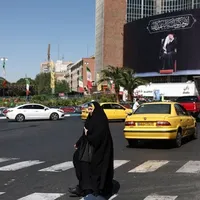
The Iranian police has announced that it will adopt stricter measures to impose compulsory hijab as of Saturday and will deal with those who “violate” the laws.
Abdolhamid has turned into an outspoken and staunch critic of Iran's rulers following its harsh crackdown on the 2022 nationwide uprising triggered by the death in morality-police custody of Mahsa Amini. On September 30, 2022, security forces killed more than 90 protesters near Abdolhamid's mosque in Zahedan.
One of the latest victims of the Iranian regime’s repressive hijab policy was Armita Geravand, a sixteen-year-old girl. She died on October 28, 2023 after about a month in coma for brain damage she suffered during a violent encounter with hijab enforcersdeployed at Tehran’s subway stations.
Follow developments on Iran International's Live coverageof ongoing tensions between Iran and Israel.