Political Prisoner 'Commits Suicide' In Iranian Prison

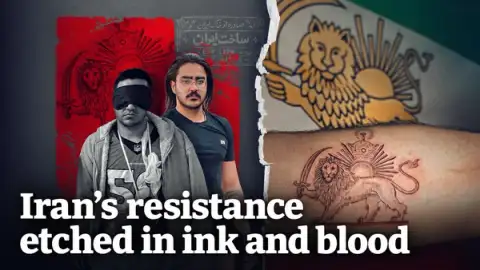
Political prisoner Shahin Galledari allegedly committed suicide on Sunday evening in Urmia Prison, the latest in a series of suspicious deaths in Iranian prisons.

Political prisoner Shahin Galledari allegedly committed suicide on Sunday evening in Urmia Prison, the latest in a series of suspicious deaths in Iranian prisons.
According to Hengaw Human Rights Organization, a Kurdish rights group, at least 35 prisoners lost their lives in Iranian prisons in 2023 alone.
Galledari, 46, had been sentenced to two years in prison by the Urmia Revolutionary Court in 2020 on charges of "acting against national security." He was detained in March 2023 and subsequently transferred to Urmia Prison to serve his sentence. In 2015, he was also detained by security forces and later released on bail.
Recent days have seen numerous reports highlighting the inadequate health conditions in Iranian prisons, including the notorious Evin jail in Tehran. Overcrowding and the presence of harmful infestations like lice have been cited as factors endangering the physical and mental well-being of prisoners, with protests on the issues ignored by prison authorities.
In recent years, many political prisoners have lost their lives in detention centers and prisons across Iran. However, Iran has consistently refused to accept responsibility for the deaths, which have been attributed to pressure, torture, and inadequate medical services.
Between 2010 and 2022, Amnesty International documented at least 72 deaths in Iranian prisons, 46 of which were due to ill treatment or torture.

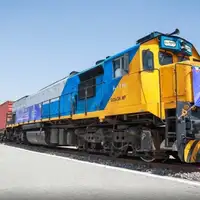
Iran's ambassador to Russia, Kazem Jalali, claims Iran's exports to Russia surpassed $2 billion in 2023, based on statistics provided by Russian authorities.
Jalali made the announcement on Monday, adding that “the actual value of Iran's exports to Russia could potentially be even higher due to the transit of Iranian products through Eurasian Economic Union member countries like Kazakhstan.”
The claims emerge amidst contrasting figures reported by Iran's Customs, which indicate $760 million worth of commodity exports to Russia in the first 10 months of the current year, ending in March. Data from the Chamber of Commerce also suggests that Iran's exports to Russia totaled approximately $743 million last year, while imports from Russia were double that amount.
The disparity between the statistics regarding Iran's exports to Russia raises questions though Iran's extensive sale of drones to Russia for use in the Ukraine war could likely contribute to the difference, such transactions not reflected in Iran's customs data.
In response to the two nations' military cooperation, Western countries have imposed multiple sanction packages against Iran for facilitating the transfer of military equipment to Russia.
Jalali also disclosed the impending visit of "a large delegation of 160 to 170 people" from Russia to Iran to finalize agreements during the meetings.
Over the past two years, Iranian authorities have promoted the alliance with Russia and China, aiming to underscore the financial and trade relations between Iran and its allies.

The prospect of a significant increase in wages in the new Iranian year (starting March 21) appears grim, as the government has only set it at 20 percent, despite a 145 percent increase in food prices.
The Supreme Labor Council, which is responsible for setting the minimum wage, convened after a long hiatus last week but there was no discussion about the wages for the next year. In previous years, negotiations would have begun by this time, and the minimum basket of goods for a family of four would have been calculated.
This year, the Ministry of Labor, Cooperatives, and Social Welfare has been slow to act, and there is no indication that the government is willing to increase the minimum wage by more than 20 percent. This is despite the fact that inflation is officially at 45 to 50%, and the real cost of living is soaring. Iranian media speculate that the council will push for a 30 to 40-percent rise.
In January, Iran announced that the new base monthly salary would rise to approximately $200 with a 20-percent increase. However, the constant decline in the value of the rial now pegs it to around $160. The looming threat of further depreciation in the upcoming year presents a significant challenge, potentially diminishing the minimum wage's value relative to the dollar.
According to a report by the Iranian Labor News Agency (ILNA), it seems that wage negotiations this year have been marginalized more than ever before. Labor activists have condemned the government's lack of action and its unilateral stance on wage negotiations. Recently, a letter surfaced revealing that the Labor Ministry barred a worker representative from participating in council meetings due to their protest against the government's low wage proposal. ILNA described this move as "an authoritarian approach to impose terms on workers."
ILNA also cast aspersions on the legal and logical basis of remarks by Labor Minister Solat Mortazavi, who insists on the 20-percent rise while the government itself announces the inflation to be about 45 percent.

Fararu, a moderate website, says, “In the current circumstances, not only is there no hope for compensating for the inflation of over 140 percent in food stuff and the rising costs of living, but also a wage increase equivalent to the official inflation of approximately 50 percent seems unlikely.”
Against the backdrop of sluggish deliberations on the annual rise, Iran is seeing an uptick in labor protests in recent weeks, with a large number of weekly demonstrations and strikes in the country’s oil, gas, petrochemical and steel industries.
The government's actions are seen as a threat to workers' rights and a violation of the principle of tripartism, which holds that governments, employers, and workers should have equal representation in wage negotiations, and a necessary precondition for such negotiations as mandated by the International Labour Organization (ILO).
Stockholm-based economist Ahmad Alavi told Iran International that in Western countries the private sector and workers are the main decision-makers, and the government only oversees the process. He pointed out that the inflation rate, the cost of living, the growth rate and all the relevant factors are taken into account in such negotiations, however, the Iranian government does not allow the labor unions or workers’ real representatives be at the negotiation table.
Echoing the same argument, London-based labor activist Sattar Rahmani told Iran International that Iran's Supreme Labor Council is comprised of regime insiders, masquerading as union activists, who actively oppress the voices of workers. Labeling the current practice by the government illegal based on ILO’s regulations as well as the regime’s own Constitution, Rahmani said that two factors, namely the inflation rate and the basket of goods needed to avoid poverty, should be the basis for deciding on the minimum wage.
Ehsan Sohrabi, a labor activist, described the government's approach to wages as "authoritarian,” which will adversely impact the livelihood of workers, representing 50 million people of Iran’s 84 million population. He told ILNA that since 2018, when the US withdrew from the JCPOA nuclear deal and re-imposed sanctions on Tehran, “the inflation rate for food items has now exceeded 900 percent.”
All in all, the cash-strapped government is dragging its feet and insisting on a 20-percent wage increase because it seems unable to increase the minimum wage to a level that meets the cost of living. According to Meysam Latifi, a vice president and the head of Iran’s Administrative and Recruitment Affairs Organization, about 80 percent of the government’s budget is spent on paying the salaries and even raising the minimum wage for one percent will amount to a huge sum.

Heavy snowfall and gas shortages have caused chaos across Iran, leading to the closure of schools, cancellation of flights, and shutdown of offices.
Media reports and statements from officials indicate that half of Iran's provinces have either closed schools or transitioned to remote learning due to the severe cold weather, gas shortages, and challenges in heating facilities since Monday.
Government offices in provinces such as Gilan and North Khorasan were also shuttered due to the weather conditions and insufficient gas supplies.
Asadollah Abbasi, the governor of Gilan, reported that more than one meter of snowfall occurred in the mountainous regions, with ongoing efforts to clear roads.
In the capital, Tehran, the Crisis Management Headquarters announced restrictions on gas supplies to state offices and industries until further notice. “Failure to adhere to these restrictions could result in gas supply cuts to offices and industries,” the headquarters warned.
Gilan airport in the north announced the cancellation of six flights to Tehran, Mashhad, and Kish due to snowfall and reduced visibility on Monday with two flights from Tehran to Kerman forced to return to their origin on Monday night due to poor visibility caused by cold and snow.
Gas shortages have become a crisis in Iran in recent years, in spite of its having one of the world’s largest gas fields.
The shortages coincide with Iran's power plants consuming mazut for months before winter to conserve gas, a practice that has contributed to severe air pollution in major cities, repeating patterns seen in previous years.

Over 275 political, social, and cultural activists have announced their decision to abstain from participating in the forthcoming elections in Iran.
They argue that the polls have been manipulated to undermine the public's right to governance.
In a joint statement issued on Sunday, the activists stressed the urgency of reforming the electoral system to ensure genuine participation and representation.
The upcoming elections for the parliament and the Assembly of Experts, scheduled for March 1, are encountering boycotts from various sectors of society including notable figures, political factions, and even people incarcerated for their dissenting views.
"The failed politics of participation and presence in the elections, in any case and at any cost, has never succeeded, as evidenced by repeated trials and bitter historical experiences in recent decades," reads the statement.
Amidst growing skepticism, Ali Khamenei, the Supreme Leader of Iran, has called for public engagement in the elections. However, recent polls reveal significant disillusionment, with over three-quarters of Iranians expressing their intention to abstain from voting.
“Without a genuine revival of the electoral institution, real participation and presence will not occur,” added the statement.
In the previous elections for the parliament, over half of Iranians refrained from participating. Experts anticipate that the upcoming elections may witness historically low turnout rates, reflecting widespread disillusionment with the Islamic Republic's governance.

Iran and Pakistan once again are aiming to revive a gas pipeline project that has been languishing for more than a decade, amid sanctions and bilateral issues between the two neighbors.
The Iran-Pakistan gas pipeline, commonly known as the Peace pipeline or IP Gas, is a complex initiative influenced by geopolitical tensions, economic factors, and international sanctions. Initially designed to transport natural gas from Iran to Pakistan, the project has encountered numerous challenges since its inception.
In March 2013, Presidents Zardari and Ahmadinejad inaugurated the project near Iran's Chabahar port, signaling the start of the USD 7.5 billion venture. However, progress stalled due to US sanctions on Iran, despite Iran completing its portion of the pipeline. Negotiations must conclude by March 2024 to avoid legal complications, with Islamabad having until September 2024 to fulfill its obligations. Both nations are exploring strategies to complete the pipeline outside the scope of US sanctions, emphasizing the project's importance for their national interests.
Pakistan has employed various legal and diplomatic means to avoid penalties and has requested a waiver from the US regarding the project. The completion of the pipeline is crucial for Pakistan's energy security and to meet its growing energy needs, fostering economic and commercial ties between the two countries.

Challenges
In order to meet Pakistan's growing energy demands and guarantee energy security, the pipeline is considered essential.
Despite resistance from Western partners, Pakistan has made progress in advancing the pipeline project. The initial phase, covering 80 kilometers from Gwadar to the Iranian border, has received government approval and funding. However, securing financing remains a significant obstacle, with speculation that China and Russia may provide funding for the Pakistani segment of the pipeline.
However, several challenges hinder the Iran-Pakistan gas pipeline project, including US sanctions, financial constraints, geopolitical conflicts, and operational delays. Overcoming these obstacles requires strategic planning and collaboration between the two nations.
Its projected expenses of USD 7.5 billion are causing delays in obtaining sufficient finance. Because regional dynamics influence progress and decision-making, geopolitical conflicts introduce an additional degree of complication.
Iran’s natural gas shortage
Iran faces domestic natural gas shortages, impacting its energy exports and oil production. The reliance on gas exports despite scarcity and rising local demand poses economic challenges and threatens internal energy security. Resolving Iran's energy crisis and easing international sanctions are essential for the pipeline's feasibility and completion.
Reduced gas output poses a danger to Iran's oil production, which is hampered by low investments and technological constraints. Iran's ability to maintain its oil production is threatened by its gas shortage and continuous exports, since the country must pump about 300 million cubic meters of gas per day into its aging oil reservoirs to maintain production.
Iran's oil fields face peril, with its domestic sector strained by the nation's heavy reliance on gas exports amid scarcity and mounting local demand. This predicament underscores Iran's challenge in balancing energy needs between exports and internal consumption amid gas shortages. The economic repercussions of Iran's gas scarcity extend beyond harming businesses and income sources, posing a threat to the country's internal energy security. Addressing Iran's expanding energy requirements demands substantial financial investments, advancements in science, and efficient energy management practices.
The expansion of QatarEnergy's liquefied natural gas (LNG) production further underscores the competitive landscape in the global energy market. Iran's ability to address its energy shortages and navigate international sanctions will determine the future of the Iran-Pakistan gas pipeline project. Despite ongoing efforts to address challenges, uncertainties persist regarding the project's viability until Iran's energy situation improves and sanctions are lifted.
The feasibility of the Iran-Pakistan gas pipeline project hinges on Iran's ability to address its domestic natural gas shortages and the lifting of international sanctions. The project's future remains uncertain without resolving Iran's energy challenges and sanction removal. Despite ongoing efforts through project management and diplomatic channels, numerous barriers persist. While completing the pipeline could benefit both nations by meeting Pakistan's energy needs and enhancing bilateral ties, its progression depends on Iran's energy situation and the removal of sanctions.