Former Iranian Foreign Minister Warns Of Critical Period Ahead For Iran
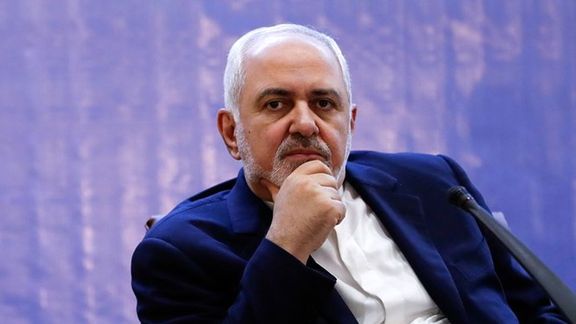
Iran's former Foreign Minister Mohammad Javad Zarif claims the next two years will be a pivotal and sensitive period for the nation as it moves beyond sanctions.
Iran's former Foreign Minister Mohammad Javad Zarif claims the next two years will be a pivotal and sensitive period for the nation as it moves beyond sanctions.
Emboldened as the United Nations Security Council lifted its ban on Iran’s missile program, removing barriers for the clerical regime to sell dangerous technologies, he said that by the year 2025, Iran will no longer be under consideration by the United Nations Security Council, rendering the reinstatement of resolutions improbable.
Zarif said in a recent interview with the semi-official ISNA news agency that "starting from 2025, any country desiring to propose a resolution against Iran must adhere to the established process for such matters."
The United Nations has recently conveyed to various nations the removal of restrictions on Iran's missile program, effectively eliminating impediments that prevented the Iranian government from engaging in the sale of potentially dangerous technologies.
In a UN letter, it was conveyed that “The Secretariat removed on 19 October 2023 from the Security Council website the list of 23 individuals and 61 entities subject to the aforementioned restrictive measures.”
The action marked the termination of all provisions outlined in Annex B of UN Security Council Resolution 2231, which had previously restricted activities such as missile development, testing, and military applications. Resolution 2231 had previously endorsed the 2015 nuclear agreement between Iran and the P5+1 countries.
With these restrictions lifted, Iran is now legally able to generate revenue through the sale of missiles and drones. The profits may subsequently be utilized to fund various militant and terrorist groups across the Middle East, which could potentially lead to heightened instability and conflict in Eurasia and, potentially, Africa.



The UN has sent letters to countries announcing end of bans on Iran’s missile program, removing barriers for the clerical regime to sell dangerous technologies.
“The Secretariat removed on 19 October 2023 from the Security Council website the list of 23 individuals and 61 entities subject to the aforementioned restrictive measures,” read the UN letter, terminating all provisions of Annex B of UN Security Council Resolution 2231 that prohibited activities such as development, tests, military employment, and others. The resolution endorsed Iran’s 2015 nuclear deal (JCPOA) with P5+1 (the five permanent members of the Council -- China, France, Russia, United Kingdom, United States, plus Germany).
“All it takes is one letter” to the UN Security Council by parties of the JCPOA to keep checks and balances on Iran’s drones and missiles, Behnam Ben Taleblu, a senior fellow at US-based think-tank the Foundation for Defense of Democracies (FDD) tells Iran International.
The hypothetical letter would start a 30-day clock for a different party to put forward a resolution to prove Iran’s compliance with the defunct deal signed with P5+1 (the five permanent members of the Council -- China, France, Russia, United Kingdom, United States, plus Germany). If the evidence for Iran’s non-compliance is clear, a snapback mechanism would crumble the foundations of UNSCR 2231 resolution, practically end the JCPOA and restore six resolutions imposed on Iran from 2006 to 2010 as well as all their prohibitions and penalties.
The US and nearly 50 other countries dusted off a 20-year-old program on weapons of mass destruction as well as issuing further missiles-related sanctions on Iran and the three European parties of the JCPOA, the so-called E3, announced in September that they would keep their sanctions in place. But no letter for a snapback.
Taleblu says unless Iran starts stockpiling weapons-grade uranium, these countries will not pursue a snapback mechanism. “Despite the recently lapsed UN prohibitions on Iranian missile testing and transfers, snapback still remains an option and should be considered an option. Legally under UN Security Council resolution 2231, snapback will remain an option until the fall of 2025. That means that the US or the E3 can still snap back and restore older multilateral penalties on Iran’s nuclear, missile and military program. And yes, all it takes is a letter from one of these JCPOA participants to the president of the UN Secretary Council and to run a 30-day clock,” Taleblu added.
On the Termination Day of the JCPOA, which will occur 10 years after Adoption Day (i.e. in 2025), the remaining EU measures will be terminated, the UNSC will conclude consideration of the Iran nuclear issue and UNSC resolution 2231 (2015) will be terminated.
Now that the prohibitions are lifted, Iran can now make money legally from its missile and drone sales and then can use the profits to finance its militant and terror proxies in the Middle East. The more chaos and destruction across Eurasia and perhaps Africa, the more Iran can find markets for its products. It can look for new buyers, who no longer face international consequences for their arms trade with Iran.
According to Taleblu, one of the more imminent perils is Iran selling ballistic missiles and related long-range strike technologies to Russia. Tehran has been providing President Vladimir Putin with a platter of miscellaneous drones, but not ballistic missiles. Russia has grown close to Iran since invading Ukraine in February 2022 and would likely use the easier flow of missiles to facilitate its invasion. Many of the hundreds of one-way attack drones it has used to bomb Ukraine in the last year were Iranian made.
“It is absolutely true that Iran did violate even arms transfer prohibitions prior to them expiring in 2020, however, thus far Iran has not given ballistic missiles to Russia,” he said, arguing that Iran waited for these US measures to end so that it can trade its missiles in broad daylight.“It is my contention that Iran was waiting for these international prohibitions to lapse to more seriously consider supplying Russia with ballistic missiles. Iran wants some of its arms transfers to not be penalized by the West and considered legal,” Taleblu said.
In addition to Russia, Iran will try to sell its missiles and drones to all its anti-West allies. Taleblu believes Iran’s leftist allies in the Americas as well as new Asian markets may be the prospective destinations of Iran’s drones and missiles.
In terms of customers for Iran’s long-range missiles or drones, “Venezuela is a growing industry.” He added that Bolivia is also a potential buyer while Belarus also offers a possible niche market. “The most acute and the most dangerous” remains the sale of Iran’s close-range ballistic missiles to Russia to help the invasion of Ukraine. “That will be a game changer and a record breaker for the history of Iranian arms proliferation as well as a game changer in the Russo-Iranian relationship.”
“The Islamic republic is an ideological actor committed to the export of the revolution, committed to keep developing a nuclear weapon, committed to protecting and defending its proxies and partners through illicit arms exports. This is a fact. Legal, political, normative and international prohibitions can hinder or name and shame it, but there is no such thing as a magic bullet.”
“Snapback matters because it sets a multilateral and international legal baseline for pressure against Iran.”
A prominent Iranian politician has called for the establishment of a tribunal to bring to trial the statesmen who have jeopardized Iran's national interests.
The former head of the Iranian parliament's National Security and Foreign Relations Committee Heshmatollah Falahatpisheh has told the press in Iran that three groups of Iranian statesmen should be put on trial on charges of weakening the country by their injudicious actions and policies.
He identified the three groups as "Those who have sacrificed national interests for factional political gains, those who have benefitted from international sanctions and plundered the country's financial resources, and those who prevented the forming of a rational foreign policy."
These characteristics point to ultraconservatives who have opposed cordial relations with the West and the JCPOA nuclear agreement between Iran and the United States. The same faction of hardliners also opposed accession to financial regulations set by the international Financial Action Task Force (FATF) that could have facilitated international trade and banking, as well as compromise with the European and American partners to the JCPOA that could have paved the way for ending the sanctions that have paralyzed Iran's economy.
Meanwhile, Falahatpisheh charged that the same ultraconservative groups, who previously claimed that furthering the negotiations to revive the 2015 nuclear deal was treason against the country's national interests and prevented the passing of the FATF bills, are currently pretending to be supporting the JCPOA and the ratification of financial regulations.
He was alluding to President Ebrahim Raisi and his ultraconservative economic teas and populist supporters in the government who have asked Supreme Leader Ali Khamenei to revive the debates about the FATF bills at Iran's Expediency Council, where the bills have been shelved since 2017 because of faction fighting at the parliament and government.
Falahatpisheh said that these groups, which he did not specifically identify, have squandered billions of dollars of the country's financial resources through their obstructive measures.
In another development, the conservative Jomhouri Eslami daily, a critic of the government policies wrote on Thursday that while it's a positive step that some of the country's officials have come to realize that their policies concerning the JCPOA and FATF were mistaken, these politicians should be held accountable for their decisions and compelled to bear the consequences of their detrimental actions.
The daily stated: "The people certainly welcome this change of approach on the part of the politicians who used to oppose the nuclear deal and healthy international trade and banking. But those politicians should be held accountable for the losses they imposed on the country's economy."
Similar to Falahatpisheh, Jomhouri Eslami also pointed out that some of the current advocates of the JCPOA and FATF are the same individuals who used to dismiss the nuclear agreement and FATF. "They asserted that they could address the country's economic problems without becoming party to the FATF conventions. They also contended that joining the convention would result in divulging Iran's economic secrets to foreigners and compromising the country's sovereignty."
The daily noted that during parliamentary discussions about the FATF, some individuals did not have a clear understanding of the acronym's meaning, and others even misspelled it.
Jomhouri Eslami also warned that although some hardliners now say they have changed their minds about the two topics, there is still a powerful opposition. The daily further warned that the continuation of this dispute might create bigger problems for Iran.
In yet another development, former President Hassan Rouhani told the congress of his political party, the Moderation and Development Party on Wednesday, that "Iran's way out of its current problems is moderation." Referring to the monopoly of power by hardliners, he warned that when a minority rules in the country, the people will have to voice their demands in the streets."
To defend Palestine is a Quranic command, Ayatollah Ahmad Alamolhoda, a firebrand senior cleric told worshippers on Friday, as tensions remain high in and around Gaza.
God commanded Muslims to defend and protect the Al-Aqsa Mosque, the hardliner cleric said, and that means keeping “infidels” away from Jerusalem.
Alamolhoda is Supreme Leader Ali Khamenei’s representative in one of the most important Shiite cities, Mashhad, where a revered imam is buried. He is also the father-in-law of Ebrahim Raisi, who was handpicked by Khamenei to become president in 2021, simply by barring all other serious candidates from running, in what turned out to be a selection rather than an election.
One of the special characteristics of Palestine, he said, is that God defeats all infidels in the blessed land. “The Holy Essence proclaims that divine signs are manifest in the land of Palestine. Any atheist movement with intentions of trespassing and committing crimes in this land shall be annihilated.”
The hardline rhetoric comes even though Islam recognizes Jews and Christians as peoples of God, and not pagans. However, as signs emerge that many in Iran do not support the government’s policy of full financial and military backing for the militant groups, state propaganda intensifies.
Alamolhoda also drew parallels between the present day and the era of Crusaders, saying that Muslims were able to take back Jerusalem after Christian invaders occupied the land. He went on to boast that Iran’s regional proxies, such as the Lebanese Hezbollah and Iraqi Shiite militias are engaged in the conflict, emphasizing that Hezbollah has 100,000 precision missiles.
Khamenei’s trusted cleric said that all militant groups are ready to help Hamas, fighting against Israel and “destroying that cancerous cell.” He emphasized that these groups are not afraid of the United States.
In what appeared to be coordinated remarks by Friday Imams across the country, Khamenei’s appointed Imam in Fars province stated that "Hamas's attack on Israel was a defensive move accompanied by courage and heroism." He added, "We tell Israel's accomplices that resistance will not let you rest until the end of your era."
Tehran Friday Imam, Kazem Sedighi, praised Hamas’ attack and claimed that they did not kill any civilian and all 1,500 victims were Israeli soldiers.
The Imam in Gilan Province claimed that thousands of Revolutionary Guard, naval and other military forces have announced their readiness to go to Gaza and fight.
Many Iranians opposed to the Islamic Republic are mocking regime supporters, telling them to “please act according to your ideology and go to Gaza to fight.” Their message is that if regime supporters die in the war, the people of Iran will live in peace.
Hardline clerics also organized a gathering in the religious city of Qom, where it was claimed “youth from 100 countries” who were dubbed “lovers of fighting Israel” were present. Iranian media said that Bahrain’s Sheikh Isa Qassem, a pro-Iran Shiite cleric also attended.
A message from Khamenei’s foreign policy adviser Ali Akbar Velayati was read during the ceremony, which praised those ready to struggle for Palestine. Representatives of Hamas and the Islamic Jihad militant groups also attended.
Alireza Panahian, Khamenei’s chief of staff delivered remarks, saying that Hamas was “saving its energy for heavier blows against Israel.”
Iran's former Foreign Minister Mohammad Javad Zarif has said that recent events in the Middle East have taken away Israel’s claims to being indestructible.
In remarks about the Hamas-Israel war, Zarif on Friday said that Israel had solidified its reputation as an invincible power amongst Palestinians, and the Arab and international community by carrying out aggressive actions.
“Israel’s fake image of resistance is now ruined. Israel’s barbaric actions is the reason for their continues defeat,” Zarif said.
Zarif, who negotiated the JCPOA nuclear accord with the United States in 2015 said that Israel has kept the Palestinians in a prison for 70 years.
In parts of his comments, Zarif spoke about IRGC’s notorious operator Qasem Soleimani and claimed that the debt the Middle East owes him for regional security.
As the commander of IRGC’s Quds extraterritorial force, Soleimani was the architect of Iran’s proxy warfare in the region, including his role in the Syrian civil war during which hundreds of thousands died. He was killed by a US drone attack in 2020.
The former foreign minister said that European countries have been preaching about human right, but they are now supporting the killings of civilians in Gaza.
“The Europeans are gagged about Israel’s crimes,” Zarif said.
This is while Iran experienced several uprisings during Zarif’s term as foreign minister (2013-2021) where authorities killed and arrested tens of thousands of people for protesting.
Also, it was during Zarif’s tenure that the Ukraine International Airlines Flight PS752 was shot down by two air-defense missiles fired by the Islamic Revolutionary Guard Corps on January 8, 2020, shortly after taking off from Tehran's Imam Khomeini International Airport.
Amid Israel’s war against Iran-backed Hamas, US Senator Lindsey Graham hosted a panel of Iran experts to discuss how the US must take a firm posture to deter Iran.
Moderated by United Against Nuclear Iran (UANI) CEO Ambassador Mark D. Wallace, the Wednesday “Roundtable on Correcting US Policy Toward Iran” included several fellow analysts at the UANI and former US State Department advisor on Iran Gabriel Noronha.
The participants in the panel were all critics of the Biden administration's foreign policy and particularly its Iran policy.
Senator Graham (R-SC), who this week called for a joint military operation against Iran, blames the Iranian regime for Hamas' attack against Israel October 7 that can potentially lead to a multi-front full-fledged war in the Middle East.
Pointing to the Biden administration's official reaction to the attack claiming there is no evidence proving Tehran’s direct involvement, Graham quipped, “If you believe the Ayatollah in Iran woke up one day and read about this attack in the paper or saw it on TV, you're crazy!” He argued that Washington does not want to confirm Iran’s role because then it will be urged to act about it.
Referring to about 30 US citizens killed in the Hamas attack, which Iran has been celebrating since day one and glorifying as a victory for its so-called ‘axis of resistance,' Graham said the US should make Iran feel that there are consequences for the actions of its proxy militants across the region.
‘Axis of Resistance’ is a term coined by the Islamic Republic to refer to its proxy forces in the region including, Palestinian militant groups, the Syrian regime, the Lebanese militant group Hezbollah and other factions.
Referring to Jordan, Egypt and Palestinian Authority canceling their meeting with President Joe Biden this week, based on an exaggerated report about an explosion at a Gaza hospital, the Senator argued that US allies should also know there will be consequences for their behavior.
Referring to the possibility of Hezbollah and other Tehran-backed US-designated terror groups joining the conflict, he said that if this war expands, the US should start military action against Tehran. “If there was a war with Iran, we would win," he stated.
Graham urged the United States to stop the Islamic Republic, which seeks to destroy the Jewish state and has been very vocal about it; “Israel cannot afford two holocausts.”
He also said that the timing of the attack – often called on media as “the September 11 of the Middle East”-- is directly related to the news about the normalization of relations between Israel and Saudi Arabia, which Iran was warning against since other Arab countries did so in the Abraham accord. “This attack was so vicious and so cruel that it had a purpose: to make it so gruesome that Israel could not look away and has to go in on the ground, and the belief is that will stop the reconciliation process,” he said.
Emphasizing the threat posed by Iran in case it builds nuclear bombs, Garaham said North Korea, Russia or China have nukes, but they would not attack the US preemptively because they are not “religious zealots.” “The Iranians are motivated by religion. They want chaos to bring back the missing Imam. They want the end of times to unfold in in their lifetime so if they had a nuclear weapon, I am 100% confident they would use it as part of their religious crusade.”
The Biden administration chose to engage in indirect negotiations with Iran upon assuming office in early 2021 to revive the JCPOA nuclear accord abandoned by Donald Trump, but the talks failed and Iran in the meantime expanded its nuclear program. According to the UN nuclear watchdog the IAEA, Iran now has enough enriched uranium for up to 5 nuclear warheads.
Panelist Norman Roule, who served for 34 years in the Central Intelligence Agency (CIA) managing various Middle East programs, started with enumerating the incidents in which Iran’s logistic or intelligence support led to the killing of Americans in the region, such as the Beirut bombing in 1983, as well as Iran’s assassination and abductions attempts on the US soil.
Roule criticized the US sanctions systems on Iranian officials as inconsequential since almost all of the sanctioned individuals would never seek to come to the US or own property there in the first place. He explained that not only such actions are symbolic but also encourage the adversary to say that “this is all they’re going to do.” “From Ukraine to Gaza; from Washington to New York; from Beirut to Yemen and Africa people are dying and will die unless this posture changes.”
Calling on the US as well as its European and Asian allies to confront Iran, Roule said that if the international community is not willing to confront Iran at present, “would they be willing to confront Iran with a nuclear weapon?” “Relentless diplomacy is a brilliant approach but endless diplomacy without deterrence is a gift to Tehran,” he stated.
He also slammed the lax enforcement of oil sanctions that have made Iran built up its foreign currency reserves “that would be very difficult and time consuming to gnaw down under actual serious sanctions.”
Jason Brodsky, the UANI policy director with deep insight into Iranian politics, pointed out that the Biden administration seeks to keep Iran's role in the Hamas attack “undefined” because saying that Iran was directly involved puts public pressure on the administration to do something about it. “It's apparent not only to Americans but to the Iranian regime that he is not keen on doing something about the Iranian problem.”
He noted that unless Iran believes that the US is willing to inflict grievous military losses on it, “the escalation is inevitable.”
“We can't just create deterrence by issuing a strongly worded press statement, warning of unspecified consequences... we can't restore deterrence with piecemeal sanctions on individuals who have no assets in the United States and are unlikely to travel here,” he said, stating that “there has to be a kinetic element to these policies to change the Iranian perception.”
Kasra Aarabi, a UK-based IRGC specialist, referred to remarks by British officials who labeled Iran’s Revolutionary Guards as the biggest threat on the UK soil, saying that there are mountains of evidence to prove that Revolutionary Guards are active on British soil. He explained how groups linked to Iran’s Supreme Leader are influencing the minds of British Muslim students with antisemitic and extremist ideologies, hosting events with IRGC commanders as speakers who “glorify IRGC terrorism.”
“They called on these students in London to join an apocalyptic Army to ‘end the lives of Jews’ around the world,” he underlined.
Urging the designation of IRGC as a terrorist group to limit their sway, Aarabi said that “despite the IRGC's persistent efforts not only to target British citizens directly but also to nurture homegrown Islamist radicalization and terrorism using methods like ISIS and Al-Qaeda through their centers... the IRGC is still not being proscribed.” “That’s the least Europeans can do.”
He emphasized that targeting IRGC bases in the region and inside Iran is not targeting the Iranian people, but “the very people who terrorize the people of Iran, the very people who killed Mahsa and Nika,” some of the most iconic martyrs of the boldest uprising against the clerical regime, came to be known as the Women, Life, Freedom movement.
“Iranian people share a common enemy with the Israeli people; the Iranian people stand with the Israeli people because the force that is terrorizing the people of Israel is the same force that is terrorizing the people of Iran,” he argued.
Gabriel Noronha, a former special advisor for the Iran Action Group at the US Department of State, mentioned several incidents that happened exactly as were predicted. He said, Senator Graham warned that if we withdrew from Afghanistan, the Taliban would take over and they did; Senator Graham warned that if we didn't provide weapons to Ukraine and that if we didn't sanction [Russian gas pipeline network] Nord Stream 2, Russia would invade, and they did; Senator Graham is warning now that because we refused to enforce sanctions on Iran, we are headed towards a disaster.”
He said Iran was giving Hamas $100 million a year in 2017 and with the Trump administration's maximum pressure policy on Iran, the Islamist group had to adopt austerity measures, but today “Hamas is getting $350 million from Iran that is 93 percent of its budget.” The Hamas attack on Israel “has been a wakeup call.”
Referring to Iran’s assassination threats against former Secretary of State Mike Pompeo and former National Security Advisor John Bolton as well as the kidnapping attempt against human rights activist Masih Alinejad, Noronha said that “we cannot let the smoking gun be a dead senior American official or human rights dissident.”
Claiming that Iran earns over $150 million a day in oil income, he said the solution is to enforce sanctions to decrease the revenues “as close to zero as we possibly can that will dry up the money for terrorism.” He said when the oil sanctions were being enforced in 2019, Iran’s oil output had dwindled to about 300,000 to 400,000 barrels per day, forcing Iran’s militia groups to lay off fighters because they could not afford to pay them. Now, the regime’s oil exports are estimated to be nearly 2 million barrels.
“We have to tell Iran if you kill Americans, there are consequences. Right now, Iran does not believe there are consequences,” he said, adding, “There have been no missiles from the United States against Hamas; There have been no US missiles against the Iranian installations that fund and train Hamas fighters and there have been no attacks against Iran's oil infrastructure which funds all these attacks.”
“If we continue the status quo, things will get worse,” he noted, calling on Republicans and Democrats to work together and create firm accountability for Iran, which means Congress should authorize the President to take action and that requires Congress to pass laws.
He highlighted that the Iranian people want to overthrow the regime, saying that the US should “put pressure on the regime and the Iranian people will do the rest.”
UANI CEO Wallace said the US has no longer a doctrine of preemption but a doctrine according to which a large number of people should be sacrificed before Washington takes serious actions. “How many rockets must rain down on Israel before we act?” he asked.
“The doctrine of preemption is already over because they've already attacked. This attack by Hamas was already that Iranian attack,” Wallace noted.