• العربية
  • فارسی
Brand
  • Iran Insight
  • Politics
  • Economy
  • Analysis
  • Special Report
  • Opinion
  • Podcast
  • Iran Insight
  • Politics
  • Economy
  • Analysis
  • Special Report
  • Opinion
  • Podcast
  • Theme
  • Language
    • العربية
    • فارسی
  • Iran Insight
  • Politics
  • Economy
  • Analysis
  • Special Report
  • Opinion
  • Podcast
All rights reserved for Volant Media UK Limited
volant media logo

Arab states urge US not to stop short in war on Iran

Mar 16, 2026, 22:27 GMT+0

Several Arab states along the Persian Gulf are urging the United States not to halt its military campaign against Iran before significantly weakening the country’s military capabilities, Reuters reported Monday, citing regional officials.

Those governments did not press Washington to launch the war, the report said, but fear that ending the campaign prematurely could leave Iran able to threaten the shipping lanes, oil infrastructure and commercial hubs that underpin their economies.

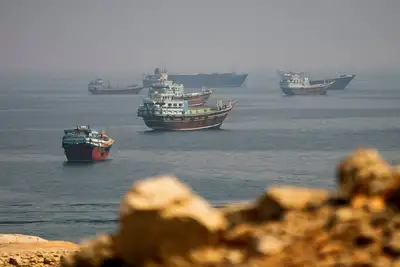
The conversations come as the war enters its third week, with US and Israeli airstrikes intensifying while Iran has fired missiles and drones at American bases in the region and disrupted traffic through the Persian Gulf’s strategic oil gateway, the Strait of Hormuz.

On Monday, Iran’s top security official, Ali Larijani, accused Islamic countries of abandoning Tehran during the war and criticized those that described Iran as an enemy after attacks on their territory.

“Is Iran expected to sit idly by while American bases in your countries are used to attack it?” he said. “These are weak excuses.”

Reuters reported that US officials have been pressing Iran’s Arab neighbours to publicly back the US-Israeli campaign, citing Western and Arab diplomats who said President Donald Trump is seeking visible regional support to strengthen the operation’s international legitimacy.

The sources added that unilateral military action by any single Arab state is considered unlikely because it would expose that country to Iranian retaliation.

The six members of the Gulf Cooperation Council — Bahrain, Kuwait, Qatar, Saudi Arabia, Oman and the United Arab Emirates — have held only limited consultations since the war began, according to officials familiar with the talks.

Regional officials told Reuters the recent attacks have reinforced a longstanding fear: that leaving Iran with significant missile forces or weapons production capacity would allow it to threaten the region’s energy lifeline whenever tensions escalate.

For many leaders in the region, officials said, the calculation is increasingly stark. Unless Iran’s military capabilities are severely degraded, they fear the country will continue to hold the region’s energy infrastructure and shipping routes at risk.


Most Viewed

Ghalibaf reveals Tehran feared street unrest after Iran International broke Khamenei news
1

Ghalibaf reveals Tehran feared street unrest after Iran International broke Khamenei news

2
PODCAST

Iran's hangings are 'murders,' says former UN prosecutor

3
ANALYSIS

China helps Iran chip away at US air superiority despite Xi’s no-arms pledge

4

US tightens military and financial pressure as Iran talks falter

5

Iran ramps up threats to Mideast energy sites as fears of major US strike grow

Banner
Banner
Banner

Spotlight

  • China helps Iran chip away at US air superiority despite Xi’s no-arms pledge
    ANALYSIS

    China helps Iran chip away at US air superiority despite Xi’s no-arms pledge

  • Why Iran's leaders failed to see this generation coming
    INSIGHT

    Why Iran's leaders failed to see this generation coming

  • Security forces seized Iran hospital, sent wounded protesters to morgue
    EXCLUSIVE

    Security forces seized Iran hospital, sent wounded protesters to morgue

  • Where steak is a dream
    VOICES FROM IRAN

    Where steak is a dream

  • 'Western trap': calls for restraint grow in Tehran after Ukraine attack
    INSIGHT

    'Western trap': calls for restraint grow in Tehran after Ukraine attack

  • From cafes to buskers, Tehran tightens its grip on the fabric of everyday life

    From cafes to buskers, Tehran tightens its grip on the fabric of everyday life