Iran Tourism Official Mocks Exaggerated Tourism Growth Figures

A tourism industry representative in Iran has accused the government of providing false statistics on the growth of foreign tourism.

A tourism industry representative in Iran has accused the government of providing false statistics on the growth of foreign tourism.
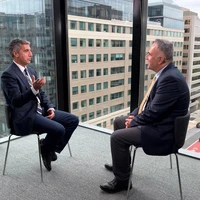
In an interview Hormatollah Rafi'ee quipped, "We are professionals in [ producingfalse] statistics," referring to the government.
He went on to express concerns about the country's inability to capitalize on tourism opportunities. He revealed that despite growth claimed by officials, the number of incoming tourists has in fact declined in recent years. This revelation raises questions about the accuracy of previous reports and the underlying challenges faced by Iran's tourism sector.
Last year, the government claimed the number of foreign visitors increased by 132 percent reaching 4.2 million people, amid the lingering COVID pandemic, which surprised many.
For years, Iran has been a destination of interest, enticing foreign visitors with its historical heritage. Even with strict dress codes for women and restrictions on alcohol and nightlife after the 1979 Islamic Revolution, a small but steady stream of mainly European tourists continued to visit the country.
Hopes for a significant boost in tourism arose when Iran and major powers reached a landmark nuclear deal in 2015.
However, these hopes were shattered when then-US President Donald Trump unilaterally withdrew from the agreement three years later, triggering a downturn in tourism prospects.
Last year, the country witnessed mass protests and detained more Europeans prompting several Western countries to issue travel advisories warning their citizens against visiting the country, citing the risk of "arbitrary detention."
Iran's judiciary has confirmed that it is relocating inmates from the Rajaei Shahr Prison in Karaj, as many believe its large land will be sold to developers soon.
“Prisoners of this prison, which is located in one of the best areas of Karaj, are being relocated to another prison,” the judiciary’s media center said in a statement on Thursday.
Rajaei Shahr (formerly Gohardasht) Prison, considered as one of the harshest prison environments in the country, is in Karaj, a city less than 30 kilometers west of the capital Tehran. Originally built before the Islamic Revolution of 1979 in the outskirts of Karaj, the prison is now in the middle of one of the city’s most expensive areas.
One reason why the prison lives in infamy is the massacre of hundreds of political prisoners there in 1988. Iran's first supreme leader, Ruhollah Khomeini, ordered the killing of prisoners who were members of MEK (The People's Mojahedin Organization of Iran), an armed opposition group, and also Marxists serving their sentences.
Since 2009, when thousands were arrested after a disputed election, many well-known political prisoners and activists were held at Rajaei Shahr alongside other prisoners most of whom were serving sentences for drug-related offenses.
On several occasions in the past two years, protesters have staged sit-ins outside Rajaei Shahr to prevent the execution of political and other prisoners.
“The plan to relocate prisoners ensues from the government’s fear of repetition of such [civil] resistance [to execution],” Seda-ye Shahrivar Twitter account which is dedicated to news of protests and dissent wrote, adding that security forces are planning to relocate prisoners of at least twenty major jail in provincial capitals across the country to remote prisons.
“In fact, the closure of Rajaei Shahr is meant to facilitate suppression, harassment and execution of prisoners, making people’s access to their imprisoned loved ones difficult, and increasing the distance between prisons from places where life is happening,” Seda-ye Sharivar wrote.
The judiciary’s statement did not mention videos posted on social media that show prisoners already being taken from Rajaei Shahr to the notorious Ghezel Hesar Prison. Social media reports indicate that some of last year’s protesters including Mohammad Beroghani who has been sentenced to death are among those transferred to Ghezel Hesar.
According to Seda-ye Sharivar, relocation of prisoners started on the evening of July 31 without prior announcement and since then at least 300 inmates, including many political prisoners, have been sent to Ghezel Hesar.
Ghezel Hesar, Iran's largest prison which houses around 20,000, is located in the Alborz Province, 20 km (12 miles) to the northwest of the capital Tehran, and is also near Karaj. Ghezel Hesar has mainly housed around 20,000 ordinary prisoners, four times more than it had been built for.
“This prison is among the evidence of the crime [mass execution of political prisoners in 1988] and its layout was repeatedly mentioned in the trial of Hamid Nouri [in Sweden],” senior journalist of Radio Zamaneh, Farzad Seifikaran, wrote about Rajaei Shahr, adding that any building development could obliterate some of the most important proof of the atrocities committed against political prisoners who were executed in thousands over a few months.
The government of President Ebrahim Raisi on June 22, 2022, allowed the judiciary to sell both Rajaei Shahr, an estate of nearly 600,000 sqm (150 acres), and pay the proceeds to the government.

The Islamic Revolutionary Guard Corps Navy unveiled new systems and weapons systems such as missiles, drones, and electronic warfare during a ceremony on Saturday.
Amid rising concerns about Iran's military activities, the IRGC showcased various types of reconnaissance, intelligence, offensive, and combat drones, support and command vehicles, as well as offense and defense systems in the electronic war domain.
According to Tasnim news agency, among the systems were a variety of cruise missile launch trucks, radar and command systems, and hundreds of cruise and ballistic missiles with ranges of 300 to 1000 kilometers.
During the ceremony, the IRGC Commander, Hossein Salami, claimed the IRGC is getting more powerful, even amidst international sanctions and pressure. He alleged that its strength has surpassed the enemy's ability to control or confront Iran's military.
Salami stated, "With a history of standing in the face of threats and dangers for decades, we have found a way to become powerful; in fact, the enemy has been the cause of our growth."
The IRGC was established shortly after the 1979 Islamic Revolution with the primary objective of protecting the Shi'ite clerical ruling system, but has become instrumental in Tehran regional interventions.
The US designated the IRGC as a terrorist organization in April 2019 due to charges of global terror acts, violations of armed conflict laws, assassination attempts, and support for regional terrorist groups. The European Parliament supported designating the IRGC as a terrorist group in January. However, the EU says it cannot do so until a court confirms the classification.

Journalists in Iran say their salaries are not enough for their living expenses, and even if they are paid on time, it only covers basic expenses for half of the month.
Iran international conducted interviews with more than 20 journalists in various cities who work for newspapers or news agencies.
According to the interviewees, the average salaries of journalists in provinces like Esfahan, Khorasan Razavi, Gilan, West Azerbaijan and Sistan-Baluchistan range from 40 to 60 million rials ($80-120) a month.
This means that journalists get paid less than the minimum wage, which the government this year increased to above 70 million rials ($140).
A Journalist in Khorasan Razavi province in northeast, emphasizing the living difficulties for journalists said, "Salaries in some Telegram channels like Akbar Mashhad start from 7 million rials ($14) and may reach 4 million ($80) a month, like other journalist in our province. Of course, editors may receive between 100 and 120 million rials ($200-220)."

According to a report by the Parliamentary Research Centre published this month the number of Iranian below the poverty line increased from 19 percent to over 30 percent in the past decade. In fact, more than 30 percent of Iran's populations lives below the poverty line. Some experts say that nearly half the population is now below the poverty line, which is defined as having an income of less than around $200 a month. Many journalists are also among the people living below the poverty line.
Journalists in Esfahan emphasized that their salaries have been paid with delays in the past year, and in some cases, they have been divided into instalments. They said, "A salary of 5.3 million rials ($105) is practically meaningless considering rising inflation and the high cost of living. There is no institution or syndicate to file a complaint with, and any protest is met with reprimands and dismissals."
Although the government claims annual inflation is at 40 percent, economists and some lawmakers believe it is closer to 70 percent. Food price inflation is estimated to be between 70-120 percent since May 2022.
A reporter from one of the news agencies in Tehran also said: "On paper, I receive around 80 million rials ($160) as my monthly salary, but due to various deductions, I end up with something close to 77 million. It's clear that with such a salary, it's impossible to live in Tehran. Depending on my shift, I do some extra work before or after my job as a driver. Once, I gave a ride to someone I had interviewed weeks earlier. The person was shocked that I was driving a taxi and repeatedly asked if I wanted to write an article about why I had to do a second job."
A reporter from one of the newspapers in Tehran told us, "I had left my parents’ home and lived alone, but my financial situation became so difficult that I had to return and live with them, however, not everyone has this option. We are barely making ends meet. I made around 100 million rials a month, but still, my income and expenses did not balance out."
Increasing censorship
The economic problem is not the only challenge facing journalists in Iran. They are daily confronted with various newly imposed restrictions. One journalist spoke about the pressures and new limitations, saying, "Reporting has become like the fluctuating dollar rate, they keep setting momentary red lines for us."
He added: "It is possible that yesterday an agreed upon report was allowed to be published, but the next day, the editors and chief editors, or the managing director say that the report should not be printed. To make our conscience suffer even more, they say, 'Are you willing to take the responsibility for others losing their jobs [if the news outlet is shut down]?’ “

During months of anti-government protests that began last September, dozens of journalists were detained, some simply for a tweet or as a preventive measure. Two reporters who broke the news about Mahsa Amini, whose death in the custody of hijab police sparked the protests, are still in jail.
A reporter from one of the news agencies in Tehran stated: "Limitations on writing news depending on the country's situation have always existed. For example, we were not allowed to cover the Haft Tappeh workers' strike for a while, and later the choice of words was completely controlled. But during the protests since September 2022, these limitations have doubled."
This reporter went on to say, "After being shocked by the killing of Kian [a 10-year-old boy shot by security forces during protests], I posted a story on my personal page. In less than 24 hours, I received a call from an unknown number, and in a harsh tone, they told me to delete the story and warned that if it happened again, they would fire me from the newspaper."
Another journalist who was recently interrogated by security forces described the dangers inherent in censorship. "We used to know what words to use and what words were prohibited, or at least we followed the criteria according to directives from the Supreme National Security Council. But after the killing of Mahsa, the conditions drastically changed, and they began to apply all sorts of pressures to restrict independent journalists. They us no to do our professional work effectively, but…we take pride in our profession and stand with the people as long as we can."

Narges Mohammadi, a prominent imprisoned Iranian human rights activist has been handed down an additional one year jail sentence in a new verdict.
This latest decision by the judiciary of the Islamic Republic has increased her total sentence to 10 years and 9 months in prison, coupled with 154 lashes.
The verdict stems from Mohammadi's alleged offense of "propaganda against the system by giving a statement from inside the prison," as stated on her Instagram page. In the said statement, she voiced her protest against the "harassment and sexual abuse of women" in detention centers, and addressed a letter to Javaid Rehman, the Special Rapporteur on the Situation of Human Rights in the Islamic Republic of Iran.
This particular case is one of the five ongoing investigations against Narges Mohammadi, conducted by the Evin Security Prosecutor's Office.
Refusing to participate in the hearing of the new accusations, Mohammadi, the Deputy Director of the Defenders of Human Rights Centre (DHRC), boldly declared that she "does not recognize the Islamic Republic and its sham and deceptive courts," as conveyed in her Instagram post.
The preliminary verdict was communicated to Mohammadi while she remains detained in the women's ward of Evin prison. However, she did not sign the receipt of the verdict.
In recent months, despite her confinement, Mohammadi has been an outspoken advocate for the uprising of Iranians against the Islamic Republic. From inside the prison, she has openly condemned repression against protesting students, citizens, and the Baha'i community, among others.
Narges Mohammadi's imprisonment dates back to November 2021, and she continues to serve her sentence.

Iran unveiled a series of what it called new maritime weapons this week as Washington appeared to be increasing pressure on Tehran on at least two fronts.
In its boldest move to deter Iran since assuming office, the Biden administration signaled on Wednesday that it may soon offer to put armed sailors and Marines on commercial ships traveling through the Strait of Hormuz.
The Pentagon last month had already sent additional F-35 and F-16 fighter jets along with a warship to the Middle East in a bid to monitor key waterways in the region following Iran's seizure and harassment of commercial vessels.
The Islamic Revolutionary Guard (IRGC) held drills around three Iranian islands in the Persian Gulf contested by the United Arab Emirates and claimed that it has added a 600-kilometer-range new missile to its arsenal “for defending the islands’ territory.”
Hossein Salami the commander of the IRGC delivered another speech on Saturday, praising what he called unprecedented advances the Islamic Republic ha made in naval power. In typical veiled language Salami said that “the enemy’s presence instead of posing a threat became an opportunity…and we expanded our defense and military” capabilities.
Salami also stated that Iran has been able to de-couple “the enemy’s military power” from its psychological dimension, implying that Tehran is not afraid of the overwhelming power wielded by the United States.

By offering to protect commercial vessels, the United States may be trying to prevent what it anticipates as inevitable Iranian escalation amid a lack of an agreement on Iran’s nuclear program and continuing US sanctions that have led to a hopeless economic situation for Tehran. But the show of force could also be apart of Washington’s efforts to re-engage in the Middle East to show Saudi Arabia and its allies in the Persian Gulf that it is the ultimate guarantor of security.
Vice Admiral Brad Cooper met met with Gulf Cooperation Council Secretary General, Jasem Mohamed Al Budaiwi, in Riyadh to discuss “maritime collaboration for ensuring the free flow of global commerce in & near critical regional waterways,” US Naval Forces Central Command announced Thursday.
Already, the US Navy is authorized to defend vessels belonging to countries with whom there is a mutual defense agreement, including Saudi Arabia and its Persian Gulf allies. However, Al-Monitor cited US officials as saying that the Pentagon has been discussing options with the National Security Council to expand maritime commercial defense “potentially including ownership of the ship or its cargo.”
As the Biden administration appears to be adopting a more forceful posture in the Persian Gulf, it is also ramping up pressure on Tehran over the issue of Iranian drone supplies to Russia.
NBC news reported Friday that the Defense Intelligence Agency (DIA) has decided to show foreign officials “undeniable” evidence of the Iranian origin of drones shout down over Ukraine.
Washington first warned about Tehran’s plan to supply attack drones to Russia in July 2022 and in October it announced that indeed Moscow had started to use Shahed kamikaze drones against Ukraine. In February the DIA issued a report saying that analysis confirmed Russia’s use of various lethal Iranian unmanned aerial vehicles (UAVs) against Ukraine.
Iran has retaliated in recent days by calling for a halt to Western arms supplies for Ukraine blaming the assistance for prolonging the war.
Iran has long been an ally of Russia both in the Syrian civil war and during the invasion of Ukraine despite its claims of neutrality. The government media in Tehran has displayed clear support for Russia and officials have never condemned Moscow's attacks on civilians. So far, Russia has used hundreds of Iranian-made drones against Ukrainian civilian and infrastructure targets.