No Iranian Harmed in Damascus Sayeda Zeinab Blast

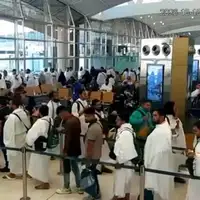
As the death toll from an explosion outside a Shiite shrine near Damascus reached seven, Islamic Republic officials confirm that no Iranian pilgrim was killed.

As the death toll from an explosion outside a Shiite shrine near Damascus reached seven, Islamic Republic officials confirm that no Iranian pilgrim was killed.
A bomb planted in a motorcycle exploded outside the Sayyida Zaynab (Sayeda Zeinab) shrine south of the Syrian capital Damascus on Thursday immediately killing six people and wounding several others, one of whom later died.
The Syrian authorities have classified the incident, which took place a day before the holy Day of Ashura, as a "terrorist attack," saying an investigation is currently underway.
The shrine of Sayeda Zeinab, who was the granddaughter of the Prophet Muhammad holds immense significance for the Shiite community, drawing pilgrims from various parts of the world.
Hamidreza Mohammadi, Deputy Head of Iran’s Hajj and Pilgrimage Organization, reaffirmed on Friday that Iranian pilgrims remained unharmed during the incident. Nasser Kanaani, Iran’s Foreign Ministry Spokesman, condemned the attack, referring to it as a "terrorist" act.
Sayyida Zaynab's shrine has been safeguarded throughout the Syrian war by Shia militias, most notably supported by Lebanon's Hezbollah and militia forces, in collaboration with the Syrian army. Iran has cited the protection of holy sites as a rationale for its involvement in the Syrian conflict, aiding in the defense of President Bashar Al-Assad's regime.
Historically, the area around the Sayyida Zaynab shrine has been targeted by the Islamic State group (ISIS), which has claimed responsibility for previous deadly attacks and explosions in the vicinity. No individual or group has claimed responsibility for this act.

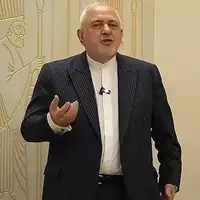
In the aftermath of the Quran burning in Sweden, an Iranian cleric has proposed that the Swedish embassy should be transformed into a Quran teaching center.
During a speech on Thursday, Hassan Akbari, the Supreme Leader's representative in Qom province's IRGC, urged high-ranking officials in Iran to protest against the insulting act and its support by Western governments by closing the Swedish embassy in Tehran and turning it into a center for Quran teaching.
He also expressed strong condemnation and called for decisive actions from the judiciary and the Ministry of Foreign Affairs against such acts.
The Quran burning incident in Sweden garnered international condemnation, prompting Iran's Supreme Leader, Ali Khamenei, to call for the perpetrator to face the severest punishment. Khamenei claimed last week that his stance is supported unanimously by all Muslim clerics.
In a statement addressing the incident, he urged the Swedish government to hand over the culprit to the judicial authorities of Muslim countries for appropriate legal action.
The perpetrator, identified as Salwan Momika, an Iraqi immigrant, burned the Quran in front of the central mosque in Stockholm on the first day of Eid al-Adha, after obtaining a permit from the Swedish government. He repeated the desecration in front of the Iraqi embassy in Stockholm on July 20.

Sweden has expressed concerns about the consequences of more events to burn the Quran amid growing anger by the Muslim population.
Swedish Prime Minister Ulf Kristersson said on Thursday that he is "extremely worried" that more demonstrations go ahead in which the Quran is desecrated, further outraging Muslims who have been fuming over a series of attacks on Islam's holy book in Sweden and Denmark.
The incident involved Salwan Momika, an Iraqi immigrant, who burned pages from the Quran in front of the central mosque in Stockholm on the first day of Eid al-Adha late in June, after obtaining a permit from a Swedish court. Some 200 onlookers witnessed him tearing up a copy of the Quran and wiping his shoes with the pages. He then put bacon on the book and set it on fire whilst another protestor addressed the crowds with a megaphone. Momika repeated the desecration in front of the Iraqi embassy in Stockholm on July 20. The following day, in neighboring Denmark, members of the far-right nationalist group "Danske Patrioter (Danish Patriots)" burned a copy of the Quran in front of Iraq's Embassy in Copenhagen.
Kristersson told Swedish news agency TT that further requests had been filed with police for permission to hold protests where desecration of the Quran was again planned.

"If they are granted, we are going to face some days where there is a clear risk of something serious happening. I am extremely worried about what it could lead to," he said, adding that the decision whether to grant permission for the demonstrations was up to the police.
Sweden's embassy in Baghdad was stormed and set ablaze on July 20 by protesters and Stockholm’s envoys in several countries, including Iran, have been summoned. Iran has announced that it will not accept a Swedish ambassador and has no plans to send a new ambassador to Sweden.
Sweden's security service, SAPO, has kept its assessment of the threat level at 3 on a scale of 5, signifying an "elevated threat" during the crisis. Charlotte von Essen, the head of the Swedish Security Service, told reporters on Thursday, "Sweden has gone from being seen as a tolerant country to being seen as an anti-Islamic land."

On Tuesday, the UN General Assembly passed a Morocco-drafted resolution, deploring ''all acts of violence against persons on the basis of their religion or belief, as well as any such acts directed against their religious symbols, holy books, homes, businesses, properties, schools, cultural centers or places of worship, as well as all attacks on and in religious places, sites and shrines in violation of international law.''
On July 12, the Geneva-based UN Human Rights Council also passed a motion to condemn the burning of Quran despite nay votes by Western countries, which said it conflicts with their positions on human rights and freedom of expression.
Denmark and Sweden have said they deplore the burning of the Quran but cannot prevent it under rules protecting free speech.
The Swedish government is caught between rock and hard place to balance defending far-reaching freedom of speech laws, while at the same time avoiding potential insult to Muslims.
Also on Thursday, Swedish Foreign Minister Tobias Billstrom said, "These are acts committed by individuals, but they do it within the framework of freedom of speech laws. In some countries there is a perception that the Swedish state is behind or condone this.”
Members of the anti-immigration Sweden Democrats, the biggest party on the right, have repeatedly warned about the "Islamization" of Swedish society and called for immigrants to adopt "Swedish" values.
Iran's Supreme Leader called for the severest punishment for the perpetrators of the Stockholm Quran burning. Ali Mohammadi-Sirat, the Supreme Leader’s man in IRGC’s Quds (Qods) Force -- a division primarily responsible for extraterritorial military and clandestine operations -- repeated Khamenei’s demands and stressed that these men will not be safe wherever they are.
Earlier this month, Iran’s Revolutionary Guard Commander Hossein Salami also threatened attacks against those responsible for the incident, saying that those who burn or desecrate the Quran will not enjoy security.

A human rights organization has voiced alarm over Iran’s threats to execute European citizens over Quran burning.
Mahmood Amiry-Moghaddam, the director of the Norway-based Iran Human Rights (IHRNGO), said Wednesday that inaction by the international community has emboldened the Islamic Republic authorities to extend their execution spree beyond Iran’s borders.
His remarks came as a reaction to repeated insistence by Supreme Leader Ali Khamenei and several other regime officials for the execution of the Sweden-based Iraqi immigrant Salwan Momika who burned pages from the Quran in front of the central mosque in Stockholm on the first day of Eid al-Adha in June.
After obtaining a permit from a Swedish court and in front of approximately 200 onlookers Momika, tore up a copy of the Quran, wiped his shoes with the pages, put bacon on the book and set it on fire whilst another protester addressed the crowds with a megaphone. Momika repeated the desecration in front of the Iraqi embassy in Stockholm on July 20. The following day, in neighboring Denmark, members of the far-right nationalist group "Danske Patrioter (Danish Patriots)" burned a copy of the Quran in front of Iraq's Embassy in Copenhagen.
Amiry-Moghaddam referred to the hanging of two Iranians in May for insulting religious entities, saying that "Unfortunately, the lack of appropriate response from the international community regarding the execution of one person on the charge of adultery and two people on the charge of sacrilege has emboldened the leaders of the Islamic Republic to issue similar sentences and even threaten to execute European citizens."

Iran's Supreme Leader called for the severest punishment for the perpetrators of the Stockholm Quran burning. Ali Mohammadi-Sirat, the Supreme Leader’s man in IRGC’s Quds (Qods) Force -- a division primarily responsible for extraterritorial military and clandestine operations -- repeated Khamenei’s demands and stressed that these men will not be safe wherever they are. Earlier this month, Iran’s Revolutionary Guard Commander Hossein Salami also threatened attacks against those responsible for the incident, saying that those who burn or desecrate the Quran will not enjoy security.
The regime’s judiciary claimed Yousef Mehrad and Sadrollah Fazeli-Zare' were running dozens of online anti-religion platforms dedicated to the hatred of Islam, the promotion of atheism and insults to sanctities, however, in earlier reports the charges were mainly related to one Telegram channel. Mizan, the judiciary’s news agency, also claimed they had burnt copies of the Quran, and they had confessed to their blasphemy. Their families and rights activists said the confessions were extracted under duress, which has proven to be the case in numerous confessions by the regime.
Amiry-Moghaddam added, “The international community should not tolerate the execution of human beings because of consensual sex or expression of opinion in the 21st century by the governments that have a seat in the United Nations.” In April, a man was executed in the city of Karaj after being charged for having an affair with a married woman. In the Islamic Republic’s law, adulterers can be sentenced to lapidation -- or stoning to death -- if one or both people are married. Nowadays, the regime just hangs them.
According to a report released earlier in July, in the last 10 years, the regime has executed approximately 5,000 people, including dozens of children. The report by Dadgostar, the news agency of US-based Human Rights Activists in Iran (HRANA), highlighted the concerning trend of an average of 10 citizens being executed every week since May of the current year. Since the beginning of 2023, the regime has executed at least 307 people with 142 hangings in May alone, hitting a dark record even for the Islamic Republic.
Amiry-Moghaddam told Iran International in June, “The purpose of the Islamic Republic’s intensification of arbitrary executions is to spread fear in society to intimidate people against holding further protests, thus prolonging its rule,” adding that “if the international community doesn’t show a stronger reaction to the current wave of executions, hundreds more will fall victim to their killing machine in the coming months.”
The Islamic Republic has intensified its killing trend in recent months, with at least seven protesters hanged since nationwide protests broke out in September 2022 following the death in custody of 22-year-old Mahsa Amini. The unrest posed the biggest internal challenge to the Islamic Republic since its establishment in 1979.

The representative of Iran’s ruler in the foreign wing of the Revolutionary Guard has issued threats against the man who burned a Quran in Sweden last month.
Ali Mohammadi-Sirat, the Supreme Leader’s man in IRGC’s Quds (Qods) Force - a division primarily responsible for extraterritorial military and clandestine operations – said the man who disrespected the Quran should fear for his life. He called upon Swedish authorities to hand over the individual to a Muslim country, emphasizing that “whoever insults Prophet Muhammad and the Holy Quran will be sentenced to execution”.
The incident involved Salwan Momika, an Iraqi immigrant, who burned pages from the Quran in front of the central mosque in Stockholm on the first day of Eid al-Adha, after obtaining a permit from a Swedish court. Some 200 onlookers witnessed him tearing up a copy of the Quran and wiping his shoes with the pages. He then put bacon on the book and set it on fire whilst another protestor addressed crowds with a megaphone. Momika repeated the desecration in front of the Iraqi embassy in Stockholm on July 20. The following day, in neighboring Denmark, members of the far-right nationalist group "Danske Patrioter (Danish Patriots)" burned a copy of the Quran in front of Iraq's Embassy in Copenhagen.
Iran's Supreme Leader called for the severest punishment for the perpetrators, describing it as "a bitter, conspiratorial, and perilous act.” In an interview with IRGC-affiliated Tasnim news agency on Wednesday, Mohammadi-Sirat repeated Khamenei’s demands and stressed that these men will not be safe wherever they are, a similar fate to that of Salman Rushdie, an Indian-born British writer who was stabbed in August 2022 because of a death edict by Islamic Republic’s founder Ruhollah Khomeini. In the late 1980s, Khomeini issued a Fatwa for the killing of Rushdie for his book, Satanic Verses, seen by some Muslims as insulting to Prophet Muhammed. Iran also announced a reward for Rushdie’s killing.

Earlier this month, Iran’s Revolutionary Guard Commander Hossein Salami also threatened attacks against those responsible for the incident, saying that those who burn or desecrate the Quran will not enjoy security.
“We will not allow those who insult the Quran to have security. If someone wants to play with our Quran and religion, we will play with all his world,” Salami said. “Sooner or later the vengeful hand of ‘mujaheds’ will reach politicians and stage managers behind this sort of crimes, and we will render the highest punishment to the perpetrator.”
Khamenei’s representative in Quds force – designated as a terrorist group by the US, Saudi Arabia, Israel and Bahrain – claimed that the clandestine orchestrators of Quran burnings are the United States and Israel. “The leaders of the Israeli regime have arranged such an action through one of their spies to divert public attention” from the country’s internal turmoil and “its weakness against the resistance front,” he said, using Islamic Republic jargon for its allies and proxies in the region, including Palestinian militant groups.

Mohammadi-Sirat's remarks came two days after Nasser Kanaani, spokesperson for Iran’s Foreign Ministry called on European countries to take stronger action against the burning of the Quran. “We want governments of countries in which such shameful insults occur to prevent the repetition of such disgraceful actions and to strongly deal with the perpetrators,” he stated,
Iran has announced that it will not accept a Swedish ambassador and has no plans to send a new ambassador to Sweden.
On Tuesday, the UN General Assembly passed a Morocco-drafted resolution, deploring ''all acts of violence against persons on the basis of their religion or belief, as well as any such acts directed against their religious symbols, holy books, homes, businesses, properties, schools, cultural centers or places of worship, as well as all attacks on and in religious places, sites and shrines in violation of international law.''
On July 12, the Geneva-based UN Human Rights Council also passed a motion to condemn the burning of Quran despite nay votes by Western countries, which said it conflicts with their positions on human rights and freedom of expression.

A sizeable force of a dozen US F-35s have arrived in the Middle East as part of a series of deployments to deter Iran and Russia from provocative actions.
As the US Navy intervened to thwart an Iranian attack on two vessels in early July, Russian warplanes in Syria have also stepped-up harassment of US aircraft.
“The F-35’s increased capacity and capability will allow the U.S. to fly in contested airspace across the theater if required,” Air Forces Central (AFCENT) spokesperson Col. Mike Andrews said in a statement.
In two incidents July 23 and 26 in Syria Russian warplanes released flares that damaged two US drones similar to an incident in March when a Russian fighter crashed into a US MQ-9 over the Black Sea, forcing US operators to down the drone in the sea.
The Pentagon announced July 17 that it was sending additional F-35 and F-16 fighter jets, along with a warship to the Middle East, in a bid to monitor key waterways in the region following Iran's seizure and harassment of commercial shipping vessels in recent months.
Last week the Pentagon also announced the deployment of the 26th Marine Expeditionary Unit to the Persian Gulf, including three Navy vessels with USS Bataan leading the group with almost 4,000 sailors and Marines.
The stealthy multirole F-35 fighters deployed come from the 421st Expeditionary Fighter Squadron of Hill Air Force Base, Utah. There are now four fighter squadrons in CENTCOM: two F-16 squadrons, one A-10 squadron, and one F-35 squadron.