Iranian Cleric Suggests Swedish Embassy Turn Into ‘Quran Center’
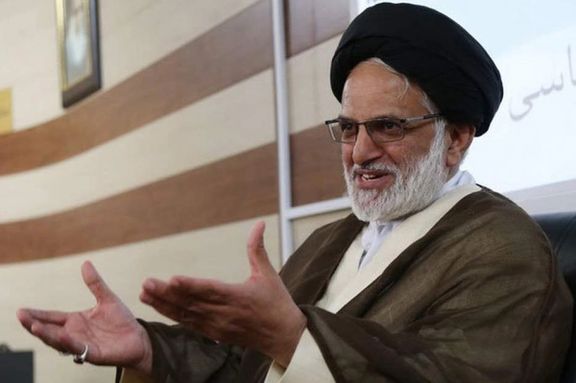
In the aftermath of the Quran burning in Sweden, an Iranian cleric has proposed that the Swedish embassy should be transformed into a Quran teaching center.
In the aftermath of the Quran burning in Sweden, an Iranian cleric has proposed that the Swedish embassy should be transformed into a Quran teaching center.
During a speech on Thursday, Hassan Akbari, the Supreme Leader's representative in Qom province's IRGC, urged high-ranking officials in Iran to protest against the insulting act and its support by Western governments by closing the Swedish embassy in Tehran and turning it into a center for Quran teaching.
He also expressed strong condemnation and called for decisive actions from the judiciary and the Ministry of Foreign Affairs against such acts.
The Quran burning incident in Sweden garnered international condemnation, prompting Iran's Supreme Leader, Ali Khamenei, to call for the perpetrator to face the severest punishment. Khamenei claimed last week that his stance is supported unanimously by all Muslim clerics.
In a statement addressing the incident, he urged the Swedish government to hand over the culprit to the judicial authorities of Muslim countries for appropriate legal action.
The perpetrator, identified as Salwan Momika, an Iraqi immigrant, burned the Quran in front of the central mosque in Stockholm on the first day of Eid al-Adha, after obtaining a permit from the Swedish government. He repeated the desecration in front of the Iraqi embassy in Stockholm on July 20.


Iran's communications minister has defended internet filtering policies, claiming that a third of the blocked sites are “obscene” and “restricted worldwide”.
Isa Zarepour’s comments come in response to a report by the Tehran Electronic Commerce Association, which said that 30% of the top 100 most visited sites globally are filtered in Iran. Zarepour said that these websites are also “restricted worldwide”.
Among the blocked services in the country are major platforms such as YouTube, Facebook, Instagram, WhatsApp, Twitter, Reddit, Netflix, Bing, BBC, AliExpress, PayPal, and Quora. Attempting to corroborate the minister's claim, a website called Farazdaily investigated the restricted websites in Iran, but discovered that they do not contain any adult or restricted content.
The restrictions on social media platforms in Iran date back more than a decade, Facebook and Twitter being banned after the 2009 presidential election and Telegram in the aftermath of the November 2019 protests. Last year, Instagram and What’s App were blocked during the mid-September protests.
Despite these strict bans, Iranian officials, including Supreme Leader Ali Khamenei, maintain a presence on social media platforms, some possessing multiple accounts on each. Meanwhile, Iranians resort to using Virtual Private Networks (VPNs) to circumvent the bans and continue using social media.
Social media has significantly transformed the information landscape in Iran, challenging the government's control over the flow of information. Citizens now utilize these platforms as virtual town squares to openly criticize and challenge the clerical regime, heralding a shift in the power dynamics between the authorities and the public.
A 20-year-old woman, who was arrested and detained for not observing the mandatory hijab, has reportedly been sexually harassed by the Iranian regime’s agents.
Tabassom Jamalpour, who was arrested on July 17 for publishing a photo of herself without the compulsory veil in front of a religious mourning procession center, has been subjected to physical abuse and sexual harassment whist in a “safe house”, according to reports by Iran Prison Atlas.
The reports allege that agents forced her to remove her clothes, saying "You should be naked like the picture you published..." before beating and stripping her and touching her breasts.
Jamalpour was then transferred to Ward 209 of Evin Prison, where she endured consecutive days of interrogation. The charges brought against her include "insulting Islam" and "spreading corruption and prostitution."
At the time of her arrest, another woman who was also not wearing a headscarf and a man wearing shorts were also detained. Their whereabouts and well-being remain unknown.
There have been a spate of accounts of violence and sexual abuse against detainees, particularly during the uprising of Iranians against the clerical regime following the death in custody of Mahsa Amini.
In February 2022, the Guardian published a report quoting 11 male and female protesters saying that they were "raped, sexually assaulted, beaten and tortured" by the security forces of the Islamic Republic during their detention.
Sweden has expressed concerns about the consequences of more events to burn the Quran amid growing anger by the Muslim population.
Swedish Prime Minister Ulf Kristersson said on Thursday that he is "extremely worried" that more demonstrations go ahead in which the Quran is desecrated, further outraging Muslims who have been fuming over a series of attacks on Islam's holy book in Sweden and Denmark.
The incident involved Salwan Momika, an Iraqi immigrant, who burned pages from the Quran in front of the central mosque in Stockholm on the first day of Eid al-Adha late in June, after obtaining a permit from a Swedish court. Some 200 onlookers witnessed him tearing up a copy of the Quran and wiping his shoes with the pages. He then put bacon on the book and set it on fire whilst another protestor addressed the crowds with a megaphone. Momika repeated the desecration in front of the Iraqi embassy in Stockholm on July 20. The following day, in neighboring Denmark, members of the far-right nationalist group "Danske Patrioter (Danish Patriots)" burned a copy of the Quran in front of Iraq's Embassy in Copenhagen.
Kristersson told Swedish news agency TT that further requests had been filed with police for permission to hold protests where desecration of the Quran was again planned.
"If they are granted, we are going to face some days where there is a clear risk of something serious happening. I am extremely worried about what it could lead to," he said, adding that the decision whether to grant permission for the demonstrations was up to the police.
Sweden's embassy in Baghdad was stormed and set ablaze on July 20 by protesters and Stockholm’s envoys in several countries, including Iran, have been summoned. Iran has announced that it will not accept a Swedish ambassador and has no plans to send a new ambassador to Sweden.
Sweden's security service, SAPO, has kept its assessment of the threat level at 3 on a scale of 5, signifying an "elevated threat" during the crisis. Charlotte von Essen, the head of the Swedish Security Service, told reporters on Thursday, "Sweden has gone from being seen as a tolerant country to being seen as an anti-Islamic land."
On Tuesday, the UN General Assembly passed a Morocco-drafted resolution, deploring ''all acts of violence against persons on the basis of their religion or belief, as well as any such acts directed against their religious symbols, holy books, homes, businesses, properties, schools, cultural centers or places of worship, as well as all attacks on and in religious places, sites and shrines in violation of international law.''
On July 12, the Geneva-based UN Human Rights Council also passed a motion to condemn the burning of Quran despite nay votes by Western countries, which said it conflicts with their positions on human rights and freedom of expression.
Denmark and Sweden have said they deplore the burning of the Quran but cannot prevent it under rules protecting free speech.
The Swedish government is caught between rock and hard place to balance defending far-reaching freedom of speech laws, while at the same time avoiding potential insult to Muslims.
Also on Thursday, Swedish Foreign Minister Tobias Billstrom said, "These are acts committed by individuals, but they do it within the framework of freedom of speech laws. In some countries there is a perception that the Swedish state is behind or condone this.”
Members of the anti-immigration Sweden Democrats, the biggest party on the right, have repeatedly warned about the "Islamization" of Swedish society and called for immigrants to adopt "Swedish" values.
Iran's Supreme Leader called for the severest punishment for the perpetrators of the Stockholm Quran burning. Ali Mohammadi-Sirat, the Supreme Leader’s man in IRGC’s Quds (Qods) Force -- a division primarily responsible for extraterritorial military and clandestine operations -- repeated Khamenei’s demands and stressed that these men will not be safe wherever they are.
Earlier this month, Iran’s Revolutionary Guard Commander Hossein Salami also threatened attacks against those responsible for the incident, saying that those who burn or desecrate the Quran will not enjoy security.
Internet privacy company Proton revealed a jaw-dropping 6,000-percent surge in sign-ups for its virtual private network (VPN) in Iran during October 2022.
This remarkable increase coincided with a notable escalation in the Iranian regime’s crackdown on internet access, a move that followed the death of Mahsa Amini whilst she was police custody.
As demonstrations swept through Iran in mid-September, the government swiftly imposed restrictions on Instagram, the sole international social media platform that citizens were previously permitted to access. Other social media platforms such as Facebook, Twitter, and Telegram had already faced bans following the 2009 Presidential election and the aftermath of the November 2019 protests.
The Switzerland-based firm, Proton, stated that in addition to the surge in sign-ups from Iran, they witnessed a remarkable 9,000-percent increase in new VPN users in the aftermath of Russia's blockage of independent news sites following its invasion of Ukraine last year. Furthermore, the company noted a staggering 15,000-percent spike in sign-ups from Turkey earlier this year when access to Twitter was reportedly temporarily restricted in the aftermath of a devastating earthquake.
Andy Yen, Proton’s founder and CEO raised concerns about the escalating trend of internet shutdowns imposed by governments globally. "Internet censorship is increasing at an alarming rate," he warned.
The company's research revealed that in 2022, authorities in 35 countries orchestrated 187 internet shutdowns, setting a new record for the highest number of shutdowns in a single year. Proton attributes such actions to events like public protests, active conflicts, elections, and political instability, employed as desperate means of control to keep citizens uninformed and isolated.
"This is a very dangerous path," Yen cautioned.
A human rights organization has voiced alarm over Iran’s threats to execute European citizens over Quran burning.
Mahmood Amiry-Moghaddam, the director of the Norway-based Iran Human Rights (IHRNGO), said Wednesday that inaction by the international community has emboldened the Islamic Republic authorities to extend their execution spree beyond Iran’s borders.
His remarks came as a reaction to repeated insistence by Supreme Leader Ali Khamenei and several other regime officials for the execution of the Sweden-based Iraqi immigrant Salwan Momika who burned pages from the Quran in front of the central mosque in Stockholm on the first day of Eid al-Adha in June.
After obtaining a permit from a Swedish court and in front of approximately 200 onlookers Momika, tore up a copy of the Quran, wiped his shoes with the pages, put bacon on the book and set it on fire whilst another protester addressed the crowds with a megaphone. Momika repeated the desecration in front of the Iraqi embassy in Stockholm on July 20. The following day, in neighboring Denmark, members of the far-right nationalist group "Danske Patrioter (Danish Patriots)" burned a copy of the Quran in front of Iraq's Embassy in Copenhagen.
Amiry-Moghaddam referred to the hanging of two Iranians in May for insulting religious entities, saying that "Unfortunately, the lack of appropriate response from the international community regarding the execution of one person on the charge of adultery and two people on the charge of sacrilege has emboldened the leaders of the Islamic Republic to issue similar sentences and even threaten to execute European citizens."
Iran's Supreme Leader called for the severest punishment for the perpetrators of the Stockholm Quran burning. Ali Mohammadi-Sirat, the Supreme Leader’s man in IRGC’s Quds (Qods) Force -- a division primarily responsible for extraterritorial military and clandestine operations -- repeated Khamenei’s demands and stressed that these men will not be safe wherever they are. Earlier this month, Iran’s Revolutionary Guard Commander Hossein Salami also threatened attacks against those responsible for the incident, saying that those who burn or desecrate the Quran will not enjoy security.
The regime’s judiciary claimed Yousef Mehrad and Sadrollah Fazeli-Zare' were running dozens of online anti-religion platforms dedicated to the hatred of Islam, the promotion of atheism and insults to sanctities, however, in earlier reports the charges were mainly related to one Telegram channel. Mizan, the judiciary’s news agency, also claimed they had burnt copies of the Quran, and they had confessed to their blasphemy. Their families and rights activists said the confessions were extracted under duress, which has proven to be the case in numerous confessions by the regime.
Amiry-Moghaddam added, “The international community should not tolerate the execution of human beings because of consensual sex or expression of opinion in the 21st century by the governments that have a seat in the United Nations.” In April, a man was executed in the city of Karaj after being charged for having an affair with a married woman. In the Islamic Republic’s law, adulterers can be sentenced to lapidation -- or stoning to death -- if one or both people are married. Nowadays, the regime just hangs them.
According to a report released earlier in July, in the last 10 years, the regime has executed approximately 5,000 people, including dozens of children. The report by Dadgostar, the news agency of US-based Human Rights Activists in Iran (HRANA), highlighted the concerning trend of an average of 10 citizens being executed every week since May of the current year. Since the beginning of 2023, the regime has executed at least 307 people with 142 hangings in May alone, hitting a dark record even for the Islamic Republic.
Amiry-Moghaddam told Iran International in June, “The purpose of the Islamic Republic’s intensification of arbitrary executions is to spread fear in society to intimidate people against holding further protests, thus prolonging its rule,” adding that “if the international community doesn’t show a stronger reaction to the current wave of executions, hundreds more will fall victim to their killing machine in the coming months.”
The Islamic Republic has intensified its killing trend in recent months, with at least seven protesters hanged since nationwide protests broke out in September 2022 following the death in custody of 22-year-old Mahsa Amini. The unrest posed the biggest internal challenge to the Islamic Republic since its establishment in 1979.