Iranian Cleric Responsible For Reward For Rushdie's Murder Dies

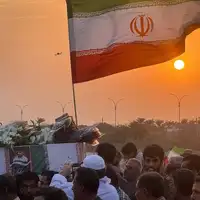
Iranian media reported the death of Hassan Sanei, an 89-year-old Expediency Council member known for announcing a reward for Salman Rushdie's murder in the 1980s.

Iranian media reported the death of Hassan Sanei, an 89-year-old Expediency Council member known for announcing a reward for Salman Rushdie's murder in the 1980s.
Hassan Sanei had a prominent role in Iranian society, having been appointed as the head of the Khordad 15 Foundation in 1983 by the directive of Ayatollah Khomeini, the ruler of Iran at the time. He continued to serve in this capacity until 2020.
The Khordad 15 Foundation was established shortly after the 1979 Islamic Revolution by taking over a collection of confiscated property and factories. Over the years, it grew to become one of Iran's major economic entities, with interests spanning various sectors such as steel, medicine, petrochemicals, food, detergents, investments, and travel quasi-public companies.
Notably, during his tenure as the foundation's head, Hassan Sanei was involved in the decision to offer a reward for the assassination of Salman Rushdie, a prominent writer who faced significant controversy following the publication of his book The Satanic Verses in 1988. This literary work caused protests among some Muslims, resulting in Ayatollah Khomeini issuing a fatwa calling for Rushdie's death in 1989.
The United States Treasury imposed sanctions on the 15 Khordad Foundation on October 28 last year, following an assassination attempt on Rushdie during a speech in New York.
Subsequently, the foundation further increased the reward amount for Salman Rushdie's murder by half a million dollars, bringing the total sum to 3.3 million, just weeks after the knife attack.


Amid talks of a prisoner swap deal with the United States, the Iranian regime has detained another American citizen, further complicating efforts to lower tensions.
Semafor news website in Washington DC cited three people briefed on the case as saying that the new arrest is now a crucial part of stepped-up negotiations between the two countries.
The article, published on Friday, did not disclose the identity of the American, saying that it withheld the name to avoid jeopardizing negotiations over his/her release. Previously, the US has prioritized securing the release of three Iranian Americans, businessmen Siamak Namazi and Emad Sharqi, as well as environmentalist Morad Tahbaz, held by Iran on trumped-up charges of espionage. Two individuals with US permanent residency -- Jamshid Sharmahd and Shahab Dalili -- are also imprisoned in Iran.

The negotiations -- which have taken place without public announcements in Oman as well as other countries -- are geared towards facilitating the exchange of Iranians convicted of crimes in Western countries for the release of US nationals held hostage in Iran, as well as the release of billions of dollars of Iran’s funds frozen in overseas banks.
While Iran has around $20 billion frozen in Iraqi, South Korean and Japanese banks due to US sanctions, what has often been mentioned as being discussed is $7 billion in two Seoul banks.
Despite claims by several Iranian officials who have for months publicly suggested that a deal was in the making, the Biden administration said in June that it continues contacts with Tehran, but no nuclear or prisoner release agreement is imminent.
According to Semafor’s sources, the inclusion of the fourth American in the talks may prompt Tehran to raise its demands.
The Biden administration has so far declined to reply to Semafor’s inquiry about the case of the fourth American citizen, but National Security Advisor Jake Sullivan implicitly confirmed it last week during an interview on Face the Nation. “We have tried very hard to secure the release of the four unjustly detained Americans in Iran, we have done so since the day that President Biden took office,” he said on Sunday.
A person directly briefed on the case and close to one of three Iranian American families told Semafor on Thursday that “Multiple senior officials at the State Department in the last few weeks have privately emphasized that the US and Iran have already agreed the fourth American will be part of any deal and there are no delays being caused by [the person’s] inclusion.”
In the past decade, Iran's Revolutionary Guard have arrested dozens of dual nationals and foreigners, mostly on unproven allegations of espionage and breach of security, in what human rights organizations have said is essentially hostage taking to extract concessions from Western governments.
In November 1979, a group of leftist students backed by the new revolutionary government occupied the US embassy in Tehran and took 54 Americans hostage for 444 days. Later, the same strategy was used in Lebanon where multiple Westerners were taken hostage in the 1980s by militant groups linked to Tehran.
Tehran denies any policy of hostage taking and insists all foreigners are tried legally. However, it has frequently shown readiness for prisoner exchanges and receiving monetary payments and participated in swaps in the past.
In March 2022, Nazanin Zaghari-Ratcliffe, an Iranian-British citizen held in Iran for nearly six years, was freed along with British-Iranian businessman Anoosheh Ashoori after the UK paid a four-decade-old £400m ($522 million) debt to Iran. Iran's foreign minister Hossein Amir-Abdollahian claimed at the time that the payment by Britain had nothing to do with the release of the Zaghari-Ratcliffe and Ashoori.
The latest case was in June when two Iranian-Austrian citizens named Kamran Qaderi and Masoud Mosaheb and a Danish individual were released in the framework of a recent prisoner exchange agreement with Belgium mediated by Oman. A week earlier, Olivier Vandecasteele, a Belgian aid worker, returned to his country in exchange for the release of Assadollah Asadi, an Iranian agent disguised as a diplomat in Europe who was convicted of a terror plot in France in 2018.

Days after Iran’s notorious hijab or ‘morality’ returned to streets, top officials refuse to take responsibility due to “concern over the upcoming elections".
A public disagreement has arisen regarding who ordered the return of the 'morality' police, which vanished from the streets following nationwide protests sparked by the death of Mahsa Amini in the custody of hijab patrols last September.
According to Tehran's leading reformist daily, Etemad, President Ebrahim Raisi's aides have advised him against implementing any plan that could provoke people until after the next presidential election in 2025 to secure his re-election. They have even suggested indirect criticism of negative reactions to hijab violations to make a positive impression on public opinion.
However, Etemad cited an unnamed senior official of the police as saying that the hijab patrols have returned by the direct order of the president as the head of the Supreme National Security Council. The interior minister is only tasked with implementing the plan as the representative of the Supreme Leader Ali Khamenei in Law Enforcement Command.

The police official emphasized their role as the sole executor of orders from higher authorities within the government and the Interior Ministry, adding that officials shifted responsibility to the police force to shield themselves from potential criticism.
As the police blamed the presidential administration, several government officials claimed that the decision was not made by the president himself.
Ali Bahadori Jahormi, the government's spokesperson, emphasized in a twitter post that the judiciary is responsible for dealing with “social abnormalities," including civil disobedience acts like women defying the Islamic Republic's strict dress code. He stated, "It is the responsibility of the judiciary to decide how to implement the law." Vice President for Women and Family Affairs Ensieh Khazali also denied that the hijab patrols returned upon the president's order.
Tasnim news agency, affiliated with the Revolutionary Guard, claimed that after the publication of the official order by the president and the chief justice to reinstate the hijab police, certain government officials contacted the agency and asked them to remove the part mentioning the president.
The ultra-hardliner daily Kayhan expressed support for the police's approach in enforcing hijab regulations, warning officials against backing down from their stance merely in fear of losing “a handful of votes.”

The morality or hijab police returned to the streets of Tehran and other cities ahead of the first anniversary of Mahsa Amini's death, immediately leading to online uproar as well as a few bouts of street protests, the biggest of which broke out in the northern city of Rasht.
A video which went viral on Saturday shows Tehran's morality police arresting a teenage girl without compulsory hijab, while the girl was screaming “I’m not coming with you” as they tried to push her into their unmarked van.
People on social media have reacted to the incident saying if Iranians do not pour into the streets on the death anniversary of Amini in mid-September, the regime will tighten the noose.
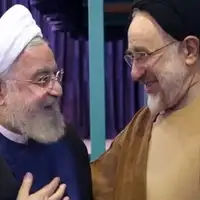
Iran’s former president Mohammad Khatami also warned that the return of morality police may lead to the regime's “overthrow by itself and social collapse”. “It seems that the danger of self-overthrow, which has been talked about many times, stands out more than ever with the return of morality police."
In addition to street patrols, the regime has intensified its crackdown on celebrities who have published photos of themselves without mandatory hijab or appeared in public without head covering as an indirect threat against ordinary people.
Only this week, several actresses as well as TV and radio personalities have been given odd sentences, such as washing corpses for burial and attending counseling sessions as well as bans, as a humiliation and intimidation tactic.
Dadban, a group of pro-bono lawyers in Iran defending political prisoners and rights activists, also revealed that one of the regime’s judges in the capital Tehran – identified as Ali Omidi – has taken a prominent role in issuing heavy sentences against those who protest mandatory hijab.

The United States expressed its appreciation for the International Maritime Organization's (IMO) decision to decline Iran's proposal to host a maritime meeting in Tehran.
The rejection was formally announced by the IMO on Thursday, and the US government expressed its support for the decision.
Citing Iran's history of disregarding international maritime regulations and safety standards, as well as its interference with unhindered navigation of commercial vessels, State Department Spokesperson Matthew Miller articulated the US stance on Thursday.
"Iran has no business hosting any official international gathering related to maritime affairs, because it has repeatedly demonstrated its contempt for international maritime rules, standards, and safety. [They are] interfering with the free navigation of vessels recently, so we did think that it was appropriate that they not be allowed to host this event, and the IMO agreed with that," said Miller during a briefing.
The rejection came as a result of a proposal led by Washington at the UN shipping agency's Council. The Council, comprising representatives from 40 countries, voted in favor of the proposal.
This development is expected to exacerbate tensions between the United States and Iran, particularly in light of a recent incident where Iran made an attempt to seize the Richmond Voyager tanker in international waters back in July.
To substantiate their case against Iran's hosting bid, the US, with the backing of Britain, submitted a working paper to the IMO's Council. According to Reuters, the document highlighted Iran's aggressive actions against more than 20 commercial vessels over the past two years.
The regime condemned the US for Tehran’s rejection, Foreign Ministry spokesman Nasser Kanaani claiming that “The United States once again exposed its arrogant and colonial nature by obstructing the shipping event in Iran.”

Poland has sternly warned Iran against taking any steps to support Russia, especially through the provision of weapons or military equipment.
During a meeting in Warsaw July 19, Poland's Deputy Foreign Minister Pawel Jabłoński conveyed a strong message to his Iranian counterpart, Ali Bagheri Kani, emphasizing that such actions would be considered unacceptable.
The meeting primarily focused on Russia's aggression against Ukraine and its violations of international law. Jabłoński highlighted the severe repercussions of Russia's actions, including crimes against civilians, not only in Ukraine and Europe but also on a global scale.
The Russian invasion has had far-reaching consequences, contributing to a decline in global food and energy security, affecting regions beyond the immediate conflict zone, read a statement by Poland’s Ministry of Foreign Affairs.
Among the topics discussed was the issue of reviving the Joint Comprehensive Plan of Action (JCPOA), commonly known as the Iran nuclear deal. Poland stressed the importance of limiting Iran's nuclear program activities to mitigate the risk of weapons of mass destruction proliferation in the Middle East.
Iran has been enriching uranium to 60-percent purity in the past two years and has accumulated enough fissile material for two nuclear bombs according to experts.
During a separate meeting with foreign ambassadors and diplomats residing in Poland, Bagheri Kani talked about NATO's presence in Afghanistan. He asserted that "NATO's role in Afghanistan demonstrated that the alliance, typically seen as a security builder, could inadvertently contribute to promoting insecurity."
Poland, a full member of NATO since 1999, has actively participated in numerous missions and operations, demonstrating its commitment to international security efforts.

The United Kingdom's security minister has expressed concerns over the actions of the Iranian regime, likening them to tactics commonly employed by terrorist groups.
In an interview with Politico on Thursday, Tom Tugendhat highlighted the emergence of what he called "a new form of state threat" from Iran.
The remarks from the security minister come in the wake of recent developments, where the UK foreign secretary revealed that British authorities have thwarted 15 separate attempts to assassinate or abduct individuals within the country. The nature of these plots and their connection to the Iranian regime has raised alarm bells in the UK's security circles.
Regarding the possibility of negotiating a renewed nuclear deal with Tehran, Tugendhat adopted a cautious stance. He asserted that no actions should inadvertently bolster the regime's claims of legitimacy or stability.
“We’re dealing with a regime that has lost legitimacy abroad, has lost legitimacy at home.”
Last week, a group of UK politicians wrote to Foreign Secretary James Cleverly, calling on the government to adopt more stringent measures against Iran.
“Iran is the Middle East’s largest, most aggressive power, with an obvious commitment to revising the global order, with a growing alliance with Russia, and a desire to deepen it," read the letter by a group of prominent British figures, including two former defense ministers, a former leader of the Liberal Democrat party, and the current chair of the parliamentary committee on foreign affairs.